Freehand, from InVision headquartered in New York, is an online whiteboard that enables teams to plan, brainstorm, and draw together. It aims to give everyone a simple way to visually represent ideas with charts, diagrams, and drawings. Whether for mind mapping, creating a customer journey map, or drafting up an org chart, Freehand can help teams make ideas and plans visual.
$4
per month per user
Lua
Score 1.0 out of 10
N/A
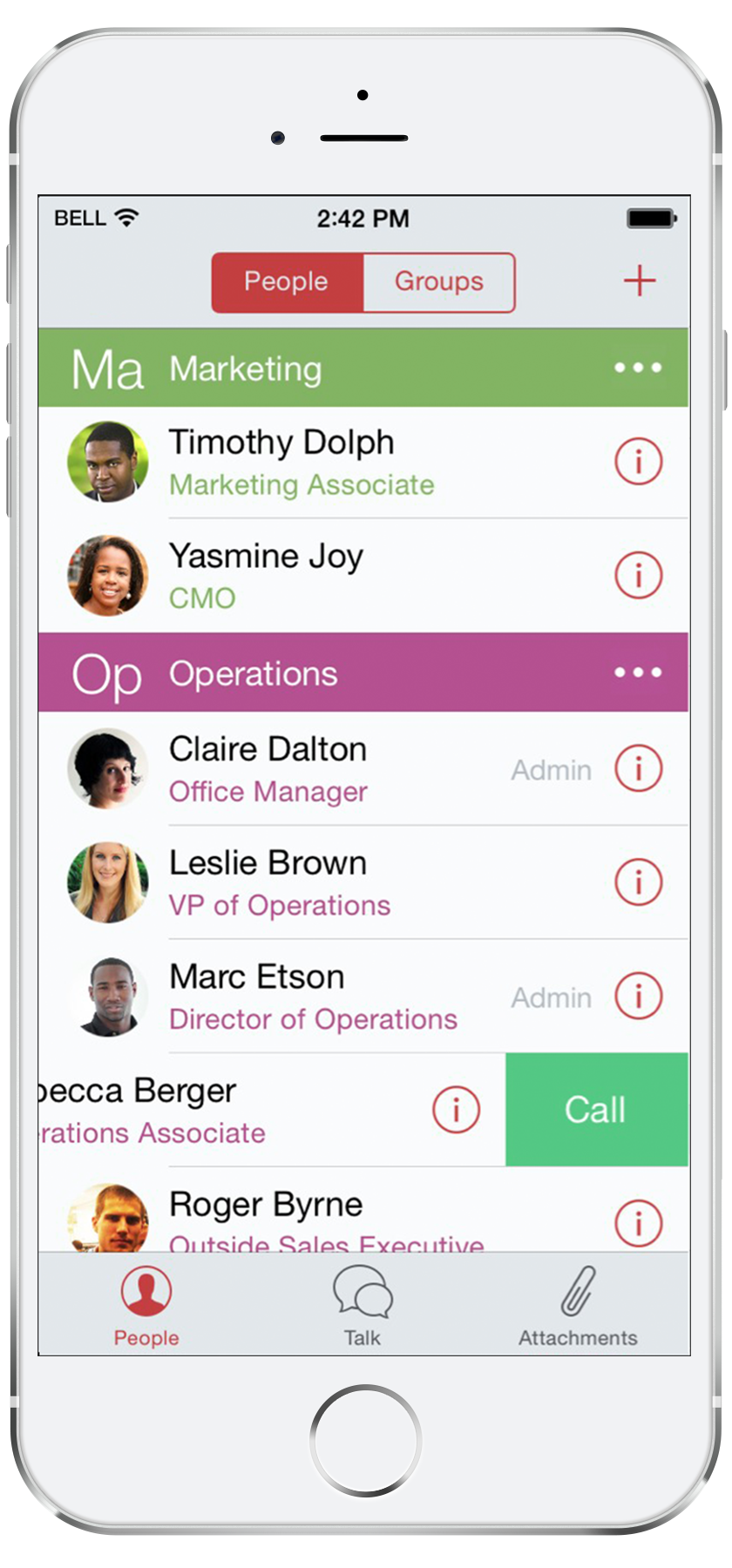
Lua is a mobile-first enterprise communication solution. It powers messaging that is built for business: instant, secure, and keeps everyone accountable. Some key features include: Real-time Secure Messaging, Two-touch Conference Calling, and an Analytics Dashboard.
$0
Per User per Month
Microsoft Teams
Score 8.1 out of 10
N/A
Microsoft Teams combines video conferencing software with team collaboration tools. The communications platform allows MS Office users to conduct conference calls and share files via SharePoint, and join or initiate a group chat.
$4.80
per month per user
Pricing
Freehand by InVision
Lua
Microsoft Teams
Editions & Modules
Freehand Free
$0
per year per user
Freehand Pro
$4
per month per user
Freehand Enterprise
Custom Quote
Lua
Per User per Month
Microsoft Teams Essentials
$4.80
per month per user
Microsoft Teams Enterprise
$5.25
per month (paid yearly) per user
Microsoft Teams Enterprise
$5.25
per month per user
Microsoft 365 Business Basic
$7.20
per month per user
Microsoft 365 Business Standard
$15
per month per user
Offerings
Pricing Offerings
Freehand by InVision
Lua
Microsoft Teams
Free Trial
Yes
Yes
Yes
Free/Freemium Version
Yes
No
Yes
Premium Consulting/Integration Services
No
Yes
No
Entry-level Setup Fee
No setup fee
$2,500
No setup fee
Additional Details
—
—
Discounts are available for non profit organizations.
Honestly, Zoom and Teams don't compare for their whiteboarding. Mainly because those are glitchy and unreliable. I've tried using them in meetings and especially with Zoom (maybe because they are newer) it loads and freezes up. I like to be "on it" in meetings and can't have …
They seem quite similar in a lot of ways but I tend to slightly prefer Invision overall. Seems like it is easier to use and offers much of the same feature set. If it were up to me I'd probably just use InVision Freehand going forward and stop using Figma altogether.
Feels better and more intuitive than Miro, however, FigJam would be my ultimate go-to just because Figma is the software that I am most familiar with. Figma has design, prototyping, and now the collaboration feature, so if I was deciding on the software for collaboration I …
While it seems less robust than some of these other tools, it does what it does very well and it is clear Invision is constantly iterating on it to make the tool better.
Drawing in Miro isn't nearly as frictionless, and it gets slow much easier. Miro tries to make things more "put together" and often times you just need to make a mess.
InVision Freehand has quickly evolved to be a very robust solution for our pre-design process and collaboration with stakeholders and other product teams. It has brought a lot more hands-on workshopping opportunities and created engaging spaces for cross functional teams. Internally to our design org we are able to prototype ideas faster and generate insights or changes BEFORE going into more hi-fidelity design tools or processes.
I wouldn't recommend Lua because they were recently acquired by another company and will be shutting down. It was unfortunate that we were only given 2 months notice right after signing up for another 1-year term.
It's amazing as a daily driver for team communication, and document search/store. Also, if you're doing a lot of LONG meetings and have trouble remembering details, the AI summarization is amazing and convenient. It just works. I'm not saying I always do this, of course, but if I need to 'skim' instead of really digging into every detail from a meeting, the AI-generated summary is generally good enough that I can get away with it.
The resolution: Our webpage designs always pass the resolution threshold to where freehand starts to work its compression. During presentations, it can be a little embarrassing when we can't read the copy because it looks like potatoes.
Embedding videos: GIFs are only good to a certain point, and creating Vimeo embeds is tedious. I wish I could embed MP4s or web assets a lot quicker.
Touchpad panning: I can't tell you how many times I've "gone back" in my browser when I'm just trying to pan across the freehand. Has honestly made me wanna force quit on many occasions.
Sticky notes and text in shapes: Overall, it's really hard to use the sticky notes and text inside rectangles without the text just getting all over the place. It's different sizes, it gets too tiny, it gets way too big, and overall, it just doesn't look professional, even with a lot of fussing.
No ability to crop/mask an image. Nice to have, but sometimes we just need to delete a chunk off a screenshot, and it requires opening PS or taking a screenshot to edit anything.
Wish there was a way to have "internal comments" that are not visible to our clients.
The webinars feature has some missing functionally such as the ability for all users to use the Q&A feature (only those with a Microsoft Teams account can use it now), the ability to upload documents for attendees to easily access and download, and the ability for presenters and organizers to easily chat amongst themselves throughout the webinar.
The "Channels" organization hierarchy could be more clear. If you have several channels set up, it can get clunky and hard to find the specific channel you are looking for.
The MS Planner tool lacks functionality and organization. You cannot assign more than one person to a task and it's confusing when you try to share tasks with people - it would be nice if they were automatically added to someone's calendar.
Honestly as in any organization it's up to budget. I feel like every organization I go to I'm constantly striving to keep InVision as part of the main funded tools used by the team especially in a remote environment. I feel there is a push to move to Figma and Zooms new white boarding tool but I'm still not a fan of Zoom's tool. Microsoft also created a white boarding tool which has been buggy.
Microsoft Teams is included with our Office 365 subscription and we have no intention of migrating off of Office 365 and Microsoft products. Since Microsoft Teams is included for free with our Office 365 subscription, and since we enjoy all the features, benefits, and functionality, there is no question that our team will continue to use the product
Color Selection can be tricky when changing colors for shapes and text I've seen other users struggle with creating sticky notes and getting text to fit in the box properly and had to abandon the tool for a workshop for this reason After having a demo, I learned of new features I wasn't using. I don't know it would have been intuitive to find on my own.
If you have the full Microsoft Office suite, it works really well because it's integrated well within its ecosystem, but if not, it can be annoying because it tries to open a shared file in the web versions of the file equivalents. The web version is also a bit slow, and the login is very difficult to handle if you have multiple Microsoft or Outlook accounts.
For availability, we never have to even think about whether inVision Freehand is going to be available for us to work with. There has never been a time when we have opened up the application and had any issues of any kind. I can't imagine why anyone would work with a platform that is unreliable. inVision Freehand is realibel, stable, and getting better all the time. Whether it's their built-in tools or the expanding of Templates to work with Freehand has been a reliable go-to platform for us.
It is a little slow when bringing artboards from Sketch to Freehand using Craft. I have had some issues loading and redrawing pages when I have a lot of images on my freehand board. It gives me an error message while I am in the file and starts to reload and redraw all the photos again. Not sure if it has a limit on how many images it can handle on a board at a time.
I haven't had to use the support team for anything, which is great news because that means the product usually works as expected! In terms of online support, I've been able to find videos that show how new features work. Also, many of the people I work with have experience with the tools so they are a great resource for me.
The overall support provided by Microsoft for Microsoft Teams has been quite good but there is still some room for improvements. Microsoft needs to proactively work on fixing the open bugs in order to provide a seamless experience to the users. But over the service and experience provided by the Microsoft team have been quite satisfactory.
The implementation is pretty much easy-peasy and plug-n-play. We simply download the applications and install, signed in and were good to go. I really cannot imagine that there would be anyone who would have any difficulty whatsoever in getting started in more than just a few minutes. It's really how implementing these officewide improvements should always go.
Miro (formerly Realtime Board) is the original product concept for this tool and I used it for 3-4 years for product development. Invision is aesthetically a carbon copy of the tool but lacks in fine usability controls. We actually didn't choose Freehand, it just came as an added tool under our Invision subscription. It's helpful but knowing the previous tool, it's been a hard sell because it's just not as good. Again, it's really fine tuned usability things like navigation, zoom, switching from tool to tool, selecting and deselecting, etc
Microsoft Teams offers a much more integrated experience between their chat and video call function compared to Google Chat and Slack. Both other tools are much better for internal communications are they have simpler UI without other features. Whereas Microsoft Teams can be used for more critical conversations, particularly between external companies, and has been very useful in sales conversations which is what we chose it for when speaking to companies that work exclusively through Microsoft.
Getting set up with inVision Freehand was super simple. We figured how many of our team members were going to be using it and we set up our account knowing that. There were no negotiations, contract hassles or anything that would have been a waste of our time, efforts or resources.
Honestly, this tool is worth every penny. Yes, it's not free and you pay for the quality of services and the license. But the ROI and the benefits are all there. Also, the renewal, negotiation, and contract terms are all very well explained by our Microsoft account manager, and she's a charm.
Not everyone in the company has access to Invision, and they can't view the links I provide to them. I also wish everyone could view a file without logging in to the enterprise account. It comes in handy when I am doing focus-group studies or other studies with our customers that don't have Freehand. Unfortunately, if that is possible, I don't know how to do that.
I used Skype for Business to take calls, hold conferences, and provide remote assistance to users. Microsoft Teams, on the other hand, is superior to Skype for Business in my opinion. My job entails a lot of screen sharing.
Personally, I would say that by using Microsoft Teams, it upped my collaboration with my colleagues by around 50% or around more than half of what I usually did prior to using it.
I had 100% show rate and attendance on all of my meetings in the past 6 months.
If I may add, I also have been chattier & collaborative towards my colleagues in past 3 months particularly the month of December when we had huge traffic at work. I would estimate this behavior to have been increased by around 60% than what I usually incur during normal operating days.