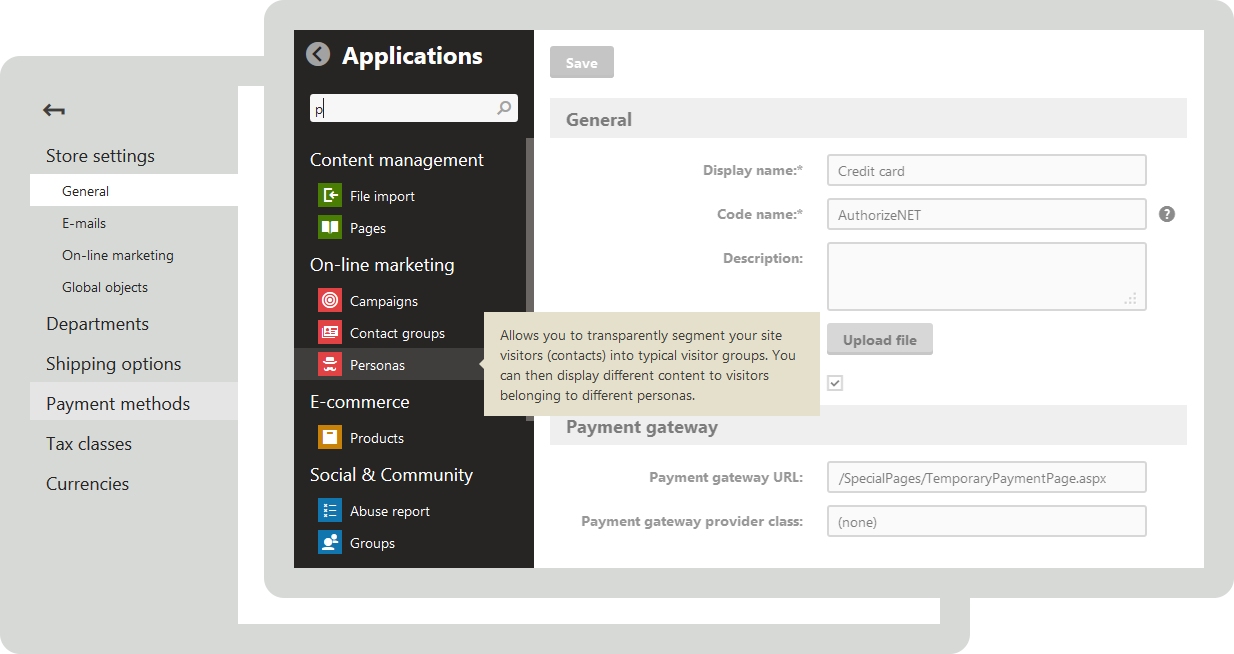
Kentico is a web content management system for building websites, online stores, intranets, and Web 2.0 community sites. Kentico CMS uses ASP.NET and Microsoft SQL Server for development via its Portal Engine, using Visual Studio, or through Microsoft MVC.
$9,999
Subscription license
SharePoint
Score 7.7 out of 10
N/A
Microsoft's SharePoint is an Intranet solution that enables users to share and manage content, knowledge, and applications to empower teamwork, quickly find information, and collaborate across the organization.
$5
Per User Per Month
Pricing
Kentico Xperience
Microsoft SharePoint
Editions & Modules
Kentico Xperience Business
$9,999 / year
Subscription license
Kentico Xperience Business
$14,999
Perpetual license
Kentico Xperience Enterprise
$17,999 / year
Subscription license
Kentico Xperience Enterprise
$29,999
Perpetual license
Kentico Xperience Corporate
Upon request
Plan 1
$5.00
Per User Per Month
Plan 2
$10.00
Per User Per Month
Office 365 E3
$20.00
Per User Per Month
Offerings
Pricing Offerings
Kentico Xperience
SharePoint
Free Trial
Yes
Yes
Free/Freemium Version
Yes
No
Premium Consulting/Integration Services
Yes
No
Entry-level Setup Fee
Optional
No setup fee
Additional Details
—
—
More Pricing Information
Community Pulse
Kentico Xperience
Microsoft SharePoint
Considered Both Products
Kentico Xperience
Verified User
Professional
Chose Kentico Xperience
Previously we used Microsoft SharePoint as a content management system and it was very limited, required a ton of support, and we encountered bugs on a weekly/monthly basis.
All of the negatives that we had associated with SharePoint went away when we switched to Kentico. It was …
When compared to the above solutions the value that Kentico offers is much higher when compared to the price of these other solutions. Kentico will do 90% of what Sitecore and Ektron and Adobe do, and those other solutions will do 90% of what Kentico does. In my opinion they …
Kentico is a robust and flexible CMS platform that is great for managing multiple websites and multiple environments (dev, stage, and production for instance). It makes content management very easy and makes it easy to keep the environments synced with the same content. However, the Kentico CMS does require a bit more technical understanding to get it set up properly and requires a bit more effort and support than, say, free open-source options.
SharePoint Document Management excels as a central repository for storing, organising, and retrieving documents. It supports version control, metadata tagging, secure access, and integration with tools like Power Automate. At our organisation, it's used for managing contracts, policies, and supplier documents. SharePoint Workflow Automation integrates with Power Automate to streamline approvals, gather feedback, and automate recurring tasks. This reduces reliance on email chains and manual trackers.
I love the intuitive top and left navigation within the content management platform. I can easily find what section, sub-section, and page I'm looking to edit
For creating content, the WYSIWYG editor is so intuitive; it feels like you're working on an MS Word doc!
The tab for adding metadata in simple fields takes away the headache of having to hunt and peck through code to add H1 tag, page description etc.
Kentico needs to invest in more enterprise class environment management utilities -- example: global CDN support via the CMS is sorely lacking. There are work-arounds, but it should be more elegant.
The Kentico staging module could be improved to support the concept of bundled releases. Current staging module functionality is good, but could be improved.
Kentico ecommerce support is a touch immature. While content management is superb, Kentico lags in this area when compared to many open source ecommerce engines.
Kentico is lacking MVC support. 99% of the time this isn't an issue for the end-user or business user, but can be a hurdle for technology teams depending on the team's makeup.
Windows Explorer users have some difficulty having to constantly UPLOAD / DOWNLOAD files. Specifically on the DOWNLOAD when they are used to Drag & Drop in & out of LOCAL folders via Window's explorer.
Microsoft SharePoint supports multiple "library" types. When implementing our "image" library the search function is done via "tags" and boolean logic. This is challenging to most end users. I'd like our users to be able to search our Microsoft SharePoint image library without having to enter KEYWORD or other BOOLEAN logic.
Microsoft SharePoint can also be an internal website for each department or company wide communication tool but I believe these features are geared for much larger organizations. Since we are a SMB we really aren't using these features. So maybe something more useful to SMBs would be nice.
We are locked into Kentico for the long haul. It provides us with an easy and flexible solution for a very non technical company to create a site and have the features they want, especially with the inclusion of EMS into our license. Now we have a true platform to build and grow our solutions.
It's integral to our business. It's already included with most of the Office 365 licensing we buy, so the cost is effectively zero. It stores our files, it is the foundation for custom applications, and Microsoft only continues to enhance its functionality and its connections to other Microsoft tools. SharePoint just keeps getting better and better.
It seriously is one of the best interfaces I have ever used. I also love the fact that I can use UI personalization to secure any functionality by user or role that I don't want that role to have access to. The best part is the customization of the UI, I can add in any button, tab, or menu item I want through it, no code required.
No usability issues reported. Individual teams also have allocated areas which replace legacy shared drives on local LANs. Access to Sharepoint resources is fully integrated with corporate Active Directory with additional two-factor authentication required for administrative users. Users have access to Microsoft Services Hub which allows you to create, manage, and track support requests while staying current on Microsoft technologies with access to select self-paced learning paths
Their support staff is friendly, knowledgeable, and will work with you until your issue is fixed. This could take a few phone calls back and forth, but they are very diligent in helping you.
The face to face training I received was on SharePoint Administration. It was rushed as there was a lot of information to cover and the application of the labs weren't that great either. I like to be able to relate what I am learning to what I am currently doing.
I like to learn at my own pace and online training allows for that. Additionally, you can skip through pieces of content that you already know or are already comfortable with. Microsoft actually offers great videos on their website for basic fundamental SharePoint Training. I have used these training videos in some of my own training sessions with end users.
I've used Sitecore, Ektron, Joomla!, WordPress, and SharePoint (if you want to count that as a competitor for CMS). Kentico 8 blows them all out of the water. Nothing is more intuitive in the way that content is created, the way the site is setup, and how efficient rollouts can be with Content Staging.
The reasons for selecting MS SharePoint are: SharePoint provides ease of use and web design assistance and support SharePoint helps you schedule your content for publishing. enables users to share documents with external parties and offers a better internal structure of the content and better indexing and searching capabilities.
Kentico has enabled faster speed to market for SMEs. They are empowered to enter content them selves while still having that content go through editorial review to ensure tone of voice and brand are maintained.
Deploying Kentico has freed up web developer resources from manual content entry enabling them to build more useful solutions to support the business efforts
Tapping into the Kentico event pipelne allows us to trigger external system events when product content is published.