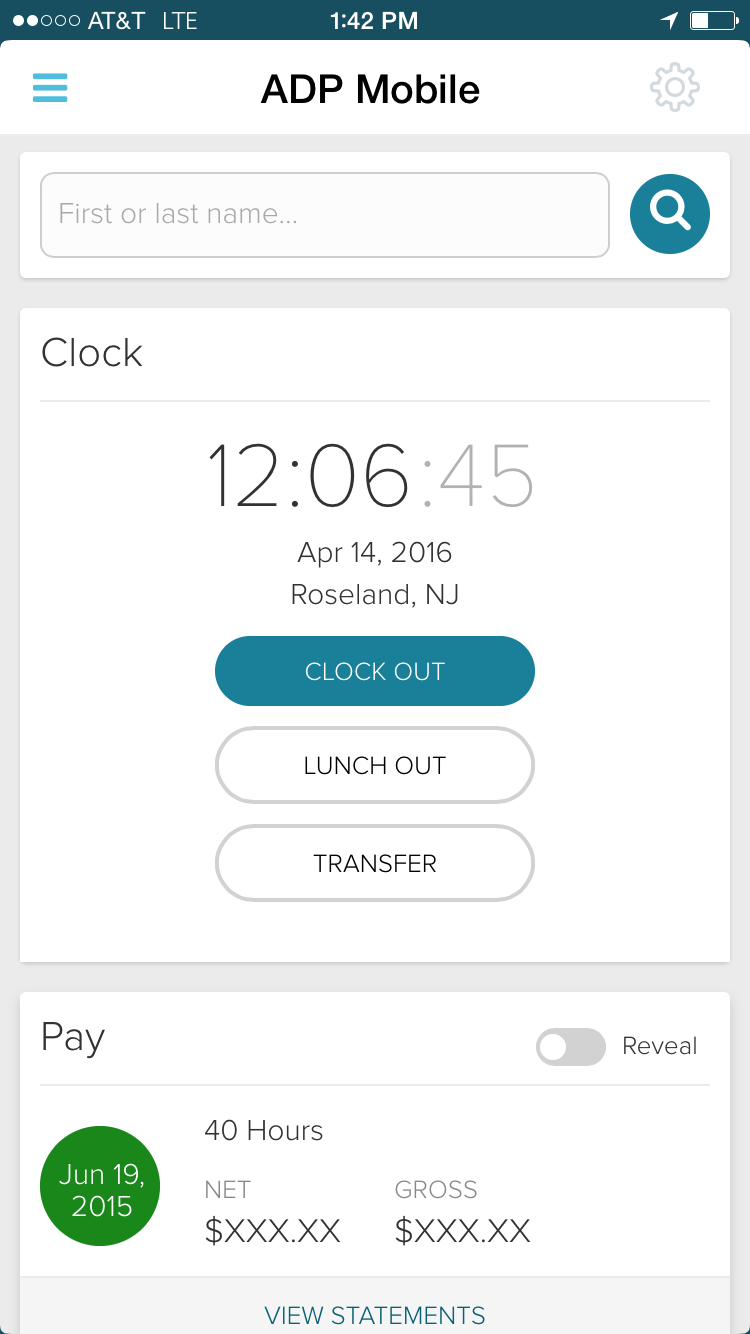
ADP Workforce Now is a cloud-based HR platform for mid-sized businesses. It features customizable modules of various HR services that businesses can tailor to their specific needs, as well as regulatory monitoring and alerts to help businesses remain compliant.
N/A
SilkRoad Recruiting
Score 8.0 out of 10
N/A
SilkRoad offers OpenHire, a recruiting and ATS system. It offers recruiting access through social media channels, data security, and EEO compliance for mid-sized to large businesses. It is a component of SilkRoad’s Lifesuite product line.
N/A
Pricing
ADP Workforce Now
SilkRoad Recruiting
Editions & Modules
Essential
Contact sales team
Enhanced
Contact sales team
Complete
Contact sales team
HR Pro
Contact sales team
Payroll Essentials
Contact sales team
HR Plus
Contact sales team
Hiring Advantage
Contact sales team
Performance Plus
Contact sales team
No answers on this topic
Offerings
Pricing Offerings
ADP Workforce Now
SilkRoad Recruiting
Free Trial
No
No
Free/Freemium Version
No
No
Premium Consulting/Integration Services
Yes
No
Entry-level Setup Fee
Required
No setup fee
Additional Details
Please contact ADP for a product demo and ask about a hands-on "test drive" of Workforce Now.
I feel that ADP workforce now is not the best software available, but one of many choices for a fully comprehensive HRIS system that can manage all functions of Human Resources if desired.
Despite using ADP as our HRIS, we are moving our sister company from ADP talent to SilkRoad because we prefer it. It has better functionality and is easier to use.
OpenHire completely streamlined the recruitment process and allowed us to manage the candidates as well as feedback from HM etc. ADP was very aniquated and frustrating to use from a recruitment process. The reporting was awful and it wasn't easy to manage. Definitely not a good …
The ease in which you can process payroll and year end (T4s). Ability to maintain payroll - enter upcoming changes (e.g. pay raises for a certain date) ahead of time. While we don't use it in my current company, in past ones the time & attendance integration with timesheets is fabulous. Our company uses a 3rd party scheduling & timesheet platform which also integrates with one click but is a little more work to maintain time off balances within ADP Workforce Now. We use the 3rd party platform (Evolia) for scheduling and timesheets as the management here wanted the ability to see salaried employees on site, have a chat feature, and some self-management on the employee side with the ability to swap shifts.
I think OpenHire is best for a small company (max about 2500 employees). The more employees you have the more HR people you should have and this can get expensive. I know most larger companies are using more advanced systems as well (Workday). During the selection process be sure to determine how many OpenHire users you would need. Ask whether your managers will be willing to work in the system as well or whether HR would have to own the entire process. If you are EEOC compliant, make sure you ask about diversity posting, APP tracking of applicants, and reporting needs. If you require an onboarding tool, SilkRoad offers RedCarpet. I found it to be very complex and hiring managers refused to use it. If you require an onboarding tool, definitely look into it. The demo may look great but there were a lot of implementation steps done to make it work and it just didn't fit our company culture. So make sure it fits yours.
The ease of use when it comes to create requisitions from a hiring managers side of things is definitely a positive. It's very much user intuitive and the specifications can be completely customized as to what a company would like to appear within said requisition.
Candidate correspondence is an absolute breeze as you can custom load templates into the system that can be edited at any time through an administrator in your company instead of having to go through a technical support team on the other side of things.
Overall, it's a pretty no muss no fuss system to use as there's not a great layer of complication about it and like most things, spaced practice and consistent exposure to it tend to iron out those rough edges. From an administration standpoint, adding in locations and hiring managers is incredibly simplistic along with reporting functionality.
Candidate folders have come a long way in the system and are much more user friendly at this point than when I began using the system some four years ago. It's very easy to shift candidate profiles between folders and edit on the fly.
OpenHire's user roles can create issues depending on how your company's hiring process flows. For example, at one company, the hiring managers were extremely involved in screening candidates yet the system seems very geared towards use of centralized recruiters who distribute candidates. The lack of ability to customize roles and security to match our managers' needs created additional burden on HR as well as frustration from hiring managers.
I experienced several problems uploading documents to accompany a candidate's offer. There was a limit on the number, size and type of attachments that could be included, and there was no alternative (as vetted with OpenHire) besides sending a separate correspondence to the candidate. I found this to appear unprofessional to the candidate as well as creating an extra step in the process for HR/recruiting.
The requisition process had a few issues which created inefficiencies in the process. Firstly, for times when you need to post a role confidentially outside of your standard process, there was no way to designate the req as 'confidential'. Instead, you had to use the 'executive' status which created issues (ie: inaccurate data in reporting). Secondly, OpenHire was unable to upload the company directory of emails in the requisition approver fields so rather than being able to select from a drop-down or using a 'smart' field, you had to type each approver's email out manually thus increasing the potential for error and delay in the process.
Due to the lack of support from the sales and service center we are looking at other options outside of ADP. Again it is a good system, it just lacks the support it deserves from the company employees. It is just unimaginable that you will need to reach out to a service provider several times for the same issue and not get it resolved.
It was a great solution for the company in all aspects, especially the cost. The company was not in a position to afford a solution such as Oracle PeopleSoft. The only reason we did not renew OpenHire was we got acquired by a much larger organization and started utilizing the tools that the parent company had available
I would give it a 10 however I do not like when ADP does facelifts in Workforce Now which does not add any value other than having to relearn navigation. I am also not a big fan of being forced to refer to the Bridge. We have Google which gives the same results. If I understood the answer I would not contact our Account Rep.
It's not a bad system to use, there just seems to be so much click through to get one task achieved. Once you know all the little routes and pieces it gets easier.
Overall, I think the functionality of the program works pretty well. Sometimes, certain browsers do not work well for the policy function of ADP, but that is the only issue thus far
Kelly La Rosa and Brian McLaughlin have been exceptional partners over the last few years and a tremendous source of support in my role. They are consistently solution‑oriented, highly responsive, and proactive in identifying opportunities to improve our processes. Both regularly brought forward thoughtful recommendations, including suggestions for new ADP products that aligned well with our evolving needs. Their expertise, reliability, and genuine commitment to client success have made a meaningful impact on my work and on our overall experience with ADP.
The support for Silkroad is awful. I know they are working on it and it seems to be slightly better but it's still not great. I have had multiple cases I have never heard from them on, others I have had to follow-up multiple times and one that took a year
In-person training was pretty good - I think this significantly depends on the trainer. Our trainer was really good and showed what ADP can do - but I know that all trainers are not the same - and this truly makes such as difference. Overall, our training went pretty well.
At the time training was not as expansive as it is now. If it could go wrong it did for me so the process was difficult and lengthy. I needed to have more in person walkthroughs of things to ensure the transition was done correctly. Not sure what else I can say, we were part of the initial move to Workforce Now when it was introduced.
Either assign more than one specialist to the implementation process, or assign less clients to the implementation specialist. The process requires attention to detail and the ability to test and re-test as well as verify the information. It also requires a lot of back and forth between the client ant the implementation specialist, so they need to be readily available during the whole implementation process.
I also used UltiPro (way back -- it didn't even appear in dropdown). Recommend ADP Workforce Now above all others. Paycor and Paycom were both very clunky. I even helped implement Paycom and could never get it to work how the business needed it to.
NeoGov is a more simple system but just being able to require specific documents has been a huge time saver for us. Other elements in NeoGov aren't as robust but still it saves me a lot of time compared to OpenHire.
We have several departments that utilize the reporting, utilize the timecards and the system. We also have self service that is nice for all of our employees. This system allows us to designate what each group can see, and what employees can change, or who can clock in and out offsite
ADP WorkforceNow has provided a positive ROI for our company. It has saved me countless hours in the time I used to spend preparing reports, managing benefits, and annual enrollment, recruitment tracking, and much more.
The integration with Payscale has allowed our company to take every position in our organization and benchmark it to industries and job titles. This has allowed us to be more competitive on recruitment and retention.
We have used the new DE&I dashboard to provide valuable information on the landscape of our workforce, as well as areas of our organization that may not be as diverse.