Chose Veeam Data Cloud for Microsoft 365
The number of features and the streamlined interface makes Veeam for 365 the better solution.

| Product | Rating | Most Used By | Product Summary | Starting Price |
|---|---|---|---|---|
 AWS Backup | N/A | AWS Backup is a fully managed backup service from AWS, designed to make it easy to centralize and automate the back up of data across AWS services in the cloud as well as on premises using the AWS Storage Gateway. Using AWS Backup, users can centrally configure backup policies and monitor backup activity for AWS resources, such as Amazon EBS volumes, Amazon RDS databases, Amazon DynamoDB tables, Amazon EFS file systems, and AWS Storage Gateway volumes. | $0.01 per GB per month | |
 Azure DevOps | N/A | Azure DevOps (formerly VSTS, Microsoft Visual Studio Team System) is an agile development product that is an extension of the Microsoft Visual Studio architecture. Azure DevOps includes software development, collaboration, and reporting capabilities. | $2 per GB (first 2GB free) | |
 Veeam Data Cloud for Microsoft 365 | Mid-Size Companies (51-1,000 employees) | Veeam Data Cloud for Microsoft 365 is a BaaS (Backup as a Service) solution used to back up and restore Microsoft 365 data, including Microsoft Exchange, Microsoft SharePoint, Microsoft OneDrive for Business and Microsoft Teams data. | N/A |
| AWS Backup | Azure DevOps | Veeam Data Cloud for Microsoft 365 | ||||||||||||||||||||||
|---|---|---|---|---|---|---|---|---|---|---|---|---|---|---|---|---|---|---|---|---|---|---|---|---|
| Editions & Modules |
|
|
| |||||||||||||||||||||
| Offerings |
| |||||||||||||||||||||||
| Entry-level Setup Fee | No setup fee | No setup fee | No setup fee | |||||||||||||||||||||
| Additional Details | — | — | — | |||||||||||||||||||||
| More Pricing Information | ||||||||||||||||||||||||
| AWS Backup | Azure DevOps | Veeam Data Cloud for Microsoft 365 | |
|---|---|---|---|
| Considered Multiple Products |  AWS Backup No answer on this topic | Azure DevOps No answer on this topic | Veeam Data Cloud for Microsoft 365  Amanda F Cragen System Engineer Chose Veeam Data Cloud for Microsoft 365 Veeam is the greatest solution for its primary function and includes a large number of capabilities for backing up data. In addition, one of the useful features is the capability to retrieve a certain e-mail. Although Veeam lacks significant scalability, it is trustworthy. An … |
| AWS Backup | Azure DevOps | Veeam Data Cloud for Microsoft 365 | |||||||||||||||||||
|---|---|---|---|---|---|---|---|---|---|---|---|---|---|---|---|---|---|---|---|---|---|
| Data Center Backup |
| ||||||||||||||||||||
| Enterprise Backup |
| ||||||||||||||||||||
| SaaS Backup |
|
| AWS Backup | Azure DevOps | Veeam Data Cloud for Microsoft 365 | |
|---|---|---|---|
| Small Businesses |  Cove Data Protection Score 9.2 out of 10 |  GitHub Score 9.1 out of 10 | Cove Data Protection Score 9.2 out of 10 |
| Medium-sized Companies |  Druva Security Cloud Score 9.4 out of 10 | GitHub Score 9.1 out of 10 | Druva Security Cloud Score 9.4 out of 10 |
| Enterprises | Druva Security Cloud Score 9.4 out of 10 |  Perforce P4 Score 7.2 out of 10 | Druva Security Cloud Score 9.4 out of 10 |
| All Alternatives | View all alternatives | View all alternatives | View all alternatives |
| AWS Backup | Azure DevOps | Veeam Data Cloud for Microsoft 365 | |
|---|---|---|---|
| Likelihood to Recommend | 8.4 (12 ratings) | 8.4 (69 ratings) | 8.6 (247 ratings) |
| Likelihood to Renew | - (0 ratings) | 10.0 (3 ratings) | 9.0 (10 ratings) |
| Usability | 8.4 (5 ratings) | 7.9 (9 ratings) | 8.4 (248 ratings) |
| Availability | - (0 ratings) | - (0 ratings) | 9.1 (2 ratings) |
| Performance | - (0 ratings) | - (0 ratings) | 8.0 (2 ratings) |
| Support Rating | 9.4 (4 ratings) | 8.1 (11 ratings) | 8.6 (243 ratings) |
| Implementation Rating | - (0 ratings) | 10.0 (1 ratings) | 8.7 (7 ratings) |
| Configurability | - (0 ratings) | - (0 ratings) | 8.2 (1 ratings) |
| Ease of integration | - (0 ratings) | - (0 ratings) | 9.1 (1 ratings) |
| Product Scalability | - (0 ratings) | - (0 ratings) | 9.1 (2 ratings) |
| Vendor post-sale | - (0 ratings) | - (0 ratings) | 9.1 (2 ratings) |
| Vendor pre-sale | - (0 ratings) | - (0 ratings) | 9.1 (2 ratings) |
| AWS Backup | Azure DevOps | Veeam Data Cloud for Microsoft 365 | |
|---|---|---|---|
| Likelihood to Recommend | Amazon AWS
| Microsoft
 Tim Kikke Head of PMO | Veeam Software
 Zachariah Murray Systems Administrator |
| Pros | Amazon AWS
| Microsoft
 Chris Studebaker Technical Architect | Veeam Software
 Antonio Mendoza IT Infrastructure and Security Manager |
| Cons | Amazon AWS
 Iván García Consultant | Microsoft
| Veeam Software
 Clay Fulton Application Support Manager |
| Likelihood to Renew | Amazon AWS No answers on this topic | Microsoft
 Raylene Wall, PMP Business Analyst | Veeam Software
|
| Usability | Amazon AWS
 Daniel Cauley Co-Owner | Microsoft
| Veeam Software
|
| Reliability and Availability | Amazon AWS No answers on this topic | Microsoft No answers on this topic | Veeam Software
 Tony Haynes IT Administrator and Project Coordinator |
| Performance | Amazon AWS No answers on this topic | Microsoft No answers on this topic | Veeam Software
|
| Support Rating | Amazon AWS
| Microsoft
| Veeam Software
|
| Implementation Rating | Amazon AWS No answers on this topic | Microsoft
| Veeam Software
|
| Alternatives Considered | Amazon AWS
 Matt Hoffman Chief Executive Officer | Microsoft
| Veeam Software
|
| Scalability | Amazon AWS No answers on this topic | Microsoft No answers on this topic | Veeam Software
|
| Return on Investment | Amazon AWS
| Microsoft
 Amy Liston Product Owner | Veeam Software
|
| ScreenShots | Veeam Data Cloud for Microsoft 365 Screenshots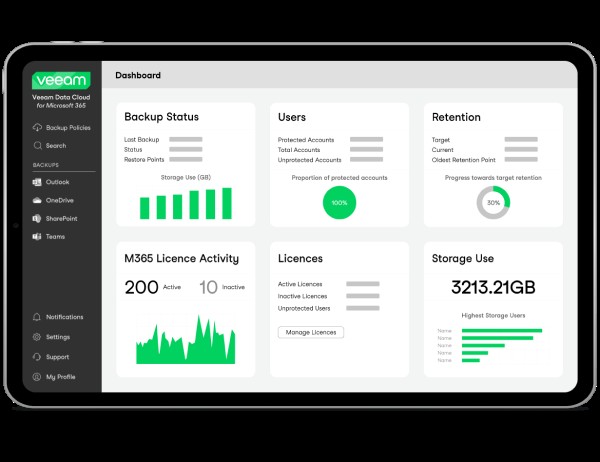 |