Azure DevOps (formerly VSTS, Microsoft Visual Studio Team System) is an agile development product that is an extension of the Microsoft Visual Studio architecture. Azure DevOps includes software development, collaboration, and reporting capabilities.
$2
per GB (first 2GB free)
Planview ProjectPlace
Score 8.3 out of 10
N/A
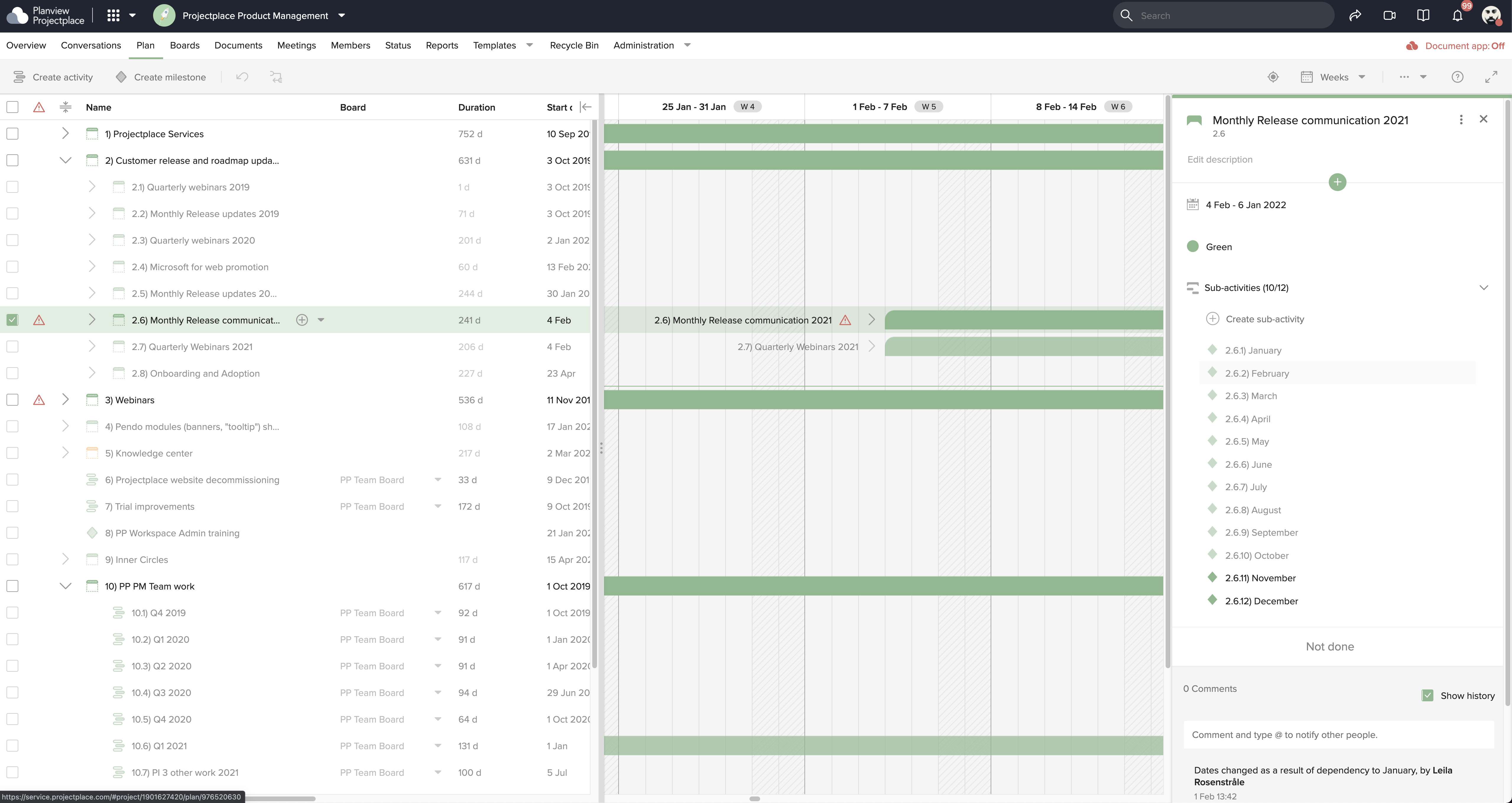
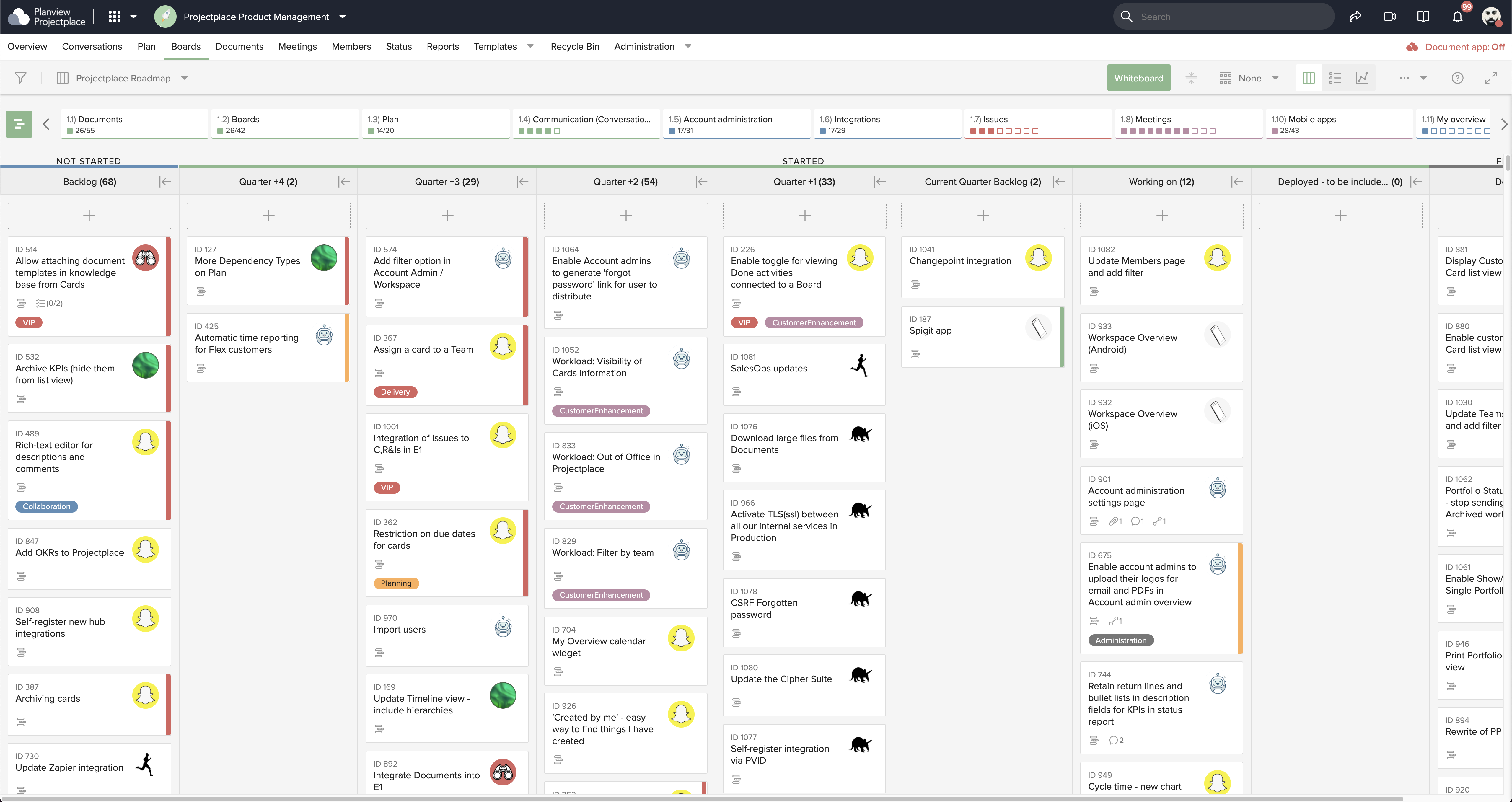
Projectplace is a collaborative work management solution. The vendor says the product is built with teams of all sizes and complexity in mind, from virtual teams of five to entire global enterprises with tens of thousands of active users. It is also designed to incorporate waterfall and agile workflows.
N/A
Trello
Score 8.4 out of 10
N/A
Trello from Atlassian is a project management tool based on a Kanban framework. Trello is ideal for task-management in a to-do list format. It supports sharing boards and cards across users or teams. The product offers a free version, and paid versions add greater automation, collaboration, and administrative control.
$6
per month per user
Pricing
Azure DevOps
Planview ProjectPlace
Trello
Editions & Modules
Azure Artifacts
$2
per GB (first 2GB free)
Basic Plan
$6
per user per month (first 5 users free)
Azure Pipelines - Self-Hosted
$15
per extra parallel job (1 free parallel job with unlimited minutes)
Azure Pipelines - Microsoft Hosted
$40
per parallel job (1,800 minutes free with 1 free parallel job)
Basic + Test Plan
$52
per user per month
No answers on this topic
Standard
$6
per month per user
Premium
$12.50
per month per user
Enterprise
$17.50
per month per user
Free
Forever Free
Offerings
Pricing Offerings
Azure DevOps
Planview ProjectPlace
Trello
Free Trial
No
Yes
No
Free/Freemium Version
No
No
Yes
Premium Consulting/Integration Services
No
Yes
No
Entry-level Setup Fee
No setup fee
No setup fee
No setup fee
Additional Details
—
—
A discount is offered for annual billing and for larger numbers of users.
More Pricing Information
Community Pulse
Azure DevOps
Planview ProjectPlace
Trello
Considered Multiple Products
Azure DevOps
Verified User
Consultant
Chose Azure DevOps
VSTS is better than these options because there is integration with git and other services. Code reviews, branching, etc. are easier with VSTS. Although, Trello and Excel are probably better if you have smaller teams and smaller projects, I believe it isn't scalable. But if you …
Trello is simple to use, but it's only for a Kanban board. Jira might be the same, but I don't really have enough experience with Jira to fully compare them. When I used it, it missed certain functionalities that I was used to in Azure DevOps. Visually it's a lot different too.
Azure DevOps covers way more than just an awesome Agile storyboard. The widgets, the reporting, the interaction with Power BI and the features that hook into pull requests and DevOps in general, go way beyond what your competitors offer. I find Azure DevOps easy to navigate …
Compared to other tools we have used, Microsoft STS has been a much more complete tool. Communication, collaboration, tracking, management, automation, testing, speed to production—all these areas have been improved since we started using Microsoft STS. We have been looking for …
We are moving away from VSTS to Version One since Version One has a better end to end workflow for a product based team (where product and development work very closely together and need to access the same data and communicate in an efficient manner.)
Unlike the other tools I have used, VSTS has everything under one roof. The other tools I have used are specific to a particular requirement like code version control, task management etc. VSTS on the other hand, has all aspects of the project tied together which makes it more …
I have used Todoist, Trello and Smartsheet. I prefer Todoist as it is very easy to use, and the same features are available on mobile app, Chrome, desktop app, and also the Outlook side bar is a great feature.
To me, ProjectPlace is the winner above and beyond all of these. Similar or less expensive, and far more practical functionality. Rather than try to be all things to all people, it focuses on basic functions that apply to most businesses. Beyond Asana, JIRA, and Trello (which …
Projectplace is a complete solution, considering the document storage, overview, and time schedule features. The possibility to integrate it with Enterprise One can definitely be another step further in Project Management within our organization. For simple tasks, though, Trello…
We still use Trello and will continue to use it for some teams and specific tasks, we also use Basecamp mostly within the technical team. Planview Projectplace is the tool that we hope will help us to move most of our work for collaboration and communication in one place to …
Planview Projectplace is a comprehensive project management application compared to its competition. I have used Trello & Basecamp their user interface is a bit easy compared to Projectplace. Also, they offer integration with some relevant applications. Their pricing is also …
I like both Trello and Planview Projectplace. I think that Planview Projectplace lends itself to being used for larger companies and more in-depth tasks. I like Trello more really because of its ease of use and user interface.
Notion is an open book that allows you to create whatever you want... nice but having some bumpers makes creating and implementing a solution a bit easier. ProjectPlace is simple to get started and use. You might miss out on a cool feature or two, but I think the lack of a …
Verified User
Project Manager
Chose Planview ProjectPlace
Organization went with ProjectPlace so we followed suit.
Verified User
Administrator
Chose Planview ProjectPlace
It offers a simpler alternative that's easier to manage by the less tech-savvy people. I also think that Planview Projectplace has managed to keep the product updated compared to other project management tools. Miro is perhaps the one that comes to mind, but while evaluating, …
Less hardware resources, more intuitive, software as a service, you can access it from multiple devices, easy sharing of information between team members.
Projectplace enables all the users in one single tool to have access to many features: planning of projects, the definition of To Dos, sharing of documents, the creation of documents, communication with project stakeholders whether it be internal or external, have a global …
Of all those I tested, it's the fluidity of the gantt that seduced me at first. Then the organization and the pleasant interface are an asset. Kanbban boards allow you to manage as you want, depending on the nature of the project or service.
Projectplace works the best for our kind of work because it's not too complicated to ensure a fast project management but it's also not too stripped down so we still can add all the details and files we need.
Projectplace provided the best combination of file sharing project management functionality. The tool is unparalleled if considering its user-friendliness. Furthermore, as a SaaS solution, it does not require on-site installation and maintenance. The tool is stable and secure …
Azure DevOps works well when you’ve got larger delivery efforts with multiple teams and a lot of moving parts, and you need one place to plan work, track it properly, and see how everything links together. It’s especially useful when delivery and development are closely tied and you want backlog items, code and releases connected rather than spread across tools. Where it’s less of a fit is for small teams or simple pieces of work, as it can feel like more setup and process than you really need, and non-technical users often struggle with the interface. It also isn’t great if you want instant, easy programme-level views or a very visual planning experience without putting time into configuration.
Planview ProjectPlace is a vibrant platform that manages all activities and schedules different roles based on their urgency, importance, and requests. Further, Planview ProjectPlace outlines the need for proper documentation with the aim of accurate referencing. Tasks are credibly shared, and proper reporting is enhanced to transform firms' work environment. ; Lastly, Planview ProjectPlace brings sustainable email integration for enterprises.
For teams or individuals with lots of individual tasks/details to track, Trello is perfect! It basically removes the need for a paper checklist. For those that need an overall project management tool that requires less tasks and more overarching goals, collaboration amongst various teams, and gantt charts I would suggest monday.com
I did mention it has good visibility in terms of linking, but sometimes items do get lost, so if there was a better way to manage that, that would be great.
The wiki is not the prettiest thing to look at, so it could have refinements there.
Under the time tracking, it would be nice to have a set template that would load each week and not have to click a button to load the previous week's template.
Somehow making it more intuitive.
Having to add in each service line and each detail that I cover for every service line each week is a bit ridiculous.
I don't think our organization will stray from using VSTS/TFS as we are now looking to upgrade to the 2012 version. Since our business is software development and we want to meet the requirements of CMMI to deliver consistent and high quality software, this SDLC management tool is here to stay. In addition, our company uses a lot of Microsoft products, such as Office 365, Asp.net, etc, and since VSTS/TFS has proved itself invaluable to our own processes and is within the Microsoft family of products, we will continue to use VSTS/TFS for a long, long time.
We're committed now & have >50 users on Projectplace. All our projects are now tracked in the tool. We this investment of time & training, the cost of maintaining Projectplace is relatively low for the benefit. So we will renew, even if there are some idiosyncrasies in the tool & there are opportunities for improvement.
I am very likely to renew Trello, because it doesn't cost anything to do so. I am also very likely to use Trello's upgraded features in the future because a lot of my team's data is stored on there and they have already gotten used to the platform. Trello is very easy for new team members to pick up, making the onboarding and usability very streamlined.
It's a great help to get more information about new feature release and stay updated on what the dev team is working on. I like how easy it is to just login and read through the work items. Each work item has basic details: Title, Description, Assigned to, State, Area (what it belongs to), and iteration (when it’s worked on). See image above.They move through different states (New → Discovery → Ready for Prod → etc.).
Easy to use platform and provides the user with an amazing experience and straightforward tools that empower and help execute tasks with fast performances that allow quick and easy service delivery. Easy on implementation and get started immediately with enterprise-ready Planview Projectplace and start to connect with teams and departments at once.
Trello is incredibly intuitive, both on desktop and mobile right away. It is also full of helpful features that make it even easier to use, and is flexible enough to suit almost any organizational need. Onboarding for the software is thorough, but concise, and the service is frequently updated with even more QOL improvements.
When we've had issues, both Microsoft support and the user community have been very responsive. DevOps has an active developer community and frankly, you can find most of your questions already asked and answered there. Microsoft also does a better job than most software vendors I've worked with creating detailed and frequently updated documentation.
I haven't needed to get in touch with support because the product is quite well structured and understandable. There were no issues initially when making payments or later for monthly payments. The project manager using the software is quite skilled in the software and has not needed much help. New licenses are easy to acquire, and there is no delay in getting them. I know there are several ways of support available, so that's a plus.
I haven't reached out to their support very often and their support is very limited anyway for the free users. They do have tons of great articles and videos in their Help Center and constantly send emails with updates and add-ons to the product. The fact that I've barely ever had to contact their support team means that they've developed a great product.
For our small business, getting a few of us started well on Trello was the key, I think. As long as a couple of us were really comfortable with the interface, we could lead others and help them with any questions. From now on, anyone who works with us just naturally uses Trello for information sharing - it's just part of what we do.
Microsoft Planner is used by project managers and IT service managers across our organization for task tracking and running their team meetings. Azure DevOps works better than Planner for software development teams but might possibly be too complex for non-software teams or more business-focused projects. We also use ServiceNow for IT service management and this tool provides better analysis and tracking of IT incidents, as Azure DevOps is more suited to development and project work for dev teams.
[In my experience] Jira is more refined, better looking, and easier to become familiar with. Also, the massive market share of Jira helps in consultancy as you can switch between clients easily. Projectplace has many powerful tools but so does Jira, and Jira integrates with our suite of software much easier compared to Projectplace.
Trello is more simple and not as "robust" as the other tools, but it's easier to use and manage and understand and ACTUALLY get stuff done with. It's simplicity is part of the beauty of using it. You don't need a million options that nobody uses, you just need to get stuff done.
We have saved a ton of time not calculating metrics by hand.
We no longer spend time writing out cards during planning, it goes straight to the board.
We no longer track separate documents to track overall department goals. We were able to create customized icons at the department level that lets us track each team's progress against our dept goals.
[We have the] ability to support remote work through projects that scale across multiple groups
We have large-scale quarterly projects, so the ability to save and duplicate project templates are helpful for us to keep track of tasks down to the specific card
Trello keeps me organized, focused, and on track. I could filter the Trello board to only see my issues and understand what I needed to work on and when.
Trello helped our team implement an agile structure. It's a very simple kanban method of viewing all of your team's tasks and statuses. You can completely customize the columns to your team's specific workflow and create tags relevant to your work.
Trello helps reduce unnecessary communications between teams. When I want to request translations, I simply create a card on the localization Trello board -- no need to directly message anyone on the team, and I can watch the status of the card change from "in progress" to "in review" to "translated," all without having to directly ask for updates.