BMC Helix ITSM replaces Remedy. It is a broad suite of ITSM, tools with strong integrations to other BMC tools and in-built ITAM. The product is used mainly by global brands and is offered in on-premise and SaaS configurations.
N/A
Jira Service Management
Score 7.9 out of 10
N/A
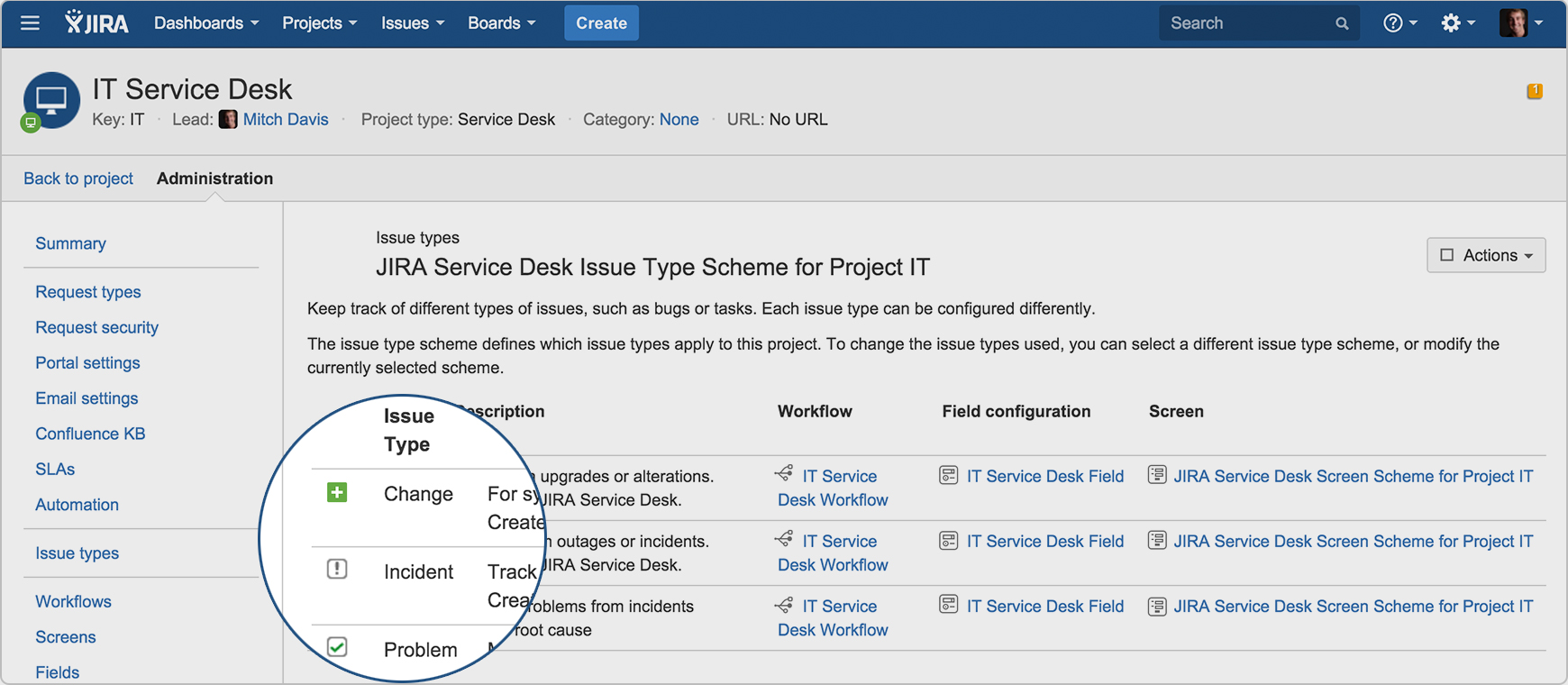
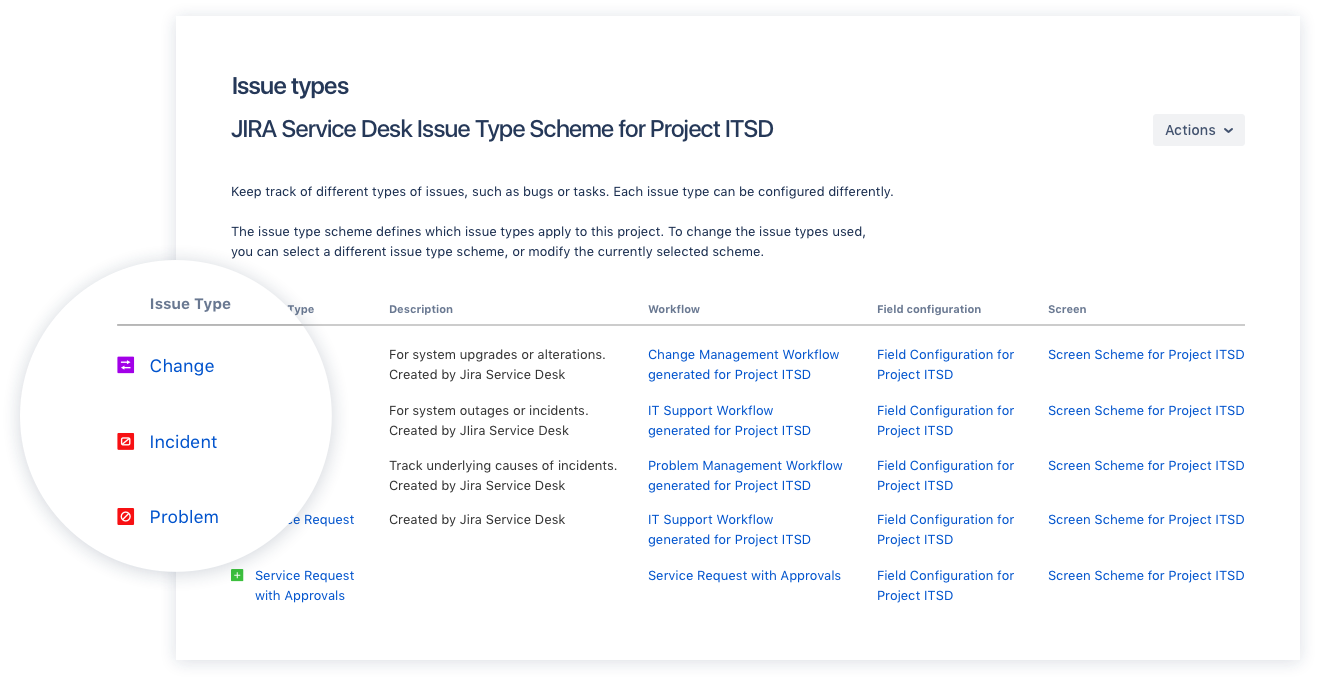
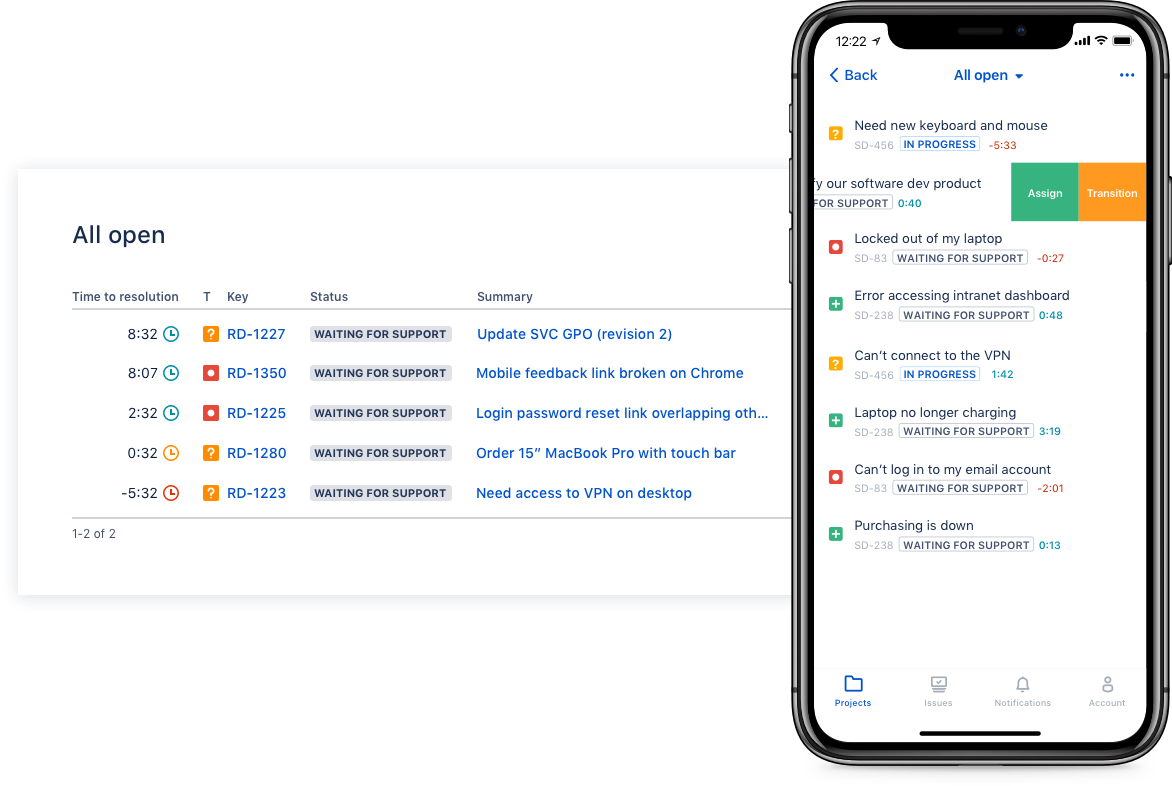
Jira Service Management (formerly Jira Service Desk, now including features from the former Mindville Insight, acquired by Atlassian in June 2020) is a service desk software that is purpose-built for IT, service, and support teams. The software provides everything IT and support teams need out-of-the-box for service request, incident, problem and change management. Jira Service Management integrates seamlessly with Jira Software so that IT and development teams can work better together. Users…
$0
per month
Lansweeper
Score 8.7 out of 10
N/A
Lansweeper helps organizations see, understand, and make confident decisions about their technology estate across IT, OT, IoT, and Cloud. Lansweeper automatically discovers and inventories every asset: hardware, software, and user—then connects that data to insights about usage, lifecycle, and risk. This is to create what the vendor describes as Technology Asset Intelligence (TAI): a trusted foundation of knowledge that turns raw inventory data into clear, actionable…
Jira Service Management is a new tool with a lot of potential (highly rated by Gartner) but for now it lacks the experience, robustness and integrations with BMC Helix. And thinking about Service Operations, the discovery tool still needs to be improved. It is a promising tool, …
Our company is a large scale enterprise and BMC Helix ITSM is a key tool for the incident management. In terms of load and volume of incidents, other tools are not efficient enough to handle the same volume.
BMC Helix ITSM (Remedy) is the older and ready to deploy solution really needs less administrative overhead as it provides all the required fields inbuilt without the customization.
I find JIRA smarter and easier to configure but sometimes can get difficult to use for analytics and also requires a lot of smart configuration and knowledge of tweaks!
Although Spiceworks appeared to be easier to set up and use, we felt that BMC Remedy was more robust. We noticed that the user base for BMC Remedy was huge. Although this should never be the single deciding factor, it was definitely a big plus. The ability to have cloud-based …
BMC Remedy is better than JIRA in IM management and second level support, and also has better reporting capabilities if you don't want to buy additional components such as EazyBI.
Sap Solution Manager is very expensive and focused on SAP developers, I don't think it's a good …
Jira is easier to set up and gets going faster. It is easier to customize to fit your needs and the Dashboard feature and added widgets really help you get the views you want to see. Other products are harder to set up, don't get going as quickly, and lack the dashboard …
Very cost effective and you receive full service help desk software system and network monitor all-inclusive. It is capable of productivity and easy to maintain. It is a easy to use help desk solution that includes a ticketing system, inventory system and a network monitor. …
For the price Lansweeper easily moved to the top of our list. It is extremely easy to use and manage. The amount of detail it gathers on each asset automatically was amazing. Manually adding an asset is very simple as well. The fact that it will detect peripherals on machines …
BMC Helix ITSM fits our environment particularly well, where standardized, auditable processes are already in place: Incident and Problem Management can be structured cleanly, with clear ownership, escalations, and fully traceable documentation—crucial in a highly regulated banking context. Through the customer platform/portal, users can log incidents and requests consistently, track their status transparently, and use a single central communication channel across service boundaries. This supports a service-oriented setup spanning multiple business services and locations. It becomes less suitable—or at least more effort-intensive—when core foundation data is not yet stable: an immature CMDB, insufficient ITAM data quality, and an unstructured knowledge base limit the value of automation and self-service. In addition, heterogeneous integrations and strict authorization models can increase implementation and ongoing maintenance efforts, especially when SLAs are not harmonized across different customer environments.
I think using a ticketing system is very easy to use and allows multiple teams to create help desks in the same portal. In terms of internal usage, I think this is a great option. However, suppose you're trying to keep internal items and external helpdesks in the same instance. In that case, this is not ideal, as there is no effective way to separate the two instances to protect internal data better.
Lansweeper I believe is well suited for any environment - its low cost and small footprint make it an easy addition to any organization, big or small, that is looking for an asset inventory solution that can either replace or supplement existing asset management systems. It may not be well suited for situations where a lot of customization is necessary, such as pulling in custom fields or details from equipment that don't reside in a registry.
AI drive incident correlation leading to identifying problems and major incidents quickly.
Digital Workplace gives end-users a modern and personalized UI to submit requests, monitor service health, and receive self-help.
As an enterprise ITSM, it is critical that Request, Incident, Problem, Asset, and Change Management are integrated and flow together. BMC Helix is built on this principle.
Integration with many of the most common tools companies are using (Slack, MS Teams, Salesforce, ... etc)
Natural workflow with Jira (as product development / project management tool) which makes the full fix and follow up of the tickets / issues very easy to follow
Allow multiple different entry points and work flows for as many different needs your teams / company have
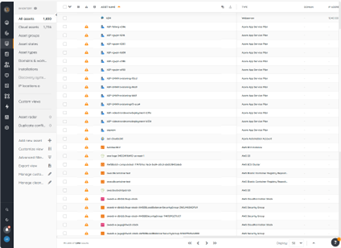
Inventory - LANSweeper scans the network for devices - anything with an SNMP trap or using AD or local credentials. We can get an in-depth look at devices.
Reporting - LANSweeper can generate just about any report you can imagine. We can check RAM in groups and determine where upgrades are needed. We can find local printers (which aren't allowed on our network) and address that issue with the user. We can check CPU type to help determine end of life without our network.
Printers - It's nice to have a quick look at printer statuses. Toner levels, out of paper, and service errors are all reported via LANSweeper.
Service Level management configs can be lengthy, and when changes are needed to specific SLA, it does take a long time to configure. Templates work but only for certain things, lots of manual work is still required.
The Online product documentation can be confusing or in same cases not correct.
BMC products are sometimes expensive. When partners try to resell licenses or increase their own allotment, it becomes very expensive.
Can only scan what it sees. Doesn't show every item on the machine. Patches are also absent.
Software Recognition is OK with Microsoft. It is dire within our network of multiple products. Recognition is at about 35% with constant manual work needed to baseline for each manufacturer in each network
Datacenter compliance is a manual project. We used Excel extensively.
License optimization is limited to installations v surplus licenses. We need to know who's using what and how.
In the current contect the requirments is around having a tool that is focused and can handle large ticket volumes and tracking incident, problem and user requests concerning end users. Jira has built in functionality to address the above practice needs faily easily and has a substantial amount of customizable reports for generating the relevant intelligence.
Overall the product enhances the capability of incident management, problem management and change management. The AI based framework helps generated better visibility and reports. The effectiveness of enhanced service desk suuport improves end user experience as the incidents are handled well in time and aged incidents are highlighted at the right time.
If you're used to other tools in the Atlassian ecosystem, you'll feel right at home with JSM. It's also a platform that technical folk can easily pick up. However, I wouldn't recommend using JSM as a company's first jumping off point into Atlassian. There are a lot of other 'newer' tools that provide sleeker ITSM systems at a similar cost.
The tool is a web gui, and is mostly easy to navigate, but certain areas are more unclear than others. Identifying what im filtering for, or what menu option has what impact can be less straightforward than I'd like. Overall though, this tool will provide me with information other tools in my box just don't.
Their tech support is top notch. They respond and get back to us, even on lower level incidents and issues, very quickly. It is rare that we deal with a support technician who does not know what they are doing.
I gave JIRA a 9 rating since for me JIRA works according to its purpose. Since there is a customer portal, our clients can leave a comment or communicate with us using the PR ticket that way it is easier for us to also request any additional information we need for our investigation.
Lots of info online there are tons of SQL Reports you can copy from the web as Lansweeper and users post many of them. They also send out alerts that pop up on Lansweeper, letting you know of an update that you need for certain software and provide an SQL report so you can scan your system to see what PCs need this update.
the trainers dont have so much practical experiences. its mostly follow up and reading existing documentation withou own input. of course experiences people are on shore or have no free time. sad truth
I believe Remedy's performance and market share exceeds its competitors. But it is worth mentioning that Microsoft's SCCM has excellent integration with Microsoft enterprise solutions and has is less expensive and not efficient. The IBM solution has better analytics but lacks the wide features and capabilities of Remedy. HP & CA are the real competitors for Remedy but lacks the stability, maturity, and effectiveness in Remedy
Zendesk is a similar ticketing system that our organization used before JIRA Service Desk. The main drawback of Zendesk was that it can only be used as a cloud service. This means that our company data would be living on the internet at the hands of their security team. Another drawback of this is the price is significantly more expensive rather than hosting it yourself. Zendesk does have some additional features such as commenting on multiple tickets at once that JSD does lack. However, switching to JSD was significantly more cost effective because we have the ability and the infrastructure to host our own ticketing system, something that Zendesk could not provide. Ultimatley switching to JSD saved us money and allows the ability for integration with all of the other Atlassian Suite products that we use on a day to day basis.
In short it has more features and its a more robust solution and it works well with those solutions. I am sure it will keep track with Ai and action recommendations in the future as I didnt see any of it on the platform (at least the one we use) I thin that is the only thing that is missing in the current product
Positive: an introduction to ITIL and viewing Asset, User Management from the perspective of ITIL, and how BMC has implemented those processes
Negative: The development team needs to communicate better with the sales and support side, and they need offer an open API
Negative: Currently the Asset Management side has little security and validation of Asset input: anyone can make API (mostly), at any item, which is a problem that I am apart of solving.
The UX needs updating, badly. Its quality is poor: it functions, but it is cumbersome, click-heavy and requires several hours to understand how to function with it. Also, it needs to ditch IE11 support, altogether.
It had a positive impact on solutions expense cause several teams we're using different solutions with different costs that used several servers and DB resources. Now, we've been able to simply that a lot with Lansweeper.
With my previous point, people had to train and learn about each of their solutions. Now we can put a team in charge and so the other teams can focus on other tasks.
Last year Lansweeper changed their licencing prices a lot so it slashed our budget.