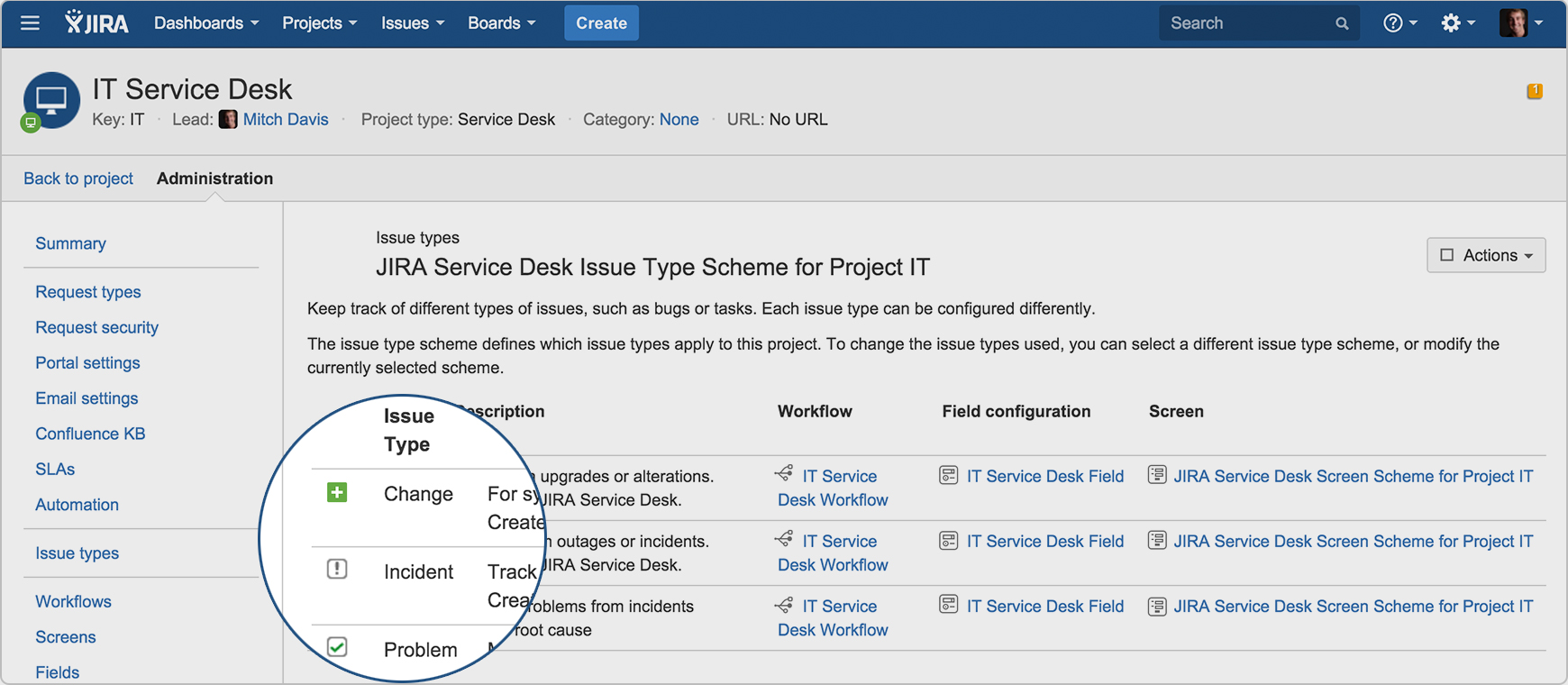
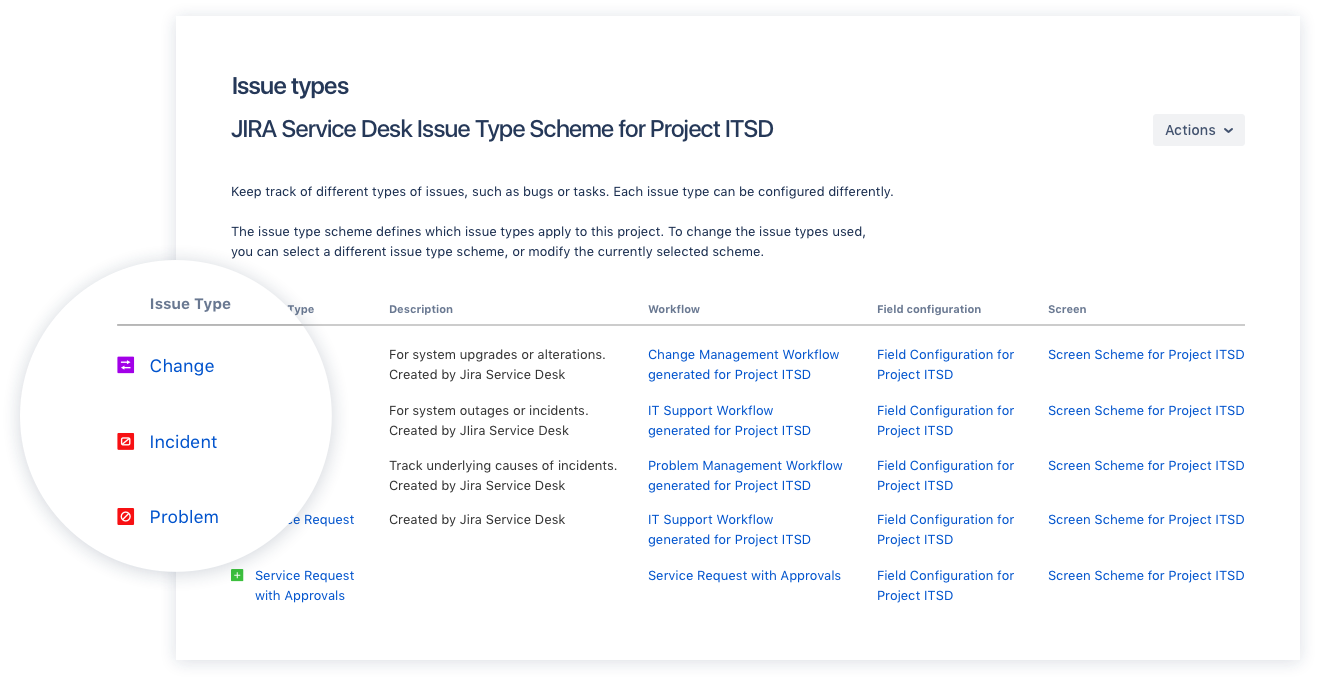
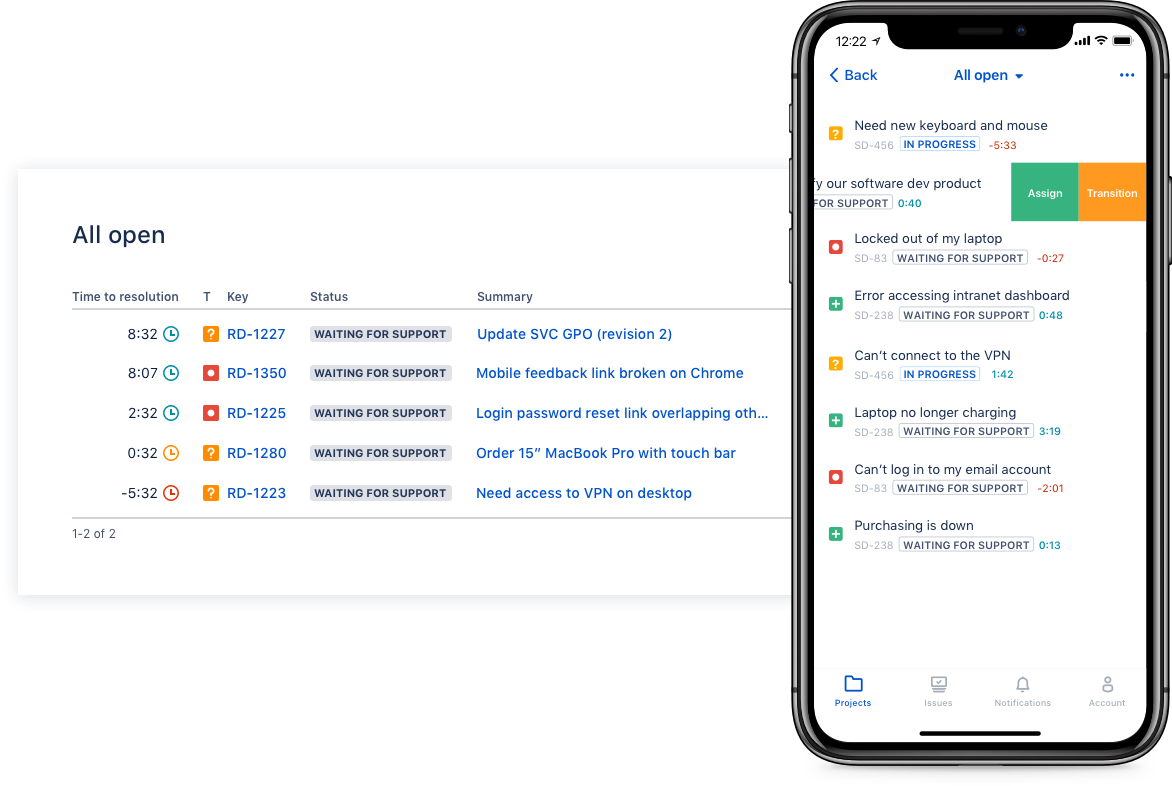
Jira Service Management (formerly Jira Service Desk, now including features from the former Mindville Insight, acquired by Atlassian in June 2020) is a service desk software that is purpose-built for IT, service, and support teams. The software provides everything IT and support teams need out-of-the-box for service request, incident, problem and change management. Jira Service Management integrates seamlessly with Jira Software so that IT and development teams can work better together. Users…
$0
per month
ManageEngine Endpoint Central
Score 9.0 out of 10
N/A
Desktop Central from ManageEngine is a client desktop management with patching, remote control, and configuration.
$795
per year per user
Pricing
Jira Service Management
ManageEngine Endpoint Central
Editions & Modules
Free
$0
per month
Standard
$20
per agent/per month
Premium
$40
per agent/per month
Enterprise
Contact sales team
No answers on this topic
Offerings
Pricing Offerings
Jira Service Management
ManageEngine Endpoint Central
Free Trial
Yes
Yes
Free/Freemium Version
No
No
Premium Consulting/Integration Services
Yes
No
Entry-level Setup Fee
No setup fee
No setup fee
Additional Details
—
—
More Pricing Information
Community Pulse
Jira Service Management
ManageEngine Endpoint Central
Features
Jira Service Management
ManageEngine Endpoint Central
Incident and problem management
Comparison of Incident and problem management features of Product A and Product B
Jira Service Management
8.5
85 Ratings
3% above category average
ManageEngine Endpoint Central
-
Ratings
Organize and prioritize service tickets
8.884 Ratings
00 Ratings
Expert directory
9.02 Ratings
00 Ratings
Service restoration
9.52 Ratings
00 Ratings
Self-service tools
8.176 Ratings
00 Ratings
Subscription-based notifications
10.01 Ratings
00 Ratings
ITSM collaboration and documentation
7.771 Ratings
00 Ratings
ITSM reports and dashboards
6.772 Ratings
00 Ratings
ITSM asset management
Comparison of ITSM asset management features of Product A and Product B
Jira Service Management
10.0
1 Ratings
19% above category average
ManageEngine Endpoint Central
-
Ratings
Configuration mangement
10.01 Ratings
00 Ratings
Asset management dashboard
10.01 Ratings
00 Ratings
Policy and contract enforcement
10.01 Ratings
00 Ratings
Change management
Comparison of Change management features of Product A and Product B
I think using a ticketing system is very easy to use and allows multiple teams to create help desks in the same portal. In terms of internal usage, I think this is a great option. However, suppose you're trying to keep internal items and external helpdesks in the same instance. In that case, this is not ideal, as there is no effective way to separate the two instances to protect internal data better.
ManageEngine Endpoint Central is very well suited to most kind of patches, updates, and software deployments. It's able to quickly recognize and update third-party software whenever a new security vulnerability is discovered, and it's able to do this for you automatically. The remote connection and management features allow us to begin troubleshooting immediately once a user reports an issue, regardless of whether or not they're working on-campus or from home. A ticket that might have taken a few days to close out now takes no longer than a couple minutes. If you use Mac, the remote connection feature requires the user to allow Endpoint Central through their system's Security/Privacy settings. This step can be difficult for your less tech-savvy users. You can remotely and silently access a computer's task manager, registry, and command prompt, which is incredibly useful. This saves us a ton of time on having to contact the user and schedule a meeting. The only complaints I have about these management features are that the UI is a little bare bones, and it occasionally has minor problems with responsiveness.
Integration with many of the most common tools companies are using (Slack, MS Teams, Salesforce, ... etc)
Natural workflow with Jira (as product development / project management tool) which makes the full fix and follow up of the tickets / issues very easy to follow
Allow multiple different entry points and work flows for as many different needs your teams / company have
We set alerts when a devices gets low on disk space. That is automatic and creates a ticket in ME SDP. We are then able to Add space to a VM Desktop, and then go thru ManageEngine Endpoint Central to extend the drives so the entire process can be done without interruption to the end user.
Using the patch scans we can easily see what patches have been installed for all manufacturers not just Microsoft, without having to physically go to the device. It also allows us to choose which patches we want to push out and automate the process so we can be hands off, freeing up out time for other things.
Remote access to devices. This allows us to remotely make changes, not just via remote control but also make registry changes and clean up space without going to the device and without interruption to the end user.
Alerts. We have set up to get email alerts when new hardware is plugged into any computers. This lets us know if someone is bringing in un-authorized equipment (thumb drives, hubs, etc) to better manage what is/is not on our network.
The remote CLI/PowerShell interfaces should support tab completion and command history like the real-world versions
Remote control could work better
Having a standalone application, even if just a Java app or something for the remote control/remote command line versus running it out of a web browser
In the current contect the requirments is around having a tool that is focused and can handle large ticket volumes and tracking incident, problem and user requests concerning end users. Jira has built in functionality to address the above practice needs faily easily and has a substantial amount of customizable reports for generating the relevant intelligence.
ManageEngine is considered an excellent product due to its comprehensive suite of solutions for IT management, with ManageEngine Endpoint Central specifically excelling in endpoint management. The platform stands out for its user-friendly interface, robust features, and versatility in addressing diverse IT needs. It offers organizations a centralized solution for endpoint security, patch management, software deployment, and asset management
If you're used to other tools in the Atlassian ecosystem, you'll feel right at home with JSM. It's also a platform that technical folk can easily pick up. However, I wouldn't recommend using JSM as a company's first jumping off point into Atlassian. There are a lot of other 'newer' tools that provide sleeker ITSM systems at a similar cost.
I gave this rating because ManageEngine Endpoint Central is reliable, easy to use, and delivers strong value for money. It helps us save time through automation and effectively handles patching, remote support, application management, BitLocker security, and corporate data wipe. Although cloud DLP support is limited, the overall performance and stability fully justify the rating.
I gave JIRA a 9 rating since for me JIRA works according to its purpose. Since there is a customer portal, our clients can leave a comment or communicate with us using the PR ticket that way it is easier for us to also request any additional information we need for our investigation.
The immediate chat support is great and very helpful. However, if you need escalated support or have a deeper need that the chat tool can't help with, you will experience significant wait times and slow responses. The time zone difference becomes painful to the point of often just giving up.
It seems that the services offered with the purchase change from what is covered to what is an additional cost. Somethings I thought we had ended up requiring an additional purchase if we wanted to continue using the feature.
Zendesk is a similar ticketing system that our organization used before JIRA Service Desk. The main drawback of Zendesk was that it can only be used as a cloud service. This means that our company data would be living on the internet at the hands of their security team. Another drawback of this is the price is significantly more expensive rather than hosting it yourself. Zendesk does have some additional features such as commenting on multiple tickets at once that JSD does lack. However, switching to JSD was significantly more cost effective because we have the ability and the infrastructure to host our own ticketing system, something that Zendesk could not provide. Ultimatley switching to JSD saved us money and allows the ability for integration with all of the other Atlassian Suite products that we use on a day to day basis.
This works great. It is super easy to setup automated patching and the patching actually works. When using Solarwinds, we would have to regularly troubleshoot machines and figure out why they were not patching. This is not the case with ManageEngine Endpoint Central. We have seen a significant decrease in number of troubleshooting hours since moving.
We have been able resolve and complete any requests which include things like software deployment or issues that include troubleshooting, much faster and more efficiently. This has had a sharp decrease in our response times and also time it takes to complete these requests or incidents.
The mobile device management features have allowed us to be able to have a much tighter grip on security. This means we have dramtically decreased our device vulnerabilities and risk of data breaches. This has saved us lots of time and money.
The remote features that are available have helped a lot with user's being able to work remotely and allow our organisation to sustain hybrid work. It means user's can still be as productive and IT support is as efficient no matter where the user is working.