Chose LogicMonitor
Sumo Logic, SolarWinds.

| Product | Rating | Most Used By | Product Summary | Starting Price |
|---|---|---|---|---|
 LogicMonitor | Mid-Size Companies (51-1,000 employees) | LogicMonitor’s SaaS-based platform, LM Envision, enables observability across on-prem and multi-cloud environments. It provides IT and business teams operational visibility and predictability across their technologies and applications. | N/A | |
 Logstash | N/A | N/A | N/A | |
 Sumo Logic | N/A | Sumo Logic is a log management offering from the San Francisco based company of the same name. | $3 Per GB Logs |
| LogicMonitor | Logstash | Sumo Logic | ||||||||||||||||||||||
|---|---|---|---|---|---|---|---|---|---|---|---|---|---|---|---|---|---|---|---|---|---|---|---|---|
| Editions & Modules |
| No answers on this topic |
| |||||||||||||||||||||
| Offerings |
| |||||||||||||||||||||||
| Entry-level Setup Fee | No setup fee | No setup fee | No setup fee | |||||||||||||||||||||
| Additional Details | Our platform is broken down into Pro and Enterprise Pricing. Pro includes monitoring for all of your cloud, hybrid, and on-premises infrastructure. Our Enterprise package includes all of this, plus our AIOps and Machine Learning functionality that provides dynamic thresholds, root cause analysis, anomaly detection and more! LogicMonitor only charges by the device. What is considered a device? A device is anything with an IP address that you want to monitor, including a physical device or a cloud resource. This means multiple data sources under the same IP address can be monitored for the same price. Unlike some monitoring platforms. we don’t charge per node, interface, or metric. | — | — | |||||||||||||||||||||
| More Pricing Information | ||||||||||||||||||||||||
| LogicMonitor | Logstash | Sumo Logic | |
|---|---|---|---|
| Considered Multiple Products |  LogicMonitor  Idan Lerer Senior Director, US Operations Chose LogicMonitor LogicMonitor was easier to customize per our needs. We could deploy it globally with some limitations we have (e.g. only one server per site can go outside the internet) and without a lot of external support.  Jason Emery Network Engineer Chose LogicMonitor Mostly LM surpasses Solarwinds in every way. There are some things LM just doesn't offer, like logging, IPAM, inventory and such. But other products do those things much better anyway. More recently LM is going to have some competition from the likes of Auvik as they are … |  Logstash No answer on this topic |  Sumo Logic  David Tanner Senior Software Engineer Chose Sumo Logic Sumo Logic works very well out of the gate. For a small business it has given us what we need. I worked at a larger company previously, and we produced so many logs we had to create a custom logging service to handle them all. Cost and availability are big issues when … |
| LogicMonitor | Logstash | Sumo Logic | |||||||||||||||||||
|---|---|---|---|---|---|---|---|---|---|---|---|---|---|---|---|---|---|---|---|---|---|
| IT Infrastructure Monitoring |
|
| LogicMonitor | Logstash | Sumo Logic | |
|---|---|---|---|
| Small Businesses |  ConnectWise Automate Score 8.4 out of 10 |  SolarWinds Papertrail Score 8.9 out of 10 |  InfluxDB Score 8.8 out of 10 |
| Medium-sized Companies |  Logz.io Score 8.5 out of 10 | Sumo Logic Score 8.8 out of 10 | Logz.io Score 8.5 out of 10 |
| Enterprises |  ScienceLogic SL1 Score 8.8 out of 10 | Sumo Logic Score 8.8 out of 10 |  NetBrain Technologies Score 9.2 out of 10 |
| All Alternatives | View all alternatives | View all alternatives | View all alternatives |
| LogicMonitor | Logstash | Sumo Logic | |
|---|---|---|---|
| Likelihood to Recommend | 9.4 (179 ratings) | 9.0 (4 ratings) | 9.3 (17 ratings) |
| Likelihood to Renew | 6.7 (8 ratings) | - (0 ratings) | - (0 ratings) |
| Usability | 8.3 (29 ratings) | 9.0 (1 ratings) | 9.0 (5 ratings) |
| Availability | 9.1 (1 ratings) | - (0 ratings) | - (0 ratings) |
| Performance | 9.1 (1 ratings) | - (0 ratings) | - (0 ratings) |
| Support Rating | 9.3 (109 ratings) | - (0 ratings) | 8.7 (6 ratings) |
| In-Person Training | 8.2 (1 ratings) | - (0 ratings) | - (0 ratings) |
| Online Training | 7.3 (1 ratings) | - (0 ratings) | - (0 ratings) |
| Implementation Rating | 9.6 (24 ratings) | - (0 ratings) | 9.0 (1 ratings) |
| Configurability | 9.1 (1 ratings) | - (0 ratings) | - (0 ratings) |
| Contract Terms and Pricing Model | 7.4 (5 ratings) | - (0 ratings) | - (0 ratings) |
| Ease of integration | 7.3 (1 ratings) | - (0 ratings) | - (0 ratings) |
| Product Scalability | 9.1 (1 ratings) | - (0 ratings) | - (0 ratings) |
| Professional Services | 7.6 (4 ratings) | - (0 ratings) | 6.2 (3 ratings) |
| Vendor post-sale | 9.1 (1 ratings) | - (0 ratings) | - (0 ratings) |
| Vendor pre-sale | 9.1 (1 ratings) | - (0 ratings) | - (0 ratings) |
| LogicMonitor | Logstash | Sumo Logic | |
|---|---|---|---|
| Likelihood to Recommend | LogicMonitor
| Elastic
| Sumo Logic
|
| Pros | LogicMonitor
| Elastic
 Rahul Chaudhary Senior Software Engineer | Sumo Logic
 Derek Ardolf DevOps Engineer |
| Cons | LogicMonitor
| Elastic
 Asad Khan Systems Solution Architect | Sumo Logic
 M Phillip Yogore Senior IT Support Analyst |
| Likelihood to Renew | LogicMonitor
| Elastic No answers on this topic | Sumo Logic No answers on this topic |
| Usability | LogicMonitor
 Martin Sims Infrastructure Engineer | Elastic
Asad Khan Systems Solution Architect | Sumo Logic
|
| Support Rating | LogicMonitor
 Jeremy Hutton Senior Network Engineer | Elastic No answers on this topic | Sumo Logic
M Phillip Yogore Senior IT Support Analyst |
| In-Person Training | LogicMonitor
Idan Lerer Senior Director, US Operations | Elastic No answers on this topic | Sumo Logic No answers on this topic |
| Online Training | LogicMonitor
Idan Lerer Senior Director, US Operations | Elastic No answers on this topic | Sumo Logic No answers on this topic |
| Implementation Rating | LogicMonitor
| Elastic No answers on this topic | Sumo Logic
Derek Ardolf DevOps Engineer |
| Alternatives Considered | LogicMonitor
| Elastic
 Jordan Moore Staff Consultant | Sumo Logic
David Tanner Senior Software Engineer |
| Contract Terms and Pricing Model | LogicMonitor
 Zachary Brand Senior Director of Connected Solutions Delivery | Elastic No answers on this topic | Sumo Logic No answers on this topic |
| Professional Services | LogicMonitor
| Elastic No answers on this topic | Sumo Logic
|
| Return on Investment | LogicMonitor
| Elastic
| Sumo Logic
|
| ScreenShots | LogicMonitor Screenshots 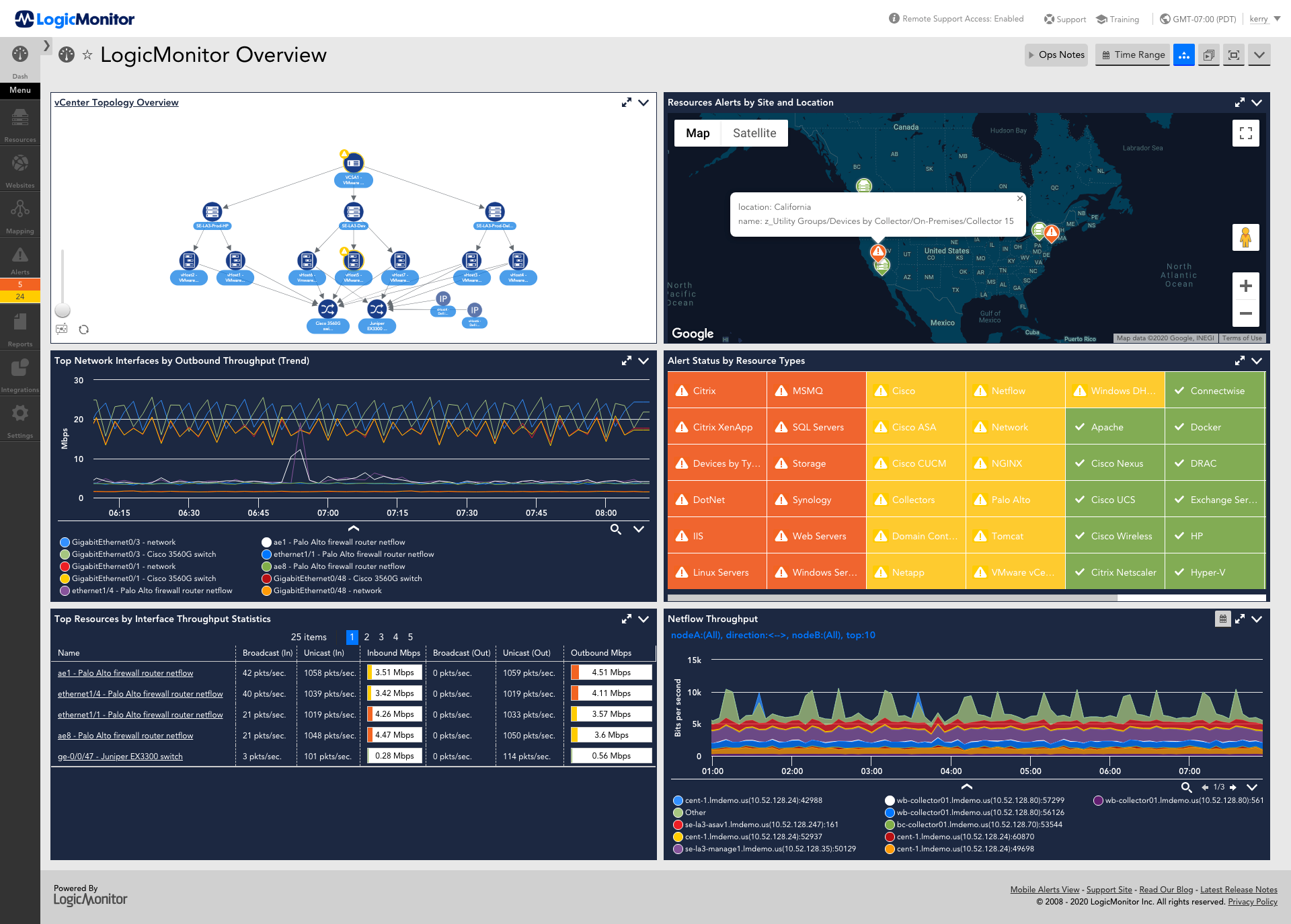  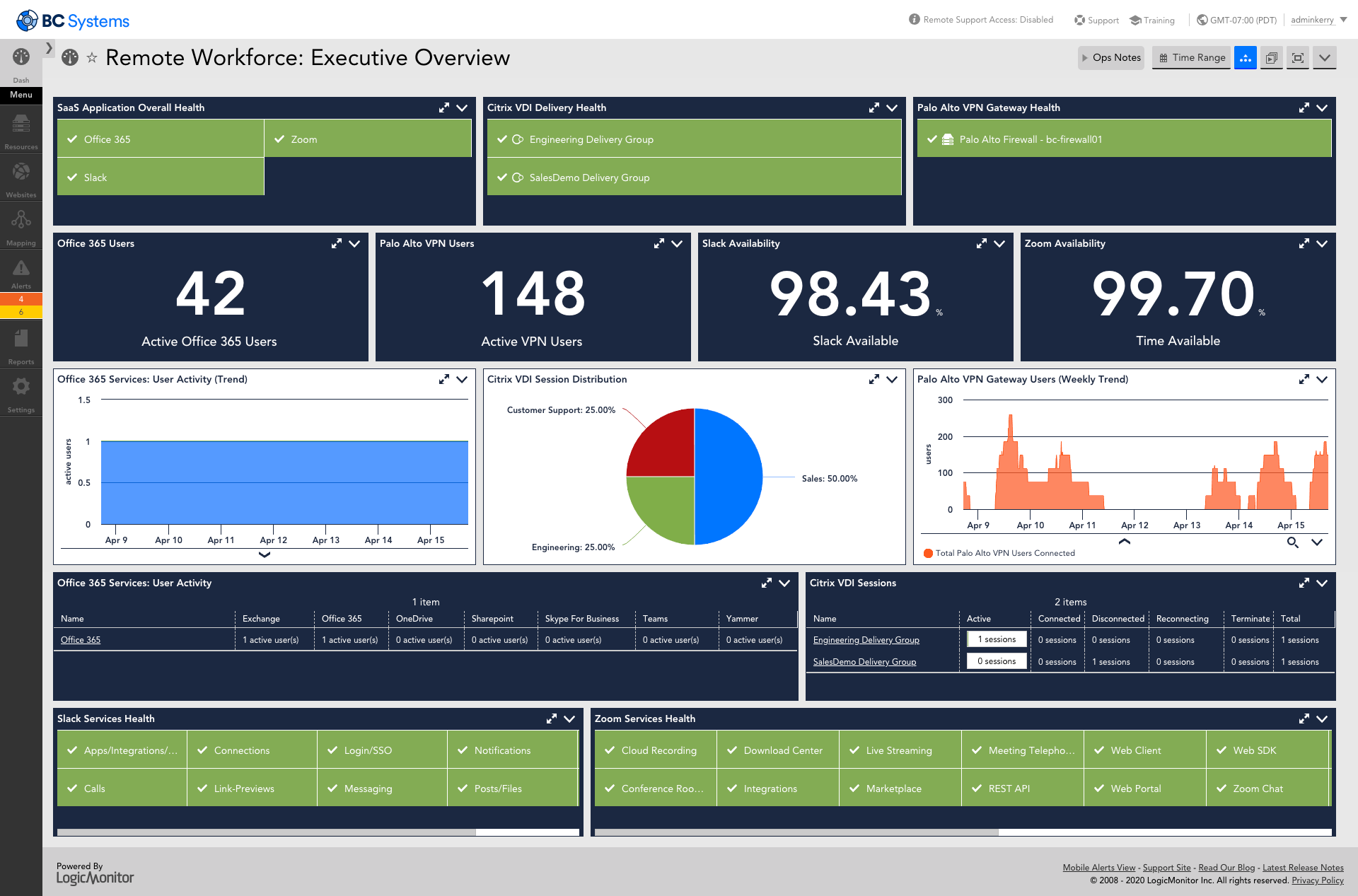   |