Salesforce Marketing Cloud Engagement (formerly Salesforce Experience Cloud or Salesforce Community Cloud) is an online forum powered by Salesforce that enables businesses to connect with their employees, customers, partner organizations, and prospects. Designed to help facilitate communication and information sharing, customers can ask questions and request help, administrators can integrate data from third-party apps, and employees can collaborate across projects and…
N/A
Shopify Plus
Score 8.9 out of 10
N/A
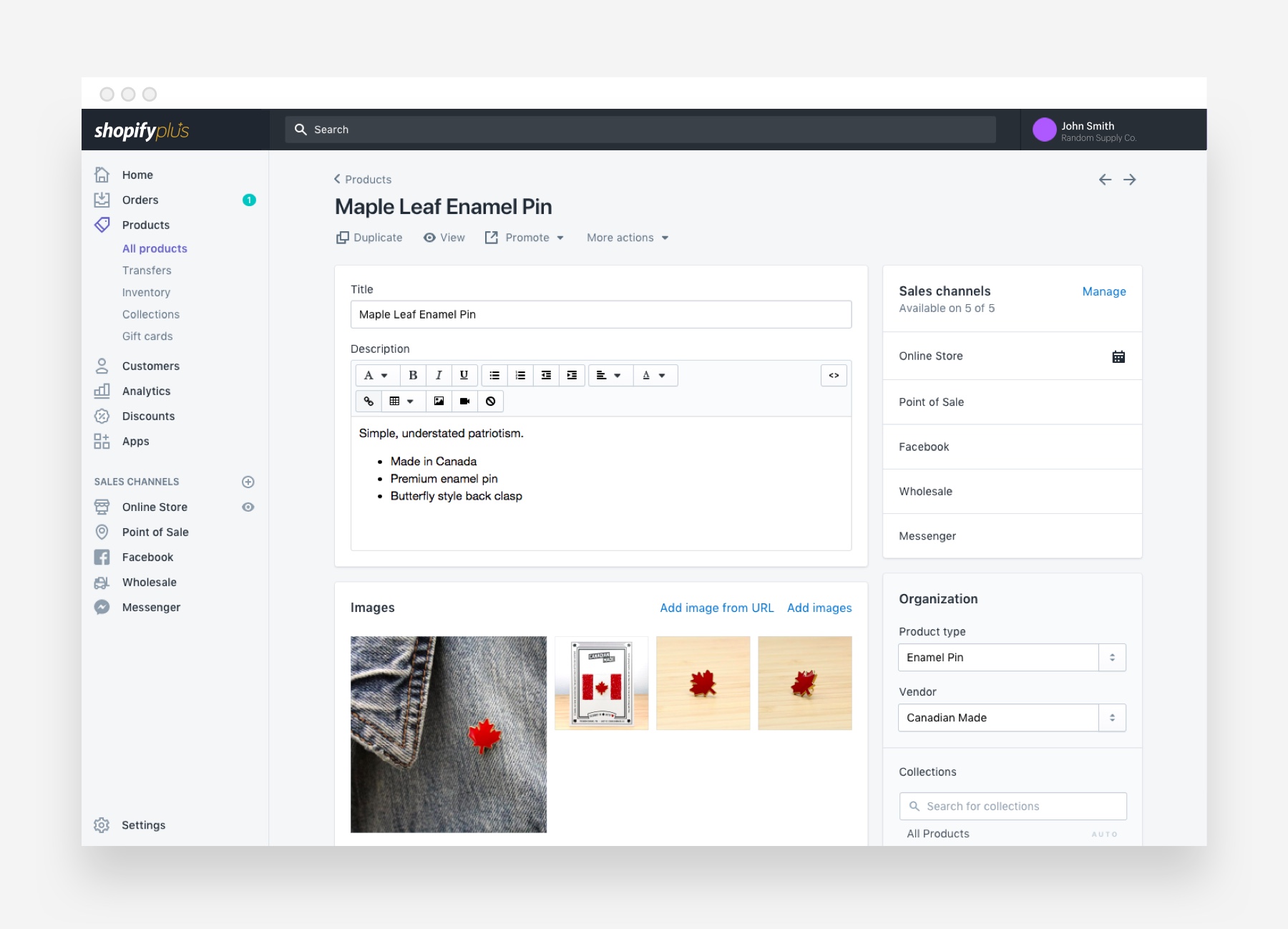
Shopify Plus is an eCommerce solution built for enterprise-level companies that enables them to sell online and offline across social channels like Facebook , Pinterest, and marketplaces like Amazon and eBay.
$2,300
per month with a 3-year commitment
WooCommerce
Score 8.4 out of 10
N/A
WooCommerce is an eCommerce plugin for WordPress, developed by WooThemes (recently acquired by Automattic). Like WordPress, it is designed to be an extendable, adaptable, open-sourced platform. WooCommerce allows merchants to sell physical products, downloadables, or services.
$0
Pricing
Salesforce Experience Cloud
Shopify Plus
WooCommerce
Editions & Modules
No answers on this topic
3-year term
$2300
per month
1-year term
$2500
per month
Woo Enterprise
Contact Sales
Offerings
Pricing Offerings
Salesforce Experience Cloud
Shopify Plus
WooCommerce
Free Trial
No
No
Yes
Free/Freemium Version
No
No
Yes
Premium Consulting/Integration Services
No
No
Yes
Entry-level Setup Fee
No setup fee
No setup fee
No setup fee
Additional Details
—
—
WooCommerce is a free and open-source plugin for WordPress. Merchants can host their WooCommerce store on any private hosting service, or with Automattic directly via WordPress.com. Some added features or services from the WooCommerce Official Marketplace may have one time or subscription pricing.
Shopify Plus offers a lot more scalable technical foundations. Magento and WooCommerce sites can be difficult to innvoate on top of and not have the security that Shopify Plus offers. Often WooCommerce sites are cobbled together with third party tools and plugins that can …
A direct connection to our ERP sets Shopify Plus apart for other platforms we've evaluated. The integration with our ERP eliminates manual data entry, reduces fulfillment errors, and ensures accurate stock visibility company-wide.
Shopify Plus is far more scalable and stable. It is much easier to implement, and the time to value is much shorter. Development resources are plentiful and skilled, and the product's user base is so massive that significant testing has been done prior to releasing any updates …
A far more professional approach to e-commerce in general. Servers and the core SSL are taken care of and you're left with a whole host of tools to sell, sell and sell.
Shopify is a much easier and more intuitive platform to use.
The mobile focus is outstanding from the other competitors and the capability to modify the store without previous code or experience makes them the best e-commerce platform.
Shopify Plus offers a more robust solution than Woo commerce and is easier to train on than Big Commerce. Woo commerce is freeware with no support. Big Commerce offers more SEO features and is a more powerful solution, but harder to remote train users on - lots more …
Shopify Plus is WAYYYYYY better than anything else that we have used, and it's not even close. The websites are faster and more reliable, both of which are critical to running an online business. The cost to run is way less. We are running five websites on Shopify Plus for less …
Shopify Plus is way ahead of the pack in terms of features, automated and worry free maintenance / security / scaling / infrastructure, customer support, and speed. We've been building eCommerce sites for over a decade and it seems almost every positive trend in eCommerce is …
Shopify Plus integrates so well with other services, and keeps all levels of the online shopping experience in one place. It really saves a developer or manager a lot of headache that can arise with other e-commerce platforms.
WooCommerce is a good free version that's very customisable, but is not a smooth or polished platform. If you look at both dashboards between Shopify and WooCommerce you can see the difference is huge.
WooCommerce seems to be built for websites that aren't focused entirely on …
Especialista en Marketing Digital y Comercio Electrónico
Chose WooCommerce
I like WooCommerce because it can be optimized, customized and adapted to every business needs. That's because it's WordPress core, it helps us customize stores in ways we can only imagine and also we can implement Google AMP and PWA easier and faster than with other platforms. …
One single word: cost! Most WooCommerce alternatives have very high monthly or annual costs. WooCommerce permits to have an implementation cost (low or high based on customization) and a very low maintenance cost. Even if some plugins are very expensive, the maintenance cost is a …
For well-suited, this product is great for your external clientele groups that you would not necessarily want to have a high user fee rate for. So basically general public or a group that will be authorized to come in and just do a few things here and there, but you don't necessarily want them access to all of your systems and your data points for groups that it would not be a great use for. I'd say probably your high level internal staff, they're going to be using a lot of the backend functionality automations, evaluating data, managing data, and doing custom inputs. That's just not what's intended for.
Shopify Plus makes order management simple and less error prone. Connecting our ERP allows us to seamlessly manage our product listings, fulfill orders, and sync customer data. Limitations to the number of product variants requires attention from our staff to make sure our products sync without issue. Other than being arbitrary, there's really no need to limit the number of product variants.
WooCommerce is best suited to customers whose website is built on the WordPress platform, and whose development team has a good understanding of plug-in implementation. If your website is not built on WordPress, but on Laravel or React (or any other non WordPress technology), then WooCommerce is not for you. WooCommerce is also great for customers who just need a simple online shopping experience. If your needs involve more complex or immersive features such as timed discounts, pick up locations, delivery reminders, or post shopping feedback surveys, know that you will need to purchase additional add-ons to make to get these features using WooCommerce set up on WordPress.
Easy to use, just like Salesforce's other products. Many users can sit down and figure it out in no time, and with a little training become power users.
Fast and secure - Salesforce is a leader in the cloud world so you get consistently fast results and security that is top notch in the industry.
Accessible from anywhere - if you use cloud CMS already this is a no-brainer, but for those that do in-house CMS still, this is a major difference. Mobile access from anywhere on the planet without a VPN is something you just can't do without the cloud.
Unlike other CMS platforms like Wordpress and Adobe Experience Manager, Salesforce does not provide a fully featured editor with a drag-and-drop design tool.
Our content creators and marketing team often struggle with permissions and how to distribute content across different experience cloud sites.
Also, there is no side-to-side comparison view for content editors to update the content easily.
When linking to our communication service some customers have several emails with orders and only one email generates orders. It would be nice if we could combine all of this information into one account.
If a customer has multiple accounts you are also unable to edit the email address as it is already used, another reason merging accounts would be helpful.
Some of the processes in Shopify are too easy to complete. I’m certain scenarios a peony of “are you sure you would like to complete(this action)” would be extremely helpful and avoid mistakes that are not reversible.
Despite very rare glitches, more connected to an excessive number of plugins, that affect the speed of the site, we are extremely satisfied with the platform, the ability to import and export products, even though we just export them, as we have our proprietary system for updating inventories. We love the ease of upgrading, enhancing, innovating, and the freedom we have to do whatever we want, which is a plus, when you consider Shopify can take down your whole store as they please, if they think you aren't abiding to their TOS or their ever changing set of rules.
Strengths: - Intuitive for Salesforce Users – If you’re already working within the Salesforce ecosystem, the Salesforce CMS is easy to navigate, with a clean UI, drag-and-drop content management, and reusable assets for quick updates. - Seamless Integration – Since it connects natively with Experience Cloud, Marketing Cloud, and CRM, it allows for efficient multi-channel content distribution without needing extra third-party tools. - AI-Powered Personalization – The ability to deliver dynamic content based on user profiles and engagement data is a huge plus, making content delivery more relevant and impactful. Challenges: - Learning Curve for New Users – If you're not already familiar with Salesforce, the interface can feel overwhelming, requiring training to fully leverage all features. - Limited Customization & Workflow Automation – While it works well for structured content, advanced approval workflows and deep editorial customization are limited compared to enterprise CMS platforms like Adobe Experience Manager. - Media & Design Limitations – Salesforce CMS is not as robust for managing rich media-heavy content, which can be frustrating for teams needing more flexibility in multimedia presentation.
It is extremely easy for merchants to get to know how Shopify Plus works. Comparitive to other platforms such as Magento and WooCommerce it is extremely lean and easy to operate, meaning clients who migrate over to it find it very intuitive to use. There is also a lot of guides and up to date information online
It is built on the Wordpress platform, so there are some quirks compared to a dedicated e-commerce product, but it is very intuitive and easy to use, especially for anyone with Wordpress experience. There are numerous great support articles and learning resources available. Significant customization can be achieved with plugins vs other eCommerce platforms, which may require more custom code and have fewer plugin options.
Again, since we provide and recommend solutions, I can't speak to every client's individual experience, but can offer general reflections as to keep their collaborations private, that they are satisfied with the experience. We hear a lot about how this system helps to encourage collaborations between their own business partners, customers, and internal members, and enables quality integrations with other products that help drive revenue.
Although support from Salesforce itself can be quite unresponsive sometimes, the community hub is incredibly helpful. The large user base of Salesforce products contribute to troubleshooting and the forums are a powerful tool for finding solutions and possible bugs and response times can be quite fast compared to your regular support channels.
Salesforce Experience Cloud was selected due to its tight integration with our existing Salesforce CRM platform. Customization of the portal was much, much simpler compared to Sharepoint - especially with role-based security parameters that are ultimately inherited based on attributes within the Salesforce CRM platform. Salesforce Experience Cloud was a natural fit for this customer-facing purpose.
Shopify had the quickest go-to-market and most robust API among the products we compared. CommerceCloud required a VERY LONG integration phase that we just didn't have time for. BigCommerce fell short on the number of features and API coverage that we needed. Overall Shopify gave us the most bang for the buck.
We were pretty sure we wanted a WordPress site so that we had more control over the site itself, having been burned by third-party vendor sites before. The fact that WooCommerce integrates so well with WordPress was a big selling point for us. Magento would have been too heavy of a lift for our small dev team and we didn't want to rely on Shopify or BigCommerce (though all of those products could have their merits for other projects or clients).
The pricing of Shopify Plus over the regular Shopify Account solution is about 10x if not 20x the cost. But with this cost comes the increased reliability and trust you have in your eCommerce Software solution/website. We still have a great ROI with the Shopify Plus Pricing.
With Shopify Plus, we have been able to drill deeper into a more robust eCommerce experience for our customers
With Shopify Plus, we have been able to customize our Website further with recommended apps, features, and customizations based on our Dedicated Account Reps expertise.