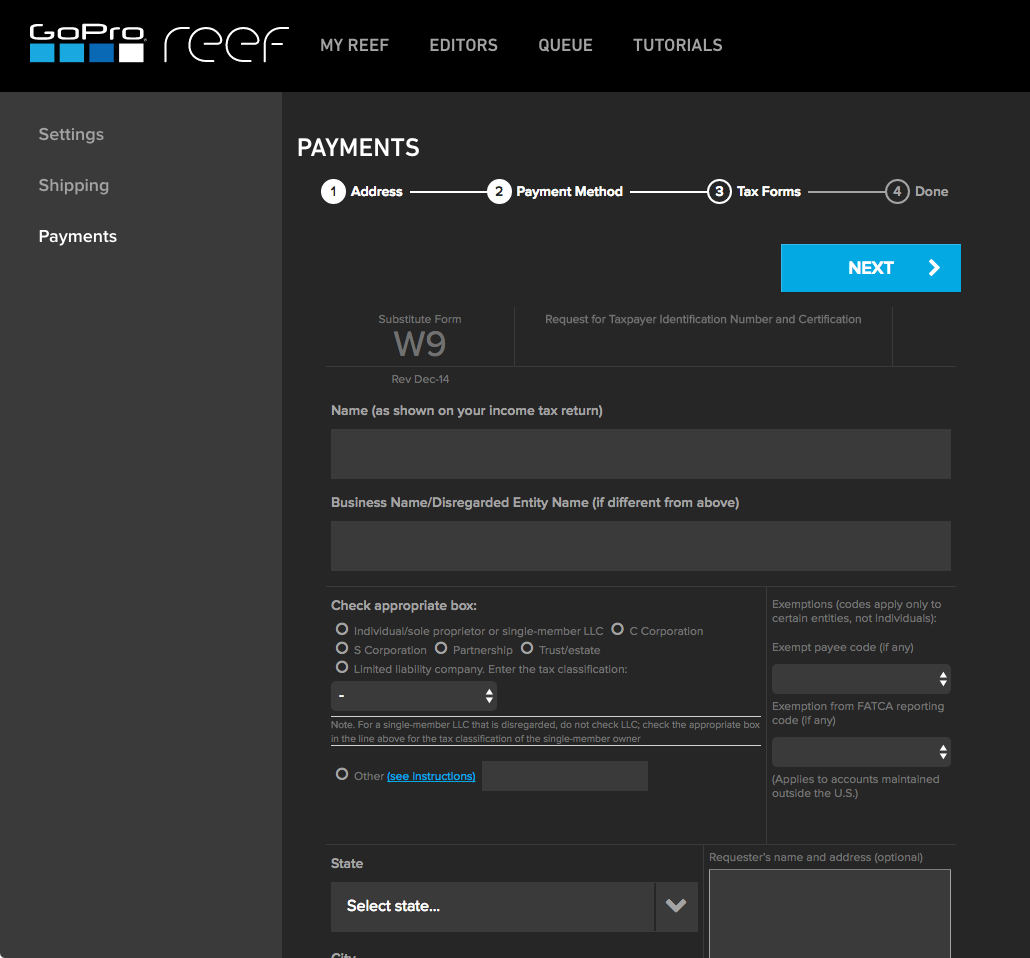
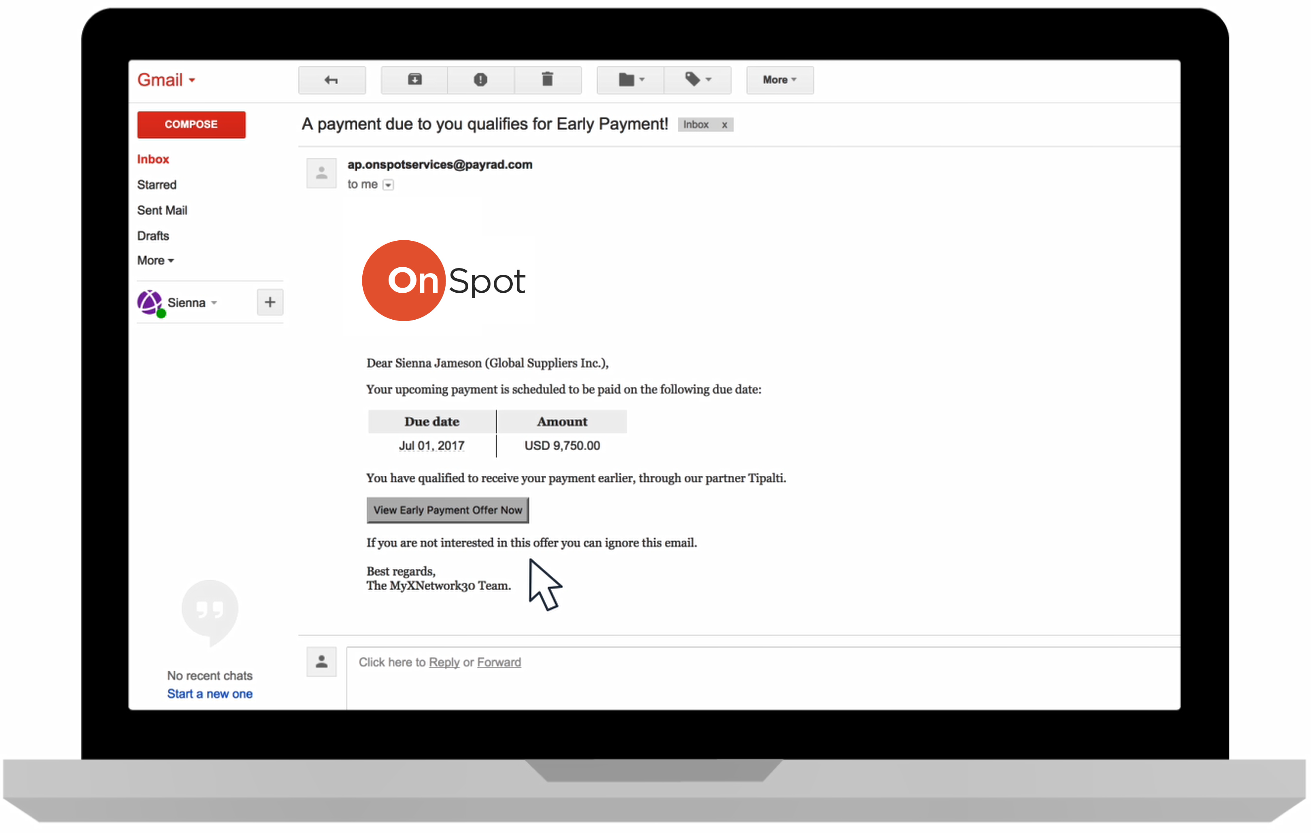
Tipalti automates critical financial processes to drive efficiency, including accounts payable, mass payments, procurement, and expenses, all on one global finance automation platform that grows with the organization, automating, de-risking and simplifying finance.
$129
per month
Zuora
Score8.5 out of 10
N/A
Zuora is one of the best-known subscription billing platforms. Zuora is an enterprise-level product and, as such, provides comprehensive metrics, tax automation, and support for multiple currencies. It also offers Salesforce and NetSuite integration out-of the-box. It often replaces cumbersome ERP (enterprise resource planning) systems that does not focus exclusively on billing.
N/A
Pricing
Tipalti
Zuora
Editions & Modules
No answers on this topic
No answers on this topic
Offerings
Pricing Offerings
Tipalti
Zuora
Free Trial
No
No
Free/Freemium Version
No
No
Premium Consulting/Integration Services
Yes
No
Entry-level Setup Fee
Required
No setup fee
Additional Details
Pricing starts at $149 per month for the platform fee. Users can upgrade to Tipalti's more advanced capabilities as their businesses gets more complex.
The Tipalti pricing model is designed to grow with the user's company. Advanced features such as W-8 tax forms, international tax IDs, or multi-entity payables are available as needed.
I would tell them that it manually syncs to ERPS. Additionally I would include the fact that you can pay multiple entities in one pay run allowing to be very efficient. I would also include that they can add rules to bill approvals or set up auto payments for certain vendors. Lastly, there are many reports you can run providing you will very informational data in seconds.
A de minimis incentive was given to thank the reviewer for their time. The incentive was not used to bias or drive a particular response, nor was the incentive contingent on a positive endorsement. More Info
Zuora is great for smaller subscription businesses that have a limited number of simple or basic products. As more products are added to the catalog, the ability to report on specific product performance has become more challenging. Similarly, as our number of customers has grown significantly over the past few years, the extraction of data through export files is more of a challenge to capture all data points.
A de minimis incentive was given to thank the reviewer for their time. The incentive was not used to bias or drive a particular response, nor was the incentive contingent on a positive endorsement. More Info
The implementation of Zuora is very helpful. Their interactive training guides are one of the best I've used. It is very thorough and any salesperson can learn how to use it very quickly.
Their subscription management offers many ways to sell a subscription. These subscriptions can be evergreen (renewing every month) or termed subscriptions. The subscriptions can be amended to add/remove products very easily.
The ability to quickly pass through large amounts of usage data for our clients is allowing us to perform billing in a time-effective manner. Once usage data is loaded, a few clicks and all of the invoices for our client base can be generated. Invoices are clean and detailed which help us maintain a good customer experience even with our somewhat complex billing model. The reporting is extremely helpful in calculating the end of month commissions, recognizing and deferring revenue, and overall bookkeeping.
A de minimis incentive was given to thank the reviewer for their time. The incentive was not used to bias or drive a particular response, nor was the incentive contingent on a positive endorsement. More Info
The report that provides the "Not payable" vendors does not work well for us, particularly because the sync to our ERP goes both ways, which means all of the employees also sync over to Tipalti and remain as Not Payable. So the list is very long, and I don't find a good use for it.
User Interface - Zuora's UI is still a weak point, however, this is negated through the use of its API's. Zuora has done a lot of work in releasing new products to limit its UI experience and the addition of Orders allows for more functionality to reduce the UI issue.
Complex system - This is both a pro and a con, but in this instance, it is a con because we may not have taken the time to truly understand the implications of all the options that were available. the Flexibility is great however if you do not take the time to understand the product and what problem you are trying to solve, you can make life difficult for yourself later down the track. Take the time to map out your approach end to end and ensure your assumptions at the start are robust.
Reporting - reporting is weak as such we have moved away to our own reporting data warehouse.
Solid system performance. Suits our needs and solution provider very inclined to accept feedback and involve users in developing the solution to serve both the provider and the ultimate user. Tipalti has streamlined our process that was previously very manual and prone to error. Now there is transparency of information and role.
A de minimis incentive was given to thank the reviewer for their time. The incentive was not used to bias or drive a particular response, nor was the incentive contingent on a positive endorsement. More Info
Our business is now, more than ever, focused on our core business rather than homegrown support tools for quoting, contracts, billing, invoicing, payments and the rest of the subscription economy. We evaluated other solutions and found this the best and most viable solution given the strong ties to Salesforce and it's integration. Zuora works, and it works well.
Two-time Tipalti selector, implementor, and user. The payment features in the app saves many steps in the payment process. No longer do you have to set-up or upload payment information to your bank and then go back to your accounting system and mark items as paid. Tipalti does all of this with a click of a mouse. The payment feature is the stand out feature. Many vendors can process your invoices. Look at how at the payment process of others.....you will see.
A de minimis incentive was given to thank the reviewer for their time. The incentive was not used to bias or drive a particular response, nor was the incentive contingent on a positive endorsement. More Info
I had 20+ years of accounting experience before taking on the revenue role. I had several things to [learn] but was able to easily master the software in a matter of weeks. Zuora is our preferred billing platform that we currently use - very efficient and much more automated than our other platform/process.
A de minimis incentive was given to thank the reviewer for their time. The incentive was not used to bias or drive a particular response, nor was the incentive contingent on a positive endorsement. TR verified that a representative sample of customers was invited. More Info
There have only been a few days/instances in the past 2.5 years of using zuora that I, personally have had issues or been notified of issues relating to Zuora.
A de minimis incentive was given to thank the reviewer for their time. The incentive was not used to bias or drive a particular response, nor was the incentive contingent on a positive endorsement. TR verified that a representative sample of customers was invited. More Info
Zuora does a superb job for all the tasks I use it for. Billing - it is trustworthy and accurate. Customer data- it holds it and keeps past records for even cancelled accounts, and subscription builds - it has the ability to make very difficult subscriptions seem easy.
A de minimis incentive was given to thank the reviewer for their time. The incentive was not used to bias or drive a particular response, nor was the incentive contingent on a positive endorsement. TR verified that a representative sample of customers was invited. More Info
Since I also work in customer support, I often have to contact Tipalti's team with questions from our users. Tipalti's support team has always been exceptionally helpful and it was a pleasure to communicate with them. I have always received prompt responses to any inquiries and they are excellent at solving our customers' issues within a short time
A de minimis incentive was given to thank the reviewer for their time. The incentive was not used to bias or drive a particular response, nor was the incentive contingent on a positive endorsement. More Info
A support request is emailed to their support team, then an automated response is sent to you in a couple hours saying "Hey, someone will take a look at your support request soon". Then somewhere around 12-18 hours later, an actual support member responds with "Have you checked out our tutorials? Here's one that sounds like it might help you". I don't want a tutorial given to me that I've already read through that only exists because of the terrible user design of Zuora's user interface
A de minimis incentive was given to thank the reviewer for their time. The incentive was not used to bias or drive a particular response, nor was the incentive contingent on a positive endorsement. TR verified that a representative sample of customers was invited. More Info
A de minimis incentive was given to thank the reviewer for their time. The incentive was not used to bias or drive a particular response, nor was the incentive contingent on a positive endorsement. TR verified that a representative sample of customers was invited. More Info
A de minimis incentive was given to thank the reviewer for their time. The incentive was not used to bias or drive a particular response, nor was the incentive contingent on a positive endorsement. TR verified that a representative sample of customers was invited. More Info
A de minimis incentive was given to thank the reviewer for their time. The incentive was not used to bias or drive a particular response, nor was the incentive contingent on a positive endorsement. More Info
I think Zuora did a great job. However, they could have provided more guidance on how to deal with out Payment Gateway and Processor provider, as well as guidance around providing a Mobile Responsive experience for sites using the Zuora HPM.
A de minimis incentive was given to thank the reviewer for their time. The incentive was not used to bias or drive a particular response, nor was the incentive contingent on a positive endorsement. TR verified that a representative sample of customers was invited. More Info
From initial implementation through to user experience, Tipalti has been able to exceed our expectations in terms of its functionality and useability. We have found with other systems implemented in the past they did not match our expectations which resulted in us terminating these services.
A de minimis incentive was given to thank the reviewer for their time. The incentive was not used to bias or drive a particular response, nor was the incentive contingent on a positive endorsement. More Info
Zuora provides way more functionality than Recurly or SaaSOptics as a billing engine. However, it is not a general ledger system like NetSuite ERP, it is still designed to be primarily a billing function that feeds into a general ledger via automated general entries. It has simplified our invoice management and automated billing while connecting with Salesforce for high-powered reporting and cross-departmental collaboration. The automation of revenue recognition has the potential to significantly reduce the time spent on accounting close by a few days.
A de minimis incentive was given to thank the reviewer for their time. The incentive was not used to bias or drive a particular response, nor was the incentive contingent on a positive endorsement. More Info
A de minimis incentive was given to thank the reviewer for their time. The incentive was not used to bias or drive a particular response, nor was the incentive contingent on a positive endorsement. TR verified that a representative sample of customers was invited. More Info
Vendor onboarding has taken the responsibility from one person to the Vendor directly. This provides the vendor with the ability to enter their own banking information for payments and upload their Federal W9 form.
Vendors can upload their own invoices to the system, taking the possibility that our AP team did not receive an emailed or mailed invoice to upload. This also increases payment efficiency as the vendor's invoice is processed in a more timely manner.
AP can review invoices for accuracy and concentrate on how to code an invoice, rather than be a paper pusher or a data entry clerk. AP doesn't spend time searching for invoices that might be a duplicate, the system will communicate this on the software review process and if AP has uploaded by email the same invoice multiple times, an email will be sent to AP to indicate that the invoice was not uploaded due to duplication.
A de minimis incentive was given to thank the reviewer for their time. The incentive was not used to bias or drive a particular response, nor was the incentive contingent on a positive endorsement. More Info