
Berlynn Pierce
CRM Project Manager
Chose Asana

| Product | Rating | Most Used By | Product Summary | Starting Price |
|---|---|---|---|---|
 Asana | N/A | Asana is a web and mobile project management app. With tasks, projects, conversations, and dashboards, Asana lets an entire team know who's doing what by when, enabling workload balancing. Users can also add integrations for GANTT charts, time tracking and more. | $13.49 per month per user | |
 Microsoft Planner | N/A | Microsoft Planner is presented as a solution to organize teamwork with intuitive, collaborative, visual task management. With it, users can create Kanban boards using task cards with files, checklists, and labels. Users can collaborate in Planner and Microsoft Teams and check visual status charts—all in the Microsoft cloud. | N/A | |
 Trello | N/A | Trello from Atlassian is a project management tool based on a Kanban framework. Trello is ideal for task-management in a to-do list format. It supports sharing boards and cards across users or teams. The product offers a free version, and paid versions add greater automation, collaboration, and administrative control. | $6 per month per user |
| Asana | Microsoft Planner | Trello | ||||||||||||||||||||||
|---|---|---|---|---|---|---|---|---|---|---|---|---|---|---|---|---|---|---|---|---|---|---|---|---|
| Editions & Modules |
| No answers on this topic |
| |||||||||||||||||||||
| Offerings |
| |||||||||||||||||||||||
| Entry-level Setup Fee | Optional | No setup fee | No setup fee | |||||||||||||||||||||
| Additional Details | A discount is offered for annual billing. | — | A discount is offered for annual billing and for larger numbers of users. | |||||||||||||||||||||
| More Pricing Information | ||||||||||||||||||||||||
| Asana | Microsoft Planner | Trello | |
|---|---|---|---|
| Considered Multiple Products |  Asana Berlynn Pierce CRM Project Manager Chose Asana  Erin Harris Internet Marketing Manager Chose Asana We all hated Trello...  Kristi Porter Chief Do-Gooder Chose Asana  Ammar Aboalrub Freelancer Chose Asana Since I have tried the two applications and saw their advantages and disadvantages, I see that Asana is much better in terms of dealing with files, ease of use, and the many features and characteristics that it has. Also, I noticed that it does not consume much space on my …  Md Tanjil Islam Bappi Infrastructure Engineer Chose Asana Asana is a highly effective instrument for managing teams and projects. The paid edition provides a multitude of features that can be tailored and used in accordance with the organisation's specific requirements. Email integration facilitates notifications that remind team …  Molly Coller Consumer Marketing - Advertising/Brand Chose Asana I have used many tools for project management but Asana is the tool that has fulfilled my all requirements and given me satisfying and reliable services at a good price. I easily manage all projects and track them in
advanced ways. [I] highly suggest [this] tool, I assure you …  Gavin Scott-Miller Project Manager Chose Asana Asana is the best of both worlds because it allows multiple views of your tasks and dashboards for project managers to review. Some of the competitors only allow one way of working, which can be a roadblock for users who are less flexible in their workflow. Getting all users to …  Ben Flemming Director of Human Resources Chose Asana Asana hit our sweet spot of easy to try, appropriate pricing for our mid size non-profit team, flexibility, and features. Lots of other platforms have very similar features organized in other ways, but Asana made sense and was fun to work with right off the bat. there were …  Andrew Makar Program Manager Chose Asana Asana has its proper place in task management. There are better tools that provide similar functionality but the decision depends heavily on the actual requirements. If you own a small business or a start up, Asana is excellent. If you are an enterprise level organization, … |  Microsoft Planner  Christie Carbone Digital Marketing Analyst Chose Microsoft Planner Pros:
 Quratulain Habib, PMP Partner / Director / Head of Projects Chose Microsoft Planner  Matt Aldridge Learning Analytics Lead Chose Microsoft Planner Compared to the other options, we already had access to Microsoft Planner, preconfigured accounts, and support and ordination from tech internally to use it. We previously used Wrike, I wanted to use Asana, and other people in the organisation either used Microsoft Project, or …  Brandon Stokes Global Revenue Enablement Manager Chose Microsoft Planner Our organization chose MS Planner because it is an included tool in the MS Suite, and since we are unfortunately replacing our current and much better project management tool due to a consolidation of the tech stack. However, it doesn't appear that any of the teams using the … |  Trello  Ana Tarasova Operations Manager Chose Trello We still use both of them, they both are good in different ways. Trello is great for everyday use for any tasks and projects, Asana is mostly used to manage big and more complex projects.  Jared DeLong Onboarding & Services Manager Chose Trello monday.com is by far my favorite project management tool out there. It's so powerful, customizable and the reporting is great. Trello works better for us currently because it's free. Asana is okay, but the overall UI is a bit confusing and boring. Airtable is good, but pales in …  Chris Widner VP of Technology & Human Resources Chose Trello Trello is visually more appealing and easier to understand by simply looking at it. When it comes to sharing my board with others, they can quickly (within seconds) see our progress, which gets them excited and buys me more momentum. Asana is great, but it takes a little bit of … Berlynn Pierce CRM & Email Marketing Chose Trello  Roberto Antonio Costinho Sosa Senior Software Engineer Chose Trello Trello is very easy to use. It is an intuitive software that does not require prior learning to take advantage of it. Asana has a complicated interface, not very intuitive and difficult to use. Trello has an intuitive interface that I like very much. Compared to other …  Dylan Schoenbaum Social Media Director Chose Trello  Muhammad Rohan Director Chose Trello  Courtney Wolf Founder Chose Trello Trello is more simple and not as "robust" as the other tools, but it's easier to use and manage and understand and ACTUALLY get stuff done with. It's simplicity is part of the beauty of using it. You don't need a million options that nobody uses, you just need to get stuff done.  Smeetha Singh Founder Chose Trello I have been able to use the free version of Trello for many years and for the free version, this platform offers incredible value. I have not yet found such value in other free versions of similar platforms. This platform is also very easy to use as a first time user.  Rahat Afnan Professional Freelancer Chose Trello I got to know some project managing [software] but I choose Trello over them.  Khushboo Sharma Software Engineer Chose Trello Ease of use and its collaborative services stand out amongst other software.  Miroslav Bobryshev 3D artist Chose Trello Trello has a minimalistic design, in-app purchases, optimized for tablets and supports widgets. |
| Asana | Microsoft Planner | Trello | |||||||||||||||||||||||||||||||||||||||||||||||||||||||||||
|---|---|---|---|---|---|---|---|---|---|---|---|---|---|---|---|---|---|---|---|---|---|---|---|---|---|---|---|---|---|---|---|---|---|---|---|---|---|---|---|---|---|---|---|---|---|---|---|---|---|---|---|---|---|---|---|---|---|---|---|---|---|
| Project Management |
| ||||||||||||||||||||||||||||||||||||||||||||||||||||||||||||
| Professional Services Automation |
|
| Asana | Microsoft Planner | Trello | |
|---|---|---|---|
| Small Businesses |  Stackby Score 8.9 out of 10 |  7shifts Score 9.9 out of 10 | Stackby Score 8.9 out of 10 |
| Medium-sized Companies |  InEight Score 8.3 out of 10 |  Todoist Score 9.2 out of 10 | InEight Score 8.3 out of 10 |
| Enterprises | InEight Score 8.3 out of 10 |  TimeCamp Score 7.0 out of 10 | InEight Score 8.3 out of 10 |
| All Alternatives | View all alternatives | View all alternatives | View all alternatives |
| Asana | Microsoft Planner | Trello | |
|---|---|---|---|
| Likelihood to Recommend | 9.0 (208 ratings) | 7.5 (28 ratings) | 9.4 (222 ratings) |
| Likelihood to Renew | 9.6 (34 ratings) | 10.0 (2 ratings) | 10.0 (6 ratings) |
| Usability | 8.3 (36 ratings) | 7.7 (12 ratings) | 9.4 (60 ratings) |
| Availability | 8.4 (2 ratings) | - (0 ratings) | 10.0 (1 ratings) |
| Performance | - (0 ratings) | - (0 ratings) | 10.0 (1 ratings) |
| Support Rating | 5.0 (42 ratings) | - (0 ratings) | 9.9 (81 ratings) |
| In-Person Training | - (0 ratings) | - (0 ratings) | 10.0 (1 ratings) |
| Implementation Rating | - (0 ratings) | - (0 ratings) | 8.0 (2 ratings) |
| Configurability | - (0 ratings) | - (0 ratings) | 5.0 (1 ratings) |
| Product Scalability | 8.2 (1 ratings) | - (0 ratings) | 10.0 (1 ratings) |
| Vendor post-sale | - (0 ratings) | - (0 ratings) | 10.0 (1 ratings) |
| Asana | Microsoft Planner | Trello | |
|---|---|---|---|
| Likelihood to Recommend | Asana
 Marina Torttoli Marketing Director | Microsoft
Brandon Stokes Global Revenue Enablement Manager | Atlassian
 Ellen Valdez, CMP Event Manager |
| Pros | Asana
Ammar Aboalrub Freelancer | Microsoft
| Atlassian
|
| Cons | Asana
| Microsoft
Christie Carbone Digital Marketing Analyst | Atlassian
 Nick Butler Trainer and coach |
| Likelihood to Renew | Asana
 page V CEO (Chief Executive Officer) | Microsoft
 Richard (Ric) Hazel Strategy Planning Advisor | Atlassian
 Sahr Saffa CXO |
| Usability | Asana
| Microsoft
| Atlassian
|
| Reliability and Availability | Asana
 Ronen Soreq Project Manager | Microsoft No answers on this topic | Atlassian
|
| Performance | Asana No answers on this topic | Microsoft No answers on this topic | Atlassian
|
| Support Rating | Asana
 Adam Lumley Director of Marketing & Communications | Microsoft No answers on this topic | Atlassian
Jared DeLong Onboarding & Services Manager |
| In-Person Training | Asana No answers on this topic | Microsoft No answers on this topic | Atlassian
|
| Implementation Rating | Asana No answers on this topic | Microsoft No answers on this topic | Atlassian
 Raylene Wall Owner |
| Alternatives Considered | Asana
 Rafiqul Islam Full-stack Software Engineer | Microsoft
 Fernanda Ministerio Especialista de Desenvolvimento Industrial | Atlassian
Courtney Wolf Founder |
| Scalability | Asana
Ronen Soreq Project Manager | Microsoft No answers on this topic | Atlassian
|
| Professional Services | Asana No answers on this topic | Microsoft No answers on this topic | Atlassian
|
| Return on Investment | Asana
Kristi Porter Chief Do-Gooder | Microsoft
| Atlassian
|
| ScreenShots | Asana Screenshots 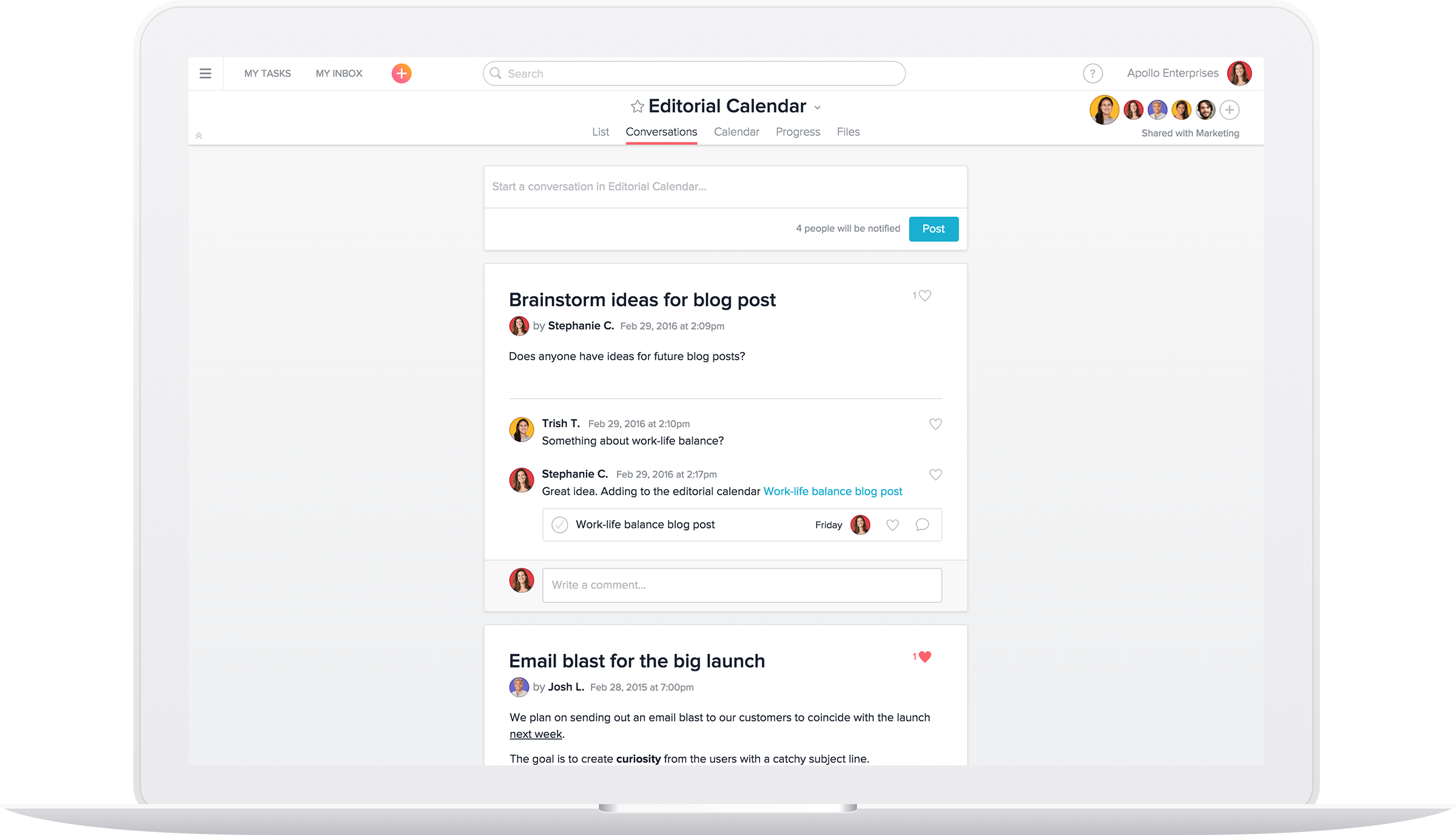     |