Atera is presented as an Agentic AI platform for IT management, that offers a digital workforce of AI agents that proactively and autonomously support entire IT operations. Atera’s all-in-one IT management platform consolidates RMM, helpdesk, ticketing, and automation, so IT teams and MSPs can manage and protect infrastructure, automate tasks, and boost service quality by reducing downtime and improving SLAs. Atera has shifted focus from automation to AI-powered autonomy in IT. With…
$139
per month per user
OpenAir PSA
Score 5.5 out of 10
N/A
NetSuite OpenAir is a cloud-based Professional Service Automation (PSA) product which includes capabilities around project management, resource management, project accounting, etc.
N/A
Syncro
Score 7.4 out of 10
N/A
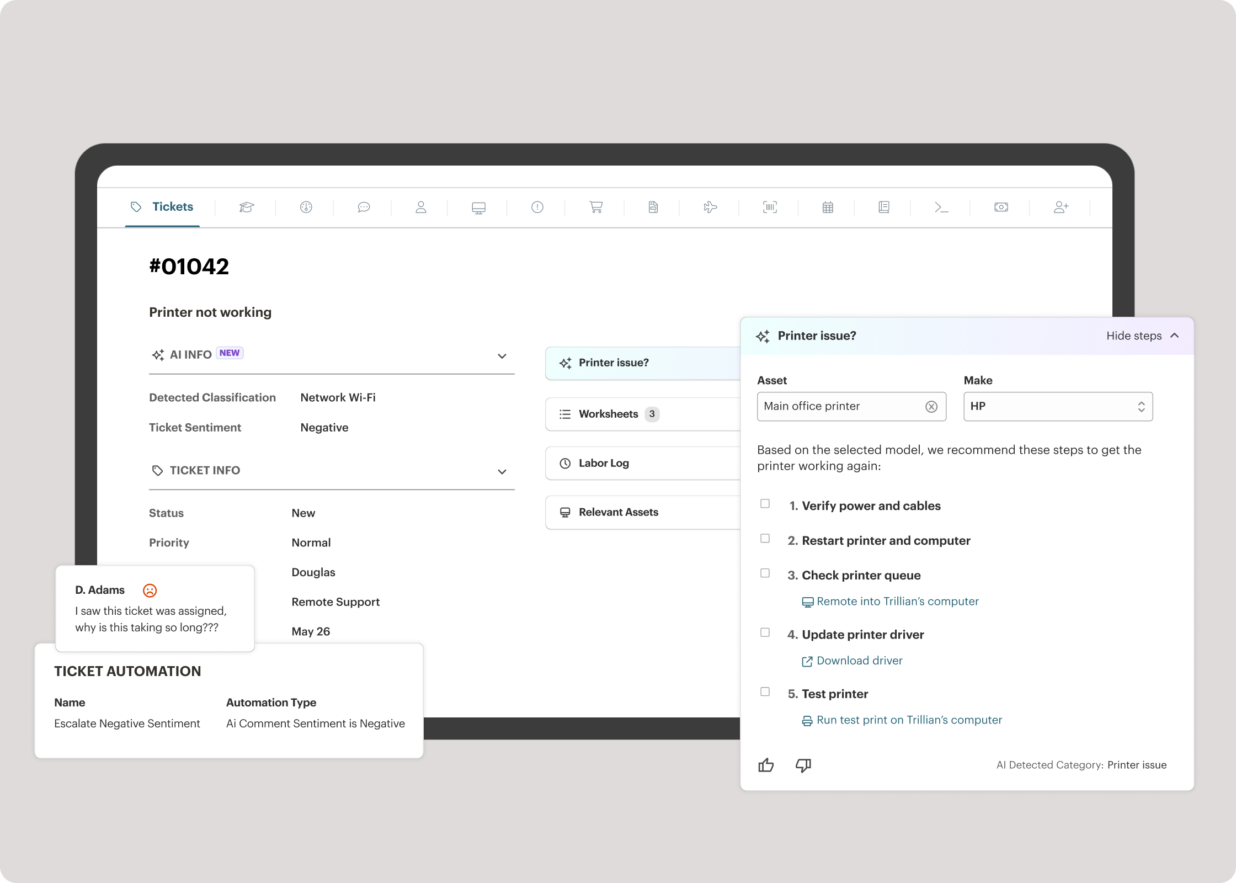
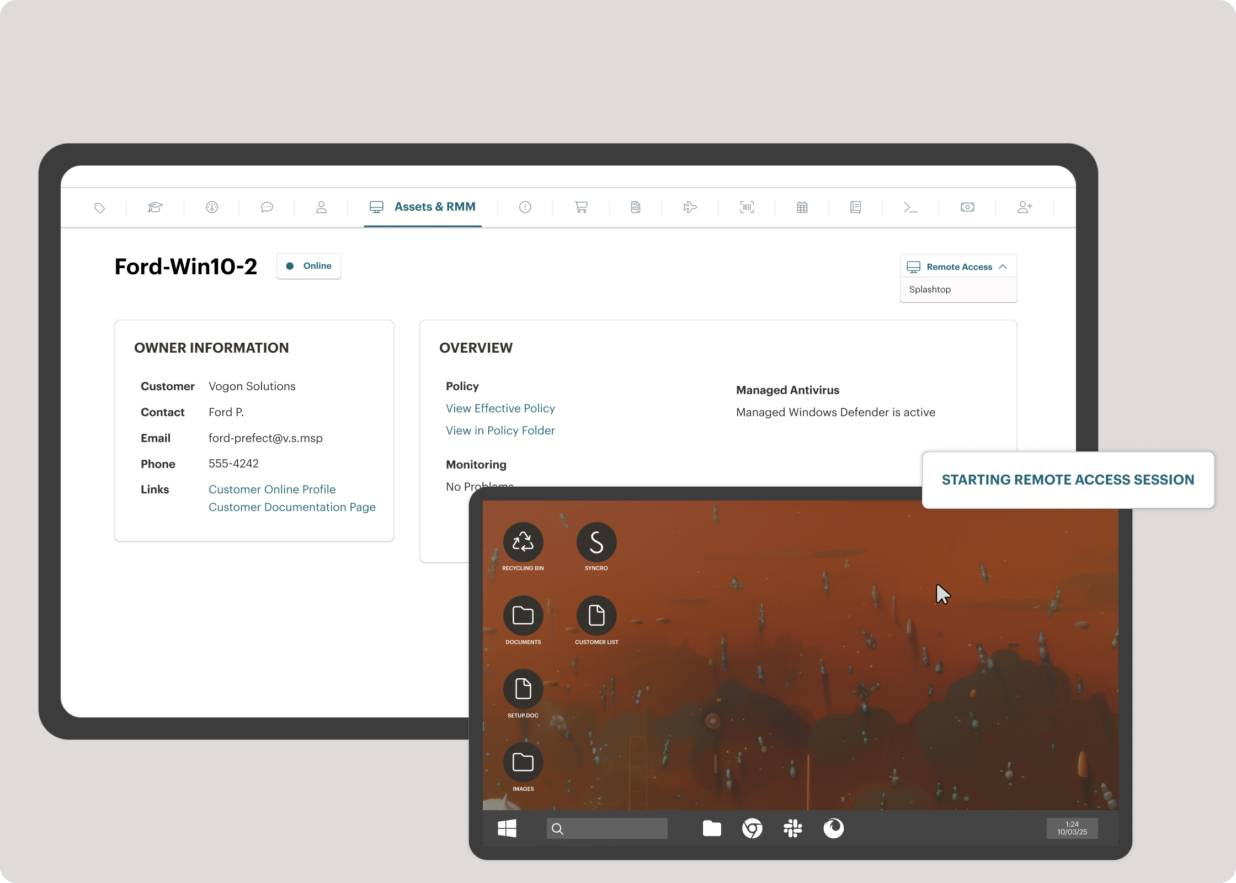
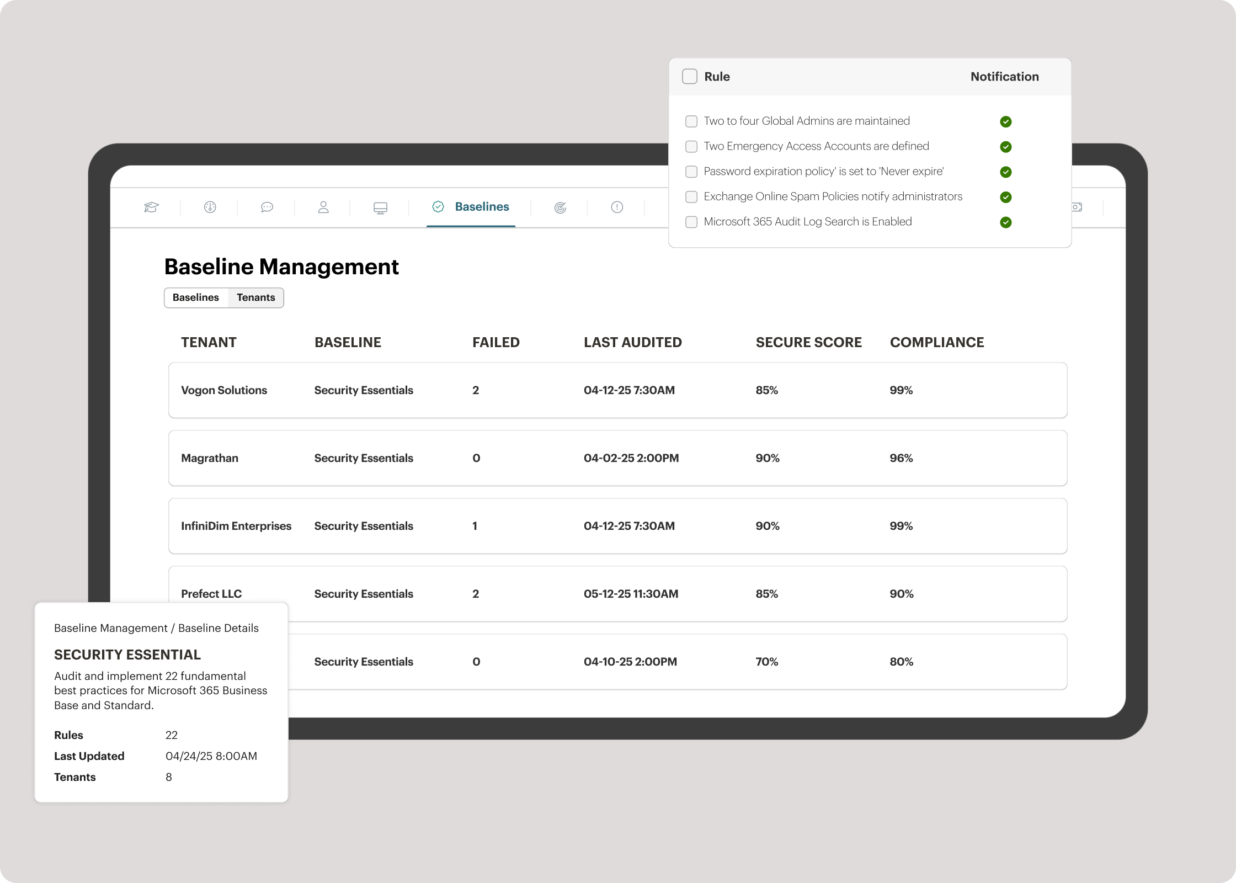
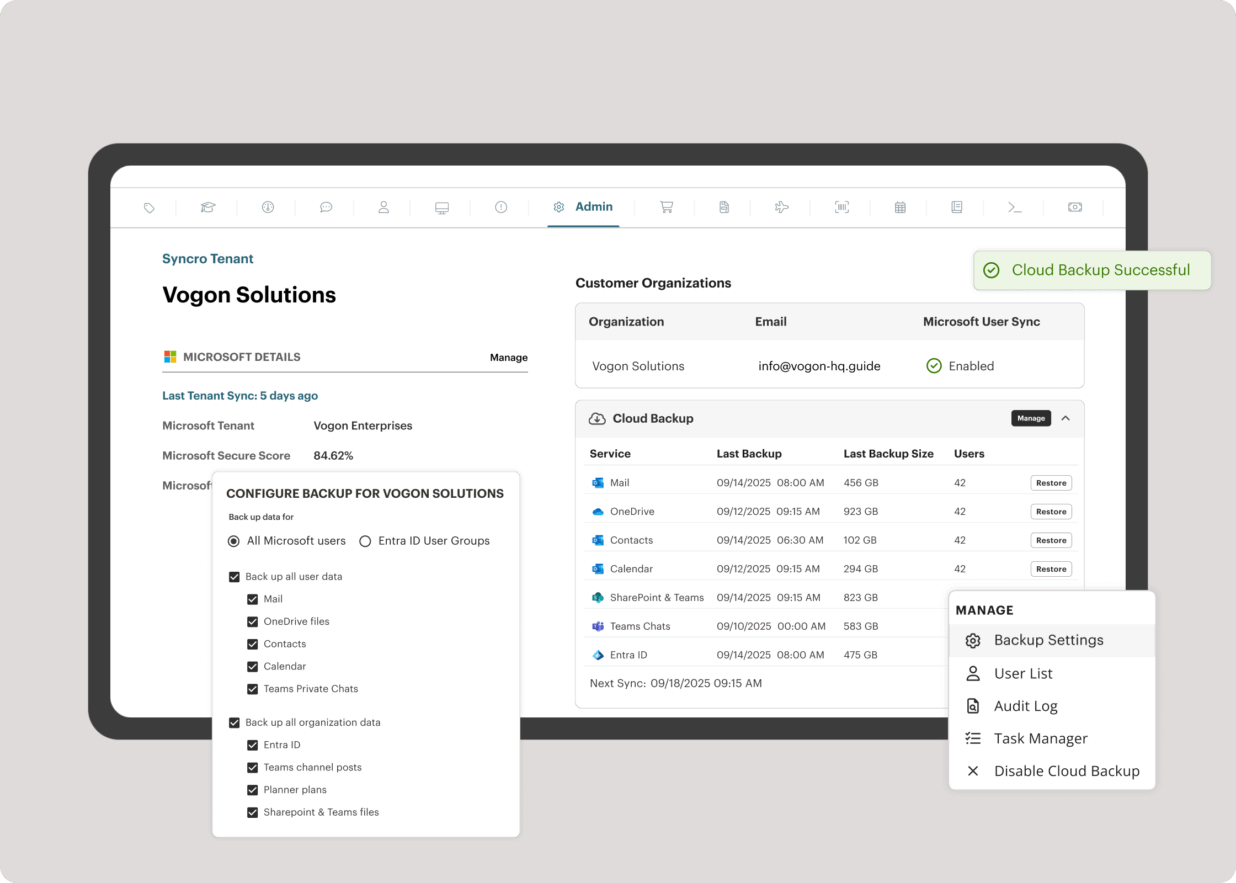
Syncro offers an Extended Monitoring and Management (XMM) platform for midsized MSPs and internal IT teams. The platform integrates RMM (endpoint management), professional services automation (PSA), and Microsoft 365 multi-tenant management to help organizations simplify operations, strengthen security, and scale.
This Year I started an IT company and was in need of monitoring and PSA software. In the past I've worked with Datto, Datto RMM and Ncentral so one of these would be a logical choice for me to choose. However their pricing is from a different world. For a starting company, …
Atera was very similar with Syncro but a bit more user friendly. There were a few features with Syncro I really liked that Atera does not have yet like custom reporting.
Atera is very similar to Syncro in feature set and pricing, but we liked Atera just a bit better. (We switched from Atera to Syncro and then back to Atera, and have stuck with Atera for several years now.) Kaseya gave us bad vibes from their sales department and we ultimately …
Any RMM that supports licensing around agents / technicians rather than devices is always a win in my mind. Primarily Atera was chosen due to the specific features it provides (we didn't need a lot of bells and whistles) and did what it needed to do, well. Remote access, patch …
Syncro does not have every bell or whistle (especially when compared with Kaseya VSA). However from a cost versus feature perspective, Syncro wins hands down.
Syncro versus Atera - they are very similar products and also use the per agent pricing. This was a big driver for us …
Atera is doing well in the monitoring part as it is informing the real time ping of running devices and if any device goes down, it is informing us on the real time. It is helping us to monitor the last reboot status, current logged in users, time zone, IP addresses and other things so that we can track our end devices status. In the patching part Atera is pathing our all devices with the notification stating user to restart device at their convenient time. It is also patching our third party applications. It is good in installing and uninstalling of the third party application but limited to availability in the Atera inventory. Atera is not good in some parts such as in the patching part of applications, sometime it fails to update all 3rd party applications that were not installed via Atera. It is not good if you have to transfer a file to multiple systems at the same time.
This product is well suited for an organization that is focused on client services, project delivery, time tracking, expense reporting, and revenue recognition. From a pure project management perspective, this product is not as feature rich as say Microsoft Project Server. For organizations that are looking for detailed complex project plan and resource management (along with resource leveling, etc.), this is probably not the best suited product
SyncroMSP is great for MSPs starting out or wanting to keep their costs low. Some RMM software will charge per install - and price breaks only available as your base grows to a significant number. As Syncro is a "per agent" cost, the costs for an MSP are (a) known and (b) easily to manage as the team grows. The third-party integration element is very useful for MSPs looking to be able to not only onsell additional services, but the management of these services is simple for anybody to use
Atera is very helpful in monitoring the servers and end-user devices for high CPU, memory, hard disk uses, and temperature monitoring.
Atera is good at installing third-party applications and also helps to remove it from the end systems.
Atera is perfect for patching as you can select the patches as per your need and reject those that are not required for you or going to disturb any of your internal applications.
Atera is good for managing software inventory as it provides you with the complete software list that is used in your infrastructure.
Netsuite OpenAir PSA is highly configurable and has a large ecosystem of assets to work with.
Tasks are easily designed to automate processes in your business workflow.
OpenAir is designed in such a way that it can communicate and receive information from external systems without having to re-engineer your systems to make them work if you are following standard business practice.
Atera does not yet have a MDM system, but I have been told that it is in the works!
Sometimes getting around the admin section of the IT side of Atera can be tricky, but the webinars and chat support help.
Many of the demo and onboarding agents are based in Israel, so it can be a challenge to find available times during the day while living in the United States.
Compared to QuickArrow, setting up reports to reflect the data accurately seemed to require a bit more consultant time and collaboration. Getting the numbers correct is essential, so budget extra time for this iniative. We also learned that certain calculations can not be displayed in the executive dashboards. Ask these questions upfront to ensure your dashboards are complete for your needs (again, working backwards in the preparation stages).
Compared to QuickArrow, NetSuite OpenAir PSA falls short in the resource management capabilities. UI, flexibility, and scheduling options all could be improved. This is on their roadmap, timeline yet to be defined. Scheduling is vitally important to our company and this is THE area where we feel is the applications weakest. However, the application does provide everything critical to scheduling and provided the elements we needed in order to be successful. We altered our scheduling process accordingly.
During our System Administration 3 day online training, when a question was asked about detailed functionality, sometimes the trainer would share..."Yes, OpenAir has a configuration for that. Just inquire with your consultant and they can flip that flag in your instance." The responsibility for obtaining these special application configurations was placed on the System Admin [in training] to ask and to take notes. If your company needs the application to work a certain way, speak up and ask your OA consultant. There seems to be MANY flags that can be flipped in the background to allow for the system to meet your needs. My complaint is that these are not published, rather made available if one inquires.
OpenAir is able to generate invoices directly and we strongly encourage using this feature to keep everything housed under one application. However, this did not work for our organization and we leveraged a financial integration. A bit of a pioneer integrating with Softrax -- the integration works well, however is quite fragile. We do receive appropriate support when needed, but would prefer the integration to be a bit more stable. We recommend integrating with their stated supported financial systems, as staying the course will likely net a more stable integration.
As of right now, we have found nothing that can offer as many features as Atera does along with the affordability. They are doing monthly releases each month and not just making small changes (shared scripting library, chocolatey support, Install packages, Splashtop SOS support, Scheduled tickets to name a few). The uptimes are great and accessibility to the dashboard has yet to be limited. We are a happy customer and bordering on fanboy status now
It all depends. We are still looking at moving our consultants to Oracle PAC, in order to get our financial systems in line (we use Oracle Financials currently). We are feeling a lot of pain with integration and segmented systems.
Ultimately,it depends on how much pain is felt there. OpenAir has given us a path to follow on from QuickArrow. I foresee either moving onto Oracle PAC by end of calendar, or staying on OpenAir.
OpenAir to Oracle integration is not easy. From a reporting and process perspective, there’s been pain from being in different systems
Atera's remote monitoring feature is one of it's best features. The laptops and servers we used it on responded quickly to our administrative task requests and made our work light. We were able to increase the resources, manage patches, windows updates and quite a few other tasks remotely and that too 24×7.
In this day and age I should not have to read a manual to understand a product. It should be intuitive to administrate and perform basic tasks. It feels like a ton of intelligence was poured into making OpenAir feature rich but no where near as much attention was given to the user experience.
Atera support provides answers to my questions lightning fast. They have never left me feeling like I'm out there on my own. I can ask questions by email, or by chat, or by opening a ticket with them and they are always on it quickly. They also have a forum where other Atera users can help you if you need it, and you can also add feature requests via the forum.
As an admin, I've had more contact with OA support than most. I've found their response to tickets typically timely and helpful, however many of the responses to tickets are "we will file an enhancement request" and then I never hear about it again. So not terrible, but not a very fulfilling experience.
Very knowledgeable and able to articulate how other customers configured the solution to meet their needs as well as the best practices they recommended.
We did a 3 day online remote course back in April. NetSuite prefers training to occur before migration. We went over the functionality of tool and three months later we migrated. Personally, I didn’t find it that beneficial. Certain parts of it were beneficial as they applied to me – talked a lot about invoicing capabilities that didn’t apply to me. They also have knowledge base / e-learning assets, but I haven’t referred to them
It went fine. Everything came over the way we wanted. In addition to migrating the current projects we wanted to migrate historical data – did that seamlessly. The finished product looked pretty good – just needed to tweak – and they helped us with that
Because Atera is a much more effective and efficient solution to manage all our IT operations, it automates each of our business processes. It offers us the best support to respond to any problem that may arise. I think Atera is much more cost-effective and reliable; its value is justified with each function and satisfies all our business needs and requirements.
OpenAir accurately reflects changes in real-time as well as lends itself to see where a draw is at, when payment is expected and what percentage of the contract has been billed or approved to date. This helps with project billing and tracking as well as cash flow. Quickbooks lacks the ability to show progress draws, approved changes, and pending changes on a given project where OpenAir excels.
The intuitive user interface has enabled both users and support technicians to familiarize themselves quickly with the functionality, and the learning curve is less.
Some features need to be accessed through documentation; they're not available directly on the dashboard.
Sometimes, internet access plays a significant role, whereas low connectivity is a hindrance.
The integrated AV solution with Bitdefender is very cheap - yet very a very high quality NGAV solution. It allows us to ensure our clients have access to an NGAV solution at an affordable price
Syncro has allowed us to expend our business into new areas which were not able to be accessed previously. This means that we can now service our clients in different ways than previously.
The fixed cost pricing allows our teams to understand what their costs are - but also allow us to grow the business and customer base with no increase in costs until we increase our technical team.