Drupal is a free, open-source content management system written in PHP that competes primarily with Joomla and Plone. The standard release of Drupal, known as Drupal core, contains basic features such as account and menu management, RSS feeds, page layout customization, and system administration.
N/A
Higher Logic Thrive
Score 8.7 out of 10
N/A
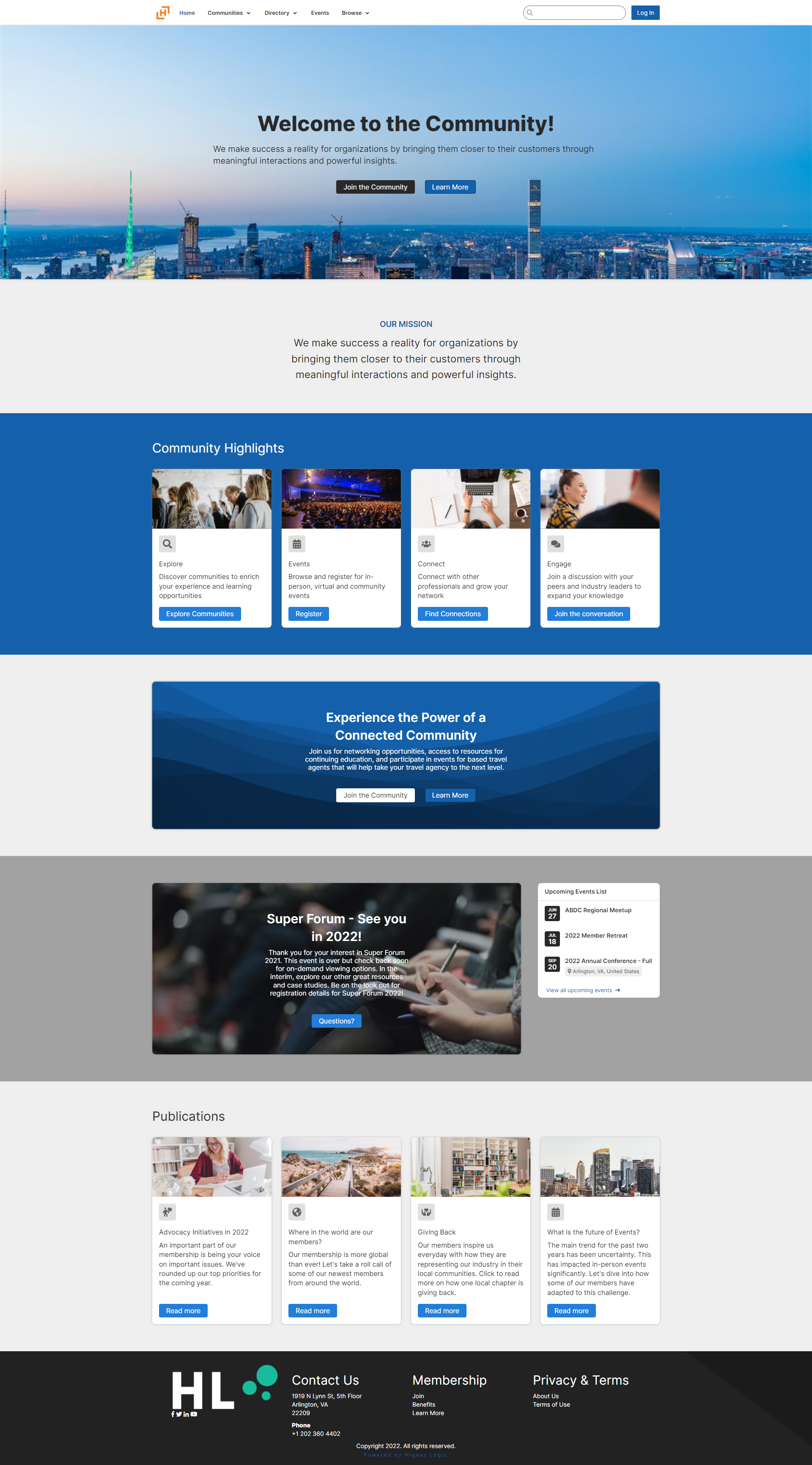
Higher Logic Thrive is a private community platform that empowers members, customers, support and product teams to create and manage meaningful, engaging online communities. The solution is designed to keep users coming back. They can find support, best practices, peer-to-peer connections, resources, events, and networking, all in one destination.
N/A
Optimizely Content Management System
Score 8.5 out of 10
N/A
Optimizely Content Management System (CMS) is purpose-built for marketers, and fully composable for developers. The CMS supports the end-to-end content lifecycle, helping users to deliver on-brand, high-impact digital experiences that 'wow' audiences.
When selected, Drupal was the tool that had enough power to create a robust intranet while not being too overly complicated. It allowed for custom integrations that were developed from IT, and it was able to handle the mass amount of users we needed, many of whom are not overly …
Higher Logic had an integration with iMIS, which was the CRM of choice at the time. It also interfaced well with our server infrastructure and technology for single sign-on development. Overall, the features of Higher Logic were more comprehensive than those of its competitor, …
Optimizely Content Management System takes the best bit of previous platforms and simplifies them without removing the more advanced features but not making the necessary to get things going. allowing for any user to jump in and start working is a massive help but empowering …
Episerver outranks these products in most cases. There are some functions in each product that you would love in Episerver but when you sum it up Episerver is the greatest :)
Optimizely CMS is part of a more composable suite when it comes to DXPs. With that, some other systems like Sitecore Experience Platform are monoliths, which makes the development and maintenance of those products fairly complex (this includes system architecture). In our …
Optimizely Content Management System doesn't invent complexity. It just sticks to common patterns and recommendations from Microsoft. This makes it extremely easy to learn and onboard new developers, and it makes it easier to upgrade and maintain.
EpiServer competes with both Drupal and WordPress, hands-down, in terms of both efficiency as well as usability. I would say EpiServer is actually a lot easier to use than Drupal was for me personally. EpiServer wasn't confusing like Drupal, and had an easier learning curve.
Features
Drupal
Higher Logic Thrive
Optimizely Content Management System
Security
Comparison of Security features of Product A and Product B
Drupal
8.1
74 Ratings
1% below category average
Higher Logic Thrive
-
Ratings
Optimizely Content Management System
8.4
168 Ratings
2% above category average
Role-based user permissions
8.174 Ratings
00 Ratings
8.4168 Ratings
Platform & Infrastructure
Comparison of Platform & Infrastructure features of Product A and Product B
Drupal
7.6
69 Ratings
2% below category average
Higher Logic Thrive
-
Ratings
Optimizely Content Management System
7.9
165 Ratings
2% above category average
API
7.264 Ratings
00 Ratings
8.0158 Ratings
Internationalization / multi-language
8.160 Ratings
00 Ratings
7.8126 Ratings
Web Content Creation
Comparison of Web Content Creation features of Product A and Product B
Drupal
6.5
78 Ratings
18% below category average
Higher Logic Thrive
-
Ratings
Optimizely Content Management System
7.8
193 Ratings
0% above category average
WYSIWYG editor
6.171 Ratings
00 Ratings
7.7177 Ratings
Code quality / cleanliness
8.175 Ratings
00 Ratings
8.1165 Ratings
Admin section
6.878 Ratings
00 Ratings
8.1177 Ratings
Page templates
5.577 Ratings
00 Ratings
8.2171 Ratings
Library of website themes
5.468 Ratings
00 Ratings
7.596 Ratings
Mobile optimization / responsive design
6.572 Ratings
00 Ratings
7.9175 Ratings
Publishing workflow
6.876 Ratings
00 Ratings
8.1171 Ratings
Form generator
6.372 Ratings
00 Ratings
6.7130 Ratings
Web Content Management
Comparison of Web Content Management features of Product A and Product B
If you want to set up a basic Not For Profit (NFP) Membership system and content base, Word Press is easier than Drupal. However, if you have specific needs that require a fair bit of customisation then Drupal is the best CRM available. If the webmaster is confident with PHP and SQL, Drupal allows a lot of creativity.
Higher Logic works very well for our business purposes. We can very easily create new communities when we need to (and this is often!). Our association isn't as concerned with driving engagement, but the tools Higher Logic provides allows us to take a closer look at the engagement level of our committee members when needed
If you want to build a website quickly there are plenty of ways to do so with some great examples and plenty of support both from the company and in the forums. if you want to build a more complex structure you can but be ready to spend the time to build exactly what you need as a solid foundation goes a massive way before building out content and making those choices early and sticking with them helps
Higher Logic product managers are probably some of the best in the industry. They know their products and aren't pushy in trying to sell them to you. Don't get me wrong, they do try to sell you a product, but they understand that not everyone who is tasked with learning more is also a decision maker. That doesn't stop them from being professional and thorough in their demonstrations or explanation of fees.
Their technical support is top notch. Not only do they work to resolve issues, they also work with you to help you with non-issues. Our initial redesign was done by an agency that worked with HL directly to set up the new site. When I was tasked with a mini-redesign this year, HL technical support offered me a lot of insight on how to best do this using just my skills and HL.
They offer training on their platforms to ensure your success as an administrator. There is no cost and you can either go to their onsite two days "boot camp" or you can access a plethora of training videos and webinars through their online users' community.
I think the user interface for content admins is very good and very competitive. And compared to other providers, the technology that CMS in particular has. So the way it integrated the net ecosystem is very well because it follows the MBC pattern. So basically it just allows really simple implementations for what would normally be complex components on any other sort of vendor that's out there.
This is not an easy CMS to work with if you don't have a good understanding of website development. It isn't "plug-and-play" like Wordpress or Shopify.
Over time, doing major updates to the system can be taxing, especially if you aren't well-versed enough in doing system updates in line with your "child" theme and code.
The CMS can become somewhat cumbersome with server resources if not carefully optimized while you build and customize it to your liking.
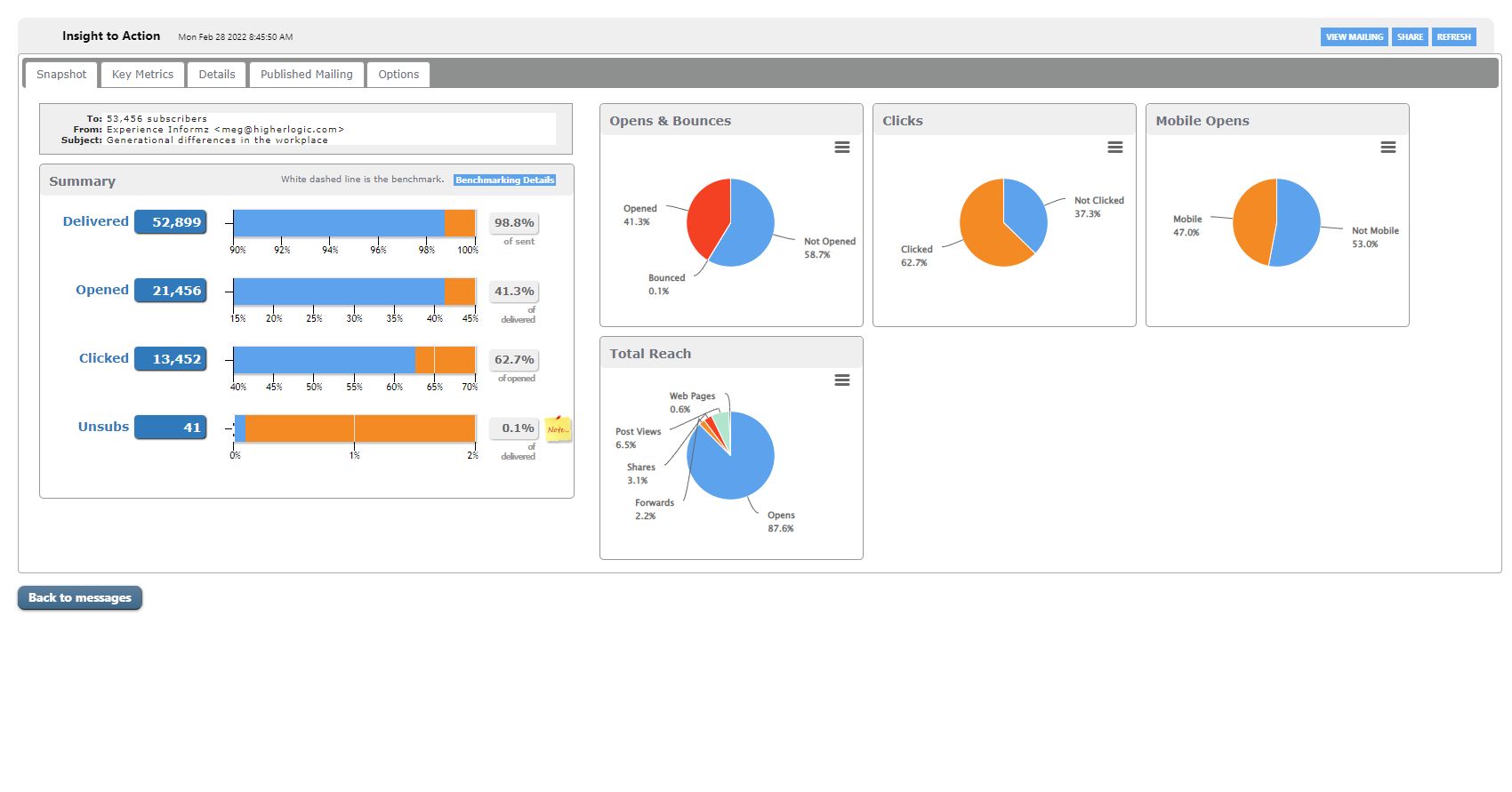
Reporting is copious but you cannot build your own reports so you may have lots of information in several different reports and have to pick and choose across several to combine manually. Exporting functionality is there but there are some reports that are only a screen shot and you cannot export them.
Magento did have some nice tools for creating product groups or carousels for promotion. Opti seems to be lacking in that.
A blog - maybe this is available and we don't have it installed, but a searchable blog would be very appreciated.
Structured Data/MicroData - maybe it's our install, but this seems to be missing
Meta data: we have access to limited types and need to make a request from IT, it would be nice to be able to access more to adjust for SEO needs.
When in a folder on the BLOCKS tab, it would be wonderful to hit the MEDIA tab and stay in that same folder.
I have some less technical people that will make folders with spaces - which Opti handles, but it would be great if it wouldn't accept a space or gave an error message not to use them.
I think I know why the extra code is added to urls and image links, but it causes issues when taking things from our testing site to the live site. For example, I need to copy the Navigation from Inspect Element on testing to put it in production. I have learned to work around it, but it's not my favorite.
The time and money invested into this platform were too great to discontinue it at this point. I'm sure it will be in use for a while. We have also spent time training many employees how to use it. All of these things add up to quite an investment in the product. Lastly, it basically fulfills what we need our intranet site to do.
They are a great company that offer great products - primarily their community. As they continue to grow and expand their offerings, I believe they will increase the number of products that offer and in turn grow their client base. We use their community, activity synch, and volunteer manager currently.
Since I work on the implementation side of things, and do not directly own licensing for Ektron CMS, I have to base this rating off of how I think it will be received or presented to customers looking to start a new site deployment. I try to remain CMS agnostic, though my specialty is with the .NET and Microsoft stack. Because of the experience I have working with Ektron, I tend to be more forgiving with the shortcomings as I am familiar with how to work around them or past them from experience. Being familiar with the community available also helps, as you become familiar with the best approaches to find solutions to your issues. Each product has it's ups and downs and all of them are only going to be as good as the company or development team implementing them can make them. This is EXTREMELY important to remember when choosing a CMS, as it can make or break your expensive investment.
As a team, we found Drupal to be highly customizable and flexible, allowing our development team to go to great lengths to develop desired functionalities. It can be used as a solution for all types of web projects. It comes with a robust admin interface that provides greater flexibility once the user gets acquainted with the system.
The software is not that simple to use when you have to get volunteers involved in the content assembly process. The content management system that is native to Higher Logic could improve to make the task of training volunteers far easier. Given its simplicity, it is hard for the system to rival more developed websites that use advanced CMS software.
From our editors perspective they find the CMS system easy and to clear to use. Our developers find it very easy to design on and appreciate the level of service support available. It's also always evolving and getting better every year. We find this investment reassuring and encourages us to try keep pace and see how we can continue to push the envelope and continue to improve all aspect of our websites and online touch points.
Drupal itself does not tend to have bugs that cause sporadic outages. When deployed on a well-configured LAMP stack, deployment and maintenance problems are minimal, and in general no exotic tuning or configuration is required. For highest uptime, putting a caching proxy like Varnish in front of Drupal (or a CDN that supports dynamic applications).
Drupal page loads can be slow, as a great many database calls may be required to generate a page. It is highly recommended to use caching systems, both built-in and external to lessen such database loads and improve performance. I haven't had any problems with behind-the-scenes integrations with external systems.
As noted earlier, the support of the community can be rather variable, with some modules attracting more attraction and action in their issue queues, but overall, the development community for Drupal is second to none. It probably the single greatest aspect of being involved in this open-source project.
Higher Logic's support is sub-par at best. It can be difficult to get in contact with anyone from the support team, and when you do, it seems as if they don't want to talk to you and don't even have the answers to your questions. Within the past few months, we've contacted them twice and both times have been very disappointing. The first time was to let them know there was an inconsistency between the analytics report and the heat map. They basically said that they already knew about the problem but didn't have any set plans to fix it because they were working on other "more important" things. The second time was for a conference call to go over some additional features that we wanted to implement. And the lady we spoke with seemed very disgusted to have to speak with us and then rushed us off the phone because she had another call.
I attended multiple trainings/tutorials early in the process. The vendor-supplied content about Optimizely was engaging for users/attendees (I often analyze training content, compliance programs, governance plans), which helps our OCM people by having good "word of mouth" about the product long before a rollout ever happens. I actually when the user-focused portion of the Optimizely Academy twice in 2022 to ensure I had a grasp on operability and to be able to support the training and OCM efforts
I was part of the team that conducted the training. Our training was fine, but we could have been better informed on Drupal before we started providing it. If we did not have answers to tough questions, we had more technical staff we could consult with. We did provide hands-on practice time for the learners, which I would always recommend. That is where the best learning occurred.
The on-line training was not as ideal as the face-to-face training. It was done remotely and only allowed for the trainers to present information to the learners and demonstrate the platform online. There was not a good way to allow for the learners to practice, ask questions and have them answered all in the same session.
Ektron is one of the best solution for .Net platform. Over the years have improved the performance issues that the previous versions had. My only complain is right now you can't do Page builder pages if you choose to have a MVC architecture
Plan ahead as much you can. You really need to know how to build what you want with the modules available to you, or that you might need to code yourself, in order to make the best use of Drupal. I recommend you analyze the most technically difficult workflows and other aspects of your implementation, and try building some test versions of those first. Get feedback from stakeholders early and often, because you can easily find yourself in a situation where your implementation does 90% of what you want, but, due to something you didn't plan for, foresee, or know about, there's no feasible way to get past the last 10%
Drupal can be more complex to learn, but it offers a much wider range of applications. Drupal’s front and backend can be customized from design to functionality to allow for a wide range of uses. If someone wants to create something more complex than a simple site or blog, Drupal can be an amazing asset to have at hand.
We are just in the early stages of looking into HubSpot Service Hub to determine if it will be a viable replacement for Higher Logic Community. We have other uses for the ServiceHub so there is an appeal to have it be a "one stop shop" for us. The big question however is how it will stack up to Higher Logic for the online communities. Candidly, while Higher Logic may be tough to beat in this area, it is something we will be looking closely at in the next 12 months.
Optimizely Content Management System is much more feature rich, and less complex that the other CMS platforms we have used. Optimizely Content Management System is more intuitive in how the content is structured and how easy it is to pull blocks of content to create the layout of a page.
Drupal is well known to be scalable, although it requires solid knowledge of MySQL best practices, caching mechanisms, and other server-level best practices. I have never personally dealt with an especially large site, so I can speak well to the issues associated with Drupal scaling.