Epicor HCM supplied human resource management system (HRMS) capabilities, but Epicor has stopped offering this functionality and company's HR applications are no longer available.
N/A
Paycom
Score 8.4 out of 10
N/A
Paycom is an automated HCM platform, built on a single database that eliminates redundant data entry through automation. A payroll and HR software solution, Paycom is used by organizations of all sizes to access employee data without navigating multiple systems.
I've used BambooHR, which I loved, but they just didn't have a payroll side to it. I've used ADP, which I hate it, and wasn't interested in getting their HR side of it. We've used a product called Epicor, which it was mediocre at best. And those are the only products I'm …
While Epicor HCM is functional for enterprises with many branch locations, I feel that is best suited out of the box for locations with corporately centralized HR. This overcomes some of the shortcomings of security capability and the need to spend a lot of time in configuring routing. The CSS portion of Epicor HCM is not as robust as competing systems and should not be used if corporations are actively looking to onboard at a high rate.
As I mentioned, the onboarding process is incredibly easy. We have around 300 employees and are constantly hiring, so Paycom has been a huge help. In fact, the ATS functionality was a major factor in our decision to switch to Paycom.
Security is always an issue with payroll/HR software. Security in Epicor HCM is very robust. In our manufacturing facility it is important that supervisors have access to their employee's information and the software allows me to limit access to only the correct department. There is also menu security that will allow me to remove access to features by user and grant access only to what they require to do the job.
This software is the repository for many different types of employee information. For example in the past we have tracked skills training by employee in either an Access database or an Excel spreadsheet. We are currently in the process of loading individual employee skill information which will allow us to query the database to pull any information that is not already a canned report in the system.
Payroll tax reports are handled by the system seamlessly. In our old system I had to keep confidential employees in a different "company" which meant I had to combine the two companies and do quarterly and year end tax reporting manually. The confidential flag in Epicor HCM allows me to utilize reports directly from the system and also creates the files needed to file online for both my quarterly SUI and W-2 reporting to SSA at year end.
I like the employee self-service feature. It's very straightforward and easy to use. I also like my representative, Mikey. He's been very helpful—every time I call him, I get the assistance I need. I also appreciate how quickly I can get someone on the phone and get help when needed.
Administrative set-up is a nightmare --> Set-up such as e-mail templates (routing, candidate communication, alerts) and configuring security rights for users, includes looking at list of approximately 100 fields some of which seem like duplicates. Interestingly, you may find that the field you need is missing. You'll need to create a work-around or pay Professional Services to get it set-up correctly, even though they should logically be available. Another alternative is that you need to go to an obscure task under Utilities that you've never used before so you can uncheck a box.
Auto alerts seem like a great idea, but the set-up is limited in such a way that you will probably need a Filter SQL statement to get it the way you want. (Ex: No way on the birthday alert to simply filter to active employees. Get ready to send out over 500 alerts for ALL employees and dependents.) You can either ask someone in your IT department or again, go to Professional Services ($$$).
Routing also seems like a great idea but if you make too many changes in the routing set-up, it errors out and doesn't allow you to submit changes. Instead you must make only a few changes, submit, then go to the task again. Efficiency is not a concern for HCM. If you have more than 5-10 routes in the system for certain tasks, this can slow down the entire routing page, making you wait between 20-40 seconds to approve and go to the next route. This will make for a fun time during your annual review process when you've got 100+ reviews routed to you.
Epicor staff (except for customer support) are salespeople--first and foremost --> Glassdoor reviews show that Epicor "emphasizes billable hours above all else" -- we've experienced this firsthand. Most account managers, implementation and interface consultants will try get you on the phone (at a whopping $100-$300/hr) to talk about nothing and avoid delivering what you've paid them for. If they're not doing that, they may just ignore your e-mails and never get back to you.
Unreliable customer support --> Customer support staff seems understaffed and sometimes lack technical knowledge. Not surprising considering that HCM is so convoluted and frustrating. Even the most expert support reps are stumped by questions--the system is just that confusing. Sometimes there is no resolution at all so your call is turned into a service change request. Then you cross your fingers and hope it gets addressed in the next upgrade. I submitted one support call over two months ago. It is still open. Sadly that is not out of the norm.
Unexplainable errors in interfaces --> Payroll and benefits interfaces have been unreliable. Employee data changes are dropped with no explanation; ergo, there is no possible solution. Unless of course you want your benefits consultant to spend several hours ($$$) researching it or very, very slowly talking you through it over the phone.
Customizations that keep on breaking and breaking and breaking --> HCM releases updates almost twice a year, with "new and improved" features. Sometimes the features don't work, as if the software was updated without any testing or foresight. You'll find that customizations you've paid for have broken inexplicably and need to be re-done. Of course you will be charged for the extra hours needed to fix the customizations.
I am not a fan of the most recent update. I wasn't prepared for the change especially given it came right before payroll was processed. I'm told given time, I will get used to it and I'm always open to change for the better.
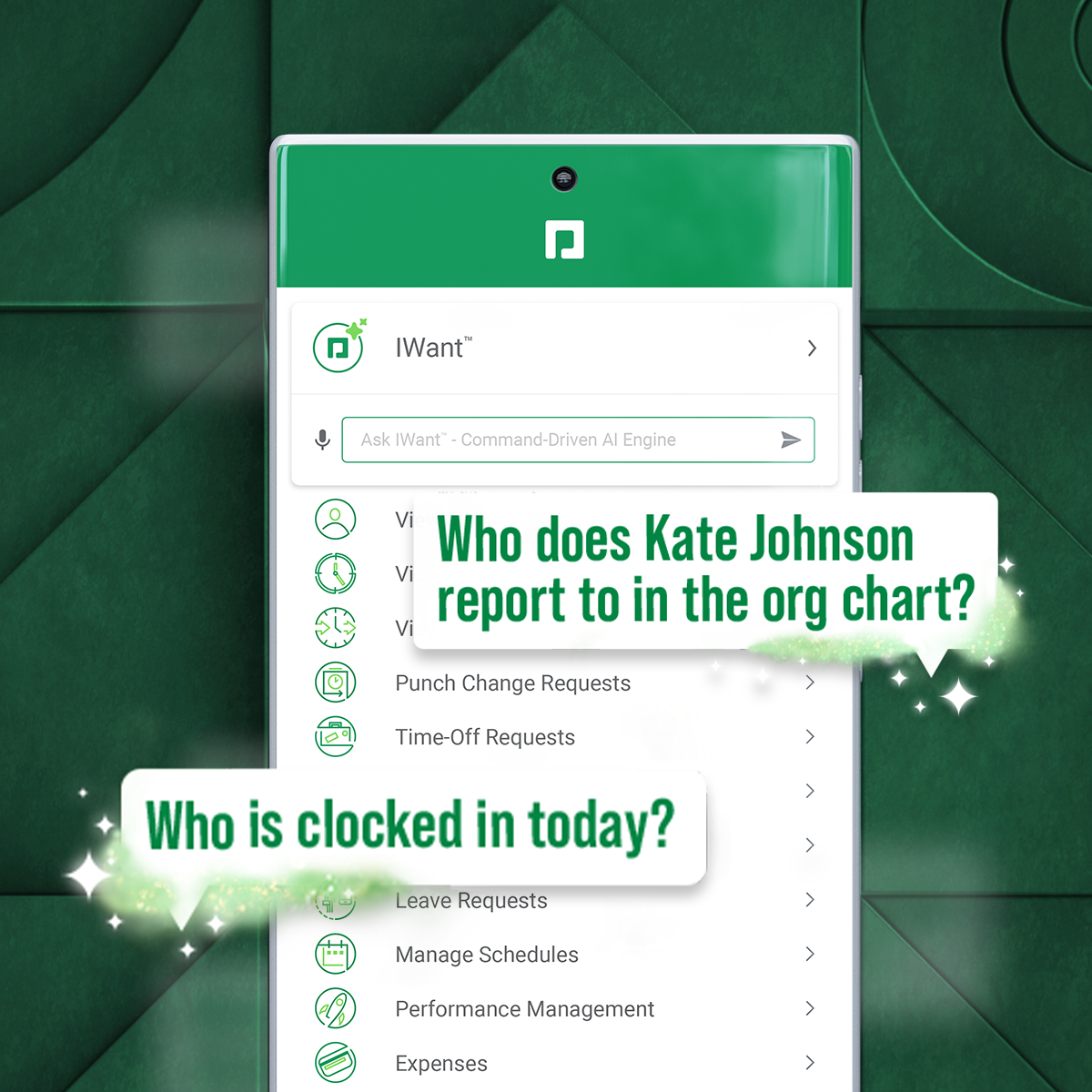
IWant™ feature isn't what I hoped it would be. I haven't used it much given the information I need in Paycom I can find quickly on my own. I have heard however that several employees utilize and appreciate the IWant™ feature.
I just recently lost my job after 16 years, and purposely sought out a position where I could continue to work with HCM. I am now in a similar role to what I was in before, and can continue the same type of work and enhancements that I did at my other company.
we are having no problems with how the system works and our support system at paycom is the best - we are learning more and using the system in more ways all the time the only thing that could be better is pricing on some things
Where it's good: Epicor HCM at a high level has a straight-forward interface for navigating to the main content sections at either the employee or HR administrator level. The interfaces are consistent throughout the application, and after a brief learning curve, one can navigate through the remainder of the interface pages in any content area without too much difficulty. HCM also has great tools for making sure the analysis of data is available and accessible to non-programmer personnel. Where it struggles: One thing working against the usability of the HCM product is the overuse of the row-selection scheme for all many to many relationships. HCM uses a "select the row from the left frame" and then "enter data corresponding to this row in the right frame" scheme for most of its data entry components. One example of overuse is the employee address entry. During the first setup of an employee or during a candidate's application, HCM allows the user to specify multiple addresses. While this functionality is desired for long-term storage, an option doesn't exist to forgo this interface type for quick initial entry for the primary use case (one address per employee). This is one example, but is particularly visible when a candidate must also bridge the learning curve.
I'm probably going to have to go seven and three-quarter to eight, and that may be user error to me because I know Paycom has got it figured out, but there's times I just can't figure it out, even with some of the tutorials, the university, the show-mes, and calling Alex, our representative. He can hold my hand and walk me through that process, and it just may be I didn't get it, but that's why I gave that score. I'd give it a solid nine.
The product performs well. As with any software there are bugs and system enhancements needed, but there are channels in place to let Epicor know what they are so they can add to future versions. Open Enrollment and Salary Planning can be a bit slow at times.
There have been a lot of issues with it at first, but we've been figuring a lot of them out on our own. Needing patches to the program though is something that I didn't expect to happen as often as it does.
In 6 years, we've never had a bad experience with client support. We implemented during COVID, and I was the only person in HR at the time. I was also having to homeschool our children, which meant bizarre work hours and limited time to focus on platform build at times. There were nights that I was literally on calls at 11 pm and the implementation team was unbelievably supportive. Recently, a Position Seat specialist came on site to help us set up for our 5 client codes - the experience was transformative for how we use the platform and an absolute game changer. I trust Paycom because I trust our representatives. They truly are strategic partners for us, and work to ensure we're maximizing the platform and that our needs are being met
We had someone from Epicor come on site to do training, and we "shared" our trainer with another company who was also doing the same major upgrade. It was nice to have another company there so we could ask each other (and the trainer) questions. This allowed for more meaningful discussions during training.
Tadd and Ellie have been great! They have show us many aspects that implementation did not. They are very personable and action oriented as well. Anytime we need them they offer to swing in.
It was good, but hard to know what questions you need to ask until you actually get in there and start working with a live product. But Paycom is also very helpful every time I call and can't figure something out. Nathan has been very friendly and helpful no matter what I call him about. He is always eager to help out.
As stated earlier, you won't find all of the problems and things that you would like to improve on until you implement. After go-live, you then will have a long period of adjustment as you get the data and processes to work the way that you really want them to.
Not at all satisfied it was a nightmare we spent over 8 months with the implementation team having issues after issues all related to the Puerto Rico regulations (half my employees are in Puerto Rico) and at the end we were moved over from the implementation team to the production team without all the issues being resolved
Epicor pales in comparison to the HRIS and report building systems listed above. Unfortunately, Epicor was implemented prior to my joining the organization. From what I was told, Epicor was chosen because of its ability to be customizable to any industry. However, what we have learned is that this isn't the whole truth. While Epicor might be able to customize to your specific industry with creating certain data fields, it still cannot function properly to meet the needs of your respective industry. For example, my industry is education. There are numerous grant propasals that we send that require specific demographic information. Consequently, when we try to run a report in Epicor, that information is never captured with accuracy which makes sending these reports for grants a herculean task, especially when these donors question our data.
I have not currently used any other products. I'm still kind of new to the HR industry. The only other thing that I really have to compare it to is Vonmar's system, which they created themselves, and it was not user-friendly.
Performance is not noticeably impacted by adding more users. Microsoft IIS and SQL are Epicor HCM's underlying technology and have proven reliability. In addition, IS staff are easy to find that know these technologies.
It's helped us save time. We've been able to automate a number of payroll and accounting functions. It's also enabled our employees to use the ask gear feature. So it's really saved time, and also we've not gotten hacked, which is always a plus.