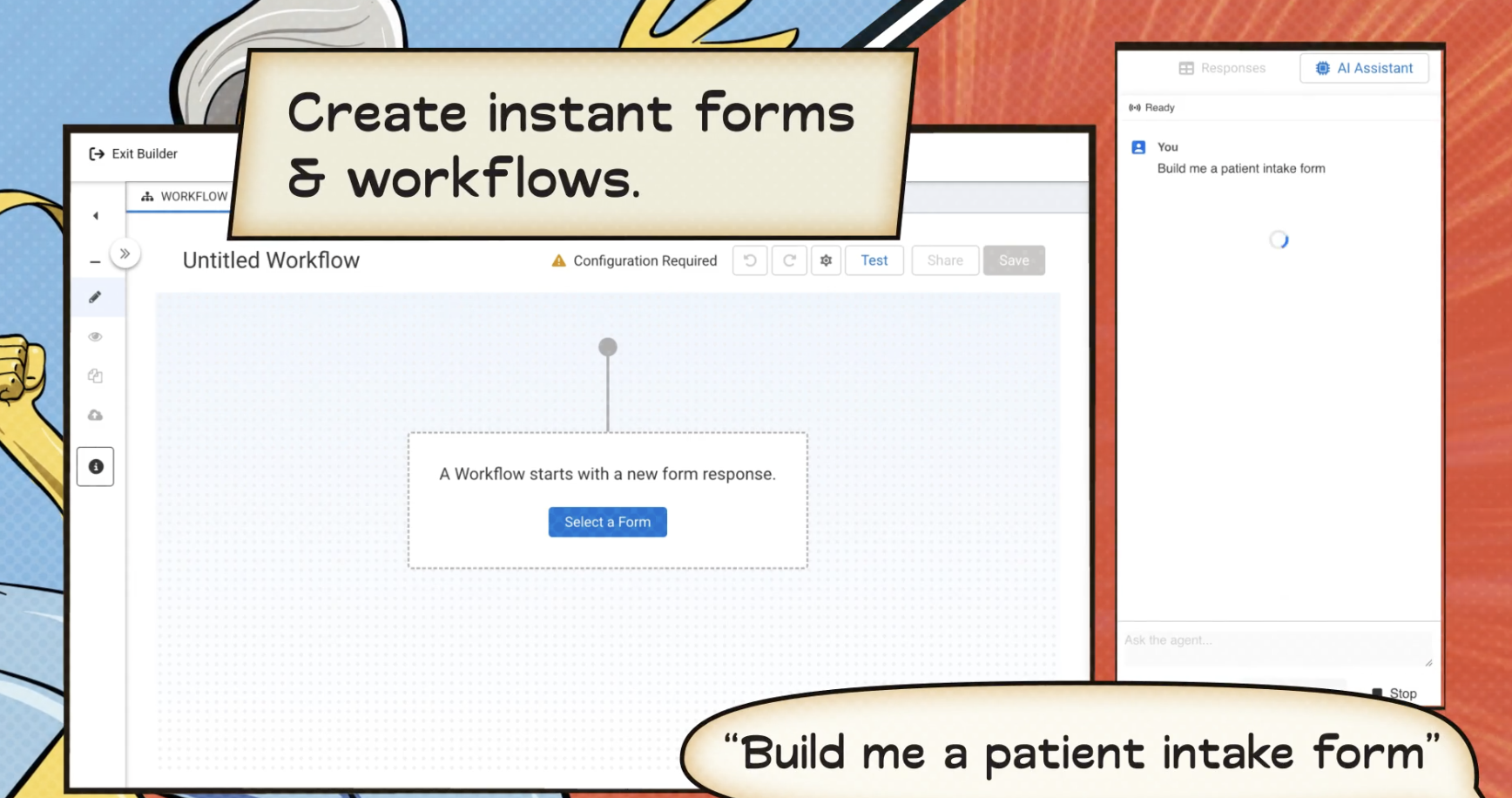
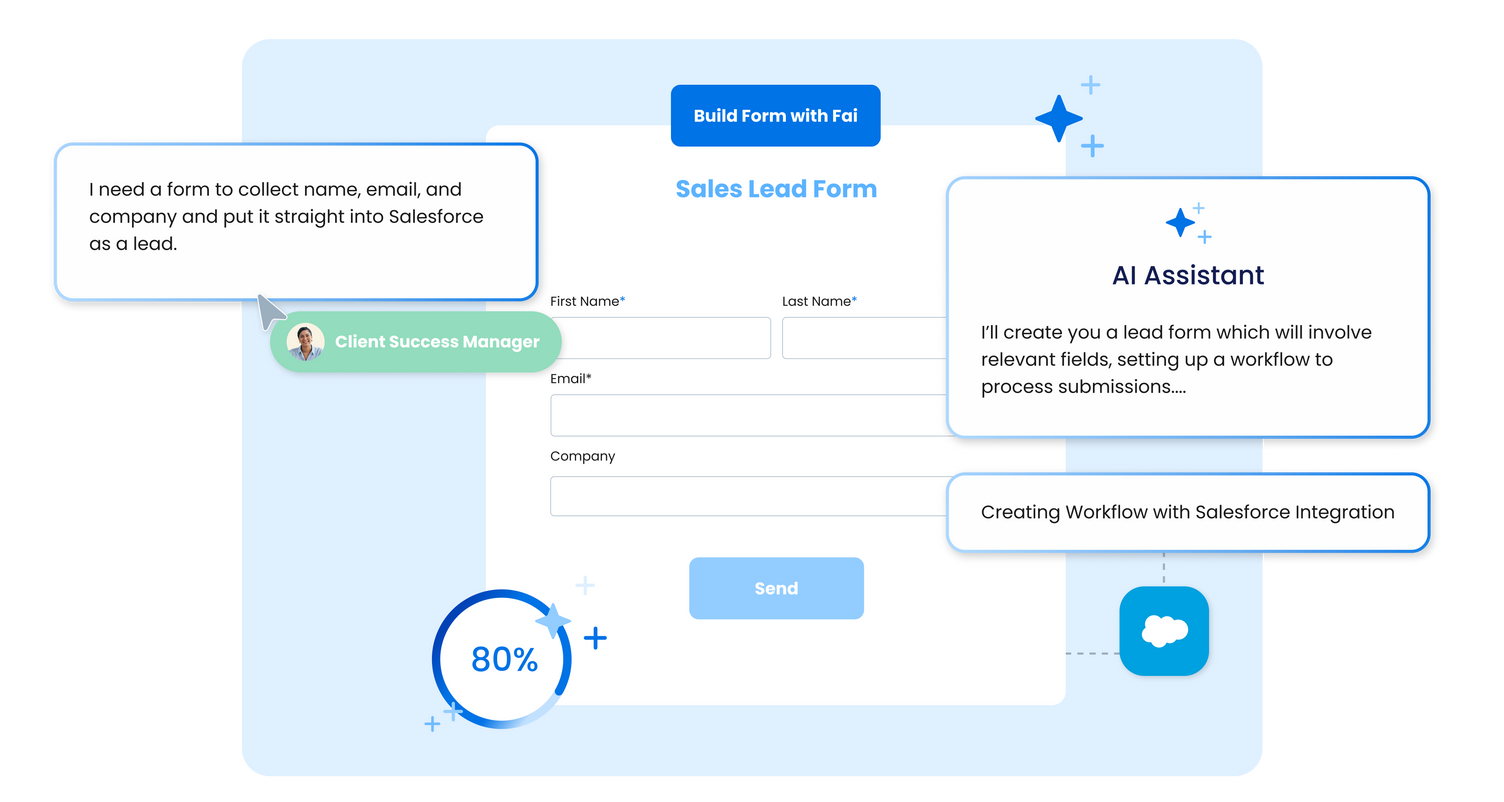
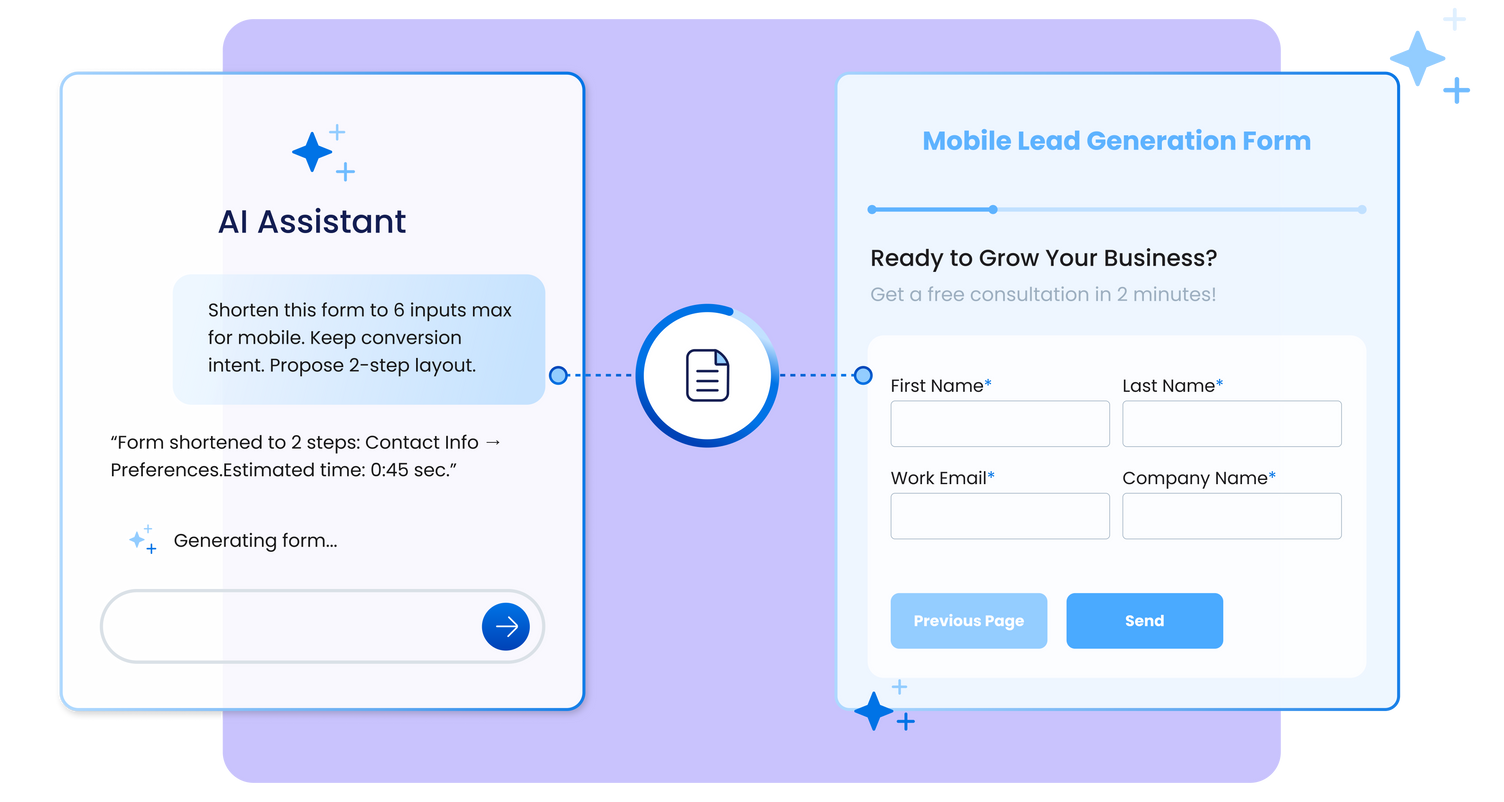
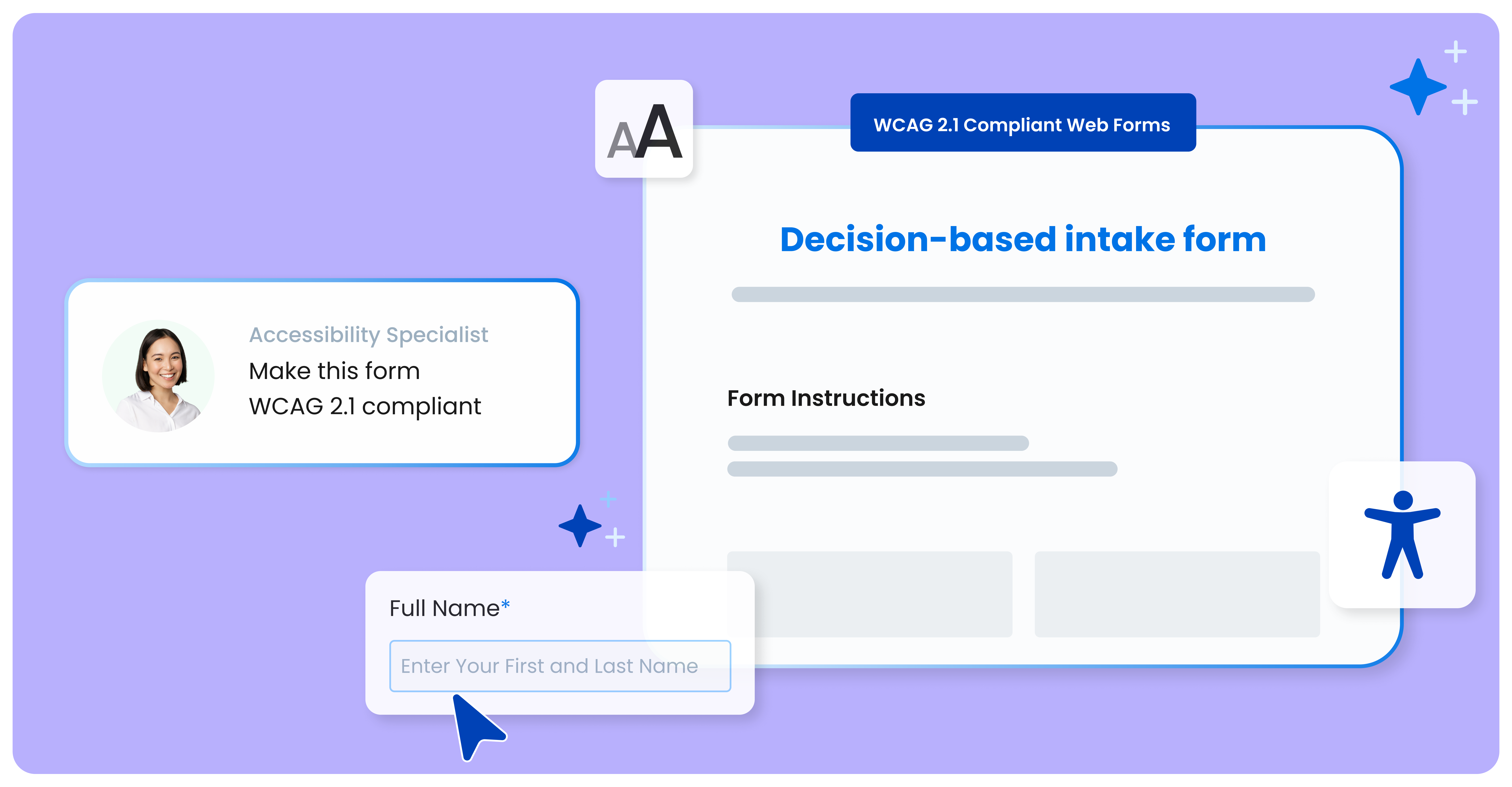
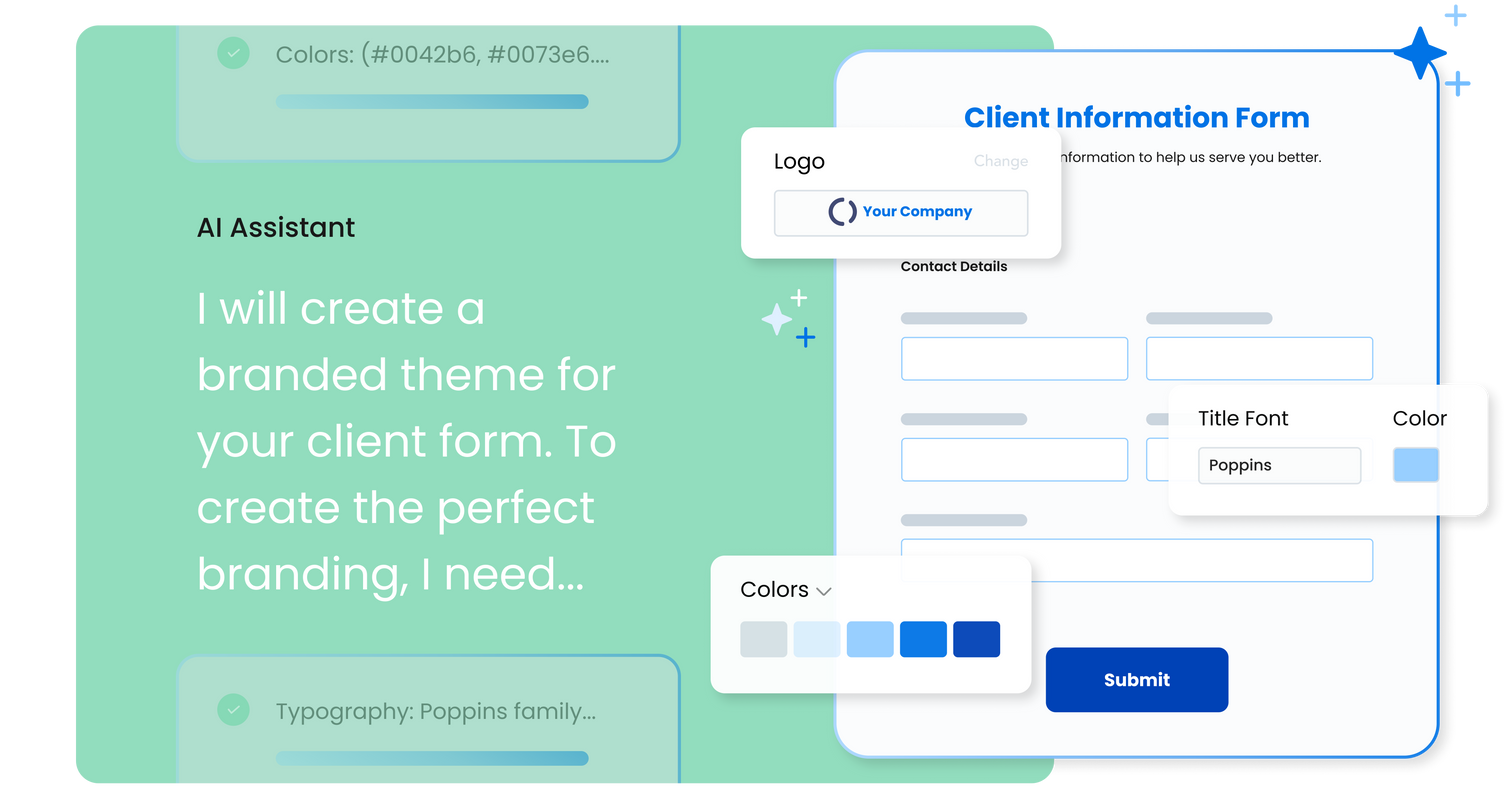
FormAssembly is an enterprise data collection and automation platform designed to enable organizations to capture clean, compliant data from the start. With the latest edition of the platform, FormAssembly Atlas, and its built-in AI assistant, Fai, forms and workflows build themselves, connect to Salesforce and other systems in just a few clicks, and ensure every record is structured, secure, and ready for automation or AI. In short, FormAssembly is designed to…
N/A
Typeform
Score8.1 out of 10
N/A
Typeform is online form and survey software, focused on high-quality visuals and user experience. Users can create surveys, registration forms, tests & quizzes, contests, tutorials, shopping carts, and contact forms, without needing to write code. Typeform offers freemium plan pricing. Their basic plan is free for one user; their Pro plan in $35/month for one user (includes logic jump, respondent notifications, calculator, custom thank you screen, hidden fields, payment fields, and 2GB file…
I have used Typeform, Yupform and Jotform before choosing FormAssembly. Compared to them, FormAssembly is better for business use and handles complex workflows more smoothky. It is Salesforce integrtion is more reliable and reduce manual work. While other are simpler or have …
A de minimis incentive was given to thank the reviewer for their time. The incentive was not used to bias or drive a particular response, nor was the incentive contingent on a positive endorsement. More Info
Verified User
Chose FormAssembly
The big differentiator for me with FormAssembly has always been the Salesforce integration. I have yet to find an alternative form builder that makes building integrations with Salesforce any easier than FormAssembly. I like the look and feel of Typeform forms better than …
A de minimis incentive was given to thank the reviewer for their time. The incentive was not used to bias or drive a particular response, nor was the incentive contingent on a positive endorsement. More Info
A de minimis incentive was given to thank the reviewer for their time. The incentive was not used to bias or drive a particular response, nor was the incentive contingent on a positive endorsement. TR verified that a representative sample of customers was invited. More Info
Well suited to get information into Salesforce. For the pricepoint you have to pay and the workflow you have to set up it is less appropriate when using Microsoft 365. The Google connector is very simple and you can use it with forms, it hinders us that is not an option unless a workflow is used.
A de minimis incentive was given to thank the reviewer for their time. The incentive was not used to bias or drive a particular response, nor was the incentive contingent on a positive endorsement. More Info
Typeform is definitely a leader in the online survey space and that's for a reason. Between logic mapping and the ease of use for the end user, it's a solid app. The unfortunate thing, however, is the price tag--particularly considering the protection you receive from bots. Typeform only allows a certain number of responses at certain package levels, ie: the lowest level, you get a very limited number of responses but in order to receive more responses before your survey is locked, you must upgrade. This is what ultimately lead us to cancel with them. When you post a survey on Typeform, that survey is automatically posted publicly on their website--making it widely available to bots. Typeform offers no easy form of protection like a standardized captcha that you can add to the survey in order to filter bots out. Instead, there are several "work arounds" that they advise users to do that have very limited degrees of success. A quick online search shows that Typeform knows this is clearly an issue, yet they have yet to build in a bot-prevention feature. Since their plan prices vary by number of responses, it seems that they have no incentive to limit the amount of bots filling out surveys I believe. Ultimately, we canceled because, although the app is powerful, it just seemed like their business practices were unethical in my opinion.
Integrating with Salesforce - mapping fields is straightforward, and custom formulas allow for some increased complexity in processing.
Scalability - we leverage the URL pre-fill and dynamic picklist features to use a single form for multiple different programs.
Simple form building via point-and-click is relatively easy. Hidden fields, conditionals, and repeat sections are useful features for more complex form needs.
Custom CSS option is useful - has allowed us to visually integrate FormAssembly forms onto our website via iframe.
A de minimis incentive was given to thank the reviewer for their time. The incentive was not used to bias or drive a particular response, nor was the incentive contingent on a positive endorsement. More Info
FormAssembly could do a much better job supporting customers. As I mentioned, FormAssembly is critical to our day-to-day operations, so it is very important to us that support is prompt and reliable when we reach out. Unfortunately, this has not been our experience. For example, on more than one occasion, I had a support case open for months without hearing back, despite repeatedly following up.
FormAssembly could make troubleshooting and configuration updates easier by improving their user interface. Salesforce, for example, has a feature called "Where is this used?" for fields, which makes it easy to address bugs and make changes efficiently and effectively.
FormAssembly could benefit from improving training and support resources.
A de minimis incentive was given to thank the reviewer for their time. The incentive was not used to bias or drive a particular response, nor was the incentive contingent on a positive endorsement. TR verified that a representative sample of customers was invited. More Info
The pricing structure is a little steep, especially for the Pro+ plan. It would be nice if they had an a la carte option because there are some features we are paying for that we will never use.
When creating forms, sometimes the cursor will inexplicably leave the field you are typing in and leave you with incomplete sentences.
Even though we are paying for our use, we still have the Typeform branding on our forms, which I think should be removed once you upgrade from the basic plan.
A de minimis incentive was given to thank the reviewer for their time. The incentive was not used to bias or drive a particular response, nor was the incentive contingent on a positive endorsement. More Info
FormAssembly continues to meet our needs, and the product functionality continues to grow, providing us with new opportunities to utilize the software. We've built many forms and associated processes on FormAssembly. It would require a large effort to migrate to another platform. We have invested a lot of time in learning FormAssembly.
A de minimis incentive was given to thank the reviewer for their time. The incentive was not used to bias or drive a particular response, nor was the incentive contingent on a positive endorsement. More Info
A de minimis incentive was given to thank the reviewer for their time. The incentive was not used to bias or drive a particular response, nor was the incentive contingent on a positive endorsement. More Info
The UI is very intuitive and easy to use, even if you've never used a form building platform before. There is plenty of easy-to-find documentation so if you're unsure on anything, you can sense-check it. I also love the drag-and-drop form building. It is a breeze to use, especially compared to other form builders which are quite clunky, or where the functionality takes a lot of clicks to reach. Everything is easily accessible and ready to use with FormAssembly.
A de minimis incentive was given to thank the reviewer for their time. The incentive was not used to bias or drive a particular response, nor was the incentive contingent on a positive endorsement. More Info
Typeform takes a little bit of getting used to. Compared to Google Forms there are a lot more parts to the software and customizing the form isn't as intuitive. I have also found that embedding it into one smaller section of a webpage seamlessly can be a little tricky. But everything can be figured out eventually and the analytics are very good.
A de minimis incentive was given to thank the reviewer for their time. The incentive was not used to bias or drive a particular response, nor was the incentive contingent on a positive endorsement. More Info
While it's not a true development package and misses some features like ingestion of external data for lists, etc... the product is fast, stable, easy to use, and will suit the needs of anyone needing online form functionality with SalesForce and other connectors available for your marketing needs.
A de minimis incentive was given to thank the reviewer for their time. The incentive was not used to bias or drive a particular response, nor was the incentive contingent on a positive endorsement. More Info
I haven't used the support portion of Typeform, as everything was quite easy to use. I have never encountered a situation where I did not know what to do or how to fix something myself. Typeform is very easy to adopt within any organization, no matter if you understand tech or not.
A de minimis incentive was given to thank the reviewer for their time. The incentive was not used to bias or drive a particular response, nor was the incentive contingent on a positive endorsement. More Info
A de minimis incentive was given to thank the reviewer for their time. The incentive was not used to bias or drive a particular response, nor was the incentive contingent on a positive endorsement. More Info
FormAssembly's features were more expansive than SurveyMonkey, in my opinion. When doing a comparison, we really liked that we could set up formulas to calculate expenses for us and that they would be easy to update as needed for rates that change from year to year.
A de minimis incentive was given to thank the reviewer for their time. The incentive was not used to bias or drive a particular response, nor was the incentive contingent on a positive endorsement. More Info
When looking for a feature rich & flexible / customizable solution, Typeform beats out everyone. However, for specific use cases (like NPS), AskNicely is a clear winner in terms of features, but is much too expensive. Typeform is also fun to use, especially compared to Wufoo which seems so out of date
A de minimis incentive was given to thank the reviewer for their time. The incentive was not used to bias or drive a particular response, nor was the incentive contingent on a positive endorsement. More Info
A de minimis incentive was given to thank the reviewer for their time. The incentive was not used to bias or drive a particular response, nor was the incentive contingent on a positive endorsement. More Info
Typeform has helped guide our Customer Success, Product, and Marketing teams in strategizing how to engage with customers better, and it has also given us a quick and easy way to do so! By collecting feedback and being able to share it across internal teams, we can coordinate our efforts to build our customers a better tool.
Typeform has proved to be an elegant solution to one of our earlier vexing problems (previous survey tools that looked annoying, had extremely limited branding options/were not customizable, and didn't integrate well with the rest of our tool set) while not breaking the bank for us - it's a very reasonable price point and does WAY more than the previous tools we were paying just as much for.
A de minimis incentive was given to thank the reviewer for their time. The incentive was not used to bias or drive a particular response, nor was the incentive contingent on a positive endorsement. More Info