Google Analytics is perhaps the best-known web analytics product and, as a free product, it has massive adoption. Although it lacks some enterprise-level features compared to its competitors in the space, the launch of the paid Google Analytics Premium edition seems likely to close the gap.
$0
per month
Klaviyo
Score8.3 out of 10
N/A
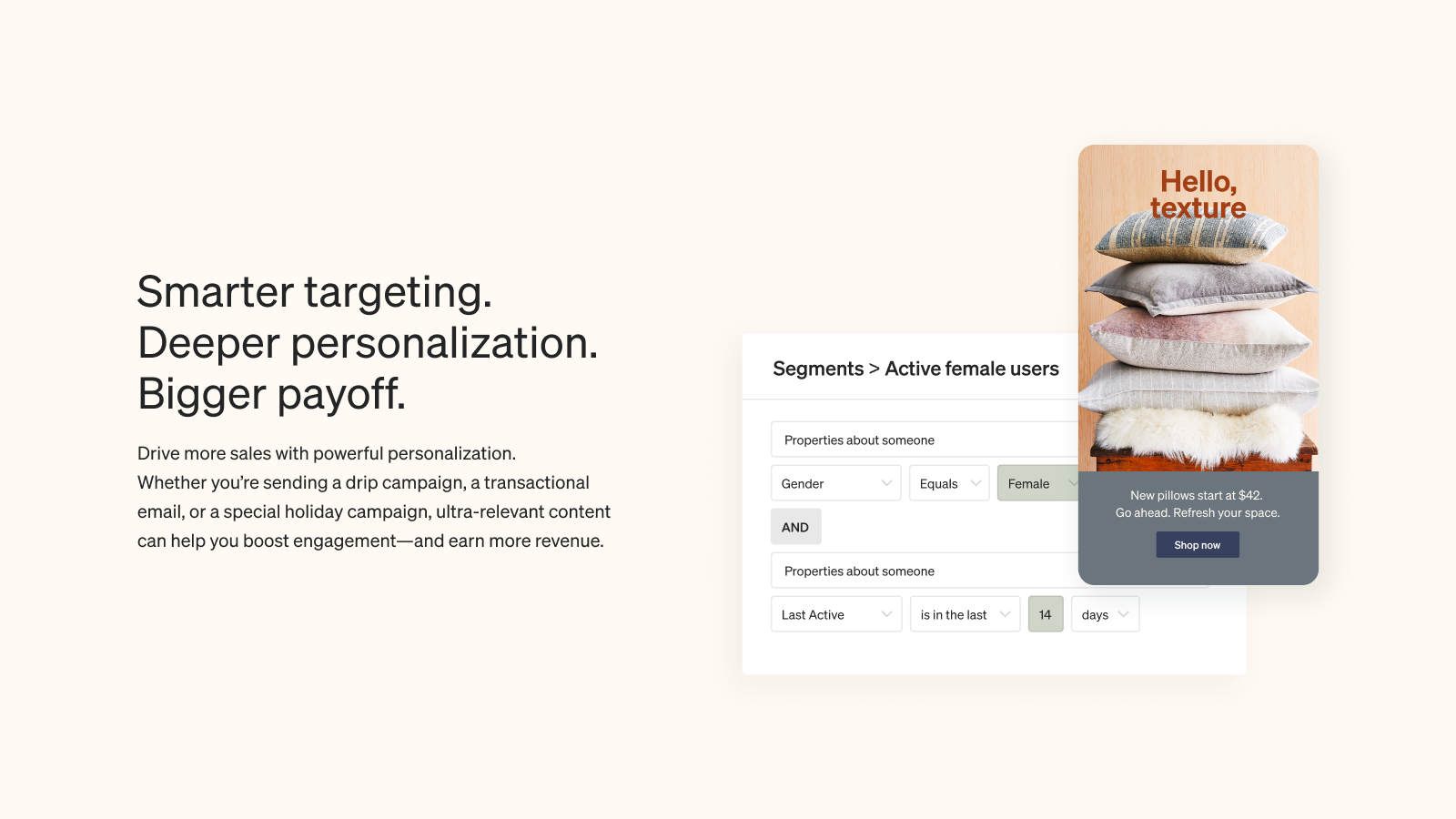
Klaviyo is a marketing automation platform that helps businesses to centralize and use every piece of their customer data. With Klaviyo, businesses can combine customer data with more than 350 native integrations to automate personalized email and SMS communications that make customers feel seen. From mom-and-pop shops to established companies, Klaviyo states businesses like Dermalogica, Living Proof, Solo Stove, Citizen Watches, and more than 143,000 other paying users leverage their platform…
$20
per month
Pricing
Google Analytics
Klaviyo
Editions & Modules
Google Analytics 360
150,000
per year
Google Analytics
Free
No answers on this topic
Offerings
Pricing Offerings
Google Analytics
Klaviyo
Free Trial
No
Yes
Free/Freemium Version
Yes
Yes
Premium Consulting/Integration Services
No
No
Entry-level Setup Fee
No setup fee
No setup fee
Additional Details
—
Paid plans start at $20/month and include:
251 - 500 contacts
5,000 monthly email sends
150 SMS/MMS sending credits
Applicable SMS carrier fees
Mobile push notifications (free beta)
Email and chat support
Additional contacts, email and text sending credits, and service plans available to meet the needs of any size business.
View all of our pricing and estimate your total cost of ownership at klaviyo.com/pricing
Marketing Automation Manager in Information Technology at Surgent Online Education (E-Learning, 501-1000 employees)
Chose Google Analytics
Webtrends as a platform is older than Google Analytics and still quite good. If you have a company that is used to using Webtrends, it's likely still a good fit for you. Google Analytics has a lower entry cost and more accessible training to new Users, so that's why I would …
A de minimis incentive was given to thank the reviewer for their time. The incentive was not used to bias or drive a particular response, nor was the incentive contingent on a positive endorsement. More Info
Klaviyo
Verified User
Chose Klaviyo
We moved from MailChimp to Klaviyo around ~2019, and Klaviyo already had an integration that gracefully synced all our data. At the time, we particularly preferred Klaviyo's A/B testing tools over MailChimp's, and the rest of their feature suite helped us stay. We still use WooC…
A de minimis incentive was given to thank the reviewer for their time. The incentive was not used to bias or drive a particular response, nor was the incentive contingent on a positive endorsement. More Info
Digital Commerce Manager in Corporate at Clinical Research Dental (Business Supplies & Equipment, 51-200 employees)
Chose Klaviyo
Klaviyo has a very intimate integration with Shopify bringing in purchasing behaviour, browsing behavior, total spend, order value, ordered products, etc. Klaviyo's automated email journeys are way more complex and support multiple IF conditions, which allows granular …
A de minimis incentive was given to thank the reviewer for their time. The incentive was not used to bias or drive a particular response, nor was the incentive contingent on a positive endorsement. More Info
Verified User
Chose Klaviyo
Klaviyo is far more advanced than Mailchimp and Constant Contact, and it is better for businesses looking to grow their sales!
A de minimis incentive was given to thank the reviewer for their time. The incentive was not used to bias or drive a particular response, nor was the incentive contingent on a positive endorsement. TR verified that a representative sample of customers was invited. More Info
Verified User
Chose Klaviyo
Klaviyo compares favorably to other similar products but really stands out when looking at specific integrations. If you're running Shopify then Klaviyo makes too much sense when deciding on a CRM system. It's literally built to work with the Shopify platform and makes life …
A de minimis incentive was given to thank the reviewer for their time. The incentive was not used to bias or drive a particular response, nor was the incentive contingent on a positive endorsement. More Info
Verified User
Chose Klaviyo
I have used Mailchimp in the past for email marketing. Klaviyo has a better Shopify integration and offers more sophisticated segmentation and triggers for emails.
A de minimis incentive was given to thank the reviewer for their time. The incentive was not used to bias or drive a particular response, nor was the incentive contingent on a positive endorsement. More Info
Verified User
Chose Klaviyo
Klaviyo Analytics are a bit more robust. We upgraded from MailChimp for that reason.
A de minimis incentive was given to thank the reviewer for their time. The incentive was not used to bias or drive a particular response, nor was the incentive contingent on a positive endorsement. More Info
Google Analytics is particularly well suited for tracking and analyzing customer behavior on a grocery e-commerce platform. It provides a wealth of information about customer behavior, including what products are most popular, what pages are visited the most, and where customers are coming from. This information can help the platform optimize its website for better customer engagement and conversion rates. However, Google Analytics may not be the best tool for more advanced, granular analysis of customer behavior, such as tracking individual customer journeys or understanding customer motivations. In these cases, it may be more appropriate to use additional tools or solutions that provide deeper insights into customer behavior.
Klaviyo is a leader in the space, but I might recommend it to a colleague for its price point. There are other options that are more affordable and provide most of the tools Klaviyo offers. I also think it can be complicated to use for a new user.
A de minimis incentive was given to thank the reviewer for their time. The incentive was not used to bias or drive a particular response, nor was the incentive contingent on a positive endorsement. More Info
A de minimis incentive was given to thank the reviewer for their time. The incentive was not used to bias or drive a particular response, nor was the incentive contingent on a positive endorsement. More Info
A de minimis incentive was given to thank the reviewer for their time. The incentive was not used to bias or drive a particular response, nor was the incentive contingent on a positive endorsement. More Info
A de minimis incentive was given to thank the reviewer for their time. The incentive was not used to bias or drive a particular response, nor was the incentive contingent on a positive endorsement. More Info
Needs more visible critical notifications as we once exceeded our monthly email limit right during the Black Friday campaign. The notification was not visible enough for us to catch it on time, as a result, some emails scheduled to be sent over the weekend were never sent
Better library of dynamic values available for use inside emails
A de minimis incentive was given to thank the reviewer for their time. The incentive was not used to bias or drive a particular response, nor was the incentive contingent on a positive endorsement. More Info
We will continue to use Google Analytics for several reasons. It is free, which is a huge selling point. It houses all of our ecommerce stores' data, and though it can't account for refunds or fraud orders, gives us and our clients directional, real time information on individual and group store performance.
A de minimis incentive was given to thank the reviewer for their time. The incentive was not used to bias or drive a particular response, nor was the incentive contingent on a positive endorsement. More Info
Klaviyo is simply a great solution for e-com email marketing & customer relationship management:
User journey visibility: We can see our clients' customers on their individual user journeys (open email, site visits) to better understand and accommodate your customers.
Flow automation: Creating automated emails that follow up with new leads, those who abandoned carts, purchased.
Email design: So easy to use, and more friendly than some other visual builders that we've used.
Metrics visibility: We can see our clients' metrics very easily and adjust efforts accordingly.
A de minimis incentive was given to thank the reviewer for their time. The incentive was not used to bias or drive a particular response, nor was the incentive contingent on a positive endorsement. More Info
Google Analytics provides a wealth of data, down to minute levels. That is it's greatest detriment: find the right information when you need it can be a cumbersome task. You are able to create shortcuts, however, so it can mitigate some of this problem. Google is continually refining Analytics, so I do not doubt there will be improvements
The only reason why I did not give it a 10/10 is that it cannot distinguish purchases that came through subscription recharges instead of purchases that were driven directly by email sends. Other than that, the automation qualities, design features, and segmentation options make this an incredible email platform, and I am very happy with it
A de minimis incentive was given to thank the reviewer for their time. The incentive was not used to bias or drive a particular response, nor was the incentive contingent on a positive endorsement. More Info
We all know Google is at top when it comes to availability. We have never faced any such instances where I can suggest otherwise. All you need is a Google account, a device and internet connection to use this super powerful tool for reporting and visualising your site data, traffic, events, etc. that too in real time.
This has been a catalyst for improving our site's traffic handling capabilities. We were able to identify exit% from our sites through it and we used recommendations to handle and implement the same in our sites. We have been increasing the usage of Google Analytics in our sites and never had any performance related issues if we used Analytics
The Google reps respond very quickly. However, sometimes they can overly call you to set up an apportionment. I'm very proficient and sometimes when I talk to reps, they give beginner tutorials and insights that are a waste of time. I wish Google would understand my level of expertise and assign me to a rep (long-term) that doesn't have to walk me through the basics.
A de minimis incentive was given to thank the reviewer for their time. The incentive was not used to bias or drive a particular response, nor was the incentive contingent on a positive endorsement. More Info
Their support is always quick and we have recurring meetings with our advisor. they were great when we first started at walking us through the platform and helping us understand how to do the overall setup. They also have a wide variety of articles that cover must issues in a very clear manner that will get you out of a predicament really fast.
A de minimis incentive was given to thank the reviewer for their time. The incentive was not used to bias or drive a particular response, nor was the incentive contingent on a positive endorsement. More Info
love the product and training they provide for businesses of all sizes. The following list of links will help you get started with Google Analytics from setup to understanding what data is being presented by Google Analytics.
I think my biggest take away from the Google Analytics implementation was that there needs to be a clear understanding of what you want to achieve and how you want to achieve it before you start. Originally the analytics were added to track visitors, but as we became more savvy with the product, we began adding more and more functionality, and defining guidelines as we went along. While not detrimental to our success, this lack of an overarching goal resulted in some minor setbacks in implementation and the collection of some messy data that is unusable.
Don't cut corners, do it right the first time, if you take your time to build everything the way you want it then it will run itself. The platform will help you increase revenue as long as you use the tools it provides. Don't be scared to ask questions, the support team will help you get to the next level
A de minimis incentive was given to thank the reviewer for their time. The incentive was not used to bias or drive a particular response, nor was the incentive contingent on a positive endorsement. More Info
I have not used Adobe Analytics as much, but I know they offer something called customer journey analytics, which we are evaluating now. I have used Semrush, and I find them much better than Google Analytics. I feel a fairly nontechnical person could learn Semrush in about a month. They also offer features like competitive analysis (on content, keywords, traffic, etc.), which is very useful. If you have to choose one among Semrush and Google Analytics, I would say go for Semrush.
A de minimis incentive was given to thank the reviewer for their time. The incentive was not used to bias or drive a particular response, nor was the incentive contingent on a positive endorsement. More Info
Klaviyo's ability to really tackle the entire marketing contact ecosystem on one platform is what really won us over. The price for everything was competitive, not necessarily the cheapest but competitive, and the ability to see that data flow from every interaction was what was crucial to us. Additionally, Klaviyo is the core of our B2C business. We were not focused on anything other than how we interact with customers directly, and Klaviyo was a direct win for us. The one negative is Klaviyo's ability to work with our B2B side of our business, because it doesn't integrate with platforms like HubSpot. That is a massive downside, but the upside justified the investment.
A de minimis incentive was given to thank the reviewer for their time. The incentive was not used to bias or drive a particular response, nor was the incentive contingent on a positive endorsement. More Info
Google Analytics is currently handling the reporting and tracking of near about 80 sites in our project. And I am not talking about the sites from different projects. They may have way more accounts than that. Never ever felt a performance issue from Google's end while generating or customising reports or tracking custom events or creating custom dimensions
A de minimis incentive was given to thank the reviewer for their time. The incentive was not used to bias or drive a particular response, nor was the incentive contingent on a positive endorsement. More Info
Klaviyo brought our email channel to the top performing channel over Paid Ads several times (according to G Analytics), before Klaviyo Paid Ads were always top and the email channel struggled to even stay in 2nd place.
Klaviyo did cost quite a bit more than our old email platform but the ROI was much higher so it paid for itself.
Klaviyo implemented tools that allowed us to have a higher customer satisfaction with things like letting customers choose to receive less emails instead of unsubscribing.
A de minimis incentive was given to thank the reviewer for their time. The incentive was not used to bias or drive a particular response, nor was the incentive contingent on a positive endorsement. TR verified that a representative sample of customers was invited. More Info