Google Workspace enables teams of all sizes to connect, create and collaborate. It includes productivity and collaboration tools for work: Gmail for custom business email, Drive for cloud storage, Docs for word processing, Meet for video and voice conferencing, Chat for team messaging, Slides for presentation building, and shared Calendars.
$6
per month per user
ManageEngine Endpoint Central
Score9 out of 10
N/A
Desktop Central from ManageEngine is a client desktop management with patching, remote control, and configuration.
Google Workspace does offer several different plans that can match well with the stage of your business. As your business grows, the higher plans can provide the better tooling or expanded features/products to scale with your needs. It would probably become very complicated to swap over to, if you are deeply embedded with another competitor. But, it could be a nice platform to consolidate several disconnected systems under one roof.
A de minimis incentive was given to thank the reviewer for their time. The incentive was not used to bias or drive a particular response, nor was the incentive contingent on a positive endorsement. More Info
For small businesses, it is also free, which, for what it offers, is really helpful. It works better than similar products, such as SCCM, both within and outside the internal network. I do not see scenarios in which it could be less appropriate.
Google Calendar...amazing. I don't need to ask team members when they're busy anymore and play this game of bouncing times back and forth. All I need to do is enter their email address and it shows my calendar and theirs side by side and then select the day and time I find that works best for the both of us.
I actually prefer Google Meet over Zoom. Zoom bogs down my computer and I find their UI overcomplicated for what it actually does. Google Meet is simple and does practically everything Zoom does without needing to pay any extra money.
Sheets integrates with our CRM (Copper) so it's perfect for us. Being able to export information out of our CRM into sheets and then create pivot tables from that data makes our lives a million times better.
A de minimis incentive was given to thank the reviewer for their time. The incentive was not used to bias or drive a particular response, nor was the incentive contingent on a positive endorsement. More Info
We set alerts when a devices gets low on disk space. That is automatic and creates a ticket in ME SDP. We are then able to Add space to a VM Desktop, and then go thru ManageEngine Endpoint Central to extend the drives so the entire process can be done without interruption to the end user.
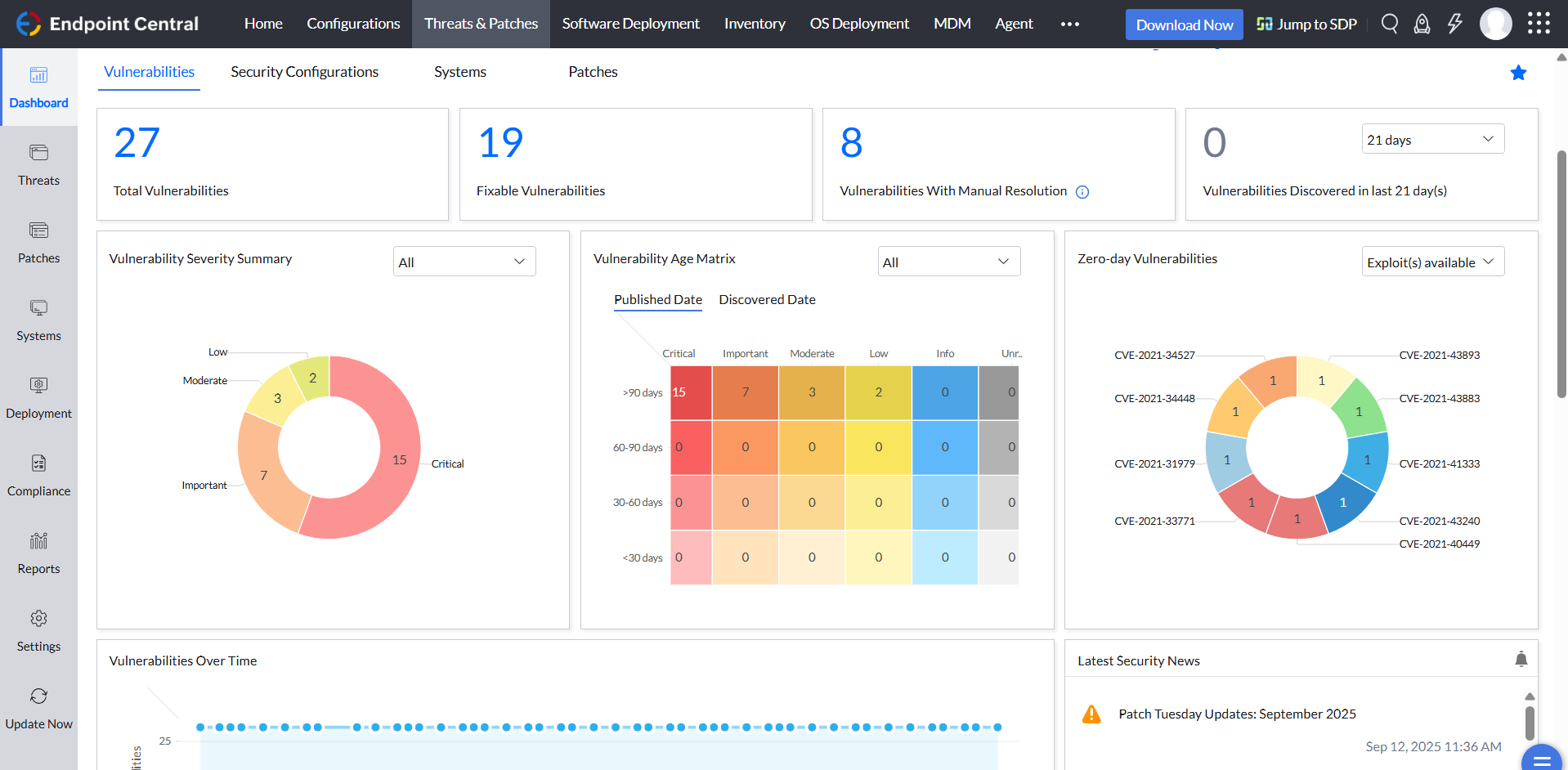
Using the patch scans we can easily see what patches have been installed for all manufacturers not just Microsoft, without having to physically go to the device. It also allows us to choose which patches we want to push out and automate the process so we can be hands off, freeing up out time for other things.
Remote access to devices. This allows us to remotely make changes, not just via remote control but also make registry changes and clean up space without going to the device and without interruption to the end user.
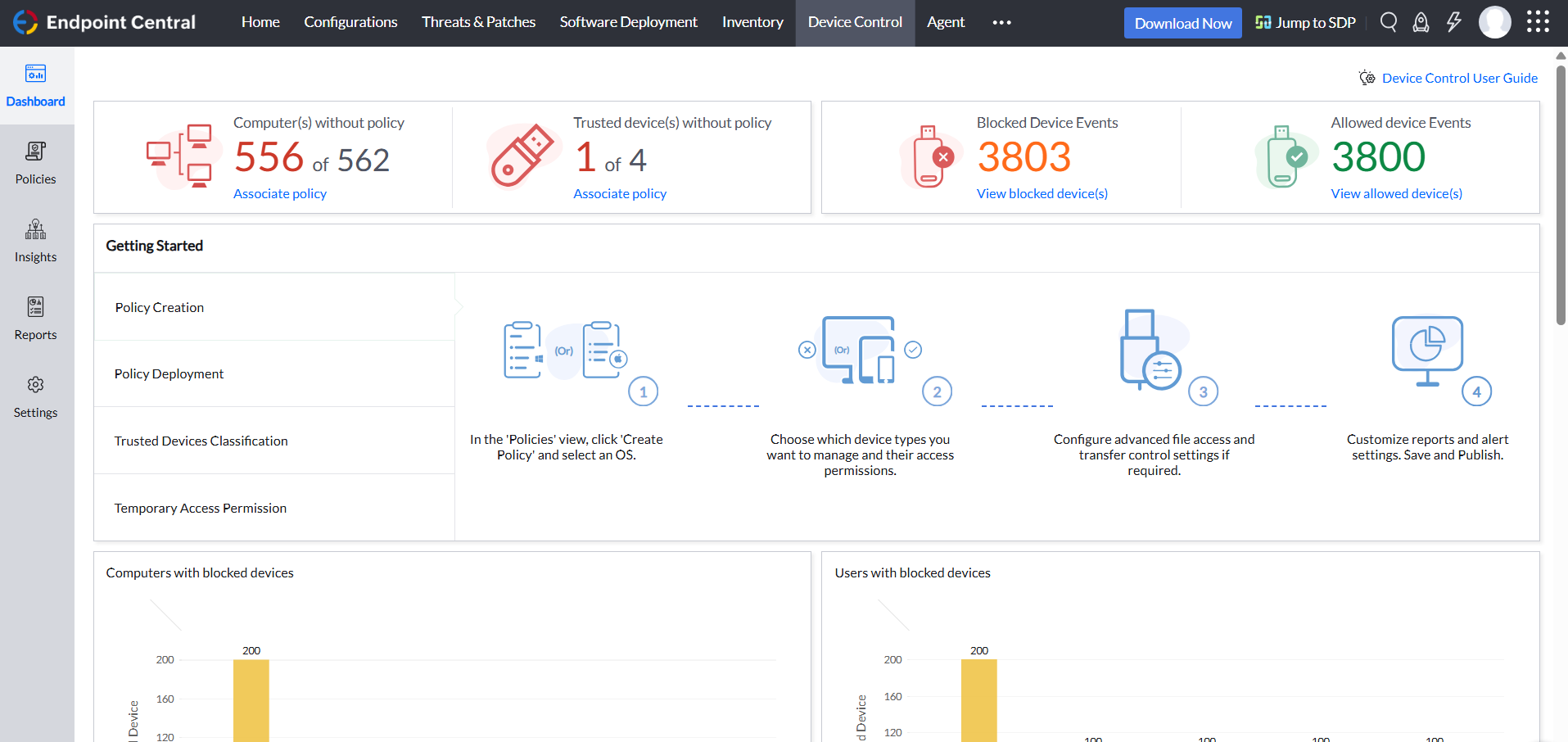
Alerts. We have set up to get email alerts when new hardware is plugged into any computers. This lets us know if someone is bringing in un-authorized equipment (thumb drives, hubs, etc) to better manage what is/is not on our network.
A de minimis incentive was given to thank the reviewer for their time. The incentive was not used to bias or drive a particular response, nor was the incentive contingent on a positive endorsement. TR verified that a representative sample of customers was invited. More Info
Pricing is a little bit higher than other services
The cost of each email inbox costs the same whether you want just email or all of the features. For example, we wanted a support email address that we could setup our support desk with. The cost of that added account is the same as the account I use with all of the features.
They removed their free tier for small organizations like mine and restricted the free tier from adding new domain names. This was likely due to abuse, but everyone lost the privilege of the free service.
A de minimis incentive was given to thank the reviewer for their time. The incentive was not used to bias or drive a particular response, nor was the incentive contingent on a positive endorsement. More Info
There is no better solution for cloud storage and real time collaboration. The amount of features included in G Suite is unmatched and out of other things we’ve tried over the years, nothing comes close to being as great of a tool.
A de minimis incentive was given to thank the reviewer for their time. The incentive was not used to bias or drive a particular response, nor was the incentive contingent on a positive endorsement. More Info
ManageEngine is considered an excellent product due to its comprehensive suite of solutions for IT management, with ManageEngine Endpoint Central specifically excelling in endpoint management. The platform stands out for its user-friendly interface, robust features, and versatility in addressing diverse IT needs. It offers organizations a centralized solution for endpoint security, patch management, software deployment, and asset management
Google Workspace is incredibly intuitive and user friendly. It's easy to adopt through simple features, for example the prompts to enable Gemini on each call for note taking is reliable, and helps to stop you forgetting to use the feature. The main reason for a strong rating is the consistency and reliability, whilst there's definitely areas for improvement, for example additional calendar features (sharing), or deeper functionality in sheets. The level that it provides means that anyone adopting it will be able to take full use of features within a day or two. Gmail, calendar and the documentation suite contain all the basic features for a small / medium business to run at a high level day to day, with minimal downtime or learning curves.
A de minimis incentive was given to thank the reviewer for their time. The incentive was not used to bias or drive a particular response, nor was the incentive contingent on a positive endorsement. More Info
Not using WNS to communicate with the endpoint console is a big plus. We now use Workspace One, and WNS can be really annoying at times. After deployment, it cleans itself, which is important for us because our current solution leaves the package on the computer and requires maintenance. The remotely script command is a lifesaver.
A de minimis incentive was given to thank the reviewer for their time. The incentive was not used to bias or drive a particular response, nor was the incentive contingent on a positive endorsement. More Info
My experiences of getting support have been positive. Calling in is not overly difficult, but it does require getting a PIN. The knowledge of those responding to the calls has been impressive. I have managed to work with them to fix two Google bugs that I had identified. These bugs required a some technical expertise and the support staff were able to understand the issue and forward the concerns to the appropriate persons. The first bug was fixed with 24 hours. The second bug took a little longer, but it was also more complicated to reproduce.
A de minimis incentive was given to thank the reviewer for their time. The incentive was not used to bias or drive a particular response, nor was the incentive contingent on a positive endorsement. More Info
The immediate chat support is great and very helpful. However, if you need escalated support or have a deeper need that the chat tool can't help with, you will experience significant wait times and slow responses. The time zone difference becomes painful to the point of often just giving up.
It seems that the services offered with the purchase change from what is covered to what is an additional cost. Somethings I thought we had ended up requiring an additional purchase if we wanted to continue using the feature.
A de minimis incentive was given to thank the reviewer for their time. The incentive was not used to bias or drive a particular response, nor was the incentive contingent on a positive endorsement. More Info
There are lots of competitors to various tools in Workspace, like Meet versus Zoom. However, Microsoft is the other big competitor I can think of for Google Workspace as a whole. To me, at least, the strength of Workspace is how easy it is to share and collaborate with others. For items that I only need for myself and can keep on my own computer, I typically rely on Microsoft Word, Excel, etc. For items that I need to share, I turn to Workspace a lot. Being able to collaborate in real-time and not having to send documents back and forth is so amazing, and such a time saver. And I love that Workspace is also a built-in tool with Dropbox now.
A de minimis incentive was given to thank the reviewer for their time. The incentive was not used to bias or drive a particular response, nor was the incentive contingent on a positive endorsement. More Info
I was not a part of the initial selection process, but I understand the issue was related to cost per endpoint. As a user of the other solutions I would say that the other solutions do have other strengths that ManageEngine is missing. The remote access tools are superior but at the end of the day you get what you pay for.
A de minimis incentive was given to thank the reviewer for their time. The incentive was not used to bias or drive a particular response, nor was the incentive contingent on a positive endorsement. More Info
A de minimis incentive was given to thank the reviewer for their time. The incentive was not used to bias or drive a particular response, nor was the incentive contingent on a positive endorsement. More Info
A de minimis incentive was given to thank the reviewer for their time. The incentive was not used to bias or drive a particular response, nor was the incentive contingent on a positive endorsement. TR verified that a representative sample of customers was invited. More Info