Instana, an IBM company since the December 2020 acquisition, provides APM services for SOA, microservices, containerized applications and Kubernetes, and cloud native applications, as well as discovery and monitoring for IT assets.
$75
per month per Managed Virtual Server (MVS)
LogicMonitor
Score 9.0 out of 10
Mid-Size Companies (51-1,000 employees)
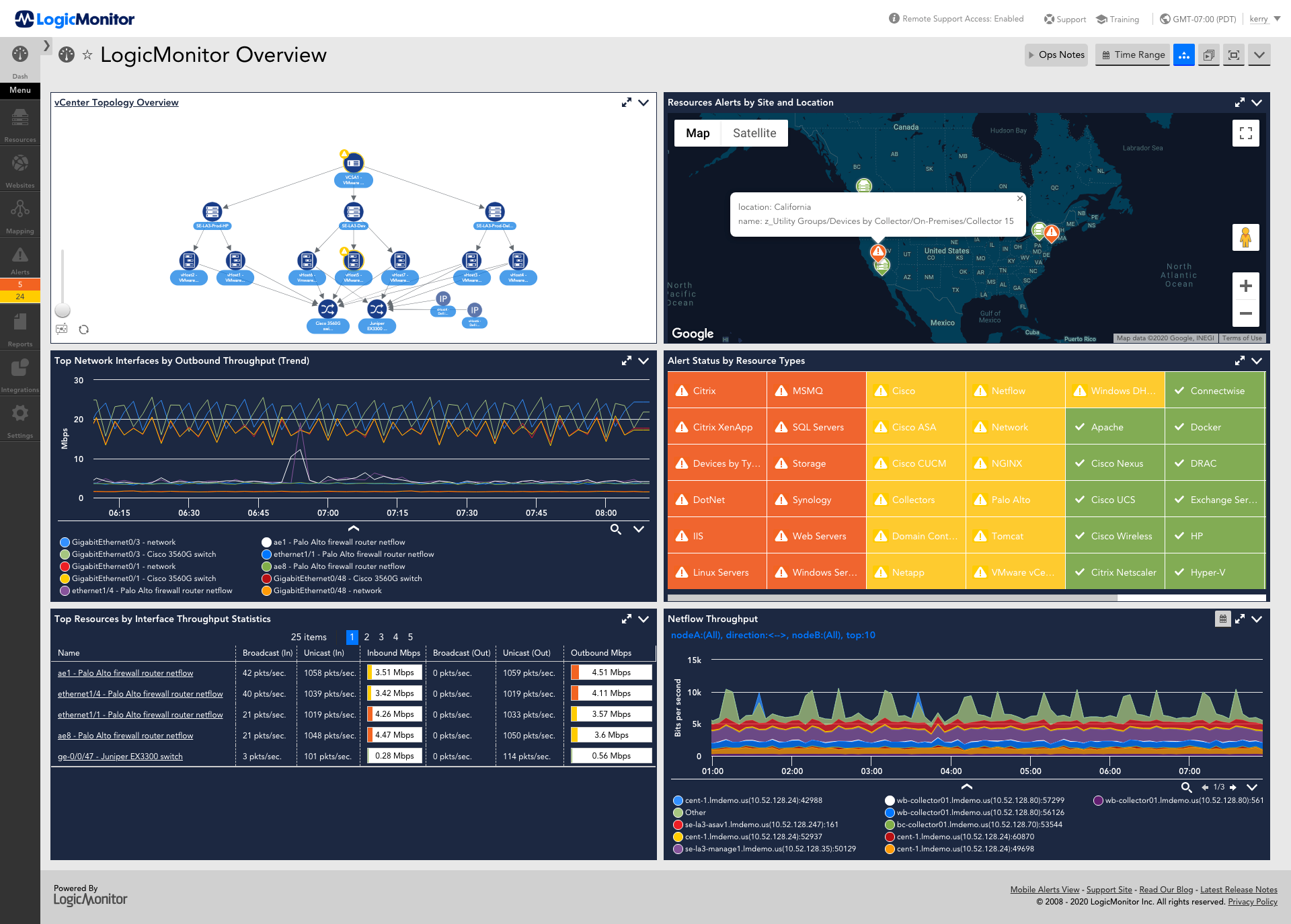
LogicMonitor’s SaaS-based platform, LM Envision, enables observability across on-prem and multi-cloud environments. It provides IT and business teams operational visibility and predictability across their technologies and applications.
N/A
Splunk AppDynamics
Score 8.4 out of 10
N/A
AppDynamics is an APM and Mobile APM program, with application mapping and predictive capabilities. These capacities enable automated remediation and code-level diagnostics in real time. It can be deployed on-premise or as a SaaS.
N/A
Pricing
IBM Instana
LogicMonitor
Splunk AppDynamics
Editions & Modules
Essentials
$20
per month per Managed Virtual Server (MVS)
Standard
$75
per month per Managed Virtual Server (MVS)
Self-Hosted
$93.80
per month per Managed Virtual Server (MVS)
Enterprise
Contact sales team
Website Monitoring
Contact sales team
No answers on this topic
Offerings
Pricing Offerings
IBM Instana
LogicMonitor
Splunk AppDynamics
Free Trial
Yes
Yes
Yes
Free/Freemium Version
No
No
Yes
Premium Consulting/Integration Services
No
Yes
Yes
Entry-level Setup Fee
No setup fee
No setup fee
No setup fee
Additional Details
—
Our platform is broken down into Pro and Enterprise Pricing. Pro includes monitoring for all of your cloud, hybrid, and on-premises infrastructure. Our Enterprise package includes all of this, plus our AIOps and Machine Learning functionality that provides dynamic thresholds, root cause analysis, anomaly detection and more!
LogicMonitor only charges by the device. What is considered a device? A device is anything with an IP address that you want to monitor, including a physical device or a cloud resource. This means multiple data sources under the same IP address can be monitored for the same price. Unlike some monitoring platforms. we don’t charge per node, interface, or metric.
IBM Instana provides 60 seconds granularity whereas the other products use time series data IBM Instana automatically detects the Service Endpoints which helps us trace all the calls pinpointed to service endpoints. IBM Instana provides complete Auto Discovery with no …
Automatic application discovery with one agent installation instead of manual configuration for each application and multiply agents for each technology stack.
Automatic tracing for application calls without the need to add complex configuration and application instrumentation.
Senior Manager - Performance & Reliability • Information Technology
Chose IBM Instana
1- ROI is higher as the budget is much less than other 2- the way of calculating license is much better and fit us and this affect the ROI 3- the ease of implementation
Instana is better at call tracing than the previous ones and is cost effective as well. But AppD can do a better job at constructing customised metrics, alert profiles and alert conditions as well, but it misses a lot of important details while tracing a call. At the same time, …
We have used them and for the moment we have chosen IBM Instana first of all because of the price because it is accessible and it works in terms of the results we have obtained, also the way of presenting the schemes and the performance of the systems is very good.
Better value for the money. Easiest license model. Automatic features included to help installation of agents, continuos discovery of services, dependencies and components, update of agents, smart alerts, tracing without sampling and a low step learning curve
In terms of flexibility Instana wins by providing the auto-discovery functions that are very precious to my company since they allow monitoring and tracing of the application services even after big infrastructural changes. In this regars, competitors still require to hardwire …
Datadog provides a more comprehensive platform, including APM, infrastructure monitoring, and log management. AppDynamics like IBM Instana offers end-to-end visibility, APM and business performance monitoring. IBM Instana competitive advantage might lie in its automatic …
I didn't keep my list of all the various products that we had POC'ed or even had demos with. Almost all were too narrow in their view to handle the breadth of environments that we have both in the cloud and in the data centers. Those few that did stack up against LogicMonitor …
AppDynamics is easy to use, very good monitoring and provides us with detailed information about the performance of the underlying infrastructure, including servers, database,and external services.
Verified User
Consultant
Chose Splunk AppDynamics
AppDynamics is more a graphical representation of data, where as other tools like Splunk shows data in a table format using Query structure. AppDynamics helps is in analyzing system performance, but other tools just help to log the data and send alerts upon manual setting. …
AppDynamics is still a good solution as this is one the earliest tool available in the APM space and people are used to this Application usage. However other products are also doing great as Dynatrace is the biggest competitor since it adds on all the AppDynamics features plus …
Ease of usage. Views key metrics of any application you can think of. Analyzes transactions easily. Helps resolve performance issues. Server and application performance management is now very easy with this tool. End user monitoring. Deep code level diagnostics in real time.
With enterprise IT assets in a multitude of ecosystems, cloud infrastructures and sometimes still left stuck in a legacy on prem architecture, IBM Instana makes it easy to get the right data to drive development and / or DevSecOps processes with tangible input from the target environment itself.
The example I will give will explain my rating for it. One employee left our company due to a personal issue, and at that time, our team was working on a highly secure project. He wanted to take revenge on our company, so he began hacking our systems from the outside. Since it appears that someone without authorization is attempting to access our systems, LogicMonitor simultaneously alerted our team to the problem. We stopped that threat with LogicMonitor.
Platforms for software as a service (SaaS) frequently cater to a large number of users with a variety of needs and usage patterns. Because AppDynamics offers multi-tenant monitoring capabilities to track performance across various customer environments, it is a good choice for SaaS platform monitoring. SaaS providers can maximize resource utilization, proactively detect and resolve performance issues, and provide a dependable and consistent user experience for their clients with AppDynamics.
Can monitor application(s) and system(s) with very large throughput of transactions by the second ( it gets everything !!!)
Provide strong drill down for your applications and will tell you where the points of failure of an application's is ( servers , network , Databases , etc you name it )
Very easy to set up and have it up and running when using the SaaS solution. There's an on premise solution which works just as well but requires more effort and preparation from an infrastructure point of view for your teams to implement.
Continuously improve their features and their agents auto-update and keep up. All while not interfering with your applications.
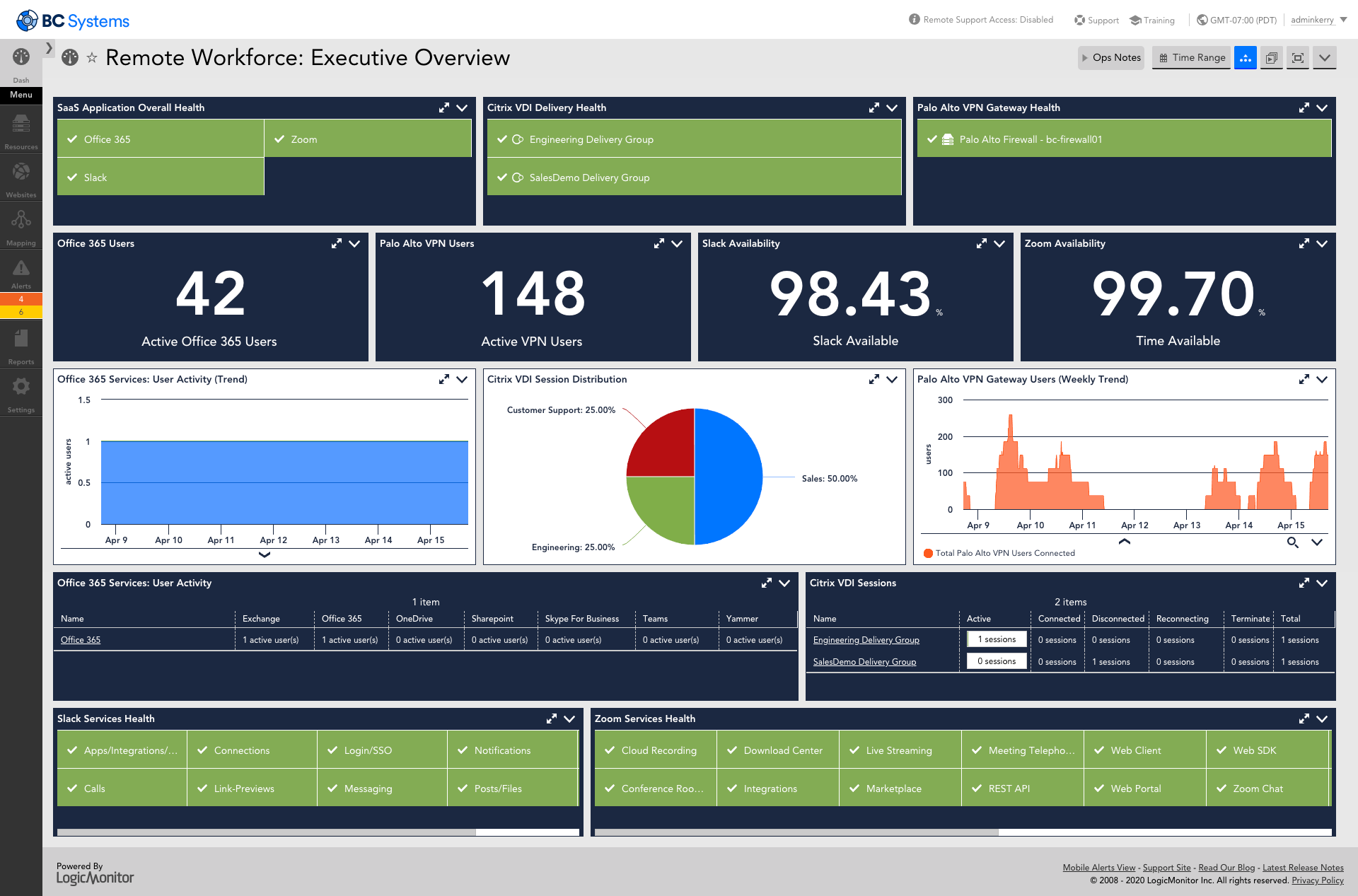
Let's you create your own dashboards and visualizations that can be tailored for different kind of users with the data collected.
Create your own events and smart alerts so you can know on the spot if something is happening or is likely to happen that needs addressing on your applications / systems
Business Transaction Monitoring is one of its signature strengths. This represents a major differentiator from generic infrastructure monitoring tools.
AI‑driven anomaly detection and intelligent alerting provide a significant advantage over traditional monitoring.
When combined with Splunk AppDynamics, full‑stack observability becomes a key part of Cisco/Splunk’s unified observability strategy.
It's very difficult to create custom dashboards, only a handful of scenarios can be visualized to dashboards.
Extracting information from Instana to further analysis into excel for example is something that can be improved. Using an API to get data is very limiting.
Open telemetry features which allow to send application data to Instana is not working as documented.
AppDynamics may enhance its capacity to track transactions through complex distributed systems and microservices, offering a more comprehensive understanding of application behavior.
Better search and filtering capabilities would enable engineers to quickly obtain deeper context by drilling down into individual data points.
AppDynamics might be more widely available to engineers and organizations if it offered subscription plans or tiered pricing options.
Instana has been able to fulfill our all requirement and provide out of box solution for multiple component like AWS RDS Monitoring and real time alerting setup on basis of that. it is also easy to integrate with other open-source alerting and monitoring tools which makes it easier to incorporate into our solutions
This product has met virtually all of our needs. It was easy to implement and has been simple to support. Customization has been intuitive with many options available. They keep adding features and expanding available options. The future of LogicMonitor looks even better than it is today which is very promising. The management and support teams at LogicMonitor are always helpful
cause it achieves all our targets and we are satisfied with using Splunk also stable no technical challenges or problem caused by Splunk a lot for innovative integrations also all layers are using splunk NOC team , DEV team, application support team, managers security team also in forcasting for EA team
IBM Instana totally alters our monitoring approach since it increases the stability of the system and simplifies the process of problem solving. And since it helps to lower the degree of alert exhaustion that we experience, it is a total game changer for us.
Set up is super easy. Just stand up a small Linux or Windows server to act as a collector. There are no agents to install on monitored devices and all you need is SNMP or WMI access. When creating dashboards, all you have to do is find the widget on the device you want to show up and choose the menu option to add it.
Splunk AppDynamics is great product that has positively maintained solid application workflows. It has simple and clean UI that displays graphical representation of our database and application behaviour. It gives us an opportunity to customize and set most reliable alerts and data configurations that aligns with our policies. It is easy to monitor operation hypothesis and lower RCA if you identify application coding errors.
On a scale of 1 to 10, I would rate the availability of Splunk AppDynamics as a 9. Overall, the platform has proven to be highly reliable and is available when we need it. It consistently supports our monitoring and performance management needs across critical applications and infrastructure. There have been occasional issues with platform availability, such as intermittent application errors or brief unplanned outages. However, these instances have been infrequent and typically resolved quickly, minimizing any significant impact on operations. The stability and uptime of the platform have met our expectations, and we continue to rely on it as a core component of our APM strategy.
On a scale of 1 to 10, I would rate the performance of Splunk AppDynamics as a 6. While the platform generally delivers the expected functionality, we’ve experienced periodic slowness—particularly with page loads and report generation. These performance issues can be frustrating, especially when trying to quickly access critical data during incident response or analysis. One contributing factor may be our use of a shared controller environment with other enterprises, which can introduce resource contention and impact overall responsiveness. In some cases, this has led to delays in accessing dashboards or completing complex queries. Despite these challenges, the platform remains a valuable tool, and we’re exploring options to improve performance, including potential changes to our deployment model and support agreements.
The sales team support we received was top notch. They worked hand in hand to make sure the product met all expectations. So far we have not really had to work with support that much; we have worked with setup team after purchase to deploy product fully. No issues so far and we are four weeks in.
AppDynamics has its own community site that includes forums and a knowledge base. On the forums, you can converse with other members of the community and ask technical questions as you have them. Though this forum isn’t filled with people there are active members for you to gain some valuable insights.
On a scale of 1 to 10, I would rate the online training for Splunk AppDynamics as a 7. The training was generally acceptable and covered the core concepts and functionality of the platform. However, there were some challenges with communication during sessions—particularly around clarity and instructor engagement—which occasionally made it difficult to fully grasp certain topics. Additionally, the training could benefit from being more focused and tailored to specific roles or use cases. A more structured approach with clearer learning paths and practical, hands-on examples would enhance the overall effectiveness and help users apply the knowledge more confidently in real-world scenarios.
I did not truly dedicate myself to implementing LogicMonitor. However, I overheard the IT team members explain that "LogicMonitor is perfect for us as it has made most of the work automated, and implementation and training sessions were perfect for us." Thus, I can state that everything went smoothly with our implementation.
On a scale of 1 to 10, I would rate our satisfaction with the implementation of Splunk AppDynamics as a 9. The deployment process was smooth and well-coordinated, thanks to the collaborative efforts between Cisco Professional Services, our internal business stakeholders, and agency technical teams. Key Insights from the Implementation: Cross-functional Collaboration Was Critical: Engaging both technical and business teams early in the process ensured that the platform was configured to meet a wide range of operational and strategic needs. Value of Expert Guidance: Cisco’s Professional Services provided invaluable expertise, helping us navigate complex configurations and tailor the solution to our environment. Their involvement accelerated deployment and ensured best practices were followed. Importance of Planning and Communication: A well-defined implementation roadmap and regular communication across teams helped us stay aligned, manage expectations, and address challenges proactively. Scalable Architecture: We designed the implementation with scalability in mind, allowing us to expand usage across agencies and applications without major rework. Overall, the implementation laid a strong foundation for our APM program and positioned us for long-term success.
As a DevOps engineer, I've explored various Application Performance Monitoring (APM) tools, including New Relic for real-time insights, AppDynamics for code-level visibility, Dynatrace for AI-driven monitoring, Datadog for comprehensive observability, Splunk for log management, Stackify Retrace for error tracking, and Raygun for crash reporting. Each tool offers distinct features, and the choice depends on specific use cases, technology stacks, and organizational needs. Thorough evaluations, considering factors like ease of use, integration capabilities, and scalability, help in selecting the most suitable APM solution for effective application monitoring in a DevOps environment.
Basically, we did not have any idea about it and how to choose, but we asked one of our former bosses, as they were very experienced with it, so they helped us by clarifying a few things between New Relic and LogicMonitor, as they told us that if you are looking for an automated option, then there is no better option than LogicMonitor.
It is distinguished from these programs because the platform provides visualizations of application processes, showing the interplay between various parts and services. Understanding the architecture of complicated apps and finding their weak spots is greatly aided by this.
Pricing seems to be getting more and more aggressive, I worry that it's going to turn into ServiceNow or SAP and everything minor feature will be an extreme cost that prices out us and our customers
While the overall value of the Splunk AppDynamics platforms is strong, the pricing structure and contract terms can be complex and difficult to navigate. Unit pricing, licensing tiers, and billing frequency are not always intuitive, which can make it challenging to align purchases with the State’s evolving needs. I rely heavily on our Account Manager to help interpret and tailor the licensing model to our specific requirements. Their support has been invaluable in ensuring we make informed decisions. The most impactful change would be to simplify the licensing and pricing model. Clearer documentation, more transparent pricing tiers, and streamlined purchasing processes would significantly improve the experience and reduce administrative overhead.
On a scale of 1 to 10, I would rate the overall scalability of Splunk AppDynamics as a 7. The platform is designed to support enterprise-wide deployments across multiple departments and sites, and it performs well in large-scale environments. Its architecture allows for horizontal scaling and supports a wide range of application types and infrastructures. However, the agent management and deployment process can be complex and time-consuming, especially when onboarding a large number of applications or systems. Coordinating agent installation, configuration, and updates across diverse environments requires careful planning and often significant manual effort. Streamlining these processes—perhaps through more centralized management tools or automation—would enhance scalability and reduce operational overhead. Despite these challenges, once deployed, AppDynamics scales effectively and provides consistent performance and visibility across the enterprise.
Haven't really used it but our initial onboarding PS was disappointing. Felt like we were being told what we needed to cover as opposed to what we wanted to cover. In addition, we were pushed into using the PS in tight time frames and we were not ready to do so.
Our experience with the professional services team supporting Splunk AppDynamics has been exceptional. They demonstrated deep technical expertise, strong collaboration skills, and a clear understanding of our business objectives. Their guidance was instrumental in the successful implementation of our APM program and platform integration. The rating of 9 reflects our high level of satisfaction, with a small margin left to acknowledge that continuous improvement is always possible. Overall, their support has been a key factor in the success of our deployment.
Through the identification of performance bottlenecks and efficient resource allocation, AppDynamics has contributed to cost savings and resource optimization. This has a direct positive impact on our overall return on investment.
While AppDynamics' numerous capabilities help maximize efficiency, they may place a strain on your system. Organizations with limited infrastructure capacity may have difficulties and therefore give this serious thought before implementing it.