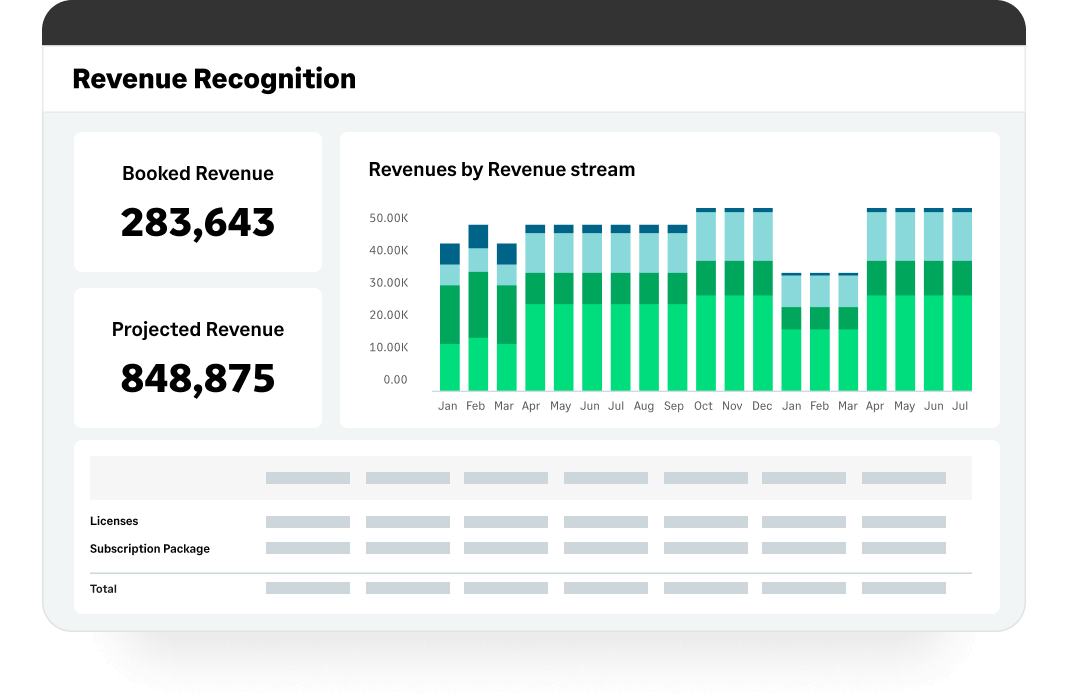
Sage Intacct is a cloud ERP system targeted at high-growth small and medium-sized businesses. Intacct includes applications for core financials and accounting, purchasing, order management, and financial reporting and business intelligence. It also integrates with 3rd party software like Salesforce.
N/A
QuickBooks Desktop Enterprise
Score7.8 out of 10
N/A
QuickBooks Desktop Enterprise is a widely-used accounting package designed for small to mid-sized businesses. It is the top of the QuickBooks line. Pricing starts at $3,000 for five users, and goes up depending on the number of additional users. They also offer an Advanced Inventory module for $999 / year.
I think Sage Intacct is by far the worst accounting software I have ever used. We only selected Sage Intacct in order to integrate with WooCommerce's order management platform...which we have since then ditched. We should have never migrated over from QuickBooks. We should have …
A de minimis incentive was given to thank the reviewer for their time. The incentive was not used to bias or drive a particular response, nor was the incentive contingent on a positive endorsement. More Info
Verified User
Chose Sage Intacct
MS GP was no longer supported, so we switched to Intacct. QuickBooks wasn't nearly as robust, and we were enticed by both the peer organizations that use Intacct and the ability to make the system work for us in ways MS financial software had historically not.
A de minimis incentive was given to thank the reviewer for their time. The incentive was not used to bias or drive a particular response, nor was the incentive contingent on a positive endorsement. More Info
Verified User
Chose Sage Intacct
Sage Intacct is miles ahead of the above systems we have used. We chose Sage Intacct for its all-in-one integration with accounting and reporting (no need to sync data with another reporting tool), as well as its ability to report on a multi-location basis. We did consider …
A de minimis incentive was given to thank the reviewer for their time. The incentive was not used to bias or drive a particular response, nor was the incentive contingent on a positive endorsement. TR verified that a representative sample of customers was invited. More Info
Controller in Finance and Accounting at GTM Builders (Construction, 11-50 employees)
Chose Sage Intacct
Sage Intacct is very similar to Netsuite, but I think the project reporting within Sage is simpler and easier to manage. Sage Intacct is much more robust than Quickbooks or most other softwares, but it is also significantly more expensive. I highly recommend to use Sage …
A de minimis incentive was given to thank the reviewer for their time. The incentive was not used to bias or drive a particular response, nor was the incentive contingent on a positive endorsement. More Info
Verified User
Chose Sage Intacct
Quickbooks is much slower and outdated when compared to Sage Intacct. Sage Intacct also provides ease of use.
A de minimis incentive was given to thank the reviewer for their time. The incentive was not used to bias or drive a particular response, nor was the incentive contingent on a positive endorsement. More Info
A de minimis incentive was given to thank the reviewer for their time. The incentive was not used to bias or drive a particular response, nor was the incentive contingent on a positive endorsement. More Info
A de minimis incentive was given to thank the reviewer for their time. The incentive was not used to bias or drive a particular response, nor was the incentive contingent on a positive endorsement. More Info
A de minimis incentive was given to thank the reviewer for their time. The incentive was not used to bias or drive a particular response, nor was the incentive contingent on a positive endorsement. TR verified that a representative sample of customers was invited. More Info
Verified User
Chose Sage Intacct
I think that Sage Intacct is quicker, more robust, and easier to work in. While I think that most accounting systems offer the same functions, and can be figured out, I did find Intacct to be more intuitive. I also find it is easy to troubleshoot issues in the system. I can …
A de minimis incentive was given to thank the reviewer for their time. The incentive was not used to bias or drive a particular response, nor was the incentive contingent on a positive endorsement. TR verified that a representative sample of customers was invited. More Info
Verified User
Chose Sage Intacct
I like to tell people that Sage Intacct is similar to Netsuite in its ease of use (quite user friendly and easy to adopt) and significantly easier than SAP’s ERP system. It is also leaps and bounds better and more comprehensive than Quickbooks.
A de minimis incentive was given to thank the reviewer for their time. The incentive was not used to bias or drive a particular response, nor was the incentive contingent on a positive endorsement. TR verified that a representative sample of customers was invited. More Info
Verified User
Chose Sage Intacct
Sage is more accurate, more correct, easier to use and has a lot of helpful features.
A de minimis incentive was given to thank the reviewer for their time. The incentive was not used to bias or drive a particular response, nor was the incentive contingent on a positive endorsement. TR verified that a representative sample of customers was invited. More Info
A de minimis incentive was given to thank the reviewer for their time. The incentive was not used to bias or drive a particular response, nor was the incentive contingent on a positive endorsement. TR verified that a representative sample of customers was invited. More Info
Controller in Finance and Accounting at The Christensen Fund (Philanthropy, 11-50 employees)
Chose Sage Intacct
We migrated from Quickbooks as we became more and more aware that that software was not keeping up with our business needs and that more sophisticated software would allow us to automate and save time in the long run. While we were evaluating Sage Intacct, we also evaluated …
A de minimis incentive was given to thank the reviewer for their time. The incentive was not used to bias or drive a particular response, nor was the incentive contingent on a positive endorsement. More Info
Verified User
Chose Sage Intacct
Sage Intacct is more user-friendly and has more features than we previously had.
A de minimis incentive was given to thank the reviewer for their time. The incentive was not used to bias or drive a particular response, nor was the incentive contingent on a positive endorsement. TR verified that a representative sample of customers was invited. More Info
Verified User
Chose Sage Intacct
Sage Intacct stacks up against quickbooks desktop in functionality. I was more used to quickbooks and their functions were good for accounts payable, but bad for me for accounts receivable when compared to Sage Intacct.
A de minimis incentive was given to thank the reviewer for their time. The incentive was not used to bias or drive a particular response, nor was the incentive contingent on a positive endorsement. TR verified that a representative sample of customers was invited. More Info
Verified User
Chose Sage Intacct
Sage is head and shoulders above any Quickbooks iteration and comparable to NetSuite. The differences are likely personal preference between Sage Intacct and NetSuite, my leaning is toward NetSuite but largely due to how comfortable I was with their system. Our business used …
A de minimis incentive was given to thank the reviewer for their time. The incentive was not used to bias or drive a particular response, nor was the incentive contingent on a positive endorsement. More Info
Verified User
Chose Sage Intacct
The compatibility for Integration with other popular software programs makes Sage Intacct the obvious choice for our multi-entity organization.
A de minimis incentive was given to thank the reviewer for their time. The incentive was not used to bias or drive a particular response, nor was the incentive contingent on a positive endorsement. TR verified that a representative sample of customers was invited. More Info
Controller in Finance and Accounting at GTM Builders, Inc. (Construction, 11-50 employees)
Chose Sage Intacct
Quickbooks Desktop works for project reporting but doesn't handle consolidation accounting. NetSuite was very close to Sage Intacct, but it didn't handle intercompany accounting as natively as Sage Intacct. For example, Sage Intacct can handle the intercompany part of a …
A de minimis incentive was given to thank the reviewer for their time. The incentive was not used to bias or drive a particular response, nor was the incentive contingent on a positive endorsement. TR verified that a representative sample of customers was invited. More Info
Verified User
Chose Sage Intacct
Sage Intacct is intuitive and allows for customization to fit the need of Finance. It does integrate with Salesforce which is great. There are a lot of automation available for different accounting functions and the marketplace offers a wide variety of different services. The …
A de minimis incentive was given to thank the reviewer for their time. The incentive was not used to bias or drive a particular response, nor was the incentive contingent on a positive endorsement. TR verified that a representative sample of customers was invited. More Info
Verified User
Chose Sage Intacct
Sage Intacct is more user friendly and more up to date. We transitioned from Great Plains which, in my opinion, was very old and outdated. The transition has created many efficiencies and time savings in our company.
A de minimis incentive was given to thank the reviewer for their time. The incentive was not used to bias or drive a particular response, nor was the incentive contingent on a positive endorsement. TR verified that a representative sample of customers was invited. More Info
A de minimis incentive was given to thank the reviewer for their time. The incentive was not used to bias or drive a particular response, nor was the incentive contingent on a positive endorsement. TR verified that a representative sample of customers was invited. More Info
Verified User
Chose Sage Intacct
Sage Intacct is better than Xero, Quickbooks, and SAP. While Netsuite has more customization options it is harder to learn quickly. For large teams Sage Intacct is the way to go. NetSuite is great but without a coach to walk the team through where to go and how to setup it can …
A de minimis incentive was given to thank the reviewer for their time. The incentive was not used to bias or drive a particular response, nor was the incentive contingent on a positive endorsement. TR verified that a representative sample of customers was invited. More Info
Verified User
Chose Sage Intacct
Netsuite is not beginner friendly, Quickbooks desktop is outdated and QuickBooks Online has technical issues which would take time to be resolved. Overall Sage is easier to use and easily understandable. Help Page in the UI has most things covered to have the seamless experience
A de minimis incentive was given to thank the reviewer for their time. The incentive was not used to bias or drive a particular response, nor was the incentive contingent on a positive endorsement. TR verified that a representative sample of customers was invited. More Info
Verified User
Chose Sage Intacct
We were all used to QuickBooks so this was a huge departure for us. Sage Intacct won for future-proofing our organization.
A de minimis incentive was given to thank the reviewer for their time. The incentive was not used to bias or drive a particular response, nor was the incentive contingent on a positive endorsement. TR verified that a representative sample of customers was invited. More Info
Intuit
Verified User
Chose QuickBooks Desktop Enterprise
Sage Intacct would be the best, but the cost is prohibative of clients. QuickBooks Desktop Enterprise is used more as it is syncs outside systems better.
A de minimis incentive was given to thank the reviewer for their time. The incentive was not used to bias or drive a particular response, nor was the incentive contingent on a positive endorsement. TR verified that a representative sample of customers was invited. More Info
Controller in Finance and Accounting at Sunset Technologies (Computer Networking, 51-200 employees)
Chose QuickBooks Desktop Enterprise
Quickbooks Desktop Enterprise is much better than either Intacct or NetSuite. The only issue is the lack of Multi-entity support with QB, and needing a better inventory solution. if you don't need that, stick with Quickbooks.
A de minimis incentive was given to thank the reviewer for their time. The incentive was not used to bias or drive a particular response, nor was the incentive contingent on a positive endorsement. More Info
Verified User
Chose QuickBooks Desktop Enterprise
Intacct was way overkill and too expensive for what we wanted - especially because ServiceTrade runs the operations side of the business. We just needed the core accounting from QB.
A de minimis incentive was given to thank the reviewer for their time. The incentive was not used to bias or drive a particular response, nor was the incentive contingent on a positive endorsement. More Info
A de minimis incentive was given to thank the reviewer for their time. The incentive was not used to bias or drive a particular response, nor was the incentive contingent on a positive endorsement. More Info
Director in Finance and Accounting at United Ways of California (Non-profit Organization Management, 11-50 employees)
Chose QuickBooks Desktop Enterprise
Quick Books Desktop Enterprise as it's pros and cons. Pro's is that is much more user friendly and intuitive to learn than other products. It does much better to revise or adjust retroactively to prior period when coding issues or even allocations issues are discovered …
A de minimis incentive was given to thank the reviewer for their time. The incentive was not used to bias or drive a particular response, nor was the incentive contingent on a positive endorsement. TR verified that a representative sample of customers was invited. More Info
Accounts Supervisor in Finance and Accounting at Analytix Solutions (Accounting, 501-1000 employees)
Chose QuickBooks Desktop Enterprise
We have selected this product as it is affordoable in terms of pricing and features too. Our clients is geeting lots of benefits by using this product. By using QuickBooks desktop client also manage the information realted to financials and also get the clear picture for the …
A de minimis incentive was given to thank the reviewer for their time. The incentive was not used to bias or drive a particular response, nor was the incentive contingent on a positive endorsement. TR verified that a representative sample of customers was invited. More Info
Accountant in Finance and Accounting at Hill Country Medical (Health, Wellness and Fitness, 201-500 employees)
Chose QuickBooks Desktop Enterprise
QuickBooks is more popular and widely used, it's easier to find potential employees that already have experience with it. Sage is more professional it feels.
A de minimis incentive was given to thank the reviewer for their time. The incentive was not used to bias or drive a particular response, nor was the incentive contingent on a positive endorsement. TR verified that a representative sample of customers was invited. More Info
CEO (Chief Executive Officer) in Corporate at Coil Tubing Technology, Inc. (Oil & Energy, 1-10 employees)
Chose QuickBooks Desktop Enterprise
All competitors do invoice and a/p. Many of the listed competitors do better asset tracking and inventory. The larger packages get too complex too quickly and become an administrative burden as well as an implementation burden. QuickBooks is easier to set up the COA and …
A de minimis incentive was given to thank the reviewer for their time. The incentive was not used to bias or drive a particular response, nor was the incentive contingent on a positive endorsement. More Info
Verified User
Chose QuickBooks Desktop Enterprise
We're still currently evaluating other options and are actively trying to get ourselves off of the Quickbooks Desktop platform.
A de minimis incentive was given to thank the reviewer for their time. The incentive was not used to bias or drive a particular response, nor was the incentive contingent on a positive endorsement. More Info
Verified User
Chose QuickBooks Desktop Enterprise
We need to have a simple interface to keep track of business expenses, and this QuickBooks Desktop Enterprise is very easy to use and user-friendly. Easy to track all your records and reconcile the data. It does a great job of creating and paying the bills and deposits. …
A de minimis incentive was given to thank the reviewer for their time. The incentive was not used to bias or drive a particular response, nor was the incentive contingent on a positive endorsement. More Info
Finance Executive in Finance and Accounting at Analytix Business Solutions (Outsourcing/Offshoring, 501-1000 employees)
Chose QuickBooks Desktop Enterprise
QuickBooks Desktop Enterprise is widely used by our client and they prefer to use it instead of Online. And it also gives lots of flexibility compared with Online.
A de minimis incentive was given to thank the reviewer for their time. The incentive was not used to bias or drive a particular response, nor was the incentive contingent on a positive endorsement. TR verified that a representative sample of customers was invited. More Info
Owner at Newman Associates (Accounting, 1-10 employees)
Chose QuickBooks Desktop Enterprise
Enterprise seems to me to be losing its relavance. The company does not seem to be interested in enhancing the product and is focusing more on their online offerings and platforms. Compared to other software available, I would be hard pressed to choose Enterprise.
A de minimis incentive was given to thank the reviewer for their time. The incentive was not used to bias or drive a particular response, nor was the incentive contingent on a positive endorsement. More Info
Verified User
Chose QuickBooks Desktop Enterprise
I've used Intacct before. It's a very efficient accounting software. But it's a bit pricey and its more convenient for bigger more complex entities. We chose QuickBooks because it's appropriate for a small to mid firm that is not very complex and that only needs straight …
A de minimis incentive was given to thank the reviewer for their time. The incentive was not used to bias or drive a particular response, nor was the incentive contingent on a positive endorsement. More Info
QuickBooks Desktop Enterprise and Sage Intacct are both accounting platforms with ERP capabilities, such as order management and purchasing. QuickBooks Desktop Enterprise is an on-premise accounting solution, while Sage Intacct is a cloud-based platform.
QuickBooks generally caters to the SMB market, and the Desktop Enterprise offering serves the largest companies within that segment, particularly those that require some light ERP capabilities like inventory management. In contrast, Sage Intacct is designed for when businesses need a more scalable and customizable accounting system. Its user base is more centered around larger midsize companies and small enterprises.
Features
QuickBooks Desktop Enterprise and Sage Intacct both provide strong features that differentiate their ideal customers.
QuickBooks Desktop Enterprise stands out among users for its native payroll system, which streamlines one of the more routine and otherwise time-intensive financial processes. It also has excellent out of the box reports. These simple reports make the platform accessible and easy to learn even for new or inexperienced users.
In contrast, Sage Intacct excels in the customization and expanded capabilities that larger organizations require. In particular, Intacct allows users an exceptional level of customizability in how their deployment and reporting is structured. This allows uses to tailor their reporting and data slicing to the business’s specific needs. The high level of customization, as well as robust 3rd part integrations, all facilitate significant scalability on the platform.
Limitations
While both products have standout features, QuickBooks Desktop Enterprise and Sage Intacct also have some limitations worth considering.
QuickBooks’s ERP capabilities, such as inventory management, are less robust than some users need. This issue becomes more pronounced as businesses grow and scale up while using the software. The customizable reporting has also been glitchy or error-prone for some users. Limited user management and administration capabilities have also hampered some teams as they add members and administrators.
Sage Intacct’s strength in customization also makes the platform more intimidating for newer users. There are fewer effective out of the box reporting options, and all the customization also entails a more substantial learning curve. Some significant functionalities, like budgeting, are also positioned as add-ons, and cost extra on top of the base subscription.
Pricing
QuickBooks Desktop Enterprise has 3 packages, each of which are sold either as a local license or through a cloud-based subscription. The Silver plan, at $1091.70/yr for local or $134/month for the hosted version, offers the core software, customer support, online backup storage, automatic upgrades, and reporting. The Platinum package, at $1746/yr for the local version or $189.80/month for the hosted version, adds on Inventory management, pricing, and bundled payroll. The Diamond package, at $3442.88/yr for the local version and $311.91/month for the hosted version, adds timesheets and a CRM connector.
Sage Intacct’s pricing varies with each customer. Concrete pricing numbers are available by quote from the vendor.
Features
Sage Intacct
QuickBooks Desktop Enterprise
Payroll Management
Comparison of Payroll Management features of Sage Intacct and QuickBooks Desktop Enterprise
Feature
Sage Intacct
7.0
358 Ratings
8% below category average
QuickBooks Desktop Enterprise
8.6
128 Ratings
13% above category average
Pay calculation
7.05 Ratings
9.0121 Ratings
Benefit plan administration
6.45 Ratings
7.873 Ratings
Direct deposit files
7.14 Ratings
9.0104 Ratings
Salary revision and increment management
6.94 Ratings
8.495 Ratings
Reimbursement management
7.5358 Ratings
8.696 Ratings
Customization
Comparison of Customization features of Sage Intacct and QuickBooks Desktop Enterprise
Feature
Sage Intacct
7.6
867 Ratings
0% above category average
QuickBooks Desktop Enterprise
7.1
87 Ratings
6% below category average
API for custom integration
7.9815 Ratings
8.269 Ratings
Plug-ins
7.4656 Ratings
6.078 Ratings
Security
Comparison of Security features of Sage Intacct and QuickBooks Desktop Enterprise
Feature
Sage Intacct
8.7
1313 Ratings
6% above category average
QuickBooks Desktop Enterprise
8.7
182 Ratings
6% above category average
Single sign-on capability
8.81072 Ratings
9.0142 Ratings
Role-based user permissions
8.61278 Ratings
8.3180 Ratings
Reporting & Analytics
Comparison of Reporting & Analytics features of Sage Intacct and QuickBooks Desktop Enterprise
Feature
Sage Intacct
7.8
1406 Ratings
0% above category average
QuickBooks Desktop Enterprise
8.0
201 Ratings
3% above category average
Dashboards
7.81266 Ratings
7.6171 Ratings
Standard reports
8.01367 Ratings
8.7199 Ratings
Custom reports
7.61353 Ratings
7.8191 Ratings
General Ledger and Configurable Accounting
Comparison of General Ledger and Configurable Accounting features of Sage Intacct and QuickBooks Desktop Enterprise
Feature
Sage Intacct
8.0
1544 Ratings
5% above category average
QuickBooks Desktop Enterprise
7.8
206 Ratings
2% above category average
Accounts payable
8.31434 Ratings
8.7199 Ratings
Accounts receivable
8.11259 Ratings
8.2198 Ratings
Cash management
8.01337 Ratings
8.7181 Ratings
Bank reconciliation
8.11326 Ratings
9.3194 Ratings
Expense management
7.9936 Ratings
7.6182 Ratings
Time tracking
6.9503 Ratings
6.794 Ratings
Fixed asset management
7.4685 Ratings
7.3138 Ratings
Multi-currency support
7.8515 Ratings
6.566 Ratings
Multi-division support
8.5843 Ratings
7.6110 Ratings
Regulations compliance
7.6513 Ratings
7.580 Ratings
Electronic tax filing
7.7381 Ratings
7.2103 Ratings
Self-service portal
7.4644 Ratings
7.380 Ratings
Global Financial Support
8.0376 Ratings
5.738 Ratings
Intercompany Accounting
8.4887 Ratings
8.296 Ratings
Journals and Reconciliations
8.71241 Ratings
9.0154 Ratings
Enterprise Accounting
8.1534 Ratings
8.3103 Ratings
Configurable Accounting
8.2729 Ratings
8.3102 Ratings
Centralized Rules Framework
7.9526 Ratings
8.063 Ratings
Standardized Processes
8.3854 Ratings
8.2114 Ratings
Primary and Secondary Ledgers
00 Ratings
8.374 Ratings
Localizations
00 Ratings
8.055 Ratings
Inventory Management
Comparison of Inventory Management features of Sage Intacct and QuickBooks Desktop Enterprise
Feature
Sage Intacct
6.7
498 Ratings
8% below category average
QuickBooks Desktop Enterprise
7.4
120 Ratings
2% above category average
Inventory tracking
7.8364 Ratings
8.1116 Ratings
Automatic reordering
5.58 Ratings
7.961 Ratings
Location management
8.5463 Ratings
6.876 Ratings
Manufacturing module
5.25 Ratings
6.660 Ratings
Order Management
Comparison of Order Management features of Sage Intacct and QuickBooks Desktop Enterprise
It depends on the scale and nature of the organisation, but for a business like ours, i.e. a medium sized business with several entities operating in more than one location with different currencies, I think it is a very good fit. It is relatively easy to get to grips with and provides a good level of functionality.
A de minimis incentive was given to thank the reviewer for their time. The incentive was not used to bias or drive a particular response, nor was the incentive contingent on a positive endorsement. More Info
QuickBooks Enterprise is great for managing our inventory, purchases and income as we receive it. We use it to help budget and plan our monthly purchases, as well as keep each location on track when it comes to their expenses. It's also used for payroll and timekeeping at each store.
A de minimis incentive was given to thank the reviewer for their time. The incentive was not used to bias or drive a particular response, nor was the incentive contingent on a positive endorsement. More Info
Excellent roll-up reporting of various categories of expenses across multiple depts. Data is not siloed when we want to find all revenue sources across business entities, for example, or even down to details such as what is spent on "discretionary" expense elements.
Coding nomenclature is flexible and makes sense across business areas. Again, this allows for both more effective capture of data and with reporting slices and iterations.
Sage Intacct's open architecture (availability of APIs and already existing hooks) has made integration with other system tool-sets easier than we would ever have thought.
A de minimis incentive was given to thank the reviewer for their time. The incentive was not used to bias or drive a particular response, nor was the incentive contingent on a positive endorsement. TR verified that a representative sample of customers was invited. More Info
Updating as each transaction is posted means, in the event of a crash, power failure, whatever; all the posted transactions are securely in the data file and can be pulled up on another computer, if the computer being used crashes.
Reporting is generally user friendly, in that one can see the desired results by setting a few parameters for the report.
A de minimis incentive was given to thank the reviewer for their time. The incentive was not used to bias or drive a particular response, nor was the incentive contingent on a positive endorsement. TR verified that a representative sample of customers was invited. More Info
A de minimis incentive was given to thank the reviewer for their time. The incentive was not used to bias or drive a particular response, nor was the incentive contingent on a positive endorsement. TR verified that a representative sample of customers was invited. More Info
Wish we had the ability to track gallons. We are a truck stop and need to know how many gallons we buy and sell.
Matching up credits in Pay Bills can be challenging, especially if you make a mistake.
Wish in some of the reporting that it would automatically total some columns.
Downloading from the bank wish it would tell you the last time you downloaded and the dates you put in so you don't download the same information twice.
A de minimis incentive was given to thank the reviewer for their time. The incentive was not used to bias or drive a particular response, nor was the incentive contingent on a positive endorsement. TR verified that a representative sample of customers was invited. More Info
Sage Intacct is continuously evolving and increasing it's functionalities. I am excited to attend conferences to learn what is in the roadmap for future releases. Additionally, using Sage Intacct allows me grow as a professional, I am really enjoy the knowledge that I have within the product to be able to share my experiences.
A de minimis incentive was given to thank the reviewer for their time. The incentive was not used to bias or drive a particular response, nor was the incentive contingent on a positive endorsement. More Info
While QuickBooks Desktop Enterprise has been an amazing tool for many years, it seems it is getting phased out for QuickBooks Online. Intuit is decreasing the level of support it offers for QuickBooks Desktop in lieu of stronger support for QuickBooks Online. Although the desktop version is robust and helpful, it seems QBO is the way of the future for bookkeeping with QuickBooks.
A de minimis incentive was given to thank the reviewer for their time. The incentive was not used to bias or drive a particular response, nor was the incentive contingent on a positive endorsement. More Info
The ease of use as a seasoned user is wonderful; however, new users struggle to adapt to the program efficiently. Better training videos--all in one location--would be beneficial. The use of a "sandbox" environment is a great tool for new employees or for the fiscal department to test certain journal entries or other transactions to verify accuracy of data.
A de minimis incentive was given to thank the reviewer for their time. The incentive was not used to bias or drive a particular response, nor was the incentive contingent on a positive endorsement. TR verified that a representative sample of customers was invited. More Info
QuickBooks provides all staff immediate access to the data in whatever form each person wants it. The balancing on entries prevents incorrect data entry on payables/receivables. Reports are easy to customize and save for future use. The records are easy to audit.
A de minimis incentive was given to thank the reviewer for their time. The incentive was not used to bias or drive a particular response, nor was the incentive contingent on a positive endorsement. TR verified that a representative sample of customers was invited. More Info
There has only been one occurrence where Sage Intacct was not available to me, however I had already been working a number of hours trying to get a project completed. It honestly allowed me to step back and take a much needed break.
A de minimis incentive was given to thank the reviewer for their time. The incentive was not used to bias or drive a particular response, nor was the incentive contingent on a positive endorsement. More Info
Rating: 7 out of 10 We rate QuickBooks Desktop Enterprise's availability a 7 out of 10. For the most part, the software is dependable and available when we need it. When hosted on a properly managed local server or through a reputable third-party cloud provider, uptime is generally consistent, and routine day-to-day operations run smoothly. However, availability challenges do arise, particularly when accessing QuickBooks remotely or during periods of high system demand. Because it's a desktop-based solution, availability is highly dependent on our internal IT infrastructure. If our network goes down, a server needs maintenance, or if there’s an issue with a remote desktop connection, access to QuickBooks can be temporarily disrupted. These outages aren’t necessarily caused by QuickBooks itself, but they do impact our experience with availability. Additionally, we’ve occasionally experienced application errors, especially after updates or when working with large company files. While Intuit support is usually helpful in resolving these issues, they can still lead to frustrating delays—especially during critical periods like month-end closing or grant reporting deadlines. Planned maintenance, while infrequent, also affects availability, especially when using a hosted environment. Coordination with IT or hosting providers is sometimes needed to minimize downtime. Overall, QuickBooks Desktop Enterprise is a reliable tool, but its dependence on local infrastructure introduces more potential points of failure compared to cloud-native solutions. Enhancements in cloud-based access or hybrid models could significantly improve both accessibility and uptime. That said, with strong internal IT support or a reliable cloud hosting provider, the availability can easily rise to an 8 or 9.
A de minimis incentive was given to thank the reviewer for their time. The incentive was not used to bias or drive a particular response, nor was the incentive contingent on a positive endorsement. TR verified that a representative sample of customers was invited. More Info
As fas as integration is concerned I don't feel this slows Sage Intacct down at all. However, sometimes I do feel it takes some larger reports more time to load due to all the detail. As well as, I "move very fast" in my motions so sometimes I double click on fuctions too quickly and the system seems to think that I have a duplicate request.
A de minimis incentive was given to thank the reviewer for their time. The incentive was not used to bias or drive a particular response, nor was the incentive contingent on a positive endorsement. More Info
I rate QuickBooks Desktop Enterprise's performance a 5 out of 10, mainly because while it’s functional for most routine tasks, it can lag significantly when handling complex operations, large data files, or during multi-user sessions. As our organization has grown, we’ve noticed that report generation—especially for customized or multi-dimensional reports—can be slow, sometimes taking several minutes to load or refresh. This impacts productivity, particularly during key financial cycles like audits, monthly closings, or grant reporting. Performance degradation is especially noticeable when multiple users are active in the system at the same time. Even with a solid server setup, there’s often a drop in responsiveness when more than a handful of users are generating reports or entering transactions concurrently. We’ve also experienced some slowdowns in third-party integrations, particularly when syncing with Vena Solutions or exporting data for use in external tools. While the integrations are valuable, they occasionally stall or require workarounds, adding friction to our workflows. In short, QuickBooks Desktop Enterprise delivers the basics well, but its performance limitations become more apparent in high-volume or complex use cases. It would benefit from better optimization for large datasets and faster processing for advanced reporting. Upgrades in system architecture—such as deeper support for cloud hosting or more efficient data handling—could significantly improve the user experience and move this rating closer to an 8.
A de minimis incentive was given to thank the reviewer for their time. The incentive was not used to bias or drive a particular response, nor was the incentive contingent on a positive endorsement. TR verified that a representative sample of customers was invited. More Info
Only a few times have we had to reach out to support, and every time we did, we received a relatively quick response and a solution was found fairly quickly. Only once was there an issue that took longer than a week to resolve, but it still did eventually get solved.
A de minimis incentive was given to thank the reviewer for their time. The incentive was not used to bias or drive a particular response, nor was the incentive contingent on a positive endorsement. TR verified that a representative sample of customers was invited. More Info
It takes a long time to get through to customer support. And sometimes you have to explain the situation multiple times before the rep actually understands the issue, but that's usually because the issue is complex and out of the ordinary. However, the rep is always patient, and will take as much time and effort as necessary to resolve whatever issue you're having. It's nice that they can "take over" your computer rather than having to talk you through the solution over the phone.
A de minimis incentive was given to thank the reviewer for their time. The incentive was not used to bias or drive a particular response, nor was the incentive contingent on a positive endorsement. More Info
I have taken in person training classes at several of the annual Sage Intacct user conferences. It is very interactive and the trainers are very easy to follow and understand. They are great at getting everyone in the class involved. They also make sure everyone has learned to task before moving to a new one.
A de minimis incentive was given to thank the reviewer for their time. The incentive was not used to bias or drive a particular response, nor was the incentive contingent on a positive endorsement. More Info
It is a very easy system to learn, so with the help it was even easier. QB is a good solid system, but it lacks some of the complexity other systems have. with QB you need to get additional modules to get the same functionality that other systems offer standard
A de minimis incentive was given to thank the reviewer for their time. The incentive was not used to bias or drive a particular response, nor was the incentive contingent on a positive endorsement. More Info
The free training is very minimal. For what we pay for the service, I would like more training. We end up training new users in-house because the provided free training is not nearly comprehensive enough. That being said, the training provided, for the material covered, was adequate and relevant for the given topics.
A de minimis incentive was given to thank the reviewer for their time. The incentive was not used to bias or drive a particular response, nor was the incentive contingent on a positive endorsement. TR verified that a representative sample of customers was invited. More Info
easy to learn system, specially with some kind of support. Just like with any other system, things get lot easier if you have guidance to lead you in your search for answers. having said that, QB is very easy to use and very easy to teach. you wont spend much time memorizing where to click.
A de minimis incentive was given to thank the reviewer for their time. The incentive was not used to bias or drive a particular response, nor was the incentive contingent on a positive endorsement. More Info
I would not use a thrid party administrator to implement your system, especially if you are going to be modifying the system at all. Use Intacct implementors as they will be able to better support you on any issues that come up after you go live.
A de minimis incentive was given to thank the reviewer for their time. The incentive was not used to bias or drive a particular response, nor was the incentive contingent on a positive endorsement. More Info
If you're loading QuickBooks Enterprise Solutions onto a computer that you're going to directly log into, you should be able to do it yourself. If you are going to connect to a server through a network or remote connection, you should probably have a professional IT person set it up for you.
A de minimis incentive was given to thank the reviewer for their time. The incentive was not used to bias or drive a particular response, nor was the incentive contingent on a positive endorsement. More Info
We evaluated Sage Intacct alongside many other options, but Blackbaud and NetSuite were the frontrunners. They all were cloud-based and capable systems, but for our team, Sage Intacct was the clearer choice for a few reasons. First, usability. Our team has varying levels of accounting experience, and Sage felt more intuitive across those different levels. The others could be powerful, but it also felt like it required more technical depth to navigate day-to-day, which was a concern for a small team. Second, functionality out of the box. Sage Intacct had more of what we needed built in without requiring a significant number of add-ons, which kept the solution simpler and the pricing more predictable. Third, nonprofit fit. Sage Intacct is purpose-built for organizations like ours, and that showed in the functionality available and the system's overall design. And finally, our implementation partner, RSM, was well-versed in Sage Intacct and gave us confidence that we would have the right support behind us. That partnership was part of the overall value of choosing Sage.
A de minimis incentive was given to thank the reviewer for their time. The incentive was not used to bias or drive a particular response, nor was the incentive contingent on a positive endorsement. More Info
We have selected this product as it is affordoable in terms of pricing and features too. Our clients is geeting lots of benefits by using this product. By using QuickBooks desktop client also manage the information realted to financials and also get the clear picture for the future by using the accounting information from this product.
A de minimis incentive was given to thank the reviewer for their time. The incentive was not used to bias or drive a particular response, nor was the incentive contingent on a positive endorsement. TR verified that a representative sample of customers was invited. More Info
A de minimis incentive was given to thank the reviewer for their time. The incentive was not used to bias or drive a particular response, nor was the incentive contingent on a positive endorsement. More Info
I would rate QuickBooks Desktop Enterprise a 7 out of 10 for overall scalability. The product offers solid scalability features, particularly for small to mid-sized organizations like ours that are growing and need reliable multi-user access, enhanced data capacity, and cross-departmental functionality. It handles increasing transaction volumes and user growth quite well, especially with its support for up to 40 users and the ability to manage large lists (customers, vendors, accounts, etc.)—a significant improvement over QuickBooks Pro or Premier. Its role-based permissions system also allows us to assign tailored access by department or user level, which is essential for maintaining control and security across teams like finance, HR, and program management. Additionally, features like advanced reporting, inventory management, and class tracking have helped us better manage multiple programs or sites within one system. That said, the scalability still has some limits. For example, deploying the software across multiple physical locations or for remote teams requires additional IT infrastructure—such as hosting it on a third-party cloud server or setting up a VPN—which introduces cost and complexity. Also, while QuickBooks Desktop Enterprise can technically handle a high volume of data, performance can decline as the file size grows over time unless regular maintenance and optimization are done. In summary, QuickBooks Desktop Enterprise scales well within its designed range, particularly for growing nonprofits and NGOs. However, organizations with distributed teams or very large, complex operations may eventually find the system’s desktop-based architecture less agile compared to cloud-native ERP platforms. With enhancements to cloud integration and remote accessibility, this rating could easily increase.
A de minimis incentive was given to thank the reviewer for their time. The incentive was not used to bias or drive a particular response, nor was the incentive contingent on a positive endorsement. TR verified that a representative sample of customers was invited. More Info
Positive - It runs better than our old software when we all work together, rather than having to sign off on each other and deal with syncing issues.
Negative - It's not as easy to go back to fix an amount, a date, etc. Sometimes, a very small mistake needs to be corrected by voiding and redoing the entire transaction.
We can successfully sync other software we use with Intacct! It reduces workload when things are automated.
A de minimis incentive was given to thank the reviewer for their time. The incentive was not used to bias or drive a particular response, nor was the incentive contingent on a positive endorsement. TR verified that a representative sample of customers was invited. More Info
Good value for the price. The initial setup was quick and easy.
When properly set up and processes are followed it's decent at managing inventory which is something we had problems with. Have to have a dedicated employee to builds.
Rolling up costs in multi-level BOM's is a project each time we have to review costs, it's very time consuming to manually update all assemblies.
A de minimis incentive was given to thank the reviewer for their time. The incentive was not used to bias or drive a particular response, nor was the incentive contingent on a positive endorsement. More Info