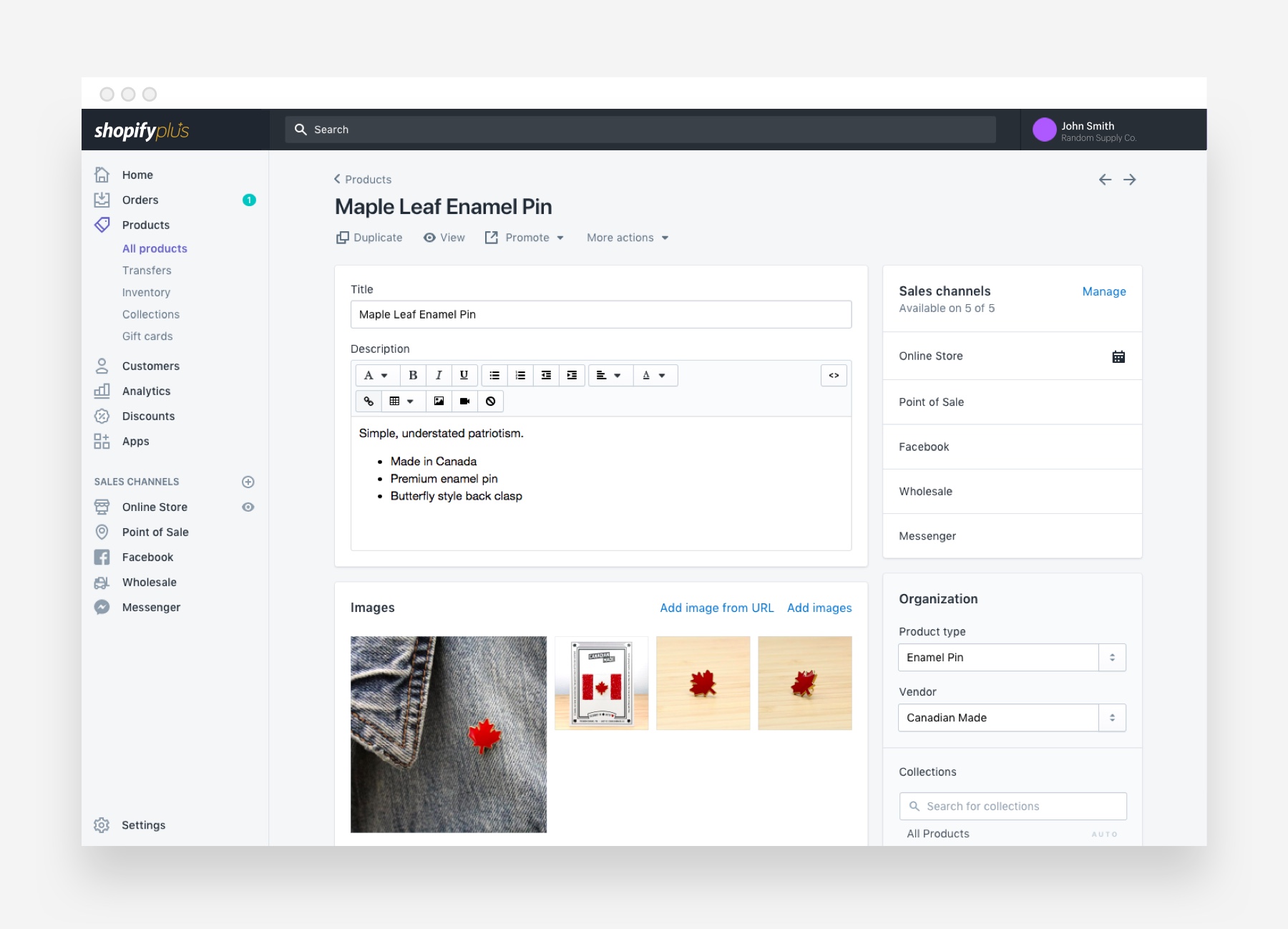
Shopify Plus is an eCommerce solution built for enterprise-level companies that enables them to sell online and offline across social channels like Facebook , Pinterest, and marketplaces like Amazon and eBay.
$2,300
per month with a 3-year commitment
Acuity Scheduling, a Squarespace company
Score 8.3 out of 10
N/A
Acuity Scheduling is an appointment management platform developed by the company of the same name in New York and acquired by Squarespace in 2019.
$14
per month
WooCommerce
Score 8.4 out of 10
N/A
WooCommerce is an eCommerce plugin for WordPress, developed by WooThemes (recently acquired by Automattic). Like WordPress, it is designed to be an extendable, adaptable, open-sourced platform. WooCommerce allows merchants to sell physical products, downloadables, or services.
$0
Pricing
Shopify Plus
Acuity Scheduling, a Squarespace company
WooCommerce
Editions & Modules
3-year term
$2300
per month
1-year term
$2500
per month
Emerging
$14
per month
Growing
$23
per month
Powerhouse
$45
per month
Woo Enterprise
Contact Sales
Offerings
Pricing Offerings
Shopify Plus
Acuity Scheduling, a Squarespace company
WooCommerce
Free Trial
No
No
Yes
Free/Freemium Version
No
No
Yes
Premium Consulting/Integration Services
No
No
Yes
Entry-level Setup Fee
No setup fee
No setup fee
No setup fee
Additional Details
—
—
WooCommerce is a free and open-source plugin for WordPress. Merchants can host their WooCommerce store on any private hosting service, or with Automattic directly via WordPress.com. Some added features or services from the WooCommerce Official Marketplace may have one time or subscription pricing.
Shopify Plus offers a lot more scalable technical foundations. Magento and WooCommerce sites can be difficult to innvoate on top of and not have the security that Shopify Plus offers. Often WooCommerce sites are cobbled together with third party tools and plugins that can …
A direct connection to our ERP sets Shopify Plus apart for other platforms we've evaluated. The integration with our ERP eliminates manual data entry, reduces fulfillment errors, and ensures accurate stock visibility company-wide.
Shopify Plus is far more scalable and stable. It is much easier to implement, and the time to value is much shorter. Development resources are plentiful and skilled, and the product's user base is so massive that significant testing has been done prior to releasing any updates …
A far more professional approach to e-commerce in general. Servers and the core SSL are taken care of and you're left with a whole host of tools to sell, sell and sell.
Shopify is a much easier and more intuitive platform to use.
The mobile focus is outstanding from the other competitors and the capability to modify the store without previous code or experience makes them the best e-commerce platform.
Shopify Plus offers a more robust solution than Woo commerce and is easier to train on than Big Commerce. Woo commerce is freeware with no support. Big Commerce offers more SEO features and is a more powerful solution, but harder to remote train users on - lots more …
Shopify Plus is WAYYYYYY better than anything else that we have used, and it's not even close. The websites are faster and more reliable, both of which are critical to running an online business. The cost to run is way less. We are running five websites on Shopify Plus for less …
Shopify Plus is way ahead of the pack in terms of features, automated and worry free maintenance / security / scaling / infrastructure, customer support, and speed. We've been building eCommerce sites for over a decade and it seems almost every positive trend in eCommerce is …
Shopify Plus integrates so well with other services, and keeps all levels of the online shopping experience in one place. It really saves a developer or manager a lot of headache that can arise with other e-commerce platforms.
WooCommerce is a good free version that's very customisable, but is not a smooth or polished platform. If you look at both dashboards between Shopify and WooCommerce you can see the difference is huge.
WooCommerce seems to be built for websites that aren't focused entirely on …
Especialista en Marketing Digital y Comercio Electrónico
Chose WooCommerce
I like WooCommerce because it can be optimized, customized and adapted to every business needs. That's because it's WordPress core, it helps us customize stores in ways we can only imagine and also we can implement Google AMP and PWA easier and faster than with other platforms. …
One single word: cost! Most WooCommerce alternatives have very high monthly or annual costs. WooCommerce permits to have an implementation cost (low or high based on customization) and a very low maintenance cost. Even if some plugins are very expensive, the maintenance cost is a …
Shopify Plus makes order management simple and less error prone. Connecting our ERP allows us to seamlessly manage our product listings, fulfill orders, and sync customer data. Limitations to the number of product variants requires attention from our staff to make sure our products sync without issue. Other than being arbitrary, there's really no need to limit the number of product variants.
I think any business can benefit from Acuity Scheduling. In my experience, however, and maybe I just haven’t found the correct settings yet, it’s been difficult to manage 4 business schedules with multiple employees and varying hours that change day-to-day and week-to-week. So I definitely would recommend it to more simple business models with set hours, as it seems like it would have all the functions one might need. I still would recommend to more complex businesses like mine as well, but also include discussion of some of the potential drawbacks.
WooCommerce is best suited to customers whose website is built on the WordPress platform, and whose development team has a good understanding of plug-in implementation. If your website is not built on WordPress, but on Laravel or React (or any other non WordPress technology), then WooCommerce is not for you. WooCommerce is also great for customers who just need a simple online shopping experience. If your needs involve more complex or immersive features such as timed discounts, pick up locations, delivery reminders, or post shopping feedback surveys, know that you will need to purchase additional add-ons to make to get these features using WooCommerce set up on WordPress.
Clicking on the link opens up my calendar, which has an uncluttered look, making it easy for my prospects and clients to review their options and make their choice.
I am able to customize my schedule, the types of appointments I want to offer, and even decide how many appointments I want in a day. There are so many details that I can customize.
I can customize how my calendar and emails look for my prospects and clients so that I come across professional and coordinated. I want the look of my business, website, etc. to have a polished, cohesive, and interesting presence.
I love that there is a workshop/class/series option for my workshops. My attendees reserve their place and pay upfront. I can duplicate these events or add future dates. It's wonderful. This saves us a lot of time and is so convenient.
I haven't had any trouble with my scheduler. It works flawlessly, so I don't have to take time out of my day to fix, troubleshoot or call customer service.
I love that I can add questions for my prospects to answer right away before booking a call. This means 3 fewer steps for me. 1. They answer these questions without an email from me. 2. They make their reservation and get a follow-up email, right away. 3. I customized the follow-up email with more details and actions to take to prepare for our call.
When linking to our communication service some customers have several emails with orders and only one email generates orders. It would be nice if we could combine all of this information into one account.
If a customer has multiple accounts you are also unable to edit the email address as it is already used, another reason merging accounts would be helpful.
Some of the processes in Shopify are too easy to complete. I’m certain scenarios a peony of “are you sure you would like to complete(this action)” would be extremely helpful and avoid mistakes that are not reversible.
Acuity Scheduling has been very reliable. If you don't believe me, check out their status page here. They do a pretty decent job maintaining their app. To be fair, it's a pretty simple tool so they shouldn't run into too many hiccups given it doesn't feature near as many options as other applications on the market run.
Despite very rare glitches, more connected to an excessive number of plugins, that affect the speed of the site, we are extremely satisfied with the platform, the ability to import and export products, even though we just export them, as we have our proprietary system for updating inventories. We love the ease of upgrading, enhancing, innovating, and the freedom we have to do whatever we want, which is a plus, when you consider Shopify can take down your whole store as they please, if they think you aren't abiding to their TOS or their ever changing set of rules.
It is extremely easy for merchants to get to know how Shopify Plus works. Comparitive to other platforms such as Magento and WooCommerce it is extremely lean and easy to operate, meaning clients who migrate over to it find it very intuitive to use. There is also a lot of guides and up to date information online
It is very easy to use once you get to know the program but with years of working with the program I am still finding new things that I had wished I knew about earlier. I feel like aspects of the website become hidden that would help productivity a lot if I knew they existed beforehand.
It is built on the Wordpress platform, so there are some quirks compared to a dedicated e-commerce product, but it is very intuitive and easy to use, especially for anyone with Wordpress experience. There are numerous great support articles and learning resources available. Significant customization can be achieved with plugins vs other eCommerce platforms, which may require more custom code and have fewer plugin options.
Every time I had a question on how to do something or had any issues with Acuity Scheduling, mainly in the very beginning, when I was learning the platform, customer service was excellent. They were prompt to respond, friendly, and very helpful until I had the right solution.
Shopify had the quickest go-to-market and most robust API among the products we compared. CommerceCloud required a VERY LONG integration phase that we just didn't have time for. BigCommerce fell short on the number of features and API coverage that we needed. Overall Shopify gave us the most bang for the buck.
In the case of Schedulicity, the system was awesome (very easy to set up and had some nice features) but did not offer the functionality and flexibility that AcuityScheduling does. In the case of SimplyBook.me, they offer lots of functionality but the interface is extremely complex and you pay a la carte for features so you're going to pay exponentially more for the same set of features as compared to AcuityScheduling. Their customer service was also lacking, in my opinion.
We were pretty sure we wanted a WordPress site so that we had more control over the site itself, having been burned by third-party vendor sites before. The fact that WooCommerce integrates so well with WordPress was a big selling point for us. Magento would have been too heavy of a lift for our small dev team and we didn't want to rely on Shopify or BigCommerce (though all of those products could have their merits for other projects or clients).
The pricing of Shopify Plus over the regular Shopify Account solution is about 10x if not 20x the cost. But with this cost comes the increased reliability and trust you have in your eCommerce Software solution/website. We still have a great ROI with the Shopify Plus Pricing.
With Shopify Plus, we have been able to drill deeper into a more robust eCommerce experience for our customers
With Shopify Plus, we have been able to customize our Website further with recommended apps, features, and customizations based on our Dedicated Account Reps expertise.