Chose Airtable
We use Basecamp as more of the "where our work gets done" space, while Airtable is planning the work.

| Product | Rating | Most Used By | Product Summary | Starting Price |
|---|---|---|---|---|
 Airtable | N/A | Airtable is a project management and collaboration platform designed to enable content pipelines, product management, events planning, user research, and more. It combines spreadsheet,database, calendar, and kanban functionality within one platform. | $24 per month per seat | |
 Basecamp | N/A | Basecamp is a web-based project-management tool. Basecamp offers features standard to project management platforms, as well as mobile accessibility, unlimited users, and 3rd party integrations. Basecamp is priced by space requirements and concurrent projects. | $15 per month per user | |
 Power Apps | N/A | PowerApps is a low code / rapid application development product from Microsoft that allows users to quickly build apps. | $20 per month per user |
| Airtable | Basecamp | Power Apps | ||||||||||||||||||||||
|---|---|---|---|---|---|---|---|---|---|---|---|---|---|---|---|---|---|---|---|---|---|---|---|---|
| Editions & Modules |
|
|
| |||||||||||||||||||||
| Offerings |
| |||||||||||||||||||||||
| Entry-level Setup Fee | No setup fee | No setup fee | No setup fee | |||||||||||||||||||||
| Additional Details | — | — | — | |||||||||||||||||||||
| More Pricing Information | ||||||||||||||||||||||||
| Airtable | Basecamp | Power Apps | |
|---|---|---|---|
| Considered Multiple Products | Airtable  Peg Ivanyo Director Chose Airtable I don't intend to replace Basecamp with Airtable, rather enhance my use of it, limit it to what it does best, which isn't ongoing tracking of data. Not wanting to build this in something like Access, which I've used previously, I did a search for services like Airtable that …  James Shafstall Marketing Director Chose Airtable I have mostly set up and helped architect custom database solutions in a proprietary software, as compares directly to Airtable. I have set up and used JIRA Software extensively, and several Marketing Automation systems, and set up Oncontact CRM, and used DAM systems, and Baseca…  Justin Raney Program Director and Co-owner Chose Airtable Airtable exceeds in the organization aspect. The one thing I think Airtable lacks is the general communication aspect like in Basecamp.  Chloe Sayers Billing Specialist Chose Airtable Airtable is way more powerful than Trello, while still incorporating the Kanban boards. However, in Airtable, you can customize the Kanban boards since they are actually database records, allowing for a lot more functionality. With the tagging feature in Airtable, it is also a …  Brian Chung Co-Founder, Business Director Chose Airtable Airtable is better because it has a free version. Free is always good for me. The others require payment. I don't like monday at all. Basecamp and Teamwork have been fair comparisons, but there isn't a free version that we can use. Overall, Airtable is still pretty good for the …  Ricardo Jose Correia D'lucas Comerciante Mayorista Chose Airtable Wrike is a very good platform for project management, however, it focuses more on marketing work which is not negligible, but for us it has worked better to manage with Airtable because it is made to manage projects using the primary information of the company that is none …  Alison Gross Director, Strategic Communication and External Affairs Chose Airtable Asana did not have the templates that we needed and Microsoft Project is not cloud-based, which limited its usability. Airtable met our needs in both those categories. Additionally, we love Airtable's visual approach.  Harper Brokaw-Falbo Administrative Coordinator Chose Airtable So much better! It's not even a competition. That being said, it would be great to have more developed user profiles within Airtable like Facebook Workplace.  Andrej Vrsansky Manager Chose Airtable Intuitive, easy to use, fast, great for attachments (uploading in behind other processes - the app actually really works while it finishes uploads)  Amber Delamater Digital Media Buyer Chose Airtable
 Susie Kaup Manager Online Engagement Chose Airtable Have used Basecamp in the past and this tool is much better suited for visual personalities and creative teams.  Rhys Harper Director of Marketing and Communications Chose Airtable Airtable is infinitely more customizable and robust. And it is much more affordable, too! |  Basecamp No answer on this topic | Power Apps No answer on this topic |
| Airtable | Basecamp | Power Apps | |||||||||||||||||||||||||||||||||||||||||||||||||||||||||||
|---|---|---|---|---|---|---|---|---|---|---|---|---|---|---|---|---|---|---|---|---|---|---|---|---|---|---|---|---|---|---|---|---|---|---|---|---|---|---|---|---|---|---|---|---|---|---|---|---|---|---|---|---|---|---|---|---|---|---|---|---|---|
| Project Management |
| ||||||||||||||||||||||||||||||||||||||||||||||||||||||||||||
| Professional Services Automation |
| ||||||||||||||||||||||||||||||||||||||||||||||||||||||||||||
| Low-Code Development |
|
| Airtable | Basecamp | Power Apps | |
|---|---|---|---|
| Small Businesses |  Stackby Score 9.0 out of 10 | Stackby Score 9.0 out of 10 |  Creatio Score 9.1 out of 10 |
| Medium-sized Companies |  InEight Score 8.5 out of 10 | InEight Score 8.5 out of 10 |  Quixy Score 9.9 out of 10 |
| Enterprises | InEight Score 8.5 out of 10 | InEight Score 8.5 out of 10 | Creatio Score 9.1 out of 10 |
| All Alternatives | View all alternatives | View all alternatives | View all alternatives |
| Airtable | Basecamp | Power Apps | |
|---|---|---|---|
| Likelihood to Recommend | 8.8 (239 ratings) | 9.8 (150 ratings) | 9.3 (23 ratings) |
| Likelihood to Renew | 9.5 (5 ratings) | 10.0 (26 ratings) | - (0 ratings) |
| Usability | 8.0 (36 ratings) | 9.3 (20 ratings) | 9.0 (4 ratings) |
| Availability | 10.0 (2 ratings) | 10.0 (5 ratings) | - (0 ratings) |
| Performance | 9.0 (1 ratings) | 7.3 (4 ratings) | - (0 ratings) |
| Support Rating | 9.0 (30 ratings) | 8.8 (28 ratings) | 9.7 (6 ratings) |
| In-Person Training | 8.0 (1 ratings) | - (0 ratings) | - (0 ratings) |
| Online Training | 9.0 (1 ratings) | 5.0 (1 ratings) | - (0 ratings) |
| Implementation Rating | 9.0 (2 ratings) | 7.7 (4 ratings) | - (0 ratings) |
| Configurability | 10.0 (2 ratings) | 8.0 (1 ratings) | - (0 ratings) |
| Contract Terms and Pricing Model | 5.0 (1 ratings) | - (0 ratings) | - (0 ratings) |
| Ease of integration | 8.0 (2 ratings) | - (0 ratings) | - (0 ratings) |
| Product Scalability | 9.0 (2 ratings) | - (0 ratings) | - (0 ratings) |
| Vendor post-sale | 8.0 (1 ratings) | - (0 ratings) | - (0 ratings) |
| Vendor pre-sale | 8.0 (1 ratings) | - (0 ratings) | - (0 ratings) |
| Airtable | Basecamp | Power Apps | |
|---|---|---|---|
| Likelihood to Recommend | Airtable
| 37 Signals
 Andrea Hester Director Of Operations | Microsoft
|
| Pros | Airtable
| 37 Signals
| Microsoft
 Nicholas Wisel Corporate Human Resources Manager |
| Cons | Airtable
 Kaley White Data and Systems Analyst | 37 Signals
 Heather Miller Senior Graphic Designer | Microsoft
 Scott Byrge Lead Software Engineer |
| Likelihood to Renew | Airtable
| 37 Signals
| Microsoft No answers on this topic |
| Usability | Airtable
| 37 Signals
 James Roy Office Manager | Microsoft
|
| Reliability and Availability | Airtable
| 37 Signals
 Lisa Keyser Developer & Designer | Microsoft No answers on this topic |
| Performance | Airtable
| 37 Signals No answers on this topic | Microsoft No answers on this topic |
| Support Rating | Airtable
| 37 Signals
| Microsoft
 Nigel Stratton Software Delivery Architect |
| In-Person Training | Airtable
| 37 Signals No answers on this topic | Microsoft No answers on this topic |
| Online Training | Airtable
| 37 Signals No answers on this topic | Microsoft No answers on this topic |
| Implementation Rating | Airtable
| 37 Signals
 Jenni Waggoner Marketing Content Manager | Social Media | Newsletter | Blog | White Papers | Microsoft No answers on this topic |
| Alternatives Considered | Airtable
 Matt Aldridge Knowledge Lead | 37 Signals
 Blake Baron Senior Financial Analyst - Cost Analytics | Microsoft
|
| Contract Terms and Pricing Model | Airtable
Kaley White Data and Systems Analyst | 37 Signals No answers on this topic | Microsoft No answers on this topic |
| Scalability | Airtable
| 37 Signals No answers on this topic | Microsoft No answers on this topic |
| Return on Investment | Airtable
 Ryan Dury Senior Manager Strategic Accounts & Sales Support | 37 Signals
| Microsoft
|
| ScreenShots | Airtable Screenshots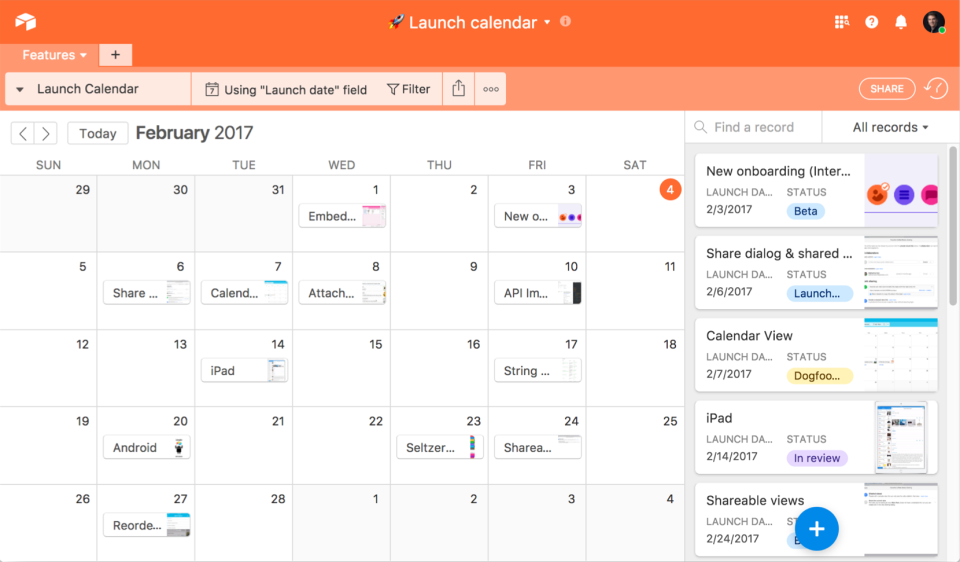   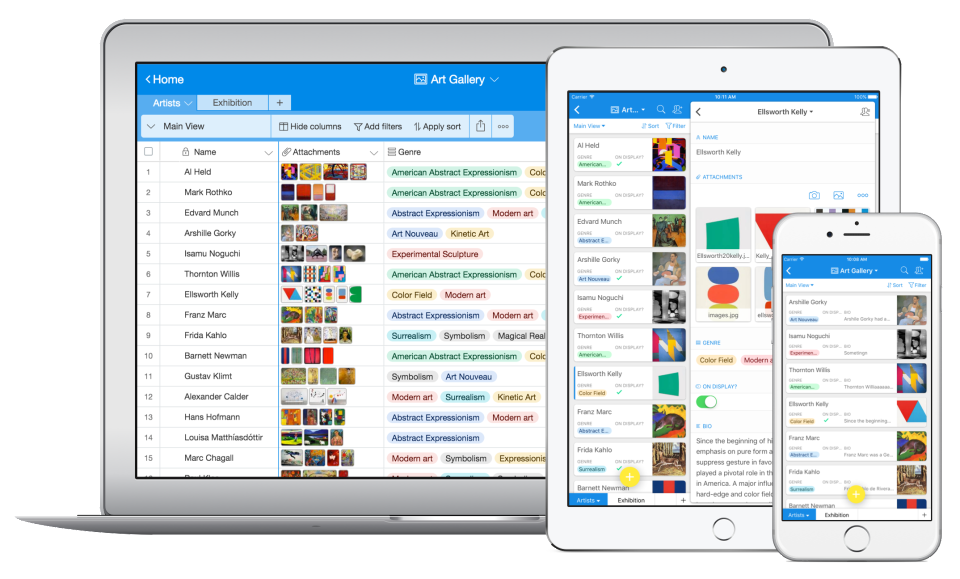  |
