
Brittney Collier
Marketing Assistant
Chose Google Trends

| Product | Rating | Most Used By | Product Summary | Starting Price |
|---|---|---|---|---|
 Google Trends | N/A | Google Trends is a search engine optimization software solution offered by . | N/A | |
 Nozzle | N/A | Nozzle is a SERP monitoring software that collects ranking data for target keywords and organizes it into dashboards, where the user can see everything from overarching trends to highly granular data. On every dashboard, users can segment ranking data in whatever way suits a particular strategy: analyze featured snippets, People Also Ask boxes, paid ads, listings containing reviews or images, and so on. Likewise, Nozzle lets the user assign keywords to keyword groups for maximum… | N/A | |
 Semrush | N/A | Semrush is a relatively popular search engine optimization tool set from the company of the same name based in Pennsylvania and founded in 2008. Largely the platforms relies on competitive intelligence, and features SEO staples like backlink checking, keyword analysis to refine SEO and PPC campaigning and locate low-cost / high-yield keywords, analysis of competitors who co-occupy desired ad and listing spaces, domain vs. domain analysis, as well as site audit and domain tracking. Semrush can… | $139.95 per month |
| Google Trends | Nozzle | Semrush | ||||||||||||||||||||||
|---|---|---|---|---|---|---|---|---|---|---|---|---|---|---|---|---|---|---|---|---|---|---|---|---|
| Editions & Modules | No answers on this topic | No answers on this topic |
| |||||||||||||||||||||
| Offerings |
| |||||||||||||||||||||||
| Entry-level Setup Fee | No setup fee | No setup fee | Optional | |||||||||||||||||||||
| Additional Details | — | -$49/mo for 10,000 pulls -$99/mo for 21,000 pulls -$249/mo for 60,000 pulls -$499/mo for 130,000 pulls -$999/mo for 275,000 pulls -$2,499/mo for 725,000 pulls -$4,999/mo for 1,500,000 pulls | 17% discount for annual pricing. | |||||||||||||||||||||
| More Pricing Information | ||||||||||||||||||||||||
| Google Trends | Nozzle | Semrush | |
|---|---|---|---|
| Considered Multiple Products |  Google Trends Brittney Collier Marketing Assistant Chose Google Trends  Todd Dodge Marketing Assistant Chose Google Trends  Mubin Saiyed Digital Marketing Associate Chose Google Trends We selected it because it is a free tool and it is made by Google.  Monica Leary Digital Marketing Manager Chose Google Trends They are both great tools. I prefer Google Trends because of the location capabilities and being able to go hyper-local. It does not however provide the details on cost and competition like SEM Rush does.  Austin Voigt Paid Media Manager Chose Google Trends Google Trends tends to be slightly more accurate than the other products, because Google has access to more user data for the algorithm to take into consideration when providing trends and information. We like this tool because it also aligns better with the Google tools we use …  Greg Dungan Owner Chose Google Trends I haven't used any other services like Google Trends.  Brice Delhome SEO Consultant Chose Google Trends Google Trends has the biggest source of data and is the most accurate. It cannot be used without any other tool because of its own limits (keyword suggestion, semantical analysis, etc.). | Nozzle  Brad Woodard President Chose Nozzle Nozzle is easier to use and seems to be more modern and robust interface.  Binaya Adhikari SEO Specialist Chose Nozzle They all provide rank tracking and data but what nozzle provides is truly amazing. Also, the price point is extremely affordable | Semrush Austin Voigt Senior Analyst - Paid Media Chose Semrush |
| Google Trends | Nozzle | Semrush | |||||||||||||||||||||||||||||||||||
|---|---|---|---|---|---|---|---|---|---|---|---|---|---|---|---|---|---|---|---|---|---|---|---|---|---|---|---|---|---|---|---|---|---|---|---|---|---|
| SEO |
| ||||||||||||||||||||||||||||||||||||
| SEO Channels |
| ||||||||||||||||||||||||||||||||||||
| SEO Platform & Account Management |
|
| Google Trends | Nozzle | Semrush | |
|---|---|---|---|
| Small Businesses | Nozzle Score 10.0 out of 10 | Google PageSpeed Insights Score 9.0 out of 10 | Nozzle Score 10.0 out of 10 |
| Medium-sized Companies |  Advanced Web Ranking Score 8.2 out of 10 | Advanced Web Ranking Score 8.2 out of 10 | Advanced Web Ranking Score 8.2 out of 10 |
| Enterprises |  Dupli Checker (DupliChecker.com) Score 8.5 out of 10 | Dupli Checker (DupliChecker.com) Score 8.5 out of 10 | Dupli Checker (DupliChecker.com) Score 8.5 out of 10 |
| All Alternatives | View all alternatives | View all alternatives | View all alternatives |
| Google Trends | Nozzle | Semrush | |
|---|---|---|---|
| Likelihood to Recommend | 10.0 (33 ratings) | 10.0 (16 ratings) | 8.2 (154 ratings) |
| Likelihood to Renew | - (0 ratings) | - (0 ratings) | 9.1 (3 ratings) |
| Usability | 8.0 (1 ratings) | - (0 ratings) | 8.0 (10 ratings) |
| Availability | - (0 ratings) | - (0 ratings) | 9.1 (1 ratings) |
| Performance | - (0 ratings) | - (0 ratings) | 7.3 (1 ratings) |
| Support Rating | 6.4 (6 ratings) | - (0 ratings) | 9.9 (17 ratings) |
| Implementation Rating | - (0 ratings) | - (0 ratings) | 7.3 (1 ratings) |
| Product Scalability | - (0 ratings) | - (0 ratings) | 9.1 (1 ratings) |
| Google Trends | Nozzle | Semrush | |
|---|---|---|---|
| Likelihood to Recommend | Google
| Nozzle
| Semrush
|
| Pros | Google
Brittney Collier Marketing Assistant | Nozzle
| Semrush
 Katie Wojciechowski SEO Copywriter |
| Cons | Google
Greg Dungan Owner | Nozzle
 Dr. Emma Shapiro CEO (Chief Executive Officer) | Semrush
 Daniel Drummond Head of Digital Marketing |
| Likelihood to Renew | Google No answers on this topic | Nozzle No answers on this topic | Semrush
|
| Usability | Google
Todd Dodge Marketing Assistant | Nozzle No answers on this topic | Semrush
|
| Reliability and Availability | Google No answers on this topic | Nozzle No answers on this topic | Semrush
 Keith Jones I am a CPA Specializing in IRS Tax Resolution and Small Business Accounting Automation & Tax Plannin |
| Performance | Google No answers on this topic | Nozzle No answers on this topic | Semrush
Keith Jones I am a CPA Specializing in IRS Tax Resolution and Small Business Accounting Automation & Tax Plannin |
| Support Rating | Google
 Brian Chung Co-Founder | Nozzle No answers on this topic | Semrush
|
| Implementation Rating | Google No answers on this topic | Nozzle No answers on this topic | Semrush
Keith Jones I am a CPA Specializing in IRS Tax Resolution and Small Business Accounting Automation & Tax Plannin |
| Alternatives Considered | Google
 Caleb Unruh Marketing Director | Nozzle
| Semrush
 Joshua Poole SEO Manager |
| Scalability | Google No answers on this topic | Nozzle No answers on this topic | Semrush
Keith Jones I am a CPA Specializing in IRS Tax Resolution and Small Business Accounting Automation & Tax Plannin |
| Return on Investment | Google
| Nozzle
Dr. Emma Shapiro CEO (Chief Executive Officer) | Semrush
|
| ScreenShots | Nozzle Screenshots  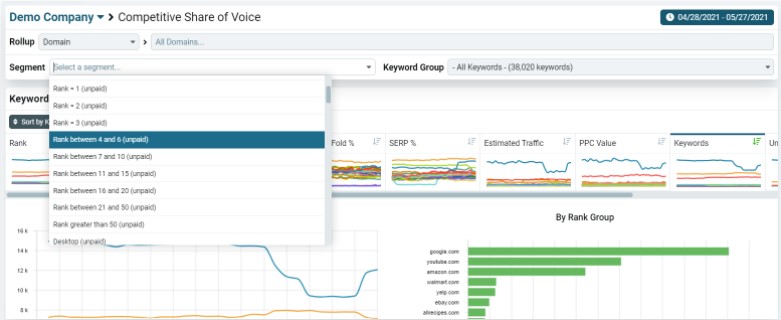 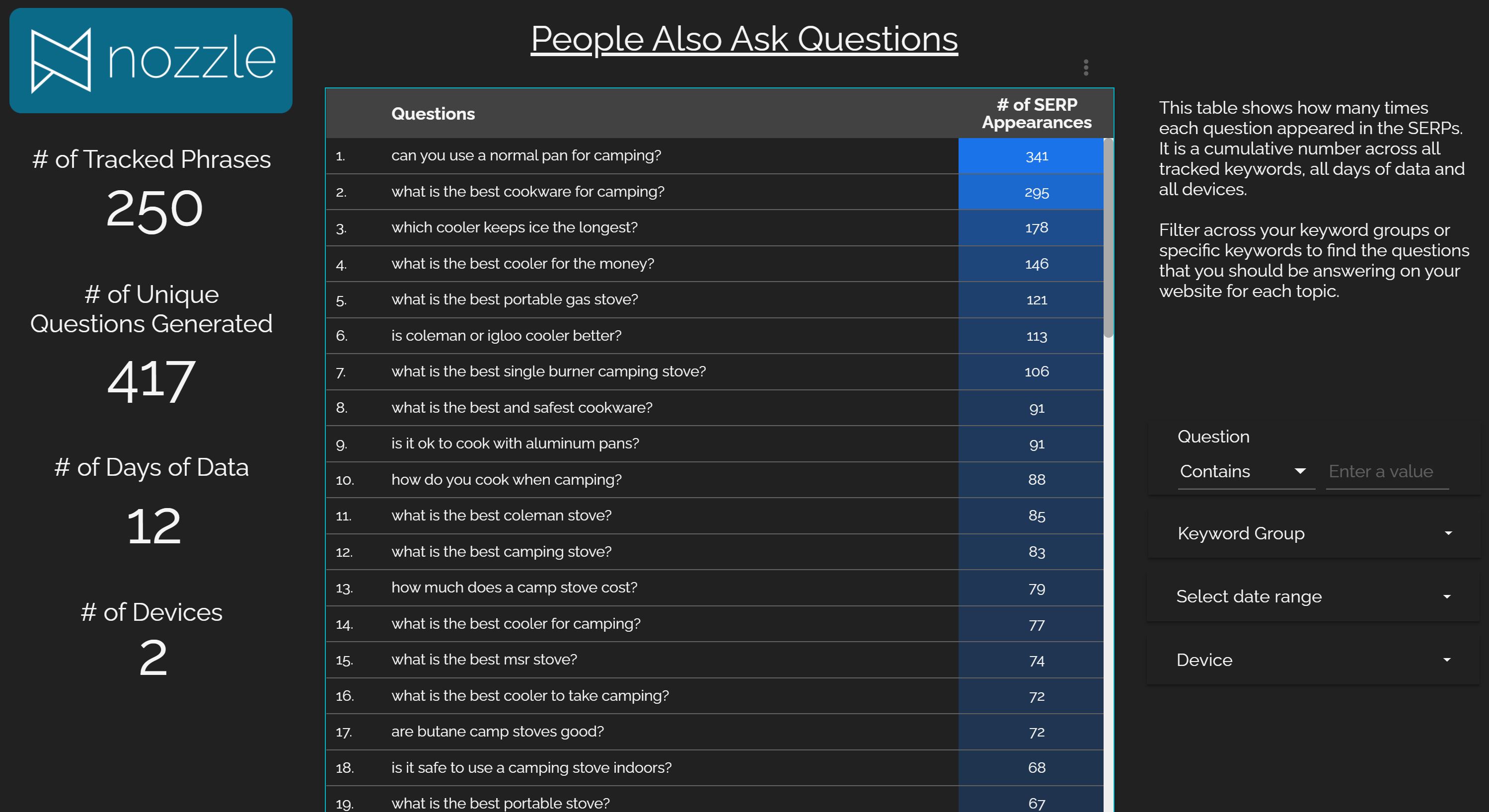 |