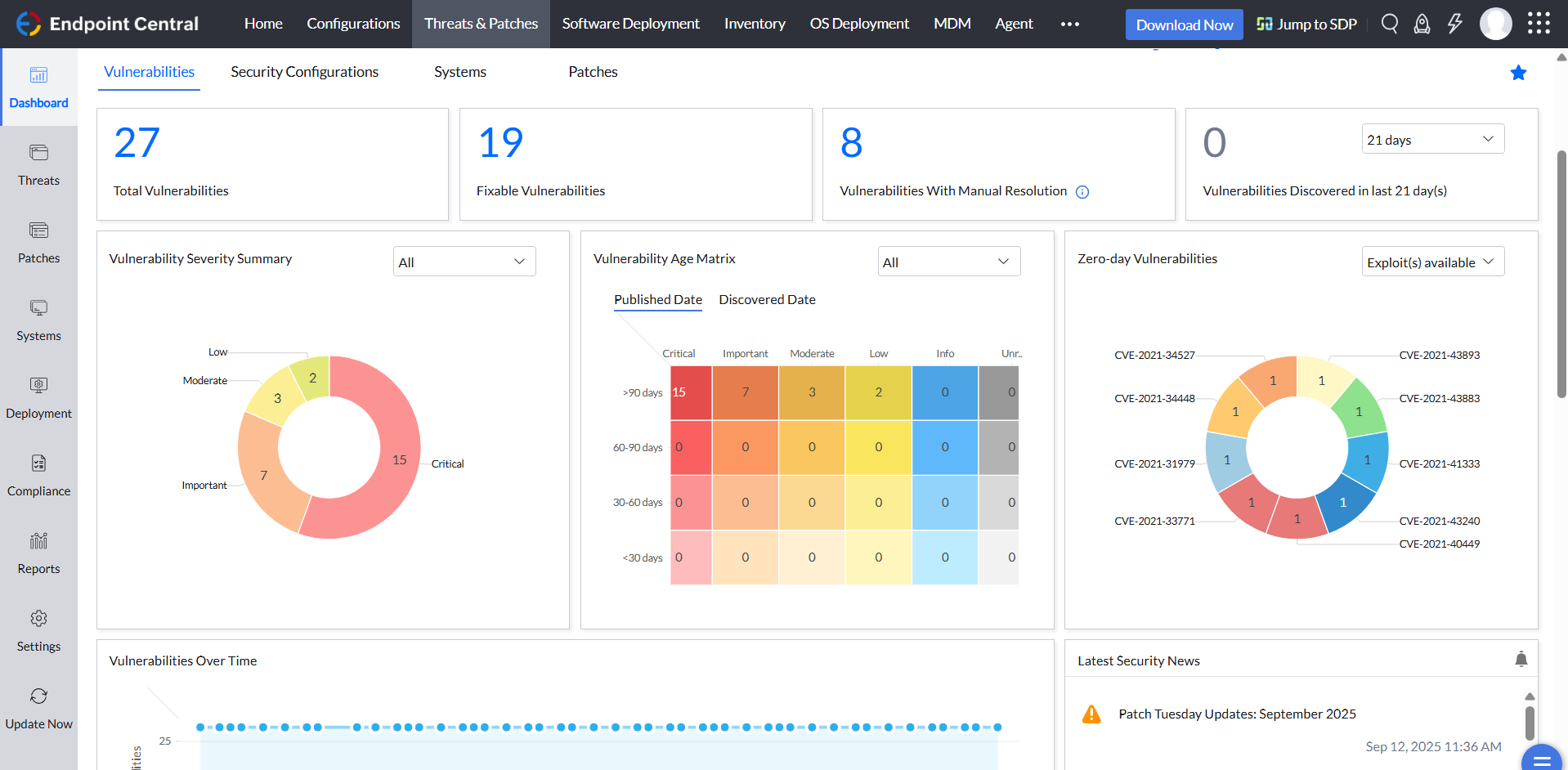
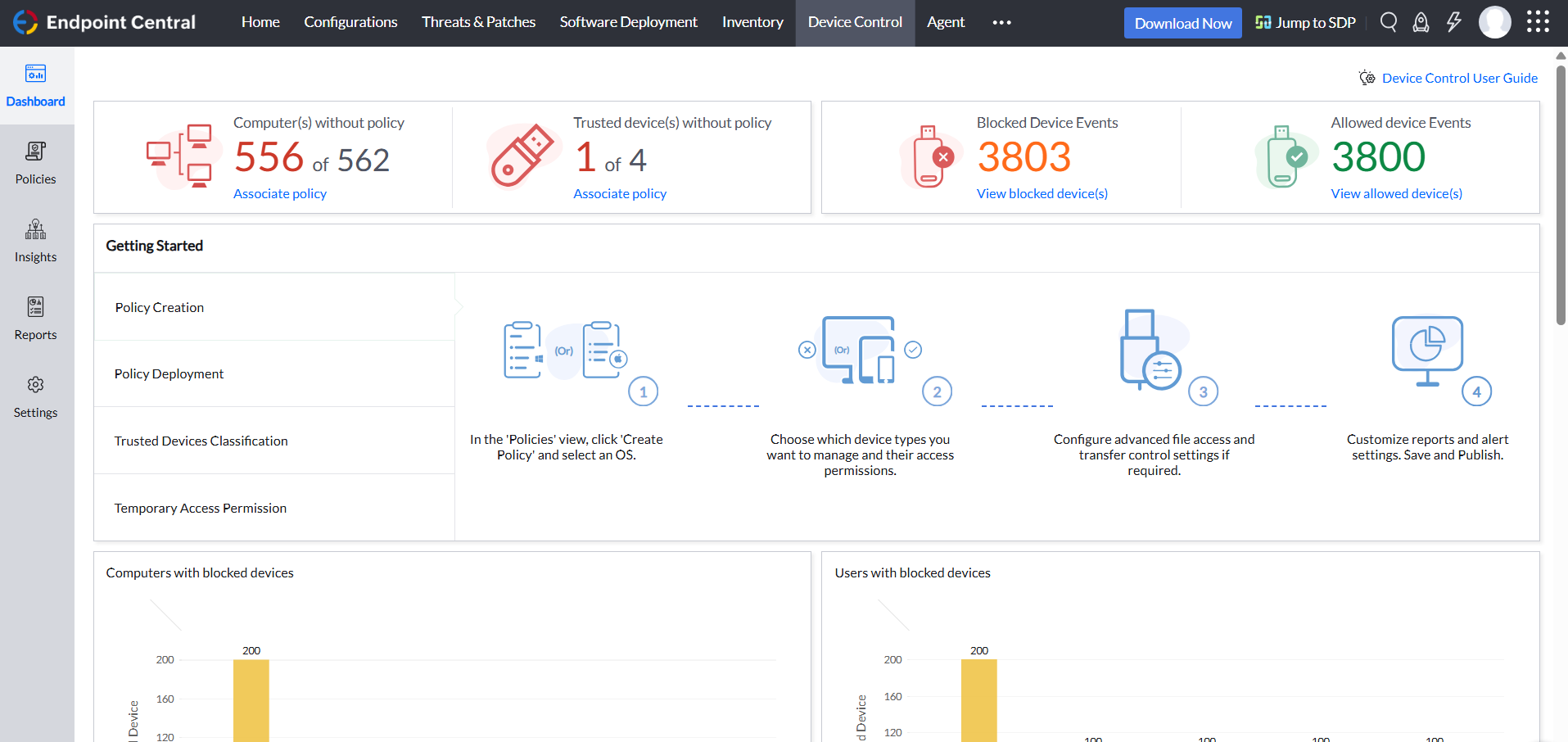
Desktop Central from ManageEngine is a client desktop management with patching, remote control, and configuration.
$795
per year per user
Symantec Endpoint Security
Score8.7 out of 10
N/A
Symantec Endpoint Protection is the company's flagship antivirus / endpoint security product.
$29.99
per year 100-249 devices
Pricing
ManageEngine Endpoint Central
Symantec Endpoint Security
Editions & Modules
No answers on this topic
Endpoint Security, Initial Hybrid Subscription License With Support
$29.99
1 year 100-249 devices
Symantec Endpoint Security Enterprise, Initial Hybrid Subscription License with Support
$34.99
1 year 1-99 devices
Endpoint Security, Initial Hybrid Subscription License With Support
$90.99
3 years 100-249 devices
Symantec Endpoint Security Enterprise, Initial Hybrid Subscription License with Support
$99.99
3 years 1-99 devices
Symantec Endpoint Security Complete, Initial Hybrid Subscription License with Support
$200
3 years 1-99 devices
Offerings
Pricing Offerings
ManageEngine Endpoint Central
Symantec Endpoint Security
Free Trial
Yes
No
Free/Freemium Version
No
No
Premium Consulting/Integration Services
No
No
Entry-level Setup Fee
No setup fee
No setup fee
Additional Details
—
—
More Pricing Information
Community Pulse
ManageEngine Endpoint Central
Symantec Endpoint Security
Considered Both Products
ManageEngine A Div of Zoho Corporation Pvt Ltd
Verified User
Chose ManageEngine Endpoint Central
In my opinion, ManageEngine Endpoint Central is cost efficient and easy to use compared to Symantec Endpoint Security and CrowdStrike Falcon. ManageEngine Endpoint Central comes with lot of required features in single feature needed for IT infrastructure where I got Inventory …
A de minimis incentive was given to thank the reviewer for their time. The incentive was not used to bias or drive a particular response, nor was the incentive contingent on a positive endorsement. More Info
A de minimis incentive was given to thank the reviewer for their time. The incentive was not used to bias or drive a particular response, nor was the incentive contingent on a positive endorsement. More Info
A de minimis incentive was given to thank the reviewer for their time. The incentive was not used to bias or drive a particular response, nor was the incentive contingent on a positive endorsement. More Info
For small businesses, it is also free, which, for what it offers, is really helpful. It works better than similar products, such as SCCM, both within and outside the internal network. I do not see scenarios in which it could be less appropriate.
Symantec Endpoint Security is a well-rounded product that provides a significant amount of functionality and covers many of our endpoint needs without needing to resort to multiple vendors that might clash in unpredictable ways when ultimately deployed to the endpoints in our estate. The default policies are adequate and tuning these requires some time as with all similar EDR products but the product is flexible enough to allow very granular whitelisting/blacklisting which is great. Low resource requirements are also fantastic and we've not had many complaints from developers who were getting slowed down when compiling complex code with other previous solutions.
A de minimis incentive was given to thank the reviewer for their time. The incentive was not used to bias or drive a particular response, nor was the incentive contingent on a positive endorsement. More Info
We set alerts when a devices gets low on disk space. That is automatic and creates a ticket in ME SDP. We are then able to Add space to a VM Desktop, and then go thru ManageEngine Endpoint Central to extend the drives so the entire process can be done without interruption to the end user.
Using the patch scans we can easily see what patches have been installed for all manufacturers not just Microsoft, without having to physically go to the device. It also allows us to choose which patches we want to push out and automate the process so we can be hands off, freeing up out time for other things.
Remote access to devices. This allows us to remotely make changes, not just via remote control but also make registry changes and clean up space without going to the device and without interruption to the end user.
Alerts. We have set up to get email alerts when new hardware is plugged into any computers. This lets us know if someone is bringing in un-authorized equipment (thumb drives, hubs, etc) to better manage what is/is not on our network.
A de minimis incentive was given to thank the reviewer for their time. The incentive was not used to bias or drive a particular response, nor was the incentive contingent on a positive endorsement. TR verified that a representative sample of customers was invited. More Info
A de minimis incentive was given to thank the reviewer for their time. The incentive was not used to bias or drive a particular response, nor was the incentive contingent on a positive endorsement. More Info
A de minimis incentive was given to thank the reviewer for their time. The incentive was not used to bias or drive a particular response, nor was the incentive contingent on a positive endorsement. More Info
The system should have a better ability to auto repair, if an item is malfunctioning it should auto reinstall.
The cloud platform and the server do not talk well to each other and it would be great to get the same data on both platforms, this may be due to version though.
It seems the whitelisting on the cloud platform could use some work.
A de minimis incentive was given to thank the reviewer for their time. The incentive was not used to bias or drive a particular response, nor was the incentive contingent on a positive endorsement. TR verified that a representative sample of customers was invited. More Info
ManageEngine is considered an excellent product due to its comprehensive suite of solutions for IT management, with ManageEngine Endpoint Central specifically excelling in endpoint management. The platform stands out for its user-friendly interface, robust features, and versatility in addressing diverse IT needs. It offers organizations a centralized solution for endpoint security, patch management, software deployment, and asset management
A de minimis incentive was given to thank the reviewer for their time. The incentive was not used to bias or drive a particular response, nor was the incentive contingent on a positive endorsement. More Info
Not using WNS to communicate with the endpoint console is a big plus. We now use Workspace One, and WNS can be really annoying at times. After deployment, it cleans itself, which is important for us because our current solution leaves the package on the computer and requires maintenance. The remotely script command is a lifesaver.
A de minimis incentive was given to thank the reviewer for their time. The incentive was not used to bias or drive a particular response, nor was the incentive contingent on a positive endorsement. More Info
The rating reflects Symantec Endpoint Security's ability to balance enterprise grade security with user-friendly workflows or advanced configurations require extra effort. For most organizations, the streamlined management and robust automation justify the high score. Management GUI is old fashined and need to be improve. Older devices may experience slowdowns during full scans without careful configuration.
A de minimis incentive was given to thank the reviewer for their time. The incentive was not used to bias or drive a particular response, nor was the incentive contingent on a positive endorsement. More Info
We've used it for years and the software is easy to use. The dashboard is easy to read, and you can easily figure out where to go to troubleshoot or deploy software. Symantec is there for emergencies like backup restoration or file retrieval. It's pretty low maintenance. Symantec is there when your IT infrastructure needs it
A de minimis incentive was given to thank the reviewer for their time. The incentive was not used to bias or drive a particular response, nor was the incentive contingent on a positive endorsement. More Info
The immediate chat support is great and very helpful. However, if you need escalated support or have a deeper need that the chat tool can't help with, you will experience significant wait times and slow responses. The time zone difference becomes painful to the point of often just giving up.
Support is completely awful! You can never get anyone to help if you can even find a number to call. The support web portal is a joke and their response time if you're even able to submit a ticket is ridiculously slow.
A de minimis incentive was given to thank the reviewer for their time. The incentive was not used to bias or drive a particular response, nor was the incentive contingent on a positive endorsement. More Info
It seems that the services offered with the purchase change from what is covered to what is an additional cost. Somethings I thought we had ended up requiring an additional purchase if we wanted to continue using the feature.
A de minimis incentive was given to thank the reviewer for their time. The incentive was not used to bias or drive a particular response, nor was the incentive contingent on a positive endorsement. More Info
A de minimis incentive was given to thank the reviewer for their time. The incentive was not used to bias or drive a particular response, nor was the incentive contingent on a positive endorsement. More Info
I was not a part of the initial selection process, but I understand the issue was related to cost per endpoint. As a user of the other solutions I would say that the other solutions do have other strengths that ManageEngine is missing. The remote access tools are superior but at the end of the day you get what you pay for.
A de minimis incentive was given to thank the reviewer for their time. The incentive was not used to bias or drive a particular response, nor was the incentive contingent on a positive endorsement. More Info
Symantec Endpoint Security offers very similar features to the above products, they all do the same thing in terms of protecting your endpoints against cybersecurity threats. Installation wise the products all install from a central management system and report back to this for central reporting. Ultimately we choose Symantec as the reseller was able to offer additional incentives which made their pricing very competitive.
A de minimis incentive was given to thank the reviewer for their time. The incentive was not used to bias or drive a particular response, nor was the incentive contingent on a positive endorsement. More Info
A de minimis incentive was given to thank the reviewer for their time. The incentive was not used to bias or drive a particular response, nor was the incentive contingent on a positive endorsement. TR verified that a representative sample of customers was invited. More Info
A de minimis incentive was given to thank the reviewer for their time. The incentive was not used to bias or drive a particular response, nor was the incentive contingent on a positive endorsement. More Info