Microsoft Power BI is a visualization and data discovery tool from Microsoft. It allows users to convert data into visuals and graphics, visually explore and analyze data, collaborate on interactive dashboards and reports, and scale across their organization with built-in governance and security.
$168
per year per user
QlikView
Score 8.2 out of 10
N/A
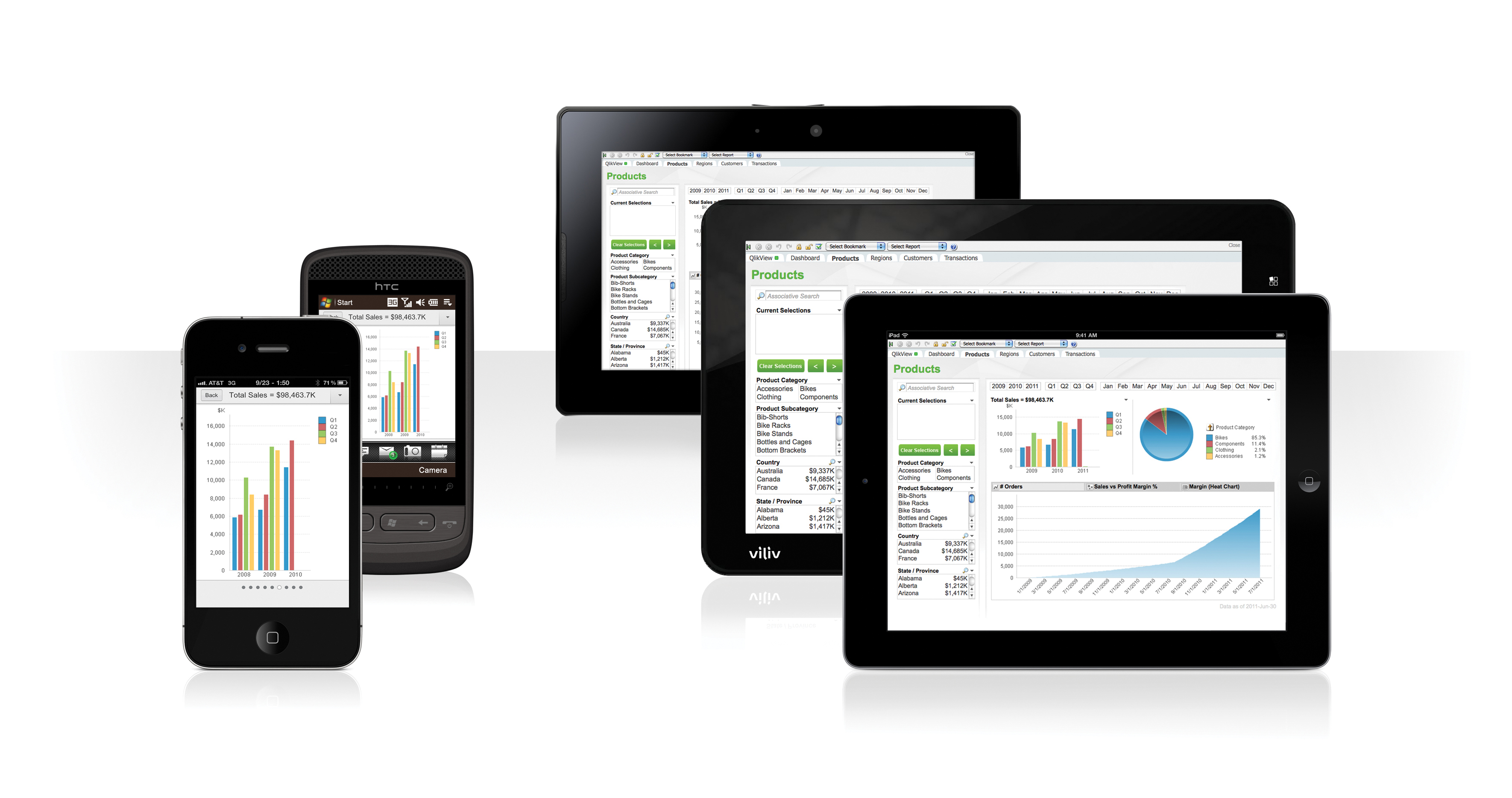
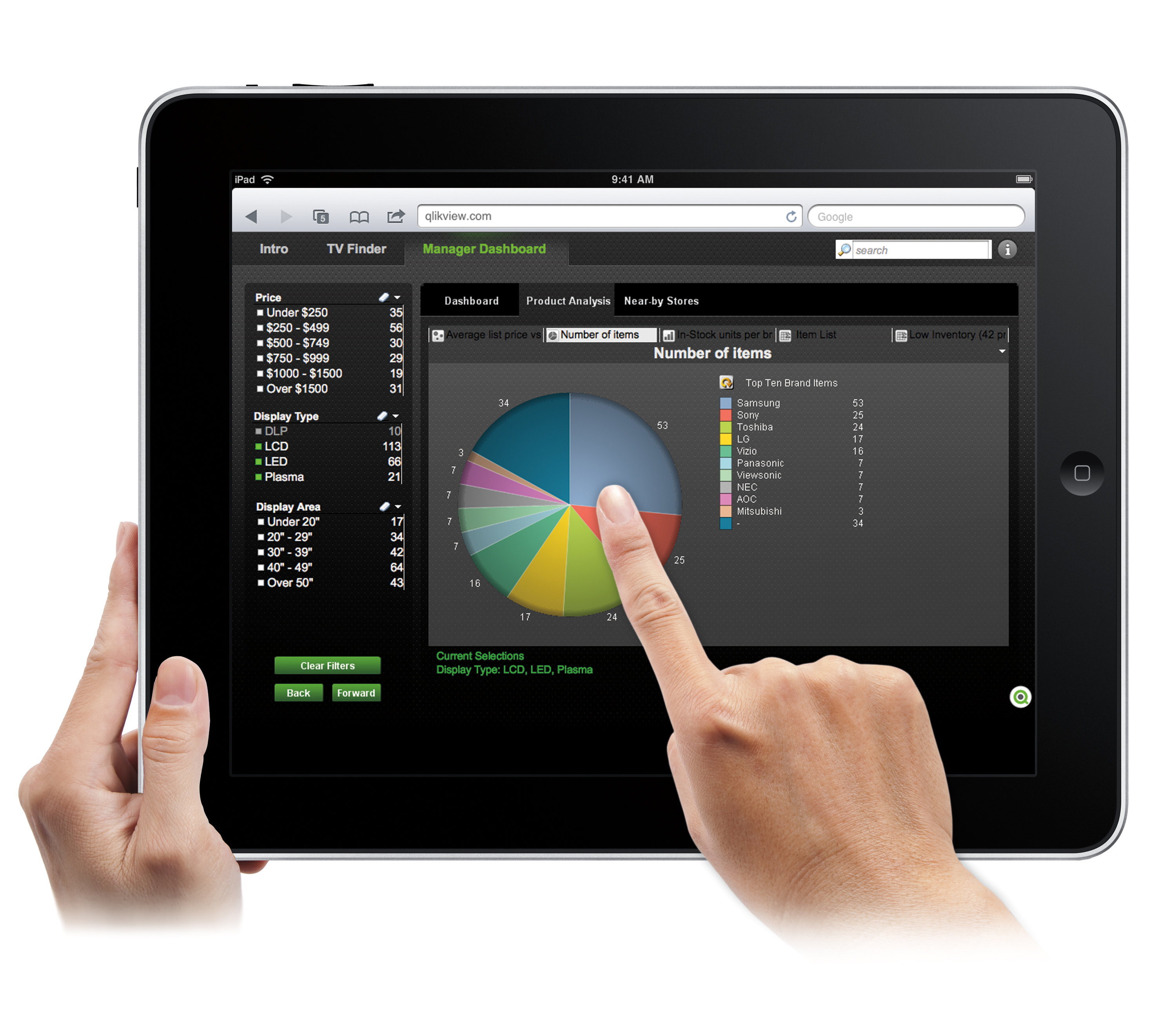
QlikView® is Qlik®’s original BI offering designed primarily for shared business intelligence reports and data visualizations. It offers guided exploration and discovery, collaborative analytics for sharing insight, and agile development and deployment.
N/A
Tableau Cloud
Score 7.9 out of 10
N/A
Tableau Cloud (formerly Tableau Online) is a self-service analytics platform that is fully hosted in the cloud. Tableau Cloud enables users to publish dashboards and invite colleagues to explore hidden opportunities with interactive visualizations and accurate data, from any browser or mobile device.
$15
per month per user
Pricing
Microsoft Power BI
QlikView
Tableau Cloud
Editions & Modules
Power BI Pro
$14
per month (billed annually) per user
Power BI Premium
$24
per month (billed annually) per user
QlikView
Custom
per user
Tableau Viewer
$15
per month billed annually per user
Enterprise Viewer
$35
per month billed annually per user
Tableau Explorer
$42
per month billed annually per user
Enterprise Explorer
$70
per month billed annually per user
Tableau Creator
$75
per month billed annually per user
Enterprise Creator
$115
per month billed annually per user
Tableau+
Contact Sales
Offerings
Pricing Offerings
Microsoft Power BI
QlikView
Tableau Cloud
Free Trial
Yes
Yes
No
Free/Freemium Version
Yes
No
No
Premium Consulting/Integration Services
No
Yes
No
Entry-level Setup Fee
No setup fee
Optional
No setup fee
Additional Details
Power BI Desktop is the data exploration and report authoring experience for Power BI, and is available as a free download.
On an perpetual license basis, based on server plus number of users.
Contact vendor for pricing.
—
More Pricing Information
Community Pulse
Microsoft Power BI
QlikView
Tableau Cloud
Considered Multiple Products
Microsoft Power BI
Verified User
Analyst
Chose Microsoft Power BI
We were able to bundle Power BI with other Microsoft products we rely on heavily. This and the customization options were the main sellers for us.
Verified User
Manager
Chose Microsoft Power BI
Power BI is a great tool to create reports and share data. However, it does not have the budgeting, forecasting and predictive modeling tools we need for our Financial Planning and Analysis part of our business. So we also implemented Vena for our financial reporting, …
We have used Microsoft Power BI for almost seven years. When looking for a reporting platform, remember that you are about to make a long-term choice. Moving reports to another system isn't easy. If you have, for example, more than 100 reports, the move to a different platform …
Microsoft PowerBI is easy to use, has leadership alignment, and is liked by everyone using it in the past and in the current setup. Thus, we decided to continue renewing Microsoft Power BI. We had also evaluated some competitors, but those platforms were not as easy to onboard. …
In the case of Tableau or Google Charts, thay have a lack on customization and on the options they have. For Qlik Sense, you need to spend too much time on the data model for doing quick tests or data validation when comparing it to Microsoft Power BI. Also, Microsoft Power BI …
I selected Power BI because it is the best in all because of its ecosystem and its ability to connect with multiple data source like Microsoft Excel, Microsoft SQL Server, web, analysis services etc. Moreover, its available on both Cloud and Desktop with some pro and cons …
It has more than 200 plus visuals in-store and is very easy to access. It has a great user community to help each other with an ample amount of responses. Almost all kinds of data sources are available to use and develop the reports Easy to use and learn with a lot of training …
Global Digital Operations Manager - BA Electrification
Chose Microsoft Power BI
Power BI was perfectly integrated in our Microsoft ecosystem what makes everything easier also, the fast evolution that has happened over the last years and their reaction to our needs is something that makes the differents. They listen to the customer and as they do a lot of …
Compared to Amazon QuickSight, if your dataset is coming from Amazon S3, it is much easier to just use QuickSight. However, if you are building a pipeline using prefect to transfer data, MS Power BI would potentially be a good tool to use and visualize the data by some none …
We selected Power BI because we could push a single source out to a group of people for instant viewing and reporting. They could select from pre-created filters that we selected, but also land on a default view. It's intuitive to use and gets the job done in an enterprise …
Even though Power BI is not the only tool we use, is the most powerful one! Its easiness to integrate information and directly import queries makes it super easy to set up and start using it. Also, it's much faster handling a lot of data compared to other products like microstra…
MS Power BI is a bit more rigid than Tableau in terms of dynamic visualizations, but we chose it because we were already using the MS ecosystem. In terms of sharing and integrating with our MS Suite, MS Power BI was better in terms of licensing and integrations with our …
Microsoft Power BI has better pricing, better features in the trial version. Power BI is also integrated with other Microsoft products, so you can publish dashboards to SharePoint pages and to Teams. Power BI is also the easiest to use. It has more wizards and all the pop-ups …
We liked Power BI over the other options we looked at (primarily Tableau) because of its super easy integration with other Microsoft products like Dynamics 365, MS Server, as well as desktop applications that we use company-wide that are base don Windows. The price was also a …
Microsoft Power BI was a little more expensive when comparing it to the competition, but it also offers a lot more options and is more flexible as well. Also, the quality and appearance of the reports and charts was more good looking and aesthetically pleasing than the other …
Power BI does not have the feel of a fully independent and robust BI Solution. It tackles smaller functional or department-level analytic needs and can operate in a small or solo roll-out environment. But scaling up to enterprise would be better suited for Qlik or Tableau. Same …
We selected Microsoft Power BI because it has the best GUI and easy-to-use interface. As part of Microsoft suite, it has the same structure as Office 365 solutions, therefore making it easier to get onboard. At the same time, having backend solutions from Microsoft such as …
Both do a good job from a presentation layer. I feel that PowerBI has better data modeling capabilities, and Tableau has a slight edge on the visualizations and end-user experience. Power BI is more attractive to most of our B2B clients, and Tableau is more attractive for B2C …
Microsoft BI tool does a better job than most of the other software. The reason is excellent visualizations and its capability to connect with various other software and data sources. Tableau does a better job when it comes to tutorials and being more user-friendly. Also …
QlikView seems somewhat legacy compared to Microsoft Power BI, with more options to customize and format dashboards with a more enhanced look and feel. QlikView was already widely used in our organization before I came on board and was widely adopted as the single source of …
Each tool has their own pros and cons; QlikView works well for our needs at this time.
Verified User
Executive
Chose QlikView
I think it all comes down to personal preference and integration compatibility with the existing systems in the organization. However, I would argue that Qlik and PowerBI are the top-tier available solutions due to robust features and capabilities, and I would put solutions …
MS Power BI and other BI tools have similar functions to QlikView and some of them also have much cheaper price. However, the strength of QlikView is that it is much easier to use and to learn. If you need to train a new person to learn the tool, it costs around 1-2 days.
QlikView has its own data warehouse, which is the most important reason why would I choose QlikView over any other tools. Apart from that, the feature options are good for the ones who know the tool well but created a steeper learning curve in the beginning. Once you went …
Qlik was less intuitive than Paxata, but less expensive than either microstrategy or PowerBI. Qlik has enough breadth to accommodate most use cases without breaking the bank.
It is inexpensive and cost prohibited software. Has alot of canned reports that you would need and doesn't request much development work. Widely adopted as an industry leader and works well with many of the top data source applications. Very easy to use and intuitive in the …
Power BI is cheaper, but more basic. Tableau is more expensive, but with greater capabilities. I feel like the other two are a little more intuitive. My company had Qlikview when I arrived.
The only other vendor product that I have worked with that provides a similar experience to Qlikview is Tableau. I would recommend Tableau if your use case is to build a fixed dashboard. You can share reports for free without needing to buy additional licenses. I would …
Tableau works quite differently when compared to Microsoft Power BI. When using Tableau to generate reports, you are required to define your data field first, run the query, and only then format the visualisation options you wish to include in your reports. This is quite …
There are lots of excellent products are available in market for data analysis like SAP BusinessObjects, IBM Cognos, MicroStrategy Analytics, Microsoft Power BI, etc. I found other products are specific to their tools like SAP BusinessObjects suits great with SAP Products …
In my opinion, while Microsoft Power BI is a bit easier to build reports and dashboards with in part to its shared traits and connectivity with other Microsoft products, Tableau Online allows for a greater depth of customization, data sourcing, and most of all the sharing of …
We formally used Microsoft Power BI as our reporting software throughout our organization. I believe Tableau Cloud is a step above Power BI and is our preferred program. The end reports are look cleaner and are easier to work with than Power BI. There are more options and …
Tableau has a way easier Intuitive UI compare to Power BI or Amplitude. AMplitude is great since anyone could create their own dashboard, but building it it's a different thing.
Tableau Cloud is ery powerful and user friendly with minimal cost when compared with other BI tools.Its robust features like switching toggles, supporting SQL queries for buiding charts and all stands out as the best.It reduces time in creating difficult and complex dashbords …
Tableau Cloud offers easier ways to make the content browsable by users. It also offers more flexible ways to set up self-service governance. Standard filtering functionalities are easier to use.
It seems more robust then the other platforms. There is a lot you can do from merging many different data sets together by joining them at like points, to creating visualizations of the data, or by showcasing some important data to any number of people within your organization. …
When weighing the pros and cons of Tableau Online vs. SAP ERP, two key considerations emerged as clear winners. SAP ERP is a powerful data purification tool, but it doesn't measure up to the competition in terms of data presentation. When it came to data visualization and …
Tableau Online provides better data visualizations (especially when comparing out of the box visualizations that are available) than MS Power BI and historically we have connected more of our data sources to Tableau vs. other platforms like Google Analytics.
Tableau provides more robust system to perform data analytics as compared to the alternatives like Power BI and Qlik. Moreover, Tableaus is super simple to use and is very reliable in terms of its connection with databases. The ability to manipulate data is another big reason …
Verified User
Professional
Chose Tableau Cloud
Tableau has a wider adoption than the competition. Tableau Online can support interfaces built on Tableau.
Tableau is among the top applications out there in the space and at this level. It really comes down to personal preference and data visualization goals. All of the top products I listed do their job very well and are packed with features. I prefer Tableau online for analyzing …
Spotfire can do similar things, but Tableau's plots are prettier in my opinion. However, if one needs to perform complex calculations on the data first, Spotfire can do it better than Tableau. So, it depends on the task at hand.
Tableau does a great job compared to all of these mentioned tools. Other tools also have a great shape-up of dashboards but obviously all have their advantages and disadvantages. The reason Tableau has an edge over all the other tools is because of its excellent visual design …
This is user friendly, no coding required, easy to set up, easy to put data into, has a connector to our CRM/ERP so there are low barriers to get data into. Tableau is really the smart and easy choice in the business intelligence software area. Ease of deployment and the …
Has significantly improved collation of data and visualisation especially with business across Europe. Has given me the ability to see the Site availability at the click of a button to see which Site is in the "money" and seize opportunities based on Market data
Sales data validations have helped manage our justifications in the past, especially with regard to new product development and new business introduction. It has also been helpful in identifying trends with business impact and direction specific to quarter and monthly sales from ERP data as well as decisions to purchase equipment of staffing based on run rates and product demand.
One thing that can get out of hand is data output - if you aren't careful in your query, you may be overloaded with data dumps and drown in the amount of info you have to filter through. This is a user caution, not a comment on the software itself.
If you're using Tableau as the primary BI tool, then Tableau Cloud is well suited to publish and share the results with a wide(r) audience. It is well suited for various degrees of self-service proficiency, from pure consumers of analytical work to more advanced users who can use web editing for smaller or larger adjustments, and even for desktop power users who will publish their work to Tableau Cloud. It has many good ways to organize the content and make it easily accessible via search, favorites, folders, collections ("playlists for your data"), or history ("recents"). It might not be ideally suited if there are many on-prem sources to be used (even though there are options to connect them) or if you have very special requirements regarding custom server setup, which is limited in a shared cloud environment like Tableau Cloud.
Options for data source connections are immense. Not just which sources, but your options for *how* the data is brought in.
Constant updates (this is both good and bad at times).
User friendliness. I can get the data connections set up and draft some quick visuals, then release to the target audience and let them expand on it how they want to.
Tableau Online is completely cloud based and that's why the reports and dashboards are accessible even on the go. One doesn't always need to access the office laptop to access the reports.
The visualizations are interactive and one can quickly change the level at which they want to view the information. For example, one person might be more interested in looking at the country level performances rather than client level. This is intuitive and one doesn't need to create multiple reports for the same.
The feature to ask questions in plain vanilla English language is great and helpful. For quick adhoc fact checks one can simply type what they are looking for and the Natural Language Programming algorithms under the hood parse the query, interpret it and then fetch the results accordingly in a visual form.
We found that QlikView can be a bit slow in supporting some forms of encryption. It is web-based and we needed to upgrade all of our server to not support the older SSL and TLS 1 protocols, only support TLS 1.2 and TLS 1.3. However, QlikView could not run with TLS 1.2 and TLS 1.3. We had to wait over six months to get a version that would handle the newer TLS versions.
There are so many options with QlikView that you can get lost when developing a visualization. There are still items I have not yet figured out, such as labeling a graph with the name of a selected detail item.
QlikView works by pulling the data it is going to use for visualization into its database. I am a security reviewer and I need to make certain that PII and PHI is not pulled by QlikView for a visualization, otherwise this could become a reportable indecent.
Microsoft Power BI is an excellent and scalable tool. It has a learning curve, but once you get past that, the sky is the limit and you can build from the most simple to the most complex dashboards. I have built everything from simple reports with only a few data points to complex reports with many pages and advanced filtering.
Ease of use, ability to load from pretty much any data source. today I created an application that loaded time sheets from excel that are not in a table format. With Qlik's "enable transformation steps" I was able to automate loads of multiple spreadsheets and multiple tabs easily. Could not do that with any other tool.
Automating reporting has reduced manual data processing by 50-70%, freeing up analysts for higher-value tasks. A finance team that previously spent 20+ hours per week on Excel-based reports now does it in minutes with Microsoft Power BI's automated Real-time dashboards have shortened decision cycles by 30-40%, enabling leadership to react quickly to sales trends, operational bottlenecks, and customer behavior.
QlikView is very easy to implement. The installation is very straight forward. QlikView has several different data connectors that can connect to different data sources very smoothly. The user interface to build the reports is very easy to understand. This helps to have a smaller learning curve. Something very helpful is that QlikView is a browser application for the end users. So, you don't need to install any applications on the user's computer.
Based on comments from our clients, I awarded it this grade. Non-technical customers frequently compliment us on the ease with which they can utilize Tableau Online. Usability is rarely a source of contention amongst our customers. Few complaints have come from me as a user of our internal products.
It is a fantastic tool, you can do almost everything related with data and reports, it is a perfect substitutive of Power Point and Excel with a high evolution and flexibility, and also it is very friendly and easy to share. I think all companies should have Power BI (or other BI tool) in their software package and if they are in the MS Suite, for sure Power BI should be the one due to all the benefits of the MS ecosystem.
My experience with the Qlik support team has been somewhat limited, but every interaction I have had with them has been very professional and I received a response quickly. Typically if there is a technical issue, our IT team will follow up. My inquiries are specific to product functionality, and Qlik has been very helpful in clarifying any questions I might have.
I have not had any issues that require customer support from Tableau at this time, which speaks well to Tableau. I have taken an online course with Tableau and it was very professional and well done, so based on that I would assume a similar level of quality for their customer service.
My team attended, but I cannot myself rate, but I think it was good as they've successfully launched a training program at our company themselves for users. It was 3-4 day training.
Training was as expected. The demo environments tend to be more fully featured that our own environment, but the training was clear and well delivered.
"Implementation" can mean a few things... so I'm not sure that this is the answer you want.... but here it goes: To me, implementation means: "Is the user interface intuitive and can I produce meaningful reports with ease?" On that score, I'd say YES. The amount of training required was minimal and the results were powerful. The desktop implementation is a simple, "blank" interface just waiting for your creativity. The pre-populated templates give you a reasonable start to any project -- and a good set of objects to "play around with" if you're just getting started. Finally, note that the "implementation" I used was baked into QuickBooks 2016 Enterprise -- called "Advanced Reporting"..... That integration makes it ultra useful and simple.
Microsoft Power BI is free. If I didn't want to create a custom platform (i.e. my organization insisted on an existing platform that I *had* to use), I'd use Microsoft Power BI. For any start-up or SMB, I'd just use Claude & Grok to build it quickly, also for free. Would not pay for Tableau or Sigma anymore. Not worth it at all.
The only other vendor product that I have worked with that provides a similar experience to Qlikview is Tableau. I would recommend Tableau if your use case is to build a fixed dashboard. You can share reports for free without needing to buy additional licenses. I would recommend Qlikview if your users are looking for a more interactive experience. They can create new objects to represent the data which can't be accomplished as easily in Tableau
In determining whether to go with Tableau Online versus Alteryx, two important factors stood out in determining our go-to solution. First, while Alteryx is an impressive tool for data cleansing, it did not stack up in terms of data visualization capabilities. Tableau, on the other hand, provided us everything we needed in terms of visualizing our data and analytics. The second factor is cost. Well neither solution would be considered cheap, Tableau was the more cost effective solution for our needs.
You can use the free desktop version to do a lot of reporting and analysis work more quickly so the ROI is huge
QlikView is great at finding outliers such as data entry errors
QlikView is great at helping you quickly discover new insights about your business that can prompt you to take action that can immediately affect your cash flow.