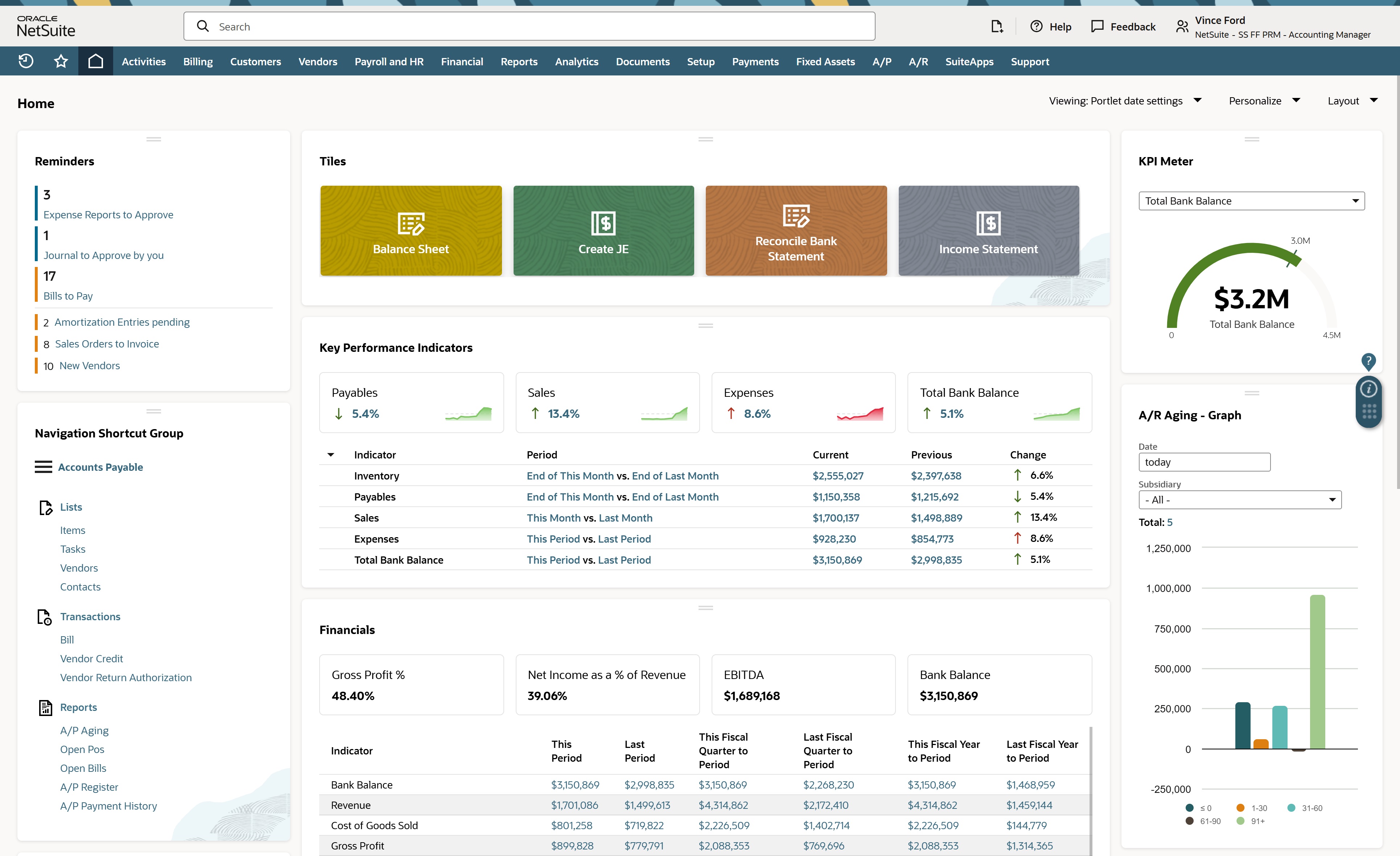
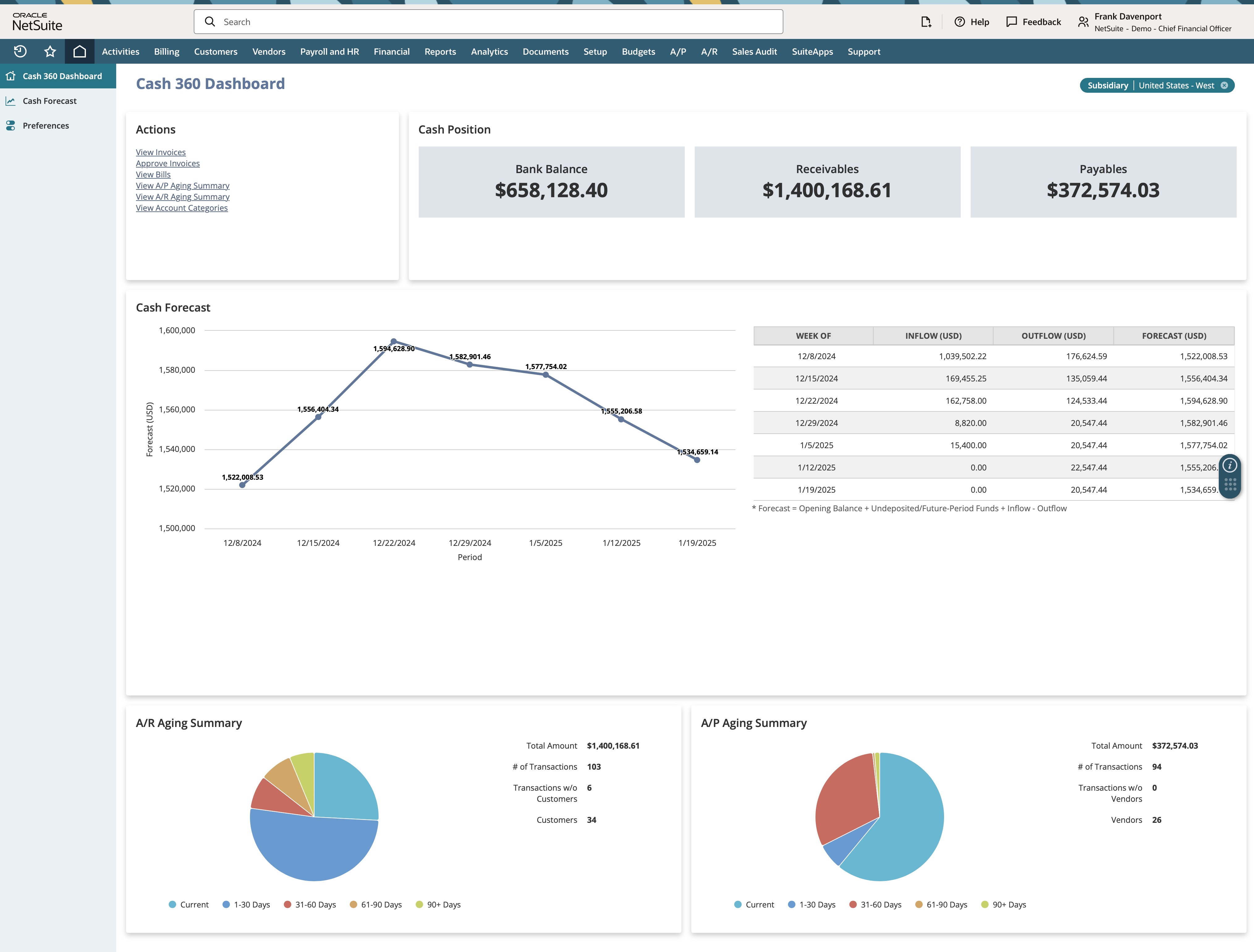
NetSuite is a suite of ERP and accounting modules which is sold in various editions aimed at different size customers. The multi-country, multi-currency version is an additional module called OneWorld. Netsuite is a SaaS system and is not offered in an on-premise edition.
N/A
Workday HCM
Score7.8 out of 10
N/A
Workday Human Capital Management is a cloud-native system offering a globally
consistent user experience. Workday HCM is part of an intelligent, unified system with other
Workday products.
N/A
Pricing
NetSuite ERP
Workday HCM
Editions & Modules
No answers on this topic
No answers on this topic
Offerings
Pricing Offerings
NetSuite ERP
Workday HCM
Free Trial
No
No
Free/Freemium Version
No
No
Premium Consulting/Integration Services
No
No
Entry-level Setup Fee
No setup fee
No setup fee
Additional Details
Users subscribe to NetSuite for an annual license fee. The license is made up of three main components: core platform, optional modules and the number of users. There is also a one-time implementation fee for initial setup. New modules and users and can be added as a business grows.
NetSuite ERP left Sage Intacct in the dust years ago. It was actually a painful experience to join a company not on NetSuite ERP after having been NetSuite ERP user historically. It was a joy to transition that same company to NetSuite ERP and reap the benefits once again.
A de minimis incentive was given to thank the reviewer for their time. The incentive was not used to bias or drive a particular response, nor was the incentive contingent on a positive endorsement. More Info
Finance System Architect in Finance and Accounting at Chianlink Labs Inc (Computer Software, 501-1000 employees)
Chose NetSuite ERP
NetSuite is far superior in terms of use and ease of implementation. NetSuite can be customized easily compared to others, NetSuite is relatively more economical.
A de minimis incentive was given to thank the reviewer for their time. The incentive was not used to bias or drive a particular response, nor was the incentive contingent on a positive endorsement. TR verified that a representative sample of customers was invited. More Info
A de minimis incentive was given to thank the reviewer for their time. The incentive was not used to bias or drive a particular response, nor was the incentive contingent on a positive endorsement. More Info
A de minimis incentive was given to thank the reviewer for their time. The incentive was not used to bias or drive a particular response, nor was the incentive contingent on a positive endorsement. More Info
Senior Netsuite Architect / Developer in Information Technology at Q2ebanking (Financial Services, 501-1000 employees)
Chose NetSuite ERP
Zuora - does one thing and not that well. The best thing about it is consolidated invoicing. It's a point solution that thinks it's a platform. It's difficult to navigate, the navigation doesn't make much sense, and any customization is really just a deceptive crutch. NetSuite …
A de minimis incentive was given to thank the reviewer for their time. The incentive was not used to bias or drive a particular response, nor was the incentive contingent on a positive endorsement. More Info
Workday
Verified User
Chose Workday HCM
Workday is more robust and works well with interfacing on Social media for job posts. Also, the main thing that the Workday Human capital management platform tool has going for it is that Workday can and often is used in other capacities and other applications, so employees …
A de minimis incentive was given to thank the reviewer for their time. The incentive was not used to bias or drive a particular response, nor was the incentive contingent on a positive endorsement. TR verified that a representative sample of customers was invited. More Info
Verified User
Chose Workday HCM
Staying with ADP, Ultipro. The selection was done prior to my joining.
NetSuite ERP is a very robust ERP. For a small business, it might be overkill and even too expensive. What I mean by this is that there are advanced functionalities that NetSuite ERP has, such as forecasting, warehouse management, and custom workflows, that are not necessary for a small business. However, as a business starts to grow, NetSuite ERP provides endless growth opportunity to meet a companies needs. We are still technically a small company of only 15 employees, but NetSuite ERP has the ability to help us grow and we will not outgrow NetSuite ERP. NetSuite ERP can handle financial tracking with P&L, tax calculations, shipping, vendor management, and so much more.
A de minimis incentive was given to thank the reviewer for their time. The incentive was not used to bias or drive a particular response, nor was the incentive contingent on a positive endorsement. More Info
Large organizations with extensive back-office support functions. With that in mind, WD is a great HCM system for mastering and controlling downstream data and providing strong support. Where WD falls short is the front-end user experience. If your intent is for the average Jane/Joe to use the system, you will find them frustrated or disappointed.
A de minimis incentive was given to thank the reviewer for their time. The incentive was not used to bias or drive a particular response, nor was the incentive contingent on a positive endorsement. TR verified that a representative sample of customers was invited. More Info
I think what it does is not having worked on the side of talent acquisitions. Whenever we have a job interview, for example, you can go right there, you can put in everything in Workday Human Capital Management. If I need to go in and see what a coworker put in or notes all that, I can document everything there in Workday Human Capital Management. I think the other thing that makes it a lot easier is for performance management, goal setting. All these things can be done right there in the platform and it just makes it easier. So to store documents, I can do that. I mean it is like a one-stop shop all in one, so it's excellent.
A de minimis incentive was given to thank the reviewer for their time. The incentive was not used to bias or drive a particular response, nor was the incentive contingent on a positive endorsement. More Info
NetSuite is able to cover all of our needs, spanning multiple departments and managerial levels. We use it daily for a multitude of functions, including creating promotions, estimating inventory, pulling historical reports, forecasting sales, and more. Overall, we're very satisfied with NetSuite as an ERP solution and recommend it to medium to large businesses.
A de minimis incentive was given to thank the reviewer for their time. The incentive was not used to bias or drive a particular response, nor was the incentive contingent on a positive endorsement. TR verified that a representative sample of customers was invited. More Info
It is work to make one system the source of truth for our data, but now that it is done, there is less work involved in staying on this path. This means for us that maintaining and/or implementing new modules like performance, finance, talent, etc. is simple. It's a no-brainer
A de minimis incentive was given to thank the reviewer for their time. The incentive was not used to bias or drive a particular response, nor was the incentive contingent on a positive endorsement. More Info
NetSuite is a cloud tool, and is easy to implement for mid-sized organizations. It comes with standard forms/ printing layouts, and financial reporting (both summary and detailed), which are very handy for business users. In addition to these, with 99.99% service availability, NetSuite makes it one of the most reliable ERP tools available on the market.
A de minimis incentive was given to thank the reviewer for their time. The incentive was not used to bias or drive a particular response, nor was the incentive contingent on a positive endorsement. More Info
Workday's on a great path in terms of user experience. Their goals is to deliver a use experience that doesn't require training or instruction, like Amazon on the consumer side for example. That's hard to do when you're talking about complex business processes and important and sensitive employee information, but they're doing it well
A de minimis incentive was given to thank the reviewer for their time. The incentive was not used to bias or drive a particular response, nor was the incentive contingent on a positive endorsement. More Info
It has been very reliable. I can only think of 1-2 times in 4.5 years that we have had issues getting in, and in each case were able to get back in within 1 hour. There has not been a major downtime
In 2014, Workday has changed the update process. There will be two updates a year; the updates will be delivered to customers typically in a 24 hour window during these two weekends a year. They also keep the Community up-to-date about any planned outages, etc. There is weekly scheduled downtime on Friday night.
Most of the time the performance is very good. Pages load in a few seconds; financial reports take less than 5 seconds; basic searches take a few seconds. But performance can be sporadic throughout the day and cause the run time to triple.
A de minimis incentive was given to thank the reviewer for their time. The incentive was not used to bias or drive a particular response, nor was the incentive contingent on a positive endorsement. More Info
From my perspective, the system runs like a well oiled machine and I have not had any issues with customers complaining about speed. If a report is taking long to run, the report can run in the background and you can go about your business. For larger enterprises, there is additional space and machines to process the application in what Workday refers to it as Extended Configuration Tenant
I would like to give 8 rating for NetSuite support and reason for that is below: Whenever we faced any technical or functional issues we tried to reach out to NEtSuite support but response was not immediate. We told them about the urgency of the issue but still we were not getting response on time. Then, we have to reach out to AE to get things resolved.
A de minimis incentive was given to thank the reviewer for their time. The incentive was not used to bias or drive a particular response, nor was the incentive contingent on a positive endorsement. More Info
Workday is still learning about the needs of higher education. I have seen rapid improvement in support and knowledge over the last year so am confident this will continue to improve. Overall however, I have found the Support Team to be extremely responsive and Workday offers the advantage of having support across several timezones so that we never wait more than a few hours for a response.
I had in person training for a day when first got the software. The training was good. The challenge was that there was a large gap between training and when we went live so we forgot quite a lot
Some training is offered online. Cost is per-person. This also gets quite expensive. Training doesn’t follow a logical path A to B. Starts in middle. When you try to do it afterwards at your desk, difficult. • Training scenarios are not very real
I have done for report writing and mass imports (EIBs). They give materials and you run through examples, i.e. you don’t just watch them do tasks, so that is helpful. Training is expensive – a single reporting writing class is $600 per person for virtual training
I felt NetSuite Professional Services did an excellent job of guiding us in the implementation. I also felt our internal teams were a little resistant to the change and engagement of new software. Had we performed better engaging and buying into the new software, I would be able to rate the implementation better. Therefore, the lower number should not be viewed as a deficiency with the software or the professional services teams, but as an reminder of how important complete buy-in from the local users is.
A de minimis incentive was given to thank the reviewer for their time. The incentive was not used to bias or drive a particular response, nor was the incentive contingent on a positive endorsement. More Info
It was implemented before my joining the company. At my last company, we used Workday professional services.
Based upon my experience at my last company, I would rate the implementation experience an 8/10. There are different ways to set things up and we had different people telling us different things. It set us back a couple of times.
Regarding configuration advice, we could set things up where every manager has supervisory organizations, or have it financially based i.e. aligned to cost center/department. We chose the individual manager path and I think we should have chosen a department route. Going down the individual manager path, to maintain the information, we have to inactivate a supervisory org whenever a manager changes/leaves.
NetSuite by far is the most expensive; However, compared to the 3 systems notated, the overall functionality, capability and reporting advantages make it my top choice for companies experiencing exponential growth across all departments. Its a best in class solution for just about any user.
A de minimis incentive was given to thank the reviewer for their time. The incentive was not used to bias or drive a particular response, nor was the incentive contingent on a positive endorsement. TR verified that a representative sample of customers was invited. More Info
Workday is an incomplete product, by this I mean it must work alongside other products and does not work by itself. Trying to make several different products work smoothly together becomes very challenging. As compared to ADP products, when purchased all together work very well all together. Also, ADP has extensive Training programs and extensive Customer Support. So ADP's products are far superior to Workday's products in my opinion.
A de minimis incentive was given to thank the reviewer for their time. The incentive was not used to bias or drive a particular response, nor was the incentive contingent on a positive endorsement. More Info
We have been able to scale our business 25X without any major overhaul with Netsuite. Its dashboard setup makes onboarding new employees very easy and allows data to be shared across multiple offices. Its cloud setup does not put any pressure on IT to scale servers or other infrastructure. We have been able to become much more efficient in all aspects of the business.
Workday has released Financials and is continuing to develop it's Human Capital Management footprint with the addition of Workday Recruiting. I think customers will find that is easy to add on additional functionality in the system. Workday does make it easy for customers to make changes without relying on IT resources. The Business Process framework is a visual tool that allows functional resources to make changes and see the flow of the transaction
NetSuite software has improved our process controls and enhanced cash management, especially in huge projects.
The software has helped us with budgeting, forecasting, and real-time financial reporting.
Introduction of NetSuite ERP into our organisation has completely changed the way we do things by enhancing compliance, ensuring real-time project milestone tracking, and enabling portfolio management.
To get the most value out of all possible automation in Workday you really need to use a lot of their modules, otherwise you may not be able to solve for some pretty important and necessary needs.
The system maintenance is way more than what I have seen with some other systems and therefore you need a quite large team dedicated to it.
The ability to automate a lot of administrative tasks and the ability for employee and manager self-service definitely create a lot of opportunity for HR to spent time and effort elsewhere. A lot of the automation that can be leveraged in Workday also allows for eliminating third party vendors as well as the cost of their maintenance and integrations.
A de minimis incentive was given to thank the reviewer for their time. The incentive was not used to bias or drive a particular response, nor was the incentive contingent on a positive endorsement. More Info