Chose Typeform
ClickUp and Google Forms

| Product | Rating | Most Used By | Product Summary | Starting Price |
|---|---|---|---|---|
 Typeform | N/A | Typeform is online form and survey software, focused on high-quality visuals and user experience. Users can create surveys, registration forms, tests & quizzes, contests, tutorials, shopping carts, and contact forms, without needing to write code. Typeform offers freemium plan pricing. Their basic plan is free for one user; their Pro plan in $35/month for one user (includes logic jump, respondent notifications, calculator, custom thank you screen, hidden fields, payment fields, and 2GB file… | $30 *Per Month | |
 Voxco Survey Software | Mid-Size Companies (51-1,000 employees) | Voxco Survey Software features one centralized database across multiple survey channels. The vendor says that with this solution, users can collect and process respondent data at any time and in any place. This flexible software can be used to create device-responsive online surveys (web, mobile, or embedded in-app), over-the-phone interviews (CATI, IVR and dialers), or face-to-face interviewing (CAPI). According to the vendor, their clients appreciate their engaging, interactive survey… | N/A | |
 Wufoo | N/A | Wufoo is a web application for creating online forms. The tool automatically builds the database, backend and scripts needed making it easy to collect and understand data. Wufoo was acquired by SurveyMonkey in 2011. | $0 |
| Typeform | Voxco Survey Software | Wufoo | ||||||||||||||||||||||
|---|---|---|---|---|---|---|---|---|---|---|---|---|---|---|---|---|---|---|---|---|---|---|---|---|
| Editions & Modules |
| No answers on this topic |
| |||||||||||||||||||||
| Offerings |
| |||||||||||||||||||||||
| Entry-level Setup Fee | No setup fee | No setup fee | No setup fee | |||||||||||||||||||||
| Additional Details | *For annual contract. | — | — | |||||||||||||||||||||
| More Pricing Information | ||||||||||||||||||||||||
| Typeform | Voxco Survey Software | Wufoo | |
|---|---|---|---|
| Considered Multiple Products |  Typeform  Sushant Kumar Product & Growth Chose Typeform We tried both free & paid products. No doubt Google form does solve a lot of our basic use case but we were looking for lot more customisation as we wanted to open these survey within our app only. We started exploring different options including SurveyMonkey but we stuck to …  Jamie Drahos Sr. Learning Solution Analyst Chose Typeform I found Typeform's user interface and design language to be more attractive and intuitive than SurveyMonkey. Typeform also beat them on pricing, so it was a no-brainer.  Tom Mulhern Freelance Web and Graphic Designer Chose Typeform Google forms allow you to collect data from your staff and clients, but the forms are dull and boring. The back end analytics are difficult to navigate making a poor user experience for both the end-user and our team. Typeform allows you to create mobile-friendly forms that are …  Alvin Landicho Cloud Integration Consultant Chose Typeform Google forms is a simple web form that integrates with their suite of office apps such as Sheets. The main drawback is that it looks like a traditional webform with form boxes. TypeForm's UI is much sexier and slick and displays one question at a time, fullscreen and … Chose Typeform I stumbled upon it and became a fan.😀 I ended up implementing it for the training team at work, and for the events and registration for a non-profit I volunteer with.  Kate Marshall Head of Content Chose Typeform Again, Typeform is your solution for better branded and designed surveys—and better user experience for the people taking the survey.  Dr Olivier Becherel - Leadership and Executive Coaching Mentor & Coach Chose Typeform Typeform has similar features to JotForm. Depending on the use and the data I need to collect, I will either use Typeform or JotForm. For example for data collection from customers, I use Typeform, but testimonials and reviews, I use JotForm. If you need to collect information …  Dave Becker Content Manager Chose Typeform Google forms is really useful for creating basic forms when you don't want to pay to create them. I have found Typeform to be much easier to use than Google Forms, and more user-friendly, even in the basic plan. That was enough to get me to switch to Typeform before we even … |  Voxco Survey Software |  Wufoo  Dimitris Rakopoulos Partner, CRM Director Chose Wufoo Wufoo lacks the intricate features that SurveyMonkey has in terms of customization, survey login, reporting, and analysis. However, it provides an excellent, easy-to-use way to create forms and surveys/polls for customers that require little effort for such tasks. In many …  Stephen Steinberg Founder Chose Wufoo They all have very similar freemium and low tier plans, so it comes down to what exactly you need and what you can live without. However, I highly suggest paying up to at least remove branding to keep all your forms on-brand to build trust with your clients and partners.  Thomas Perez Chief Executive Officer Chose Wufoo I have used EmailMeForms in the past, and to be honest, they are very similar, but WuFoo's forms look way more professional. I like the fact that you can fully customize the look and feel of the form, add your own branding, and images and the fact that after submission they …  Steven Hope Product Manager Chose Wufoo Easy to use, simple design, efficient controls.  page V CEO (Chief Executive Officer) Chose Wufoo For companies who want budget-friendly, customizable forms software that allowed them flexibility and ease of use (where design did not matter), our first recommendation would be Wufoo. Wufoo has all the integrations and capabilities that Typeform has - with more, actually. The …  Jillian Straw Marketing Associate Chose Wufoo We use them in conjunction with each other. The ability to have multiple technologies work together is what we look for in (and as) a SaaS platform. The best in class is always more beneficial than having one all-in-one solution. In the antiquated days of the past there would …  Raphael Sanguinete Sócio-fundador e Produtor Executivo Chose Wufoo I think out of these apps, Wufoo and SurveyMonkey maybe are the ones with more robust and complex features. But neither has a design so beautiful as Typeform, nor the simplicity of creating and answering surveys in Google Forms. Usually I use: - Typeform for small and more …  Justin Roodman Product Marketing Manager Chose Wufoo Both Wufoo and Formstack offer a lot of the same features, which is to be expected. Price is a huge factor though when comparing Wufoo vs Formstack. Wufoo is $29 per month paid annually for 5 users and unlimited forms. Formstack is $82.50 per month paid annually for 5 users …  Alek Babaa Google Ads Account Manager Chose Wufoo We use two other form builders, WP Forms and Jot Form. Jot form is probably the closest to Wufoo in functionality and feel, where WP forms is mainly to capture leads and subscribers. Jot form too has its limitations in the look and feel department, but offers similar …  Debbie Gillum Marketing and Digital Communications Specialist Chose Wufoo It was the most affordable, easiest to use and best product that we researched and evaluated. We liked the interface of it, how you could make multiple accounts, the different theme options you could choose from and how easy it was to share your form. We needed something we …  Justin Moore Assistant Director Of Admissions Chose Wufoo In terms of building reports, Wufoo is very similar to Google Forms. Both have the capability to edit live forms and immediately share them. Wufoo offers a few more features than Google Forms does as well. Overall, our department has looked at both options and continues to use …  Bree Gurin Director of Client Services Chose Wufoo We selected Wufoo based on a recommendation from a web developer friend, ease of use and cost. Wufoo does, however, have fewer features than Cognitoforms.  Audrey Burn Graphic/Web Designer Chose Wufoo Wufoo doesn't replace MailChimp, but Wufoo's forms are more robust and full featured, MailChimp's form capabilities don't always fit my needs, so I integrate the two.  Isaac Nuell Conference Planner Chose Wufoo Wufoo has an unparalleled ease of use. It's a simple to follow layout and support staff are accessible within an hour window almost without fail. The forms are more dynamic and easy to set up than either Google Forms or Salsa Labs based registration, but unlike Salsa Labs, the …  Lane Castleberry Web Communications and Social Media Coordinator Chose Wufoo As a manager of website content, without much experience in coding HTML, even the smallest of edits were difficult when starting my job. In the past three years, I've used some WordPress theme software and the ninjaform plugin. The lack of design and efficiency became apparent …  Joseph Hillman UI Developer Chose Wufoo We really didn't test drive other products for forms/surveys. We did initial research on what it might add, but Wufoo took the cake every time in comparison for its ease of use, trainability, and support situations. |
| Typeform | Voxco Survey Software | Wufoo | |||||||||||||||||||||||
|---|---|---|---|---|---|---|---|---|---|---|---|---|---|---|---|---|---|---|---|---|---|---|---|---|---|
| Survey Format & Appearance |
| ||||||||||||||||||||||||
| Survey Content |
| ||||||||||||||||||||||||
| Survey Logic |
| ||||||||||||||||||||||||
| Survey Reporting & Analytics |
| ||||||||||||||||||||||||
| Survey Administration & Security |
| ||||||||||||||||||||||||
| Survey Distribution |
|
| Typeform | Voxco Survey Software | Wufoo | |
|---|---|---|---|
| Small Businesses |  Square 9 Softworks Score 9.3 out of 10 | Square 9 Softworks Score 9.3 out of 10 | Square 9 Softworks Score 9.3 out of 10 |
| Medium-sized Companies |  Qualaroo Score 7.0 out of 10 | Qualaroo Score 7.0 out of 10 | Qualaroo Score 7.0 out of 10 |
| Enterprises |  Verint Voice of the Customer Score 9.2 out of 10 | Verint Voice of the Customer Score 9.2 out of 10 | Verint Voice of the Customer Score 9.2 out of 10 |
| All Alternatives | View all alternatives | View all alternatives | View all alternatives |
| Typeform | Voxco Survey Software | Wufoo | |
|---|---|---|---|
| Likelihood to Recommend | 7.3 (0 ratings) | 7.0 (0 ratings) | 8.3 (0 ratings) |
| Likelihood to Renew | 10.0 (0 ratings) | - (0 ratings) | 10.0 (0 ratings) |
| Usability | 7.5 (0 ratings) | - (0 ratings) | 8.0 (0 ratings) |
| Performance | - (0 ratings) | - (0 ratings) | 9.0 (0 ratings) |
| Support Rating | 5.7 (0 ratings) | - (0 ratings) | 10.0 (0 ratings) |
| Online Training | - (0 ratings) | - (0 ratings) | 8.0 (0 ratings) |
| Implementation Rating | - (0 ratings) | - (0 ratings) | 9.0 (0 ratings) |
| Vendor post-sale | - (0 ratings) | - (0 ratings) | 10.0 (0 ratings) |
| Vendor pre-sale | - (0 ratings) | - (0 ratings) | 10.0 (0 ratings) |
| Typeform | Voxco Survey Software | Wufoo | |
|---|---|---|---|
| Likelihood to Recommend |
|
|
|
| Pros |
 Bethany Chan Customer Success Manager |
|
Isaac Nuell Conference Planner |
| Cons |
|
|
 Heather Ahrens Executive Assistant |
| Likelihood to Renew |
| No answers on this topic |
 Stephen A. Williams Director, IT |
| Usability |
| No answers on this topic |
|
| Reliability and Availability | No answers on this topic | No answers on this topic |
|
| Performance | No answers on this topic | No answers on this topic |
 Rebecca VanDenBerg Owner |
| Support Rating |
| No answers on this topic |
 Mark Stackhouse Creative Director |
| Online Training | No answers on this topic | No answers on this topic |
 Sarah Downing Office Manager and IRB Administrator |
| Implementation Rating | No answers on this topic | No answers on this topic |
Mark Stackhouse Creative Director |
| Alternatives Considered |
Dave Becker Content Manager |
|
page V CEO (Chief Executive Officer) |
| Scalability | No answers on this topic | No answers on this topic |
|
| Return on Investment |
Jamie Drahos Sr. Learning Solution Analyst |
|
|
| ScreenShots | Voxco Survey Software Screenshots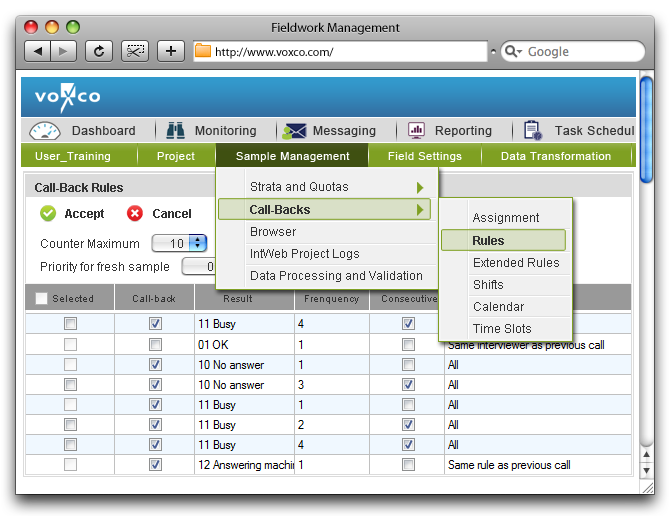 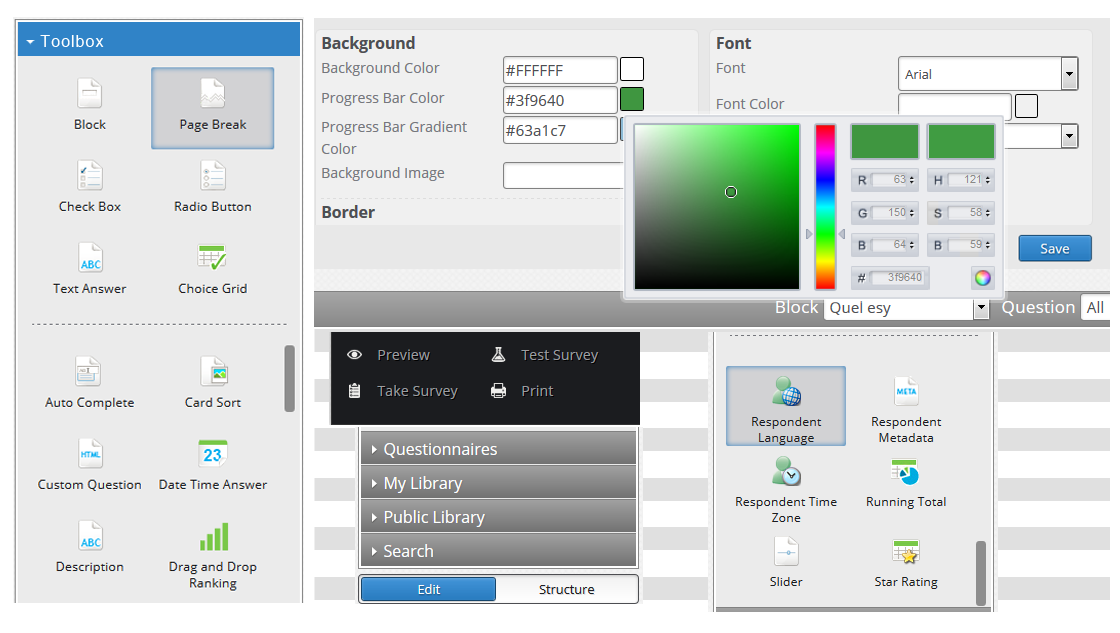   |