Adobe Commerce delivers personalized shopping at scale. Delivered as Adobe Commerce as a Cloud Service (ACCS), it boosts conversion with an AI-powered storefront, built-in merchandising, and GenAI-driven content. ACCS supports rapid expansion through multi-site, multi-language, and multi-brand capabilities, handling millions of SKUs, complex catalogs, and custom pricing. Always-on SaaS innovation lowers total cost of ownership by removing upgrade overhead and minimizing…
N/A
Shopify
Score 8.6 out of 10
N/A
Shopify is a commerce platform designed for both online stores and retail locations. Shopify offers a professional online storefront, a payment solution to accept credit cards, and the Shopify POS application to power retail sales.
$39
per month
ShopKeep
Score 7.0 out of 10
Small Businesses (1-50 employees)
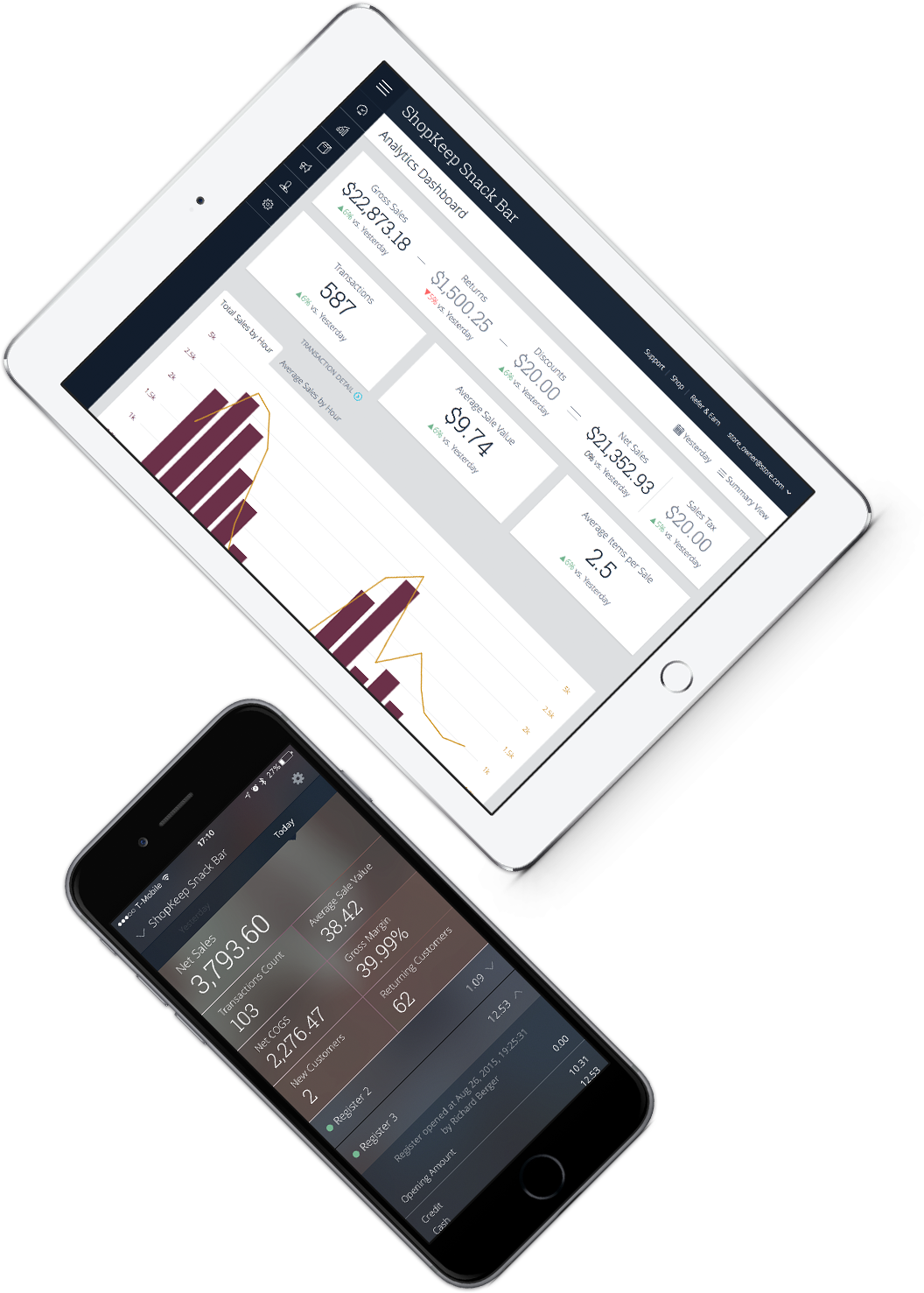
ShopKeep is an iPad point of sale system; The vendor says it is intuitive, secure, affordable software that helps merchants run smarter businesses. The product optimizes staffing and inventory, while offering sales reports and customer information on a cloud-based platform. The product includes low-cost, integrated payment processing, as well as point of sale hardware. According to the vendor, ShopKeep has 23,000 customers, and a customer…
The only platform listed above that competes with Magento in full functionality is Demandware, in my opinion. However, Demandware is even more development resource intensive than Magento. NetSuite has several realms of customization, but their API is quite limited. Shopify, BigC…
3dcart and Shopify are basic placeholder platforms used either to help wireframe projects that will eventually move to other platforms or were legacy platforms migrated to Magento after acquisitions. 3dcart provided an easier Customer Service Agent interface but failed to …
Magento scales much better than any of the other software when it comes to very large e-commerce websites. But all the other options are more user-friendly for smaller sites as there is a bit of a learning curve in learning to manage Magento. Customization is better along with W…
Magento is a great mid market product. It give you the ability to customize and can handle more complex business needs than both Shopify and BigCommerce. The ability to host the platform yourself and have full access to the source code allows for larger more complex catalogs, …
While Magento is more customizable, all the main features I need can be done through Shopify and the cost is $300 per month instead of the $4,000 in development I am spending and the $600 in hosting per month.
Shopify and BigCommerce are great if you are a small business that is creating your first business and don't have many Skus or complex pricing. For us, having over 2 million Skus and a very complex inventory management of those Skus, Adobe Commerce (Magento Commerce) being …
Shopify has the bad habit of charging transaction fees unless you use Shopify Payments, and this aspect only is usually a no-go if you have a big eCommerce to handle. Salesforce has very similar capabilities and probably has a better ecosystem, but it's customization capability …
Shopify is just better. In my opinion, it can save quotes, have different pricing for resellers, have multiple catalogues, do blogs, change the website, etc. It feels like Shopify is designed to do everything and does it all quite well overall, whilst Magento is for one thing …
Shopify is also a great solution for the customers that comes with different set of benefits and limits when comparing with Adobe Commerce. Shopify provided very limited b2b support, limits in the integration with third party, checkout and theme custimization is limited, …
Adobe Commerce is in the lead, more scalable and flexible than Shopify, more robust than Kibo and Big Commerce and more open and easier to implement than Spryker and Salesforce. It is a strong contender for organization with development capabilities, needing a multisite, …
Magento Commerce was previously put into place and used right when I came onboard. We used it for quite some time, but ultimately the need for our company's specific customizations became too difficult to manage during core updates. We specifically needed a more specialized way …
Our procurement team chose Magento over the alternatives we considered primarily because of the level of personalization it offers and because of the level of ownership and security it offers.
Magento is not technically a master of any portion of building an ecommerce webpage but it certainly is very good at a lot of things which ultimately was the deciding factor. Primarily its versatility was above that of the other choices. Wordpress created beautiful content …
Magento is a more enterprise level solution. It is viable for smaller businesses, however requires a higher upfront investment while others have lower upfront but more maintenance.
Shopify, BigCommerce, oscommerce, etc - Magento, provides merchants with lower budgets and less manpower, the ability to have a fully-featured web storefront without the cost of flexibility. Magento allows merchants the ability to fully customize their platform as they see fit
Shopify allows for companies to quickly and easily get online and selling. However, the more you want to customize the platform, the more you'll realize that other platforms (such as Wordpress + WooCommerce) end up being better because you have access to all of the core code …
Shopify is so much easier to use, and much more user-friendly than both BigCommerce and Magento. The reporting, product management, and app marketplace are much better as well. Shopify also integrates with other systems very easily with apps and sales channels, so it saves a …
Shopify is much much simpler than these 2 alternatives. It is aimed at small entrepreneurs or start-ups that cannot afford big costly developments of e-commerce solutions. Shopify works in a plug-and-play way that allows you to start selling right away and not lose time on the …
Shopify allowed my team to build a great, user-friendly website, and manage the store from desktop and mobile. Compared to Magento, it stacks [up] in terms of ease of use. It is by far the easiest platform I have tried to create websites, manage inventory and logistics and it …
You can build an e-commerce site very quickly and easily. Bulk upload of products is a very convenient feature. There are regular features and roadmap updates on Shopify as compared to others in the market. The quality of customer support is also good. Shopify meets all the …
Magento is more serious; you'll need support from your digital agency and a retainer for promotions and updates.
WooCommerce is good but becomes expensive with all the extras that shopify has out of the box. And this relies on WordPress which you'll need to maintain and keep …
Shopify performs a great marketing influence by having ads and different kinds of branding on various social media. Also, their utilities promotion creates a great impact on the people's mind, and after executing action on the platform, in my experience I liked it how …
Shopify is the most accessible website management tool to make custom edits to and is the quickest to learn. The file structure is easy to understand, but on Magento, it is very complicated. BigCommerce offers more default options than Shopify, but Shopify has more apps. 3D …
Shopify as a business is one of the fastest-growing e-commerce solutions in the world. And for good reason, because it's core functionality is set up in such a way that you can literally start an online business in a couple of hours. They have a massive suite of applications …
We evaluated building our own site on servers with other software such as open-source. Include Magento.
None compare to the easy setup and scalability that Shopify has. Being on the cloud allows us not to worry about servers or anything else such as downtime or traffic spikes …
Shopify is by far the easiest platform to launch and scale a small to medium-sized e-commerce platform. Their growing fast, which means that new features are always being added. But they do so without compromising their stability or their customer support. Shopify comes with a …
Magento - we had a negative experience with the complexity involved in maintaining the site backend and product catalog with a previous client and decided it wasn't suitable for the …
Shopify is so much cheaper to run and easier to use than Magento. As I mentioned before if you are a huge company, then yes, use Magento. But if you are a small to medium sized company, Shopify is a must and will save you time and money over the years of using it.
Shopify is much easier and intuitive for our clients. Shopify is built much better for developers to come in and make customizations to both design and functionality. Finally, there's speed - Shopify has typically always been significantly faster.
Founder and Senior eCommerce Strategist & Consultant
Chose Shopify
We have used Magento for higher end projects. Magento is open source and therefore has better customization capabilities. Shopify on the other had, is more user-friendly, more cost effective and has superior customer service, which some Magento versions don't have at all. …
Choosing Magento Enterprise is a cost-effective way to achieve the goal of a more synergistic brand image online but the ROI is not immediately quantifiable. Magento is not easy to use at all if you’re a beginner. The downside of Magento is you will also have a hosting …
I've used both Magento and WordPress for running stores and while I typically suggest Shopify, WordPress and Magento both give much more room to customize the store. Since you host the software you have the freedom to customize the entire store from the home page to the …
BigCommerce is the closest competitor. It is a little less expensive and has more flexible product options, but Shopify is more intuitive to use and more flexible with site styling and functionality.
Primarily B2C focused, I think that the B2B features are increasing but the core focus of the platform (and Magento) is really consumer-based. That said, if you are looking for the fastest time to market with minimal investment option then Adobe Commerce is likely not the option that 9 out of 10 people would opt for nowadays.
Shopify allowed us to handle matrix items and combined listings. Both of which we could not do on our previous platform. There was some customization involved but overall, it did what we needed it to. The one downside was that if we want to change anything we would have to reload the entire set of matrix items manually.
ShopKeep can maintain up to 10,000 individual stock items. This is perfect for a cafe, coffee shop, wine bar, small retail store, etc. If you're inventory exceeds the 10,000 items then it may not be a fit for you. Also, ShopKeep works with Apple tablets only (iPad 2 or later). If you prefer Android or PC based tablets then this won't work for you.
It's base security and integration with trusted security partners (such as NoFraud) is a game-changer when it comes to reliability and a "hands off approach" for our IT department. The up-time is also very good.
It offers a wide range of verified plugins that are (for the most part) easy to install and use for any specific scenario you're looking for.
It's Analytics area in the admin is actually nice and offers a wide variety of reports that you can run.
ShopKeep provides solid pre-sales support. They did a pre-sales screen-share demo that helped us ensure that their system would handle the needs of the business, and they assisted us in making decisions around which hardware would be appropriate.
ShopKeep's hardware seems well thought out and well integrated. One exception is issues with the connection between their recommended iCMP credit card scanner and the register. Other than that, the hardware works well together.
The register has excellent configurability and customization capabilities, and handles a large variety of products easily. High-volume products can have their own buttons on the register. Products can be added to a purchase by using these buttons, by scanning a bar code with an integrated bar code scanner, or by doing a live text search.
The register is also easily configurable to handle product options - either multiple options like pizza toppings, or exclusive options like regular or decaf coffee.
The ShopKeep system can handle hybrid retail/quick serve/restaurant scenarios with grace. This was a factor that eliminated many other systems that are optimized for one or the other, or where the products for handling retail are completely separate from the products for handling quick serve/restaurant operations. Since this customer has a location where there is a quick serve counter, a restaurant, and a retail gift shop all in the same location, ShopKeep's ability to handle all of these kinds of transactions from the same platform is a powerful advantage. ShopKeep also recently added functionality to transfer open tickets between registers, so that if a customer starts out with a cup of coffee at the quick serve counter, their ticket can be picked up and added to at the gift shop if they wander in there to purchase items.
ShopKeep has a Back Office system that can be accessed through any Web browser, or through their mobile app. The Back Office system is used to import and export data, manage inventory, configure the iPad registers, set up product options, manage employees, and report transactions, sales, product costs & margins, and other data.
Discounts, returns and credits are relatively easy to handle from the register, and the system can be configured to require a manager to approve these kinds of transactions, or not.
Bulk imports and exports are handled well by ShopKeep's Back Office. When setting up initial inventory, products can be added through Excel, then imported as comma-separated values (CSV) files by uploading them through the Web browser. Once inventory is established, adding or modifying items can be done directly through the Web interface.
ShopKeep has a mobile app that can be used by owners or managers to remotely access real-time snapshots of sales and other important data whenever they wish.
Magento Commerce Cloud can be complicated to develop for. In our field, it has been a struggle at times to find qualified developers.
Our merchandising team sees performance issues from time to time. Updating a product and waiting for the change to clear the queue can take up to an hour in some situations.
Because of the incredible amount of features that Magento Commerce Cloud offers, training new employees to use Magento takes a long time.
I would love it if Shopify built an in house app which helped us post UGCs and social proof from platforms such as Instagram, Youtube etc. more seamlessly on our website. Right now, we are able to do it through third party apps but the look and feel is just okay.
It has the best overall price point. It is super cheap and the connection between our ERP system is unmatched by any other Ecommerce sites we have talked with. We honestly can't get this level of complex customization without having to spend a fortune somewhere else. It is able to do everything we need it to do for the right price.
Nothing we have used in the past or have seen thus far even comes close to offering what we get with Shopify Plus, especially for the price. You cannot even come close to getting what we are getting at the price we pay. We are beyond thrilled and Shopify Plus meets and exceeds all of our needs and expectations. We love it!
Because we expect the current issue with the credit card reader disconnecting from the register to be solved with an upcoming software update, and we like many of the features of Shopkeep.
Being unable to store quotes for later was annoying. People called up expecting to pay there and then, and having to place them on hold whilst you added items to the basket and input all their customer information in was annoying for them and us, making us look unprofessional.
It is fairly easy to use Shopify regardless of what task you are attempting to perform. Most things are customizable to a degree without requiring coding ability. I have very limited coding experience and have still been able to navigate my way around changing features of the website that require edits to the code with the use of AI and trial-and-error. This previously wasn't possible with the WooCommerce platform.
The register functionality is excellent, both from a learning standpoint and an operations standpoint. Cashiers learn how to use the register quickly, and the registers can be configured with hot buttons for fast-moving products. Setting up product variations and additions is straightforward. The web-accessible Back Office has good features, but lacks enough granularity to provide a store manager with the ability to modify inventory settings without giving them access to all of the financial reports as well.
In terms of support I give Shopify a 9 out of 10 because they're always very friendly and thorough, and they personally can't solve my problem for me they always point me in the proper direction with the proper information I need to move forward
Occasional long waits [5 minutes or more] or call-backs needed for telephone support. Email support replies usually take several hours. Support personnel are generally friendly and knowledgable.
Shopify offered us several trainings to setup a Shopify store, how to build a brand, SEO, product photography etc. All this content have been super helpful in our journey.
If moving from a "dumb" cash register system, spend all the time needed to get starting inventory and product costing and pricing correct. Shopkeep has good tools for reporting inventory, margins, and other critical business info, but the information is only useful if the starting figures are accurate.
Magento Commerce was previously put into place and used right when I came onboard. We used it for quite some time, but ultimately the need for our company's specific customizations became too difficult to manage during core updates. We specifically needed a more specialized way of calculating shipping, connecting with our 3PL's inventory API, managing specialized discounts and codes, and even the way we showcased information on the product pages.
Big Commerce and SAP Hybris are two other platforms we've investigated and Shopify is by far easiest to use and customize. While it doesn't do everything out of the box, the apps do fill in many gaps. The cost however, is probably the biggest selling point against these other two options.
ShopKeep is an inexpensive choice iPad POS system that comes with all of the tools needed to do business without any long-term contracts or expensive fees. It also offers free 24/7 phone and email support along with online live chat during business hours. Coffee Shop Manager offered some of these items, but they also tied you into a long-term contract and you were charged fee after fee for support, etc. Also, the CSM system was big and took up a lot of space compared to ShopKeep's integration with an Apple iPad tablet.
Great for SEO. We have been able to build out a huge number of highly targeted pages on the site that have propelled our SEO to the next level
Magento plugs in with many third party tools including ERP's, CRM's, shipping tools. It is a core part of our tech stacks and has allowed us to improve our capabilities as a business.
Has enabled us to provide a best in class web experience for our customers. We are constantly expanding the capabilities of Magento and to improve sales and grow our business.
It got the store up quickly so the client could start selling. She was previously selling products on Etsy and Facebook and wanted to consolidate everything onto one website, so the main thing Shopify solved was to reduce the store owner's time in managing all her products on multiple sites. Also, we had previously built a website on Wix with all the custom functionality and branding she needed - a truly great, high-end website - but it performed so slowly that it was unusable. So the speed at which Shopify can be set up and then works on the page is appreciable.
The website was manageable by the client - she could figure the system out herself after a while so she saved money on costs for hiring developers. She did have to hire developers to customize some of the plug-ins but costs are all relative; it wasn't a high investment compared to building a full e-commerce website. With the complexity and size of her product base and the functionality and branding she wanted to have in a website, and the potential of her business, she would have needed to invest well over $10,000 to get to where she really needs to be. In the end she kept the budget under $5000.00.
Costs kept climbing with plug-ins having to be added with everything. My client became more involved in building the website and began to try multiple plugins, and she did not have the skill base to evaluate the plugins functionalities so she chose plugins that did not do everything she needed, and then ended up paying the plugin developers to customize the plugins. So on one hand, it's pretty amazing to be able to bring up an e-commerce website as quickly as a week or so, but on the other hand if you need anything customized or deeper functionality in regards to product searching and filtering on the web page, and management on the backend, it quickly goes beyond the skills of the average person to manage, and above their expected budget as well. In the end my client really did not get anything close to the functionality for the website we had originally envisioned.
Shopify was the easiest way we could find to bring the client's products to a global market. We evaluated several other platforms and the functionality simple did not seem to be adequate, so Shopify seemed like the only solution that could do enough of what we needed and still stay within this client's budget. Really the problem in this project was not platform per se but that the budget wasn't large enough. Shopify managed to provide a solution for an ecommerce store with thousands of products on a tiny budget, so in the sense of pure functionality it provided the best value of all the platforms we evaluated. The solution still isn't big enough for this client's business though so, without having insights into this client's post-build sales results, my guess is that because her new website did not make her products easier to sort through, and she likely didn't have much more budget left to invest in SEO and other marketing of the website, her sales probably didn't increase substantially as a result of having built the website. So I think this project all in all did not likely have a high ROI.
ShopKeep didn't integrate with my accounting software. I had to double enter all financial data.
Without inventory controls, all of my financial information was inaccurate. It is impossible to grow a business without accurate financial information.