Chose Adobe Experience Manager
We have selected Adobe Experience Manager for its unified compliance-ready tool kit (e.g AI-driven personalization, RBI- compliant multilingual templates) and enterprise scalability.

| Product | Rating | Most Used By | Product Summary | Starting Price |
|---|---|---|---|---|
 Adobe Experience Manager | N/A | Adobe Experience Manager is a combined web content management system and digital asset management system. The combined applications of Adobe Experience Manager Sites and Adobe Experience Manager Assets is offered by the vendor as an end-to-end solution for managing and delivering marketing content. | N/A | |
 Progress Sitefinity | N/A | Progress Sitefinity is a content management and customer analytics platform. It supports content management, tailored marketing, multi-channel management, and ecommerce sites. | N/A | |
 Sitecore Digital Experience Platform | N/A | The Sitecore Experience Platform (Sitecore XP) is a digital experience platform used to build websites and create customer experiences online. The solution boasts fast content authoring, built-in personalization features, testing and other optimizations, as well as analytics and marketing features. | N/A |
| Adobe Experience Manager | Progress Sitefinity | Sitecore Digital Experience Platform | ||||||||||||||||||||||
|---|---|---|---|---|---|---|---|---|---|---|---|---|---|---|---|---|---|---|---|---|---|---|---|---|
| Editions & Modules | No answers on this topic | No answers on this topic | No answers on this topic | |||||||||||||||||||||
| Offerings |
| |||||||||||||||||||||||
| Entry-level Setup Fee | No setup fee | No setup fee | No setup fee | |||||||||||||||||||||
| Additional Details | — | — | — | |||||||||||||||||||||
| More Pricing Information | ||||||||||||||||||||||||
| Adobe Experience Manager | Progress Sitefinity | Sitecore Digital Experience Platform | |
|---|---|---|---|
| Considered Multiple Products |  Adobe Experience Manager  Anshum Malhotra Sr. Software Developer Chose Adobe Experience Manager Adobe Experience Manager has more features than any other CMS.  Ali Alkhafaji VP, Technology and Architecture Chose Adobe Experience Manager Of all the different CMS tools I have used and implemented, Adobe Experience Manager (CQ) is the most robust and feature-full. The reliance on Apache Technologies was a real smart decision for CQ's architecture which ensured future scalability, testability and extensibility. | Progress Sitefinity  Justin Cawthorne Senior Project Manager Chose Progress Sitefinity We evaluated a range of other platforms before selecting Progress Sitefinity. While many other platforms had a powerful range of features, Progress Sitefinity provided to be a comparable product at a price far more suited to our budget. Above all else, its ease of use gained …  Todd Knowlton CEO (Chief Executive Officer) Chose Progress Sitefinity In addition to being a user of Sitefinity, my company is also a Sitefinity Partner. More than a decade ago, we were supporting several CMS platforms and decided we wanted to pick one and be great at it. After analyzing many content management systems, we decided that Sitefinity …  Alex Hood CTO Chose Progress Sitefinity It is hands down just easier for our customers to use. The interface and the page builder experience is much better than what we have used in the past and has many enterprise features even in the lower price-point.  Thomas Noack Director of Integrated Marketing Chose Progress Sitefinity
 Mike Fus Vice President of Operations Chose Progress Sitefinity We prefer Sitefinity to any of the open source solutions out there for the basic arguments you will typically hear. Additionally, Sitefinity fit well into our .NET development stack and competency we have on staff. Relative to Sitecore, Sitefinity seemed to offer better value …  Nabeel Qaisar Technical Lead Chose Progress Sitefinity Umbraco is good for a campaign website, whereas Sitecore provides rich feature and is suitable for enterprise websites, but compared to Sitefinity it's more expensive. Sitefinity provides features which are suitable for many enterprise websites. It also has different types of …  Dave Johnson Sr Marketing Communications Manager Chose Progress Sitefinity  Erin Hasinger Web Communications Manager Chose Progress Sitefinity  Drew Pasler Project Manager Chose Progress Sitefinity I don't think the Sitefinity stacks up against them, and i would no longer recommend Sitefinity after using the other mentioned CMS's  Bart Welch Website Manager Chose Progress Sitefinity The cost of Sitefinity compared to other enterprise level CMS systems along with their built-in functions makes this a one stop solution for most companies. We also have the ability to easily create other content types and tools.  Sam Rueby (MCP) Senior ASP.NET Web Application Engineer Chose Progress Sitefinity We've used Sitecore in the past and the interface was very unintuitive and difficult to use. Since then we have experimented with DotNetNuke and Umbraco, but are not satisfied only being supported by a community of volunteers. Customers have requirements and Sitefinity is able …  James Sperring Development Lead Chose Progress Sitefinity  Paola Naldi Digital Marketing Coordinator Chose Progress Sitefinity We have also evaluated Sitecore CMS, but we choose Sitefinity because of its support and a big software company as Progress has convinced us more. We hope to see quick support from Progress, and new cool development of Sitefinity with a lot a new features in the news releases.  Alex Kirkwood Head of Application Delivery Chose Progress Sitefinity Ultimately, Sitefinity won over the competitor products in three key areas - price, ease of use and ease of extension/integration.  Bill Elvin Director Of Engineering Chose Progress Sitefinity We chose Sitefinity because it was the only CMS framework that was built on ASP.Net MVC web pages and we believed it was going to be a much easier implementation than the others, since our site was already written in that language. |  Sitecore Digital Experience Platform  Vickie Bertini Solution Architect II Chose Sitecore Digital Experience Platform Really the only comparable product to Sitecore DXP is Adobe Experience Manager. Both are very well established and robust content management platforms. Products like Contentful and Contentstack are very lightweight and do not have as many built-in features like DXP, so it is …  Zaheer Tariq Web Tech Manager Chose Sitecore Digital Experience Platform Its is simply by far the most advanced system. Using other CMS you will soon be blocked with advanced customizations specially to their back office but Sitecore enables you to do whatever you want and hook into the pipelines and embed your own code/business logic.  Alex Lada Tech Director Chose Sitecore Digital Experience Platform Of all the competitors listed above, Sitecore owned, by far, the best combination of power, easy-of-use, and extensibility. It easily outperformed the other paid-for CMS systems. Its power is especially noticeable in its ability to handle very complex workflows, security … |
| Adobe Experience Manager | Progress Sitefinity | Sitecore Digital Experience Platform | |||||||||||||||||||||||||||||||||||||||||||
|---|---|---|---|---|---|---|---|---|---|---|---|---|---|---|---|---|---|---|---|---|---|---|---|---|---|---|---|---|---|---|---|---|---|---|---|---|---|---|---|---|---|---|---|---|---|
| Security |
| ||||||||||||||||||||||||||||||||||||||||||||
| Platform & Infrastructure |
| ||||||||||||||||||||||||||||||||||||||||||||
| Web Content Creation |
| ||||||||||||||||||||||||||||||||||||||||||||
| Web Content Management |
| ||||||||||||||||||||||||||||||||||||||||||||
| Results and Analysis |
| ||||||||||||||||||||||||||||||||||||||||||||
| Digital Experience Platform |
|
| Adobe Experience Manager | Progress Sitefinity | Sitecore Digital Experience Platform | |
|---|---|---|---|
| Small Businesses |  Bloomreach - The Agentic Platform for Personalization Score 9.0 out of 10 | Bloomreach - The Agentic Platform for Personalization Score 9.0 out of 10 | Bloomreach - The Agentic Platform for Personalization Score 9.0 out of 10 |
| Medium-sized Companies |  RWS Tridion Sites Score 9.0 out of 10 | RWS Tridion Sites Score 9.0 out of 10 | RWS Tridion Sites Score 9.0 out of 10 |
| Enterprises | RWS Tridion Sites Score 9.0 out of 10 | RWS Tridion Sites Score 9.0 out of 10 | RWS Tridion Sites Score 9.0 out of 10 |
| All Alternatives | View all alternatives | View all alternatives | View all alternatives |
| Adobe Experience Manager | Progress Sitefinity | Sitecore Digital Experience Platform | |
|---|---|---|---|
| Likelihood to Recommend | 8.4 (142 ratings) | 7.1 (171 ratings) | 9.3 (42 ratings) |
| Likelihood to Renew | 8.2 (6 ratings) | 7.2 (7 ratings) | 8.2 (10 ratings) |
| Usability | 7.8 (95 ratings) | 8.9 (10 ratings) | 9.0 (17 ratings) |
| Availability | 8.6 (5 ratings) | 8.2 (1 ratings) | - (0 ratings) |
| Performance | 8.0 (5 ratings) | 5.5 (1 ratings) | - (0 ratings) |
| Support Rating | 7.2 (11 ratings) | 9.0 (7 ratings) | 9.0 (3 ratings) |
| Online Training | - (0 ratings) | - (0 ratings) | 10.0 (1 ratings) |
| Implementation Rating | 8.7 (2 ratings) | 4.6 (4 ratings) | 9.1 (2 ratings) |
| Configurability | - (0 ratings) | 5.5 (1 ratings) | - (0 ratings) |
| Contract Terms and Pricing Model | 9.5 (2 ratings) | - (0 ratings) | - (0 ratings) |
| Product Scalability | - (0 ratings) | 4.5 (1 ratings) | - (0 ratings) |
| Professional Services | 9.0 (1 ratings) | - (0 ratings) | 9.0 (1 ratings) |
| Vendor post-sale | - (0 ratings) | 6.4 (1 ratings) | - (0 ratings) |
| Vendor pre-sale | - (0 ratings) | 5.5 (1 ratings) | - (0 ratings) |
| Adobe Experience Manager | Progress Sitefinity | Sitecore Digital Experience Platform | |
|---|---|---|---|
| Likelihood to Recommend | Adobe
| Progress Software Corporation
Justin Cawthorne Senior Project Manager | Sitecore
 Vincent Lui Solutions Architect |
| Pros | Adobe
| Progress Software Corporation
 Jochem Bökkers Sitefinity lead | Sitecore
|
| Cons | Adobe
| Progress Software Corporation
| Sitecore
Zaheer Tariq Web Tech Manager |
| Likelihood to Renew | Adobe
 Fernando Galeano CQ5 Developer | Progress Software Corporation
| Sitecore
|
| Usability | Adobe
| Progress Software Corporation
| Sitecore
Vickie Bertini Solution Architect II |
| Reliability and Availability | Adobe
| Progress Software Corporation
 Kelly Martinez Systems Manager / Application Developer | Sitecore No answers on this topic |
| Performance | Adobe
| Progress Software Corporation
Kelly Martinez Systems Manager / Application Developer | Sitecore No answers on this topic |
| Support Rating | Adobe
| Progress Software Corporation
| Sitecore
|
| Online Training | Adobe No answers on this topic | Progress Software Corporation No answers on this topic | Sitecore
|
| Implementation Rating | Adobe
 Vagner Polund Software developer | Progress Software Corporation
| Sitecore
 Chris Spears, CMTO Chief Marketing Technologist |
| Alternatives Considered | Adobe
| Progress Software Corporation
Alex Hood CTO | Sitecore
|
| Contract Terms and Pricing Model | Adobe
| Progress Software Corporation No answers on this topic | Sitecore No answers on this topic |
| Scalability | Adobe No answers on this topic | Progress Software Corporation
Kelly Martinez Systems Manager / Application Developer | Sitecore No answers on this topic |
| Professional Services | Adobe
| Progress Software Corporation No answers on this topic | Sitecore No answers on this topic |
| Return on Investment | Adobe
| Progress Software Corporation
 Julia Spangler Creative Team Supervisor | Sitecore
 Laxmi Srinivas Samayamantri Techical Project Manager; Digital Architect, Sitecore Architect |
| ScreenShots | Adobe Experience Manager Screenshots      | Progress Sitefinity Screenshots    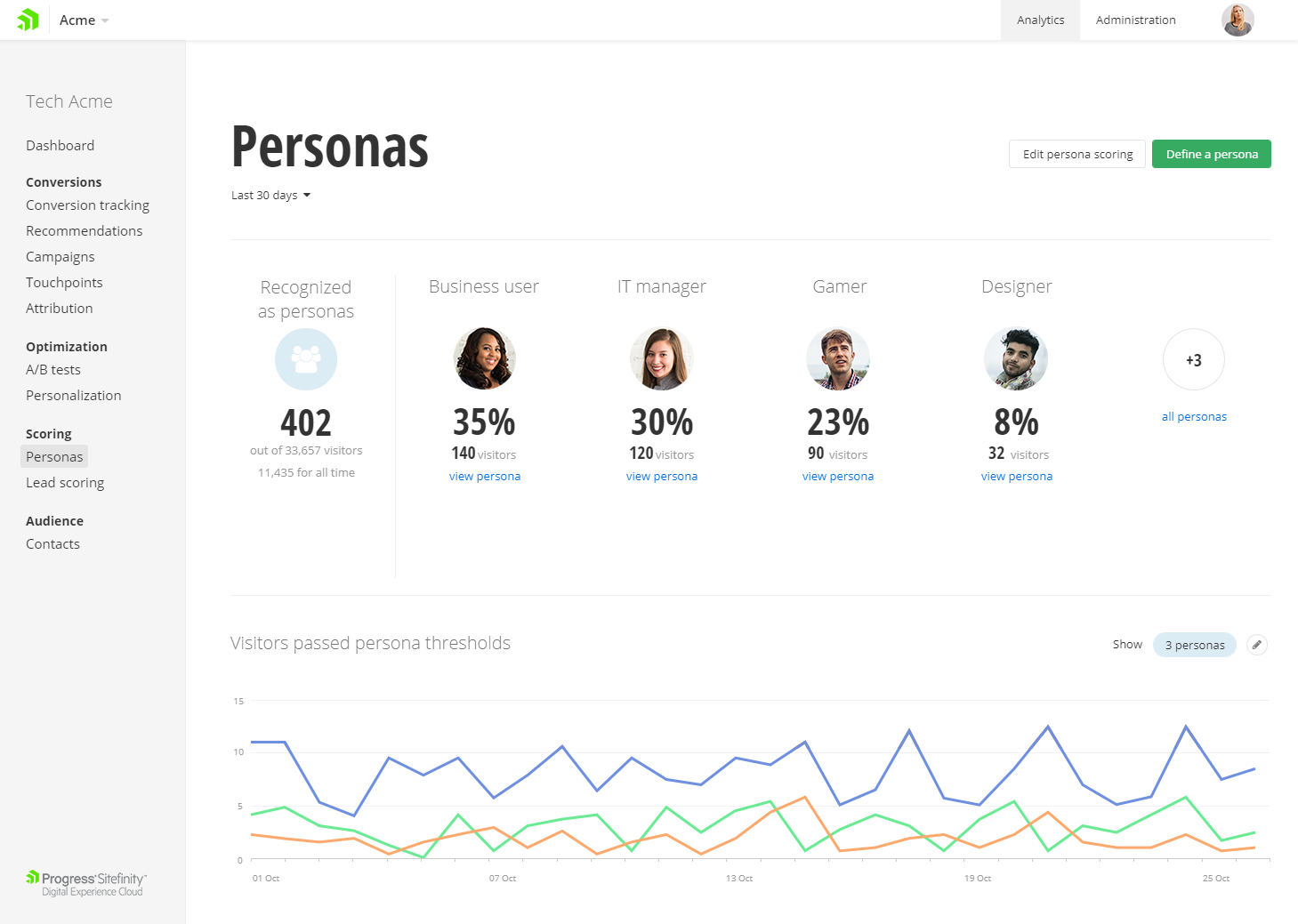 |