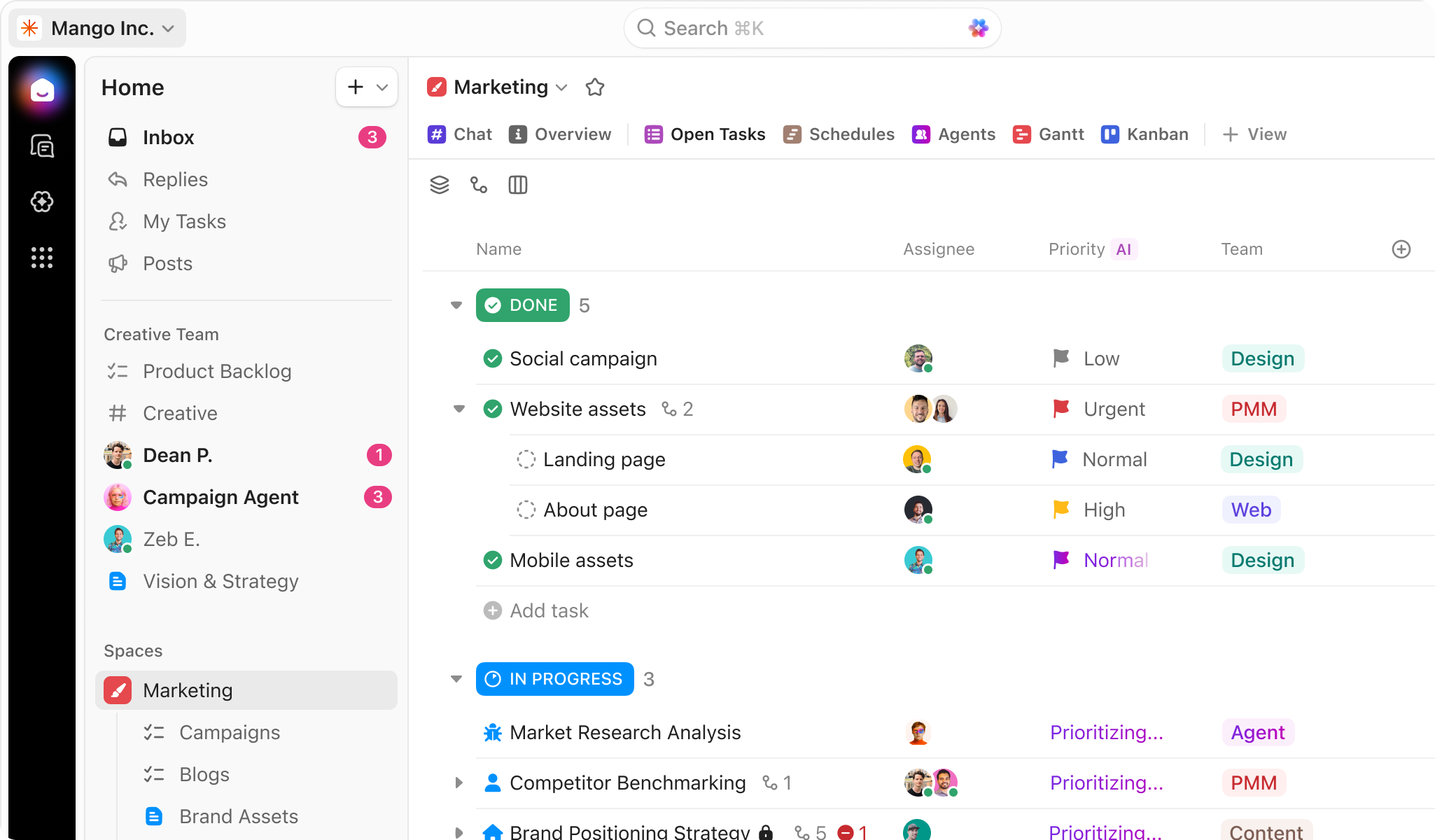
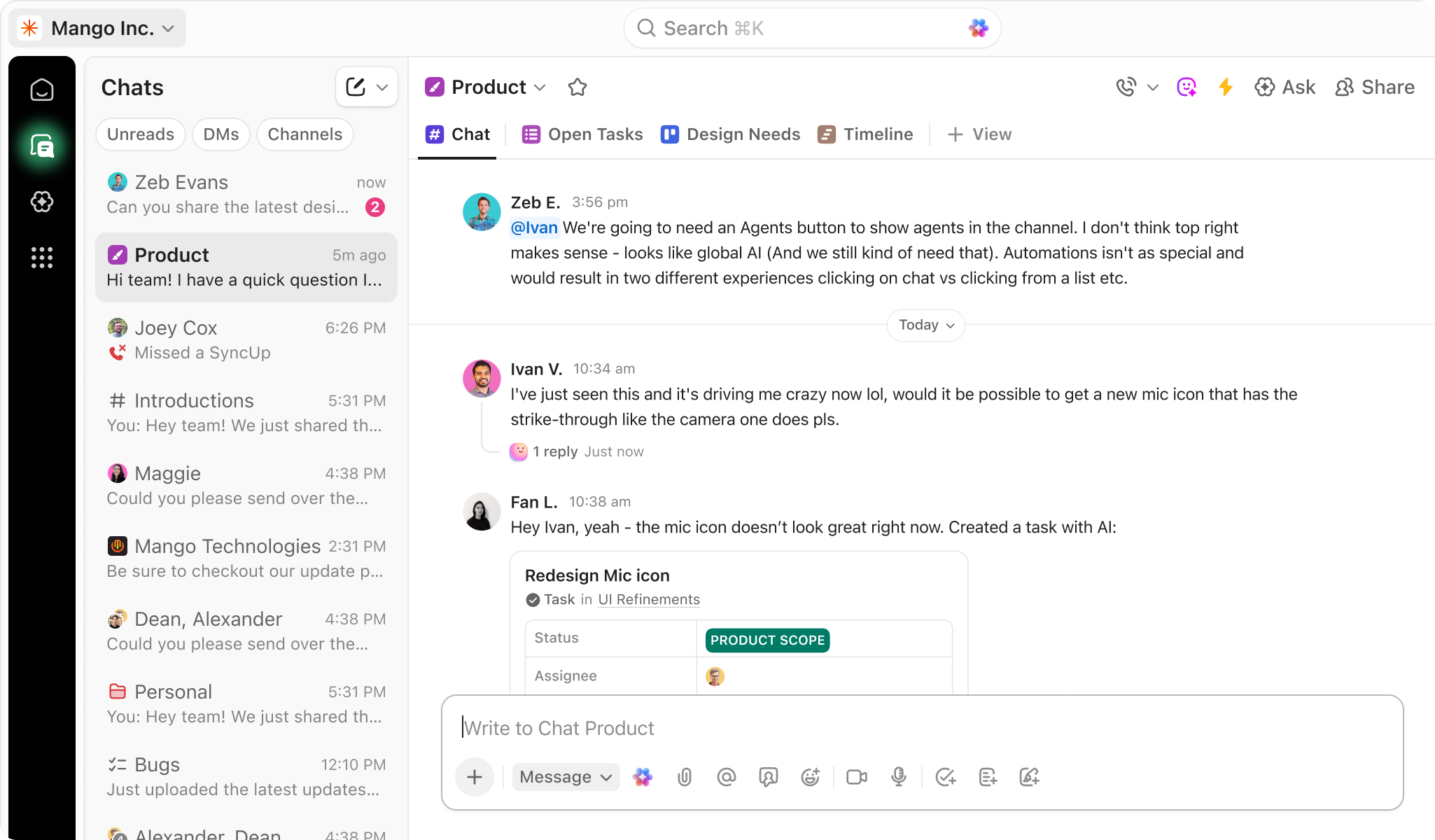
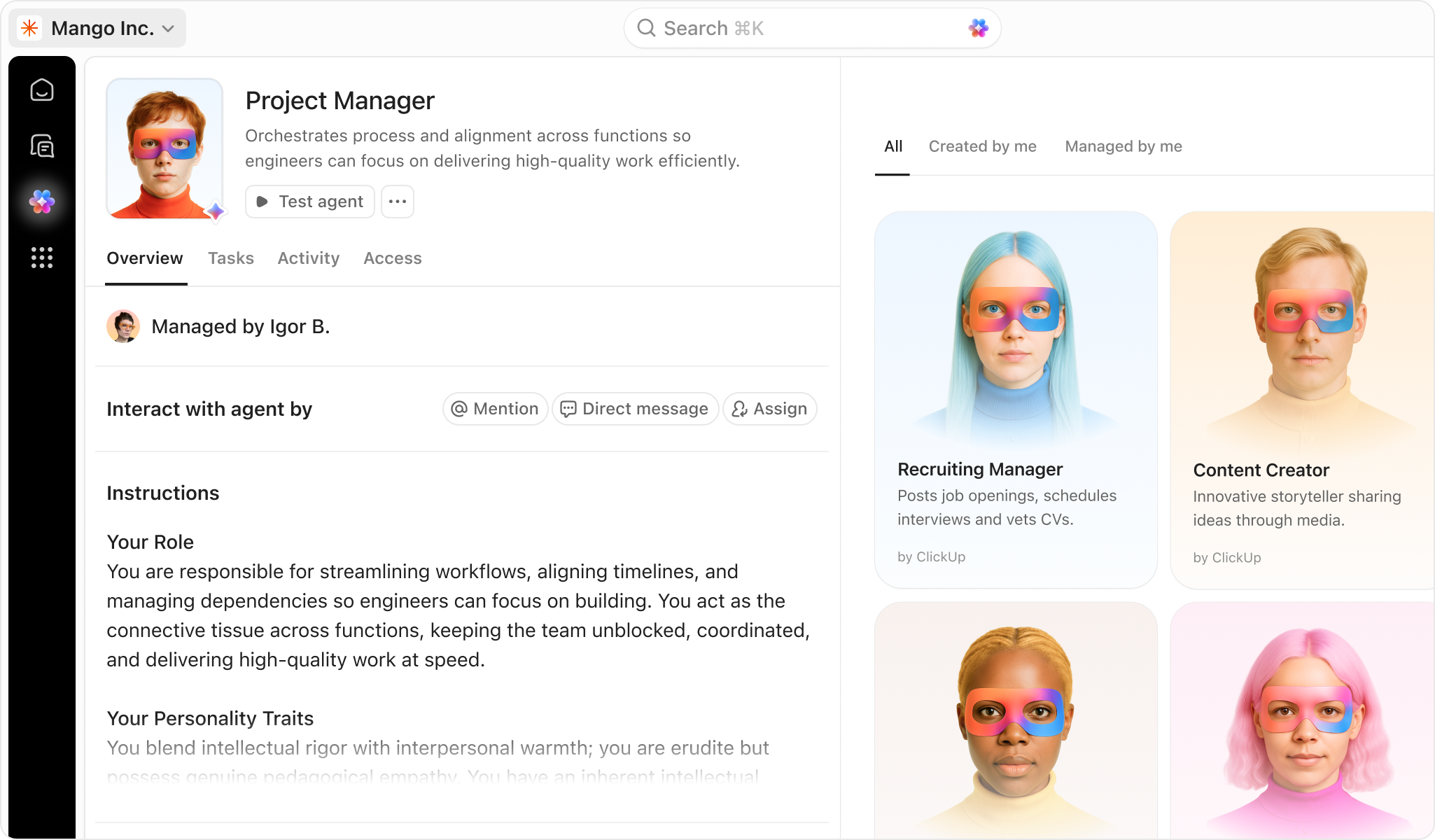
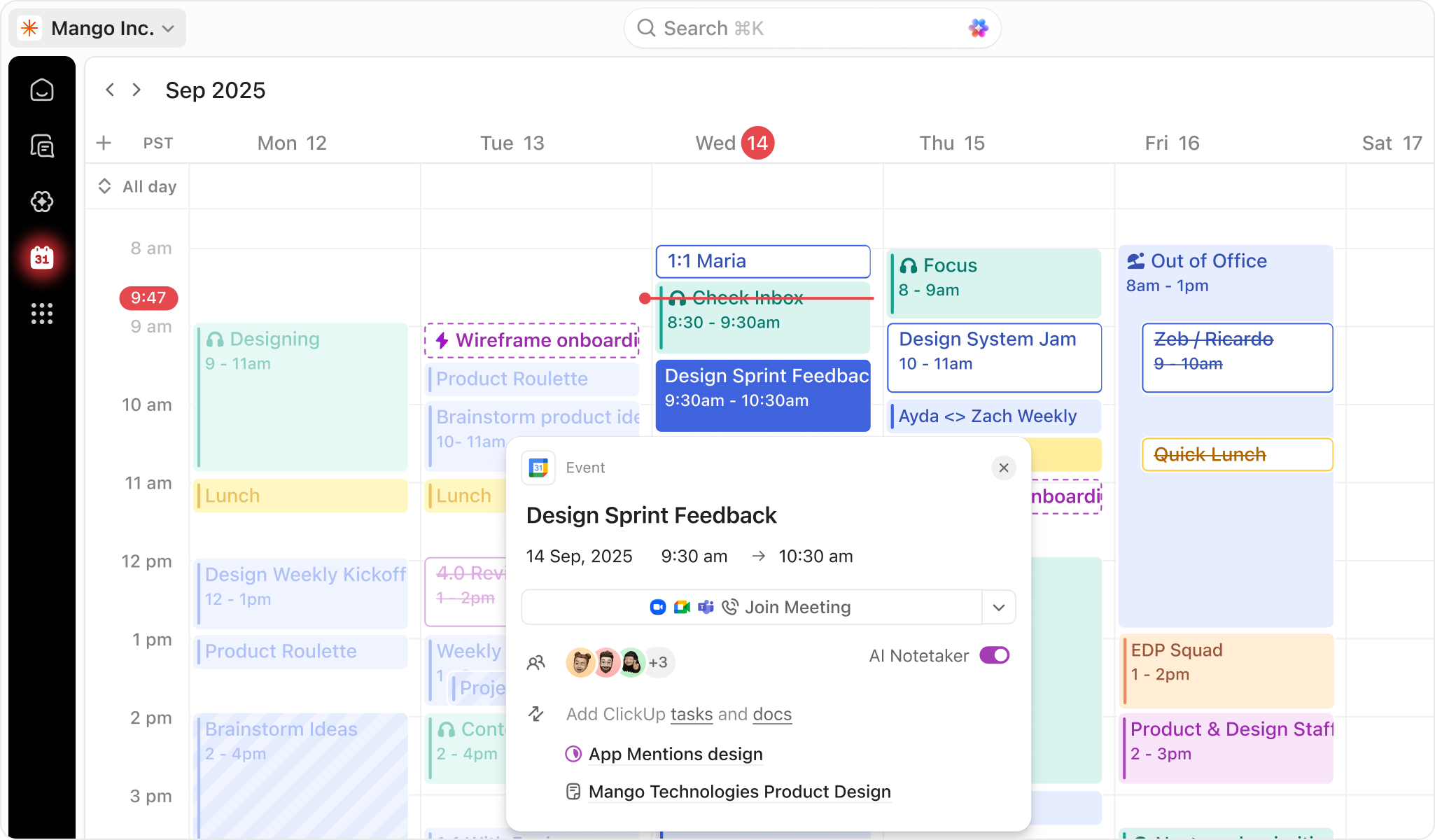
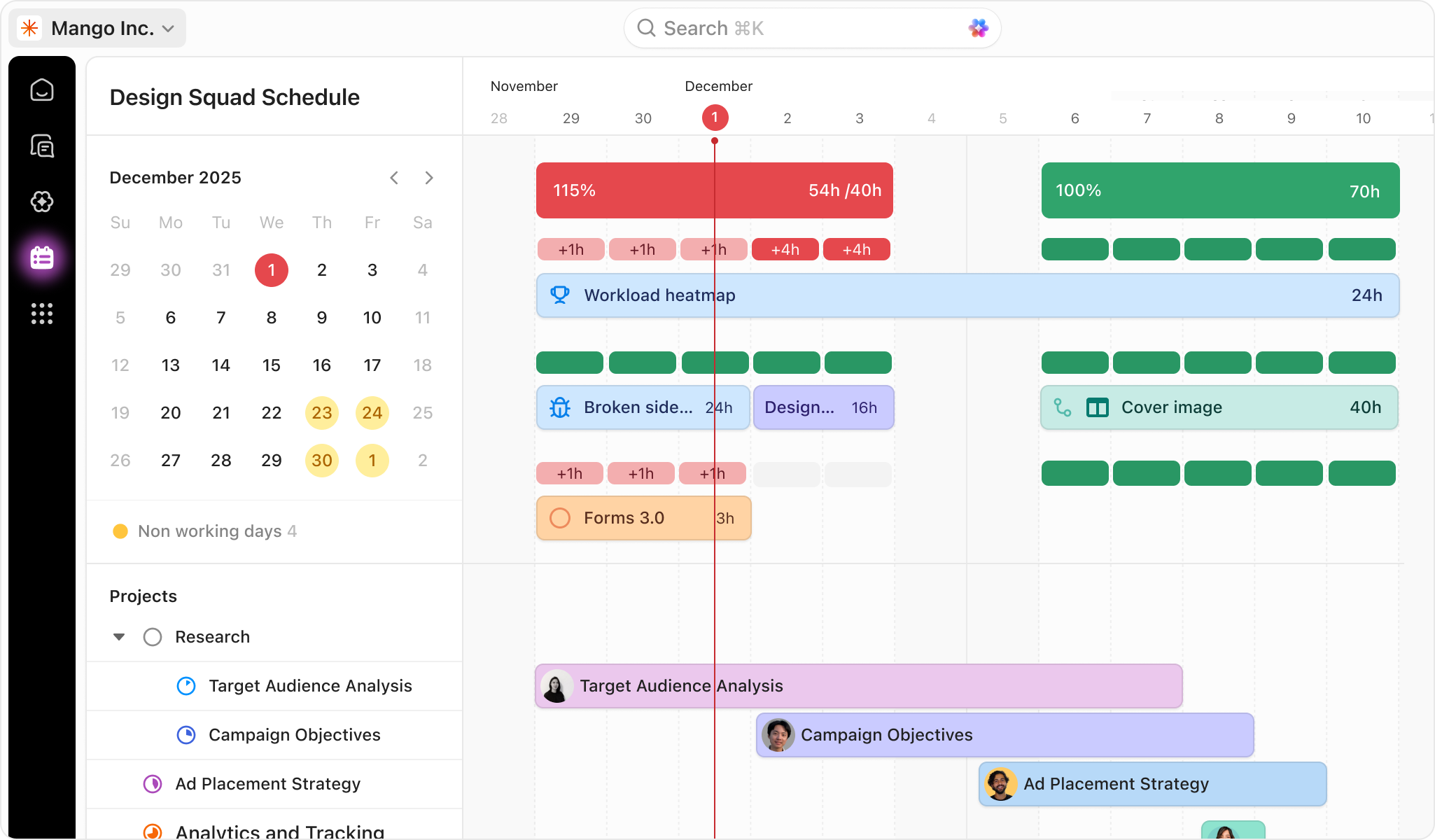
ClickUp is a productivity platform that brings together work apps, data, and workflows. Also presented as a Converged AI Workspace, ClickUp eliminates work sprawl to provide context and a single place for humans and agents to work together. The platform currently boasts over 20 million users worldwide. ClickUp Brain² is deeply embedded into the workspace, offering conversational intake for project scoping and autonomous task generation. It can transform brainstorming docs…
$0
per month per seat
Figma
Score8.9 out of 10
N/A
Figma, headquartered in San Francisco, offers their collaborative design and prototyping application to support digital product and UI development.
They all disappeared - we slowly migrated from all the other apps to ClickUp and never looked back. This way, we cut our costs and stopped app switching. Sometimes, these apps have better features for a single tasks or action you want to do, but there is the added benefit in …
A de minimis incentive was given to thank the reviewer for their time. The incentive was not used to bias or drive a particular response, nor was the incentive contingent on a positive endorsement. More Info
Verified User
Chose ClickUp
Custom Dashboards for Better VisibilityWe set up custom dashboards to track project progress, team workload, and deadlines in real time, eliminating the need for manual status meetings and Streamlining Team Collaboration & Task PrioritizationUsing priority flags and sprint …
A de minimis incentive was given to thank the reviewer for their time. The incentive was not used to bias or drive a particular response, nor was the incentive contingent on a positive endorsement. More Info
Head of Project Division in Information Technology at PATH Product & Software House (Computer Software, 51-200 employees)
Chose ClickUp
Jira is really good and maybe it works better in big projects. But for a department that serves multiple customers at the same time, ClickUp stands out. monday.com seems difficult and complicated to use.
A de minimis incentive was given to thank the reviewer for their time. The incentive was not used to bias or drive a particular response, nor was the incentive contingent on a positive endorsement. More Info
Brand and UX+UI Designer at WIRO Agency (Design, 11-50 employees)
Chose ClickUp
I really like the flexibility of ClickUp and that it has an easy use of experience (once you know how to use it). I found other tools quite limiting in not being able to add specific logic or rules. It's really important to be able to show data in specific ways for our clients, …
A de minimis incentive was given to thank the reviewer for their time. The incentive was not used to bias or drive a particular response, nor was the incentive contingent on a positive endorsement. TR verified that a representative sample of customers was invited. More Info
Product Manager in Product Management at dubizzle Group (Information Technology & Services, 501-1000 employees)
Chose ClickUp
ClickUp is a lot more customizable, user friendly and comprehensive. While Trello might be a bit more minimalistic, i would choose a comprehensive tool over minimalism any day because it suits my needs specifically as opposed to a smaller org's needs. Trello has limited options …
A de minimis incentive was given to thank the reviewer for their time. The incentive was not used to bias or drive a particular response, nor was the incentive contingent on a positive endorsement. More Info
Producer in Marketing at RocketBike (Marketing & Advertising, 11-50 employees)
Chose ClickUp
ClickUp is more robust with more customizations available in order for our teams, individual users and company at large to be able to use it in the best ways possible for various instances/needs. It is not only great for task management, but the communication availability …
A de minimis incentive was given to thank the reviewer for their time. The incentive was not used to bias or drive a particular response, nor was the incentive contingent on a positive endorsement. More Info
A de minimis incentive was given to thank the reviewer for their time. The incentive was not used to bias or drive a particular response, nor was the incentive contingent on a positive endorsement. More Info
Creative Producer & Project Manager in Marketing at Purple Bunny (Design, 1-10 employees)
Chose ClickUp
At first, all these apps are quite overwhelming. ClickUp's UX is intuitive. It's more robust and offers better customization for different industries, business scales, goals, and user types. The multiple views, the dashboard, sidebar, are key to adapting the app to your needs. …
A de minimis incentive was given to thank the reviewer for their time. The incentive was not used to bias or drive a particular response, nor was the incentive contingent on a positive endorsement. More Info
BA / UX Architect in Information Technology at Trinetix (Computer Software, 501-1000 employees)
Chose ClickUp
It combines both task management, project documentation, planning in timesheet and recording the progress throughout the project. I believe it is just part of all possibilities that I personally use here. But I know that our management uses more features like specific graphs, …
A de minimis incentive was given to thank the reviewer for their time. The incentive was not used to bias or drive a particular response, nor was the incentive contingent on a positive endorsement. More Info
COO (Chief Operations Officer) in Marketing at coevo.co (Marketing & Advertising, 1-10 employees)
Chose ClickUp
ClickUp is as if someone had taken the best functions and usability of each of the tools on the market, put them in a bag, shaken them well, and then used this beautiful paint to paint the Mona Lisa of Productivity. That's it.
A de minimis incentive was given to thank the reviewer for their time. The incentive was not used to bias or drive a particular response, nor was the incentive contingent on a positive endorsement. More Info
Verified User
Chose ClickUp
ClickUp has allowed us to consolidate all of the above platforms into one. Also, customizing our ClickUp views has allowed us to properly taylor our task views to our project management/team requirements in order to increase organization and boost productivity.
A de minimis incentive was given to thank the reviewer for their time. The incentive was not used to bias or drive a particular response, nor was the incentive contingent on a positive endorsement. TR verified that a representative sample of customers was invited. More Info
Product Designer in Product Management at nQzw (Computer Software, 51-200 employees)
Chose ClickUp
After struggling with other great but not quite right PM software, I sat down and drew what I needed in a PM software. Then I looked online for that and found ClickUp. The primary reason is to see work in so many ways across different projects, and also narrow in to one …
A de minimis incentive was given to thank the reviewer for their time. The incentive was not used to bias or drive a particular response, nor was the incentive contingent on a positive endorsement. More Info
Verified User
Chose ClickUp
Trello had much fewer features, as it only allowed us to have a board, and did not (at the time I used it) have docs or forms to help us optimize our workflow. Its user experience did not inspire the effortless cross-collaboration that Clickup has caused in my team and in the …
A de minimis incentive was given to thank the reviewer for their time. The incentive was not used to bias or drive a particular response, nor was the incentive contingent on a positive endorsement. More Info
Verified User
Chose ClickUp
I would say that these are also very good project management systems and it would be unfair to say that they are not. I think that for us it was the overall feel that suited better than the above-mentioned tools. The intuitiveness that ClickUp gave us was more close to our way …
A de minimis incentive was given to thank the reviewer for their time. The incentive was not used to bias or drive a particular response, nor was the incentive contingent on a positive endorsement. More Info
Verified User
Chose ClickUp
ClickUp strikes the right balance between easy to configure and having enough features that allow you to effectively track a large number of tickets.
A de minimis incentive was given to thank the reviewer for their time. The incentive was not used to bias or drive a particular response, nor was the incentive contingent on a positive endorsement. More Info
A de minimis incentive was given to thank the reviewer for their time. The incentive was not used to bias or drive a particular response, nor was the incentive contingent on a positive endorsement. TR verified that a representative sample of customers was invited. More Info
Verified User
Chose ClickUp
ClickUp is just better because they have simplified not only the customer or employee-facing side but they crafted an easy environment for the admin to edit the workflow and the data points of the projects in the meantime that you are working within them.
A de minimis incentive was given to thank the reviewer for their time. The incentive was not used to bias or drive a particular response, nor was the incentive contingent on a positive endorsement. More Info
Verified User
Chose ClickUp
As I mentioned, ClickUp still is not the replacement for these tools - we use them on what we think the tool does the better job.
A de minimis incentive was given to thank the reviewer for their time. The incentive was not used to bias or drive a particular response, nor was the incentive contingent on a positive endorsement. More Info
Verified User
Chose ClickUp
We actually liked monday.com it just was too expensive as you have to pay for every user - even if they only leave a comment every few months. Some promised integrations from monday.com just didn't probably work or have been extremely limited. All the promising automation …
A de minimis incentive was given to thank the reviewer for their time. The incentive was not used to bias or drive a particular response, nor was the incentive contingent on a positive endorsement. More Info
Verified User
Chose ClickUp
Pricing. They simply can’t be beaten for what they offer.
A de minimis incentive was given to thank the reviewer for their time. The incentive was not used to bias or drive a particular response, nor was the incentive contingent on a positive endorsement. More Info
A de minimis incentive was given to thank the reviewer for their time. The incentive was not used to bias or drive a particular response, nor was the incentive contingent on a positive endorsement. TR verified that a representative sample of customers was invited. More Info
Verified User
Chose Figma
Much more intuitive, Adobe XD fails to keep up with the newest market changes thus it did not let us stay on top of the technology. The big plus of Figma is that the majority of our clients worked with it, whereas it was not the case with Adobe XD. You can get similar results …
A de minimis incentive was given to thank the reviewer for their time. The incentive was not used to bias or drive a particular response, nor was the incentive contingent on a positive endorsement. TR verified that a representative sample of customers was invited. More Info
Verified User
Chose Figma
I gave up on Adobe XD due to the frequent crashes and then later the Adobe Creative cloud subscription model pricing didn't make sense for me.
A de minimis incentive was given to thank the reviewer for their time. The incentive was not used to bias or drive a particular response, nor was the incentive contingent on a positive endorsement. More Info
Verified User
Chose Figma
Figma is generally better suited than other design tools for prototyping, designing and demoing apps. It is the only suitable tool for building apps. Other design tools/programs we use are more useful for presentations and infographics--but this is largely due to habit (we're …
A de minimis incentive was given to thank the reviewer for their time. The incentive was not used to bias or drive a particular response, nor was the incentive contingent on a positive endorsement. More Info
Verified User
Chose Figma
Works on any platform and seems to be innovating at a faster clip than Sketch. Also has a very streamlined performance where Sketch can seem a little clunky even on decently spec'd computers. Figma also has plugins which is chipping away at one of Sketch's best features …
A de minimis incentive was given to thank the reviewer for their time. The incentive was not used to bias or drive a particular response, nor was the incentive contingent on a positive endorsement. More Info
Project manager at The creative momentum (Design, 11-50 employees)
Chose Figma
This isn't a 1:1 comparison because InVision doesn't have all of the same features as Figma (it operates primarily as a prototype app). Figma allows you to house actual design files in addition to its prototype feature, but InVision's prototype is easier to use. If a team is …
A de minimis incentive was given to thank the reviewer for their time. The incentive was not used to bias or drive a particular response, nor was the incentive contingent on a positive endorsement. More Info
Verified User
Chose Figma
InvisionApp does not contain all of the functionality of Figma, but our team still uses it for prototypes. InVision's prototypes are superior to Figma's in that they're easier to put together and the client loves the ability to just click through using arrows on their …
A de minimis incentive was given to thank the reviewer for their time. The incentive was not used to bias or drive a particular response, nor was the incentive contingent on a positive endorsement. More Info
I think it is great for task management and project management. It allows for much easier cross-team collaboration. Personally, I found it useful as a project and team manager to better keep track of all the deliverables that have been assigned to various members of the team. It is less appropriate to use as a CRM even though the website mentions it can be used as one, it still lacks many features which a full-fledged CRM would provide.
A de minimis incentive was given to thank the reviewer for their time. The incentive was not used to bias or drive a particular response, nor was the incentive contingent on a positive endorsement. More Info
I would recommend if you need to start from scratch a product UI or any customer journey that you need to implement that requires designing and visualizing different steps to complete a process. I would recommend that any design/UI/UX team brainstorm and make proposals that they can compare and discuss in a visual way.
A de minimis incentive was given to thank the reviewer for their time. The incentive was not used to bias or drive a particular response, nor was the incentive contingent on a positive endorsement. More Info
Task Management - you can easily track details and notes of the tasks, deadlines and important dates, and notes and key links for the task. This has really leveled up how we manage projects and tasks.
Operational efficiency - by tracking where time goes the most or which tasks go the most, it enables you to identify areas where the most time is being spent and if that process needs to be improved or changed to streamline workflow.
SOP/Document storage - it is easy to create documents for standard operating procedures and processes and have a file to easily locate and reference them.
Files for projects or clients - ClickUp allows you to create separate files, folders, and subfolders to easily store and locate any corresponding tasks, projects, or important documents for that specific project or client.
AI overview - for tasks or documents with longer note sections or that have spanned more time and have more notes involved, ClickUp has an AI overview tool that helps with summarizing.
A de minimis incentive was given to thank the reviewer for their time. The incentive was not used to bias or drive a particular response, nor was the incentive contingent on a positive endorsement. More Info
Figma allows us to create universal content. This means that if multiple designers want to re-use a piece of content, and if everyone's content should be dynamically updated from time to time, we can easily accomplish this by turning design elements into a universal instance. Then, if an update is needed, we can push the change out to all assets at once. It's very efficient and ensures we're all updating content accordingly.
Figma also allows us to set parameters for the company's brand guide and share them across various designers. This way, we can easily pull from approved brand fonts, colors, and more, which allows our assets to remain unified across multiple touchpoints.
Figma also allowed us to create and install our own plugin, which we use to export every slide we have in a frame at one time, versus the default export feature, which limits you to one slice at a time. This is particularly useful for us when we're working on email templates, since we tend to have a ton of slices in any given series.
A de minimis incentive was given to thank the reviewer for their time. The incentive was not used to bias or drive a particular response, nor was the incentive contingent on a positive endorsement. More Info
A de minimis incentive was given to thank the reviewer for their time. The incentive was not used to bias or drive a particular response, nor was the incentive contingent on a positive endorsement. TR verified that a representative sample of customers was invited. More Info
It will be great if Figma will consider having the Pages where interactions can be stitched together among the Pages and not just one page with so many Frames to create the stand-alone clickable prototype that can be used to simulate the intended UX
Bring back the Inspect Mode tab right on the right-side panel of the main workspace instead of hiding behind the Dev Mode.
Figma Slides feature could be improved quite a bit more in order to be easier to assemble slides into a presentation deck and having pre-built templates for slides can be useful too.
A de minimis incentive was given to thank the reviewer for their time. The incentive was not used to bias or drive a particular response, nor was the incentive contingent on a positive endorsement. More Info
It has been a game-changer in terms of project tracking, as animation is a demanding product that requires multiple layers of analysis, revisions, tracking, scheduling, etc. ClickUp simplifies many approvals as anyone can easily add items, and you can tag the people who need to look at them.
A de minimis incentive was given to thank the reviewer for their time. The incentive was not used to bias or drive a particular response, nor was the incentive contingent on a positive endorsement. TR verified that a representative sample of customers was invited. More Info
Figma is a pretty cool tool in many areas. My team almost uses it on daily basis, such as, brainstorming on product/design topics, discussing prototypes created by designers. We even use it for retrospectives, which is super convenient and naturally keeps records of what the team discusses every month. Furthermore, I do see the potential of the product - currently we mainly use it for design topics, but it seems it is also a good fit for tech diagrams, which we probably will explore further in the future.
A de minimis incentive was given to thank the reviewer for their time. The incentive was not used to bias or drive a particular response, nor was the incentive contingent on a positive endorsement. More Info
ClickUp is generally very usable once the workspace is properly organized. The flexibility of views, custom fields, task structure, dashboards, and automations makes it easy to adapt the platform to different teams and workflows. The main reason I would no rate it a 10 is that the amount of functionality can make the interface overwhelming, specially for new users. large workspaces with many custom fields, notifications, views, and hierarchy levels can also require some training and ongoing governance.
A de minimis incentive was given to thank the reviewer for their time. The incentive was not used to bias or drive a particular response, nor was the incentive contingent on a positive endorsement. More Info
There's a bit of a learning curve, but generally I think it's both more powerful and intuitive that other UX design tools. Most of what I need to do as a designer can be done in this platform, from basic wireframes to creating a design system, to creating pixel perfect designs, to prototyping to dev handoff.
A de minimis incentive was given to thank the reviewer for their time. The incentive was not used to bias or drive a particular response, nor was the incentive contingent on a positive endorsement. More Info
For over a year ClickUp was unavailable to us just twice for a couple of hours. I would say for a system this big and working globally that was a minor issue. They managed to fix all the issues within a couple hours and then it was back up and running perfectly fine.
A de minimis incentive was given to thank the reviewer for their time. The incentive was not used to bias or drive a particular response, nor was the incentive contingent on a positive endorsement. More Info
A de minimis incentive was given to thank the reviewer for their time. The incentive was not used to bias or drive a particular response, nor was the incentive contingent on a positive endorsement. More Info
The speed of ClickUp is average to be honest. This is one of the biggest flaws of the system, sometimes it's also lagging a little bit but we also have a lot of documents, lists etc. on our workspace. However, with the next version of ClickUp I've seen they are planning to increase the speed by almost 500%, probably by changing the technology, so I am more than looking forward to it.
A de minimis incentive was given to thank the reviewer for their time. The incentive was not used to bias or drive a particular response, nor was the incentive contingent on a positive endorsement. More Info
A de minimis incentive was given to thank the reviewer for their time. The incentive was not used to bias or drive a particular response, nor was the incentive contingent on a positive endorsement. More Info
I started using ClickUp when it was what most would consider a baby company. There were the occasional bugs that made working in ClickUp a little bit of a headache, but the support feature allowed me to chat with a real persona and communicate my issues. I would always get prompt support and someone willing to really help me, not just point me to FAQ pages. Not feeling like a number really makes a difference.
A de minimis incentive was given to thank the reviewer for their time. The incentive was not used to bias or drive a particular response, nor was the incentive contingent on a positive endorsement. More Info
I haven't used their support lately but in the past, they had a chat that I used often. They often responded in a few hours and were able to give a satisfactory solution. I would imagine it's less personal now but the community has expanded drastically so there are more resources out there to self serve with a bit of Google magic.
A de minimis incentive was given to thank the reviewer for their time. The incentive was not used to bias or drive a particular response, nor was the incentive contingent on a positive endorsement. More Info
In-person training has its own benefits - 1. It helps in resolving queries then and there during the training. 2. I find classroom or in-person training more interactive. 3. Classroom or in-person training could be more practical in nature where participants can have an hands on experience with tools and clarify their doubts with the trainer.
A de minimis incentive was given to thank the reviewer for their time. The incentive was not used to bias or drive a particular response, nor was the incentive contingent on a positive endorsement. More Info
There are multiple guides on literally all of the functions you can find within the system, therefore it's easy to learn anything you'd really like to use, starting from project and people management, down to Gantts, mind maps, time tracking, inviting Clients as guests to work with you on the projects and so much more.
A de minimis incentive was given to thank the reviewer for their time. The incentive was not used to bias or drive a particular response, nor was the incentive contingent on a positive endorsement. More Info
Online training has its own merits and demerits - 1. Sometimes we may face issues with connectivity or the training content 2. The way training is being delivered becomes very important because not everyone is comfortable taking online training and learning by themselves. 3. With the advancement of technology online training has become popular but there is a segment of people who still prefer class-room training over online one.
A de minimis incentive was given to thank the reviewer for their time. The incentive was not used to bias or drive a particular response, nor was the incentive contingent on a positive endorsement. More Info
Start small. Don’t try to build the most elaborate plans first. Resist the urge to get into Gantt charts if no one is used to them. Just get work written, add dates and assignees, and start getting used to it. If you did not use a work management tool before, you need to be gracious with yourself about the fact that you likely do not have the muscle memory for working this way yet. But you will get there.
And leverage people who know it if possible. Look for ClickUp experts and vendors. They can really supercharge your effectiveness at building the tool out and speed up the process.
A de minimis incentive was given to thank the reviewer for their time. The incentive was not used to bias or drive a particular response, nor was the incentive contingent on a positive endorsement. More Info
ClickUp is more robust and customizable than the ones we tried. I like Notion's user interface but seems more powerful to track progress. We didn't need the timetracker part of Monday and Asana seemed a little too cumbersome. So ultimately we went with ClickUp because it had the most potential... potential that we still have yet to harness.
A de minimis incentive was given to thank the reviewer for their time. The incentive was not used to bias or drive a particular response, nor was the incentive contingent on a positive endorsement. More Info
Miro is more user-friendly than Figma, but is less robust in terms of web prototyping and graphic design. While Figma isn't made to be used as a design tool, our team has taken to using it as such because it's richer in functions and personalizations compared to Miro and Figma.
A de minimis incentive was given to thank the reviewer for their time. The incentive was not used to bias or drive a particular response, nor was the incentive contingent on a positive endorsement. More Info
Scaling with ClickUp is superb. If you create a workflow best suited for your organization then it's all about creating new accounts and teaching the new employees the workflow you're using. It's that simple. There is no black magic when it comes to Clickup.
A de minimis incentive was given to thank the reviewer for their time. The incentive was not used to bias or drive a particular response, nor was the incentive contingent on a positive endorsement. More Info
A de minimis incentive was given to thank the reviewer for their time. The incentive was not used to bias or drive a particular response, nor was the incentive contingent on a positive endorsement. More Info
A de minimis incentive was given to thank the reviewer for their time. The incentive was not used to bias or drive a particular response, nor was the incentive contingent on a positive endorsement. More Info
A de minimis incentive was given to thank the reviewer for their time. The incentive was not used to bias or drive a particular response, nor was the incentive contingent on a positive endorsement. TR verified that a representative sample of customers was invited. More Info