HubSpot Service Hub aims to bring customer service data and channels together in one place, and helps scale support through automation and self-service. According to the vendor, Service Hub provides more time for proactive service that delights, retains, and grows your customer base.
$15
per month per seat
Fin by Intercom
Score 8.7 out of 10
N/A
Fin is Intercom’s AI Agent for customer service, designed to deliver high-quality answers, even for complex queries. It works with any helpdesk, or it can be paired with Intercom’s next-generation Helpdesk to get the full Intercom Customer Service Suite.
$0.99
one-time fee per outcome
Jira Service Management
Score 7.9 out of 10
N/A
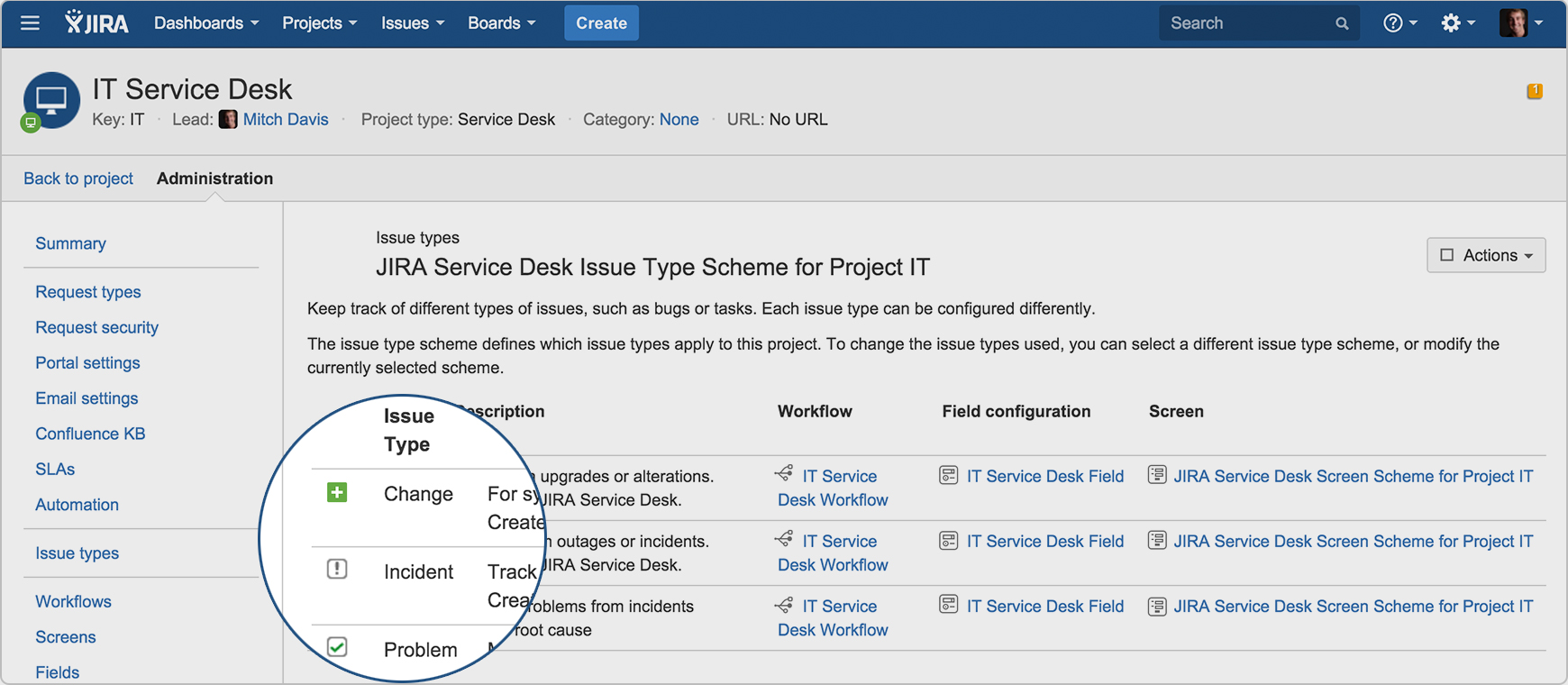
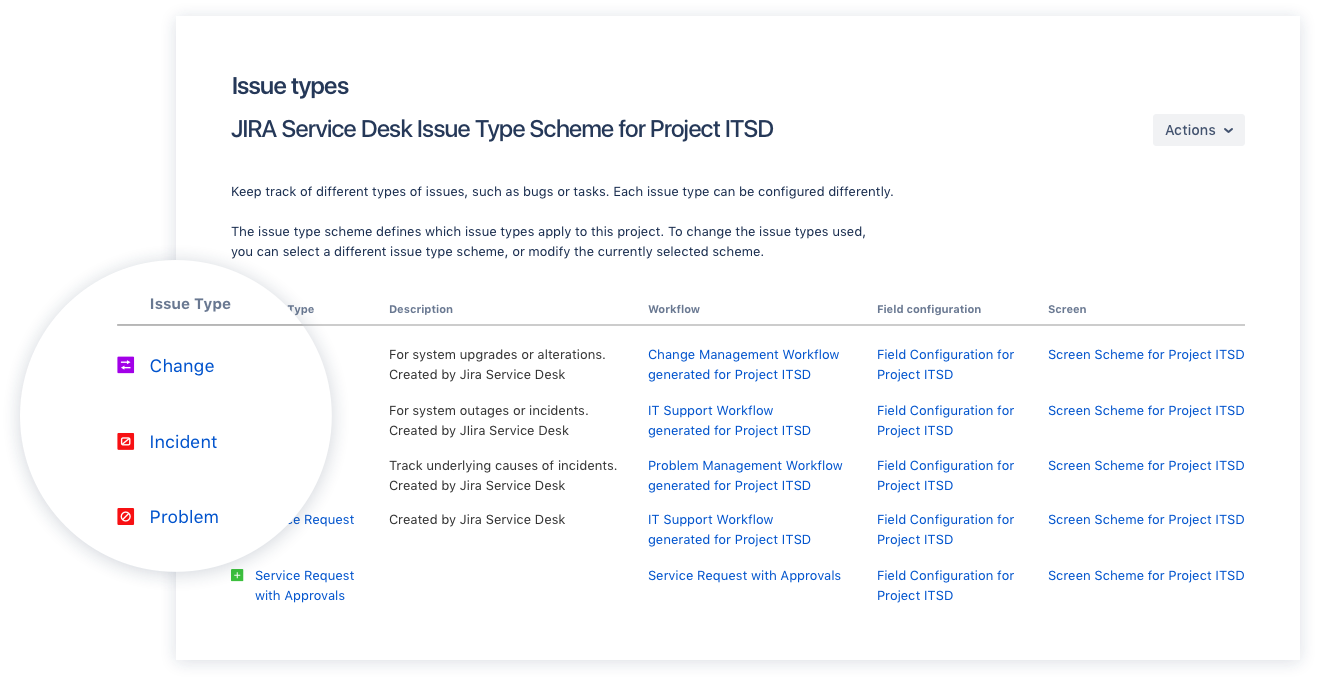
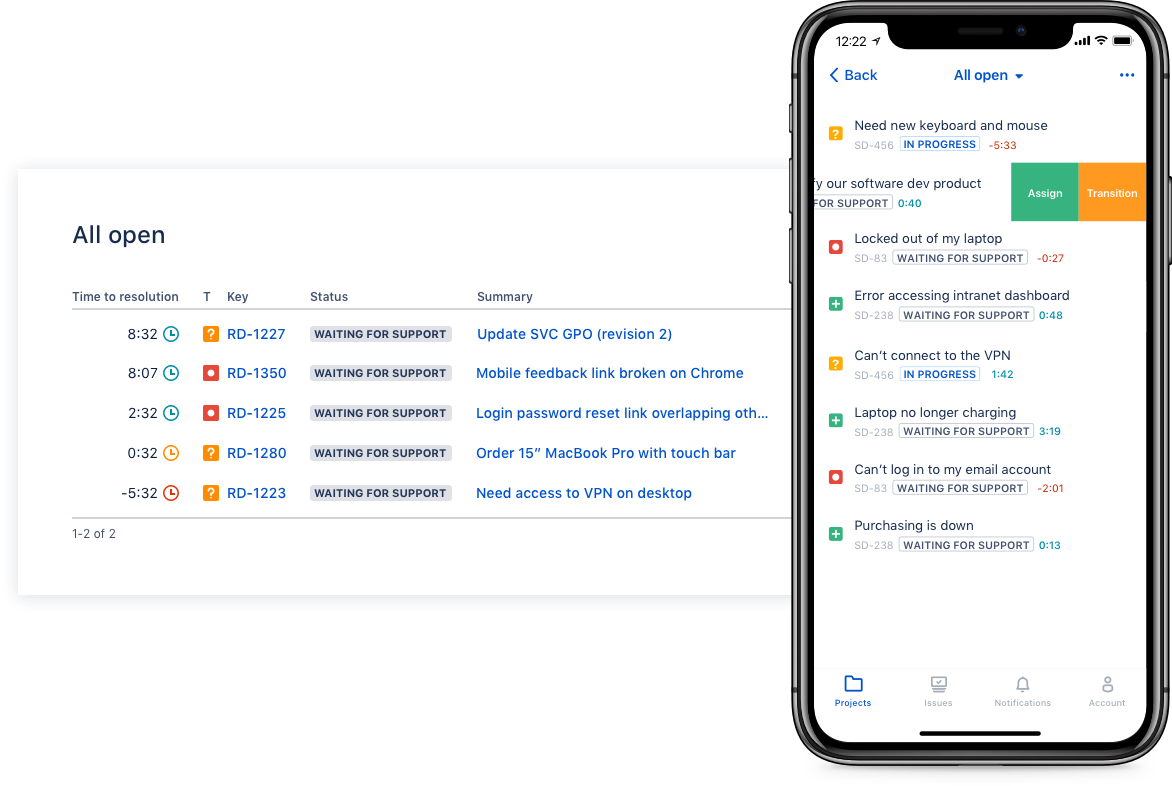
Jira Service Management (formerly Jira Service Desk, now including features from the former Mindville Insight, acquired by Atlassian in June 2020) is a service desk software that is purpose-built for IT, service, and support teams. The software provides everything IT and support teams need out-of-the-box for service request, incident, problem and change management. Jira Service Management integrates seamlessly with Jira Software so that IT and development teams can work better together. Users…
$0
per month
Pricing
HubSpot Service Hub
Fin by Intercom
Jira Service Management
Editions & Modules
Service Hub Starter
$15
per month per seat
Professional
$100
per month per seat
Enterprise
$150
per month per seat
Enterprise
Starting at $1,200
per month
Fin with your current helpdesk
$0.99
one-time fee per outcome
Copilot add-on
$35
per month per user
Pro
$99
per month For analysis of 1,000 conversations
Fin with Intercom’s Helpdesk
from $39 + $0.99 per Fin outcome
per month per seat
Free
$0
per month
Standard
$20
per agent/per month
Premium
$40
per agent/per month
Enterprise
Contact sales team
Offerings
Pricing Offerings
HubSpot Service Hub
Fin by Intercom
Jira Service Management
Free Trial
No
Yes
Yes
Free/Freemium Version
Yes
No
No
Premium Consulting/Integration Services
No
No
Yes
Entry-level Setup Fee
No setup fee
No setup fee
No setup fee
Additional Details
A discount is offered for annual billing.
Fin comes with a 90-day money-back guarantee. Here's how it works:
Intercom states that users who sign up for the Fin Guarantee Success Program and do not achieve at least a resolution rate of 65% will be paid $1M. This program is designed for high volume customers.
Eligibility criteria:
High volume customers (over 250k monthly conversions) in North America and Europe. Intercom states that phase one of this program will admit customers on Intercom Helpdesk or Zendesk.
For the feature set we were looking for, particularly with an integrated customer 360 view and solid sales pipeline system to help our sales track new leads, HubSpot came out a lot cheaper than the alternatives and allowed the sales pipeline and support team to operate together …
Way better than all of them - especially the workflow tool which I don't think Help Scout or Crisp even had. Really easy to manage capacity too through snoozing conversations and customers receiving emails after a response.
With HubSpot, there was no way for our users to return …
My main concern at the moment is how the integration looks to the users and Intercom just looks modern and up-to-date. HubSpot is missing this. In the background it always comes down to how you organize your team and processes.
Unlike Zendesk, Intercom has done it right, and continues to do so. Don't underestimate how important this is, we are many out in the market that feels this way
Intercom is a very intuitive system that is relatively easy and quick to set up, the majority of what you need is there and ready to go. Where HubSpot has the edge is on the CRM functionality it has, while Intercom has tagging and segmentation, it doesn't have the depth of CRM …
Verified User
Executive
Chose Fin by Intercom
Intercom offers really good and consistent application for our clients to talk to us. Chat support is the fastest way to contact us and intercom has made it happen.
Intercom is a full suite that is more affordable than other systems such as Drift and HubSpot. Although the latter would have been even better integrated with our CRM since we use HubSpot Sales, the hidden costs with HubSpot always get us.
Both Intercom and Drift are comparable in terms of their abilities. Although Intercom came into the market first, Drift has done well to keep up with Intercom's updates and offer similar services of its own. Intercom edges out Drift in terms of its abilities and wealth of …
Compared to most of the competitive market, Intercom seems to be the most human/personable approach to customer success, customer service, and technical support. The alternatives are primarily built on an archaic approach - "take a ticket and wait in line" - that we worried …
We are now in the process of moving from Jira to Zendesk, however, I would assume that we would still be using Jira for the time being. Zendesk is a bit easier to understand and manage for the non-technical people, but Jira gave us the basics that we needed to have in order to …
Jira is the full-fledged task, bug and issue management tool. One can have his way with other tools, but there is going to have to be a whole lot of compromising. With Jira, one does not need to compromise, for as soon as its learning curve is achieved, one can have all he …
I'd recommend HubSpot Service Hub for sure. When switching from a different platform to HubSpot Service Hub orgs and admins can count with a vast number of trainings in HubSpot Academy and most of them are free. This means users will find the resources they need without needing to reach for their superiors for training sessions or guidance.
Fin is really good for answering simple and procedural questions, which we get a lot of because we see many first-time users who don't return. It's less appropriate the higher the stakes the issue is: though it's decent at teasing out details and nuance, if the user doesn't communicate clearly, there's a high risk that Fin will misunderstand their question and provide inaccurate information or instructions.
I think using a ticketing system is very easy to use and allows multiple teams to create help desks in the same portal. In terms of internal usage, I think this is a great option. However, suppose you're trying to keep internal items and external helpdesks in the same instance. In that case, this is not ideal, as there is no effective way to separate the two instances to protect internal data better.
Integration with many of the most common tools companies are using (Slack, MS Teams, Salesforce, ... etc)
Natural workflow with Jira (as product development / project management tool) which makes the full fix and follow up of the tickets / issues very easy to follow
Allow multiple different entry points and work flows for as many different needs your teams / company have
We've had some issues setting up the Client Portal functionality because we merged with another company and are still operating under two domains; Setting up the Client Portal could be easier or they could provide better support to help us work through it
We've been able to do everything we need to do with HubSpot Service Hub
Being able to give Fin by Intercom explicit instructions on when to say or do something... guidance sometime works but not always
Ability to set clear holiday hours so users know the team will not get back to them without having to change existing workflow/intro copy. When Fin by Intercom escalates during a holiday, it often shares the wrong "expected response time is"
Being able to see last month's usage numbers would help us track plan utilization better
We have been and will be continuing our journey with Intercom and nothing too concerning has happened that I have experienced or heard of that has us on the edge yet. If it ever happens it will be something along the lines of "Outgrowing" the use of need of the platform.
In the current contect the requirments is around having a tool that is focused and can handle large ticket volumes and tracking incident, problem and user requests concerning end users. Jira has built in functionality to address the above practice needs faily easily and has a substantial amount of customizable reports for generating the relevant intelligence.
I'd give it a 9 or 10 for the survey functionality because that is what we use regularly. I left it at an eight because we don't yet have experience with some of the other functionalities within the ServiceHub. Based on our demos, the ticketing system and the ChatBot are great, and we look forward to adding them soon.
From an administration standpoint, Fin is very easy to set up, train, and test. Having the ability to impersonate a user in our system to see how Fin responds is huge. It lets you test several situations and throw curveballs at it (as customers will) without the risk of setting Fin live and wondering what will happen. It's also easy to fine-tune. Some chatbots you can never quite get right without spending hours on, but Fin usually takes a few minutes to dial it in. From a customer standpoint, Fin couldn't be easier to engage with. We tell customers up front it's an AI bot and they're wow'd with the experience
If you're used to other tools in the Atlassian ecosystem, you'll feel right at home with JSM. It's also a platform that technical folk can easily pick up. However, I wouldn't recommend using JSM as a company's first jumping off point into Atlassian. There are a lot of other 'newer' tools that provide sleeker ITSM systems at a similar cost.
Intercom is the premier customer support/engagement model and it definitely has one of the top tier customer support teams as well. I don't think I have ever waited more than 5 minutes to get the information I need or get help with an issue. They are incredible and I aim to model our customer service department after them.
I gave JIRA a 9 rating since for me JIRA works according to its purpose. Since there is a customer portal, our clients can leave a comment or communicate with us using the PR ticket that way it is easier for us to also request any additional information we need for our investigation.
HubSpot [Service Hub] had many integrations we needed to connect to our CRM, and the cost was just right from them VS the others. We had to look at all the features, and HubSpot CRM just had way more than the others and more bang for your buck. So the Service Hub was just a bonus with their CRM tools.
We used it a few years ago, and it was not as feature-rich for our needs. It lacked true AI capabilities, was hard for users to understand, and created workaround issues. The internal ticket system was difficult to use and led to many missed issues and calls.
Zendesk is a similar ticketing system that our organization used before JIRA Service Desk. The main drawback of Zendesk was that it can only be used as a cloud service. This means that our company data would be living on the internet at the hands of their security team. Another drawback of this is the price is significantly more expensive rather than hosting it yourself. Zendesk does have some additional features such as commenting on multiple tickets at once that JSD does lack. However, switching to JSD was significantly more cost effective because we have the ability and the infrastructure to host our own ticketing system, something that Zendesk could not provide. Ultimatley switching to JSD saved us money and allows the ability for integration with all of the other Atlassian Suite products that we use on a day to day basis.
Easy to keep track of leads and track their journey into becoming a customer. For example, we can tell which leads open what emails and target people differently to help increase sales.
Even though HubSpot Service Hub is very expensive, I do think it is worth the price because we can keep track of all leads/ customers very easy, track the customer journey, rework emails with AI, etc.
HubSpot Service Hub also has reporting so you can track everything which helps to improve our sales
New role opportunities — Using the “Fin-first” approach has reduced the workload for our Tier 1 team, giving them more time to focus on their own career growth. It’s also opened the door to a dedicated, AI-focused role, where a team member regularly reviews Fin’s answers and makes updates to help it perform even better.
Enabling Fin has also reduced our response time and allowed us to meet SLA's.