Chose Litmus from Validity
I don’t have any experience with others

| Product | Rating | Most Used By | Product Summary | Starting Price |
|---|---|---|---|---|
 Litmus from Validity | N/A | Litmus, from Validity, is an email marketing solution used to create error-free emails in less time. It is also used to build email campaigns, personalize and test them thoroughly, monitor deliverability, and analyze email performance. | N/A | |
 SparkPost (discontinued) | N/A | SparkPost offered real-time analysis of email delivery and customer engagement as well as personalized email templates. The service has been discontinued. | $30 per month | |
 Everest (Return Path + 250ok) | N/A | Everest is an integrated email success platform providing crucial insights and deliverability guidance so users can reach more people, increase engagement, and improve efficiencies of their email programs. Everest helps to improve email deliverability by getting complete visibility into email marketing metrics and sender reputation, understand the audience and deliver content that is timely, personalized, and functions flawlessly on any device, and get a holistic view of a company's… | N/A |
| Litmus from Validity | SparkPost (discontinued) | Everest (Return Path + 250ok) | ||||||||||||||||||||||
|---|---|---|---|---|---|---|---|---|---|---|---|---|---|---|---|---|---|---|---|---|---|---|---|---|
| Editions & Modules | No answers on this topic |
|
| |||||||||||||||||||||
| Offerings |
| |||||||||||||||||||||||
| Entry-level Setup Fee | No setup fee | No setup fee | No setup fee | |||||||||||||||||||||
| Additional Details | — | — | — | |||||||||||||||||||||
| More Pricing Information | ||||||||||||||||||||||||
| Litmus from Validity | SparkPost (discontinued) | Everest (Return Path + 250ok) | |
|---|---|---|---|
| Considered Multiple Products |  Litmus from Validity  Airaka Laughlin Senior Quality Assurance Engineer Chose Litmus from Validity Haven't tried anything but Litmus. I haven't needed any other product.  Aditya Raj Guptha T S Senior Marketing Technology Analyst Chose Litmus from Validity We evaluated Litmus against Email on Acid and ultimately opted for Litmus due to its more expansive functionality and workflow. In fairness, Email on Acid offered a good rendering tool, but Litmus went further with engagement analytics, heatmaps and read time insights. …  Manoj Babal Assistant Manager - CRM and Digital Channels Chose Litmus from Validity NA  Daria Montella marketing specialist Chose Litmus from Validity it's more user friendly  Jerry Knott Associate Director, Email Marketing & Automation Chose Litmus from Validity Litmus is our first tool and will most likely be our last. |  SparkPost (discontinued)  Chandra Shekar Kali Email Marketing Specialist Chose SparkPost (discontinued) Mailchimp and sendgrid are giving good services and good customer support 24/7 and ROI is increased with this as transition is very smooth. SparkPost is very expensive and not good as much as we think and they will least worried about your mails, tickets, call and messages. …  Witt Sparks Chief Technical Officer, Software Developer Chose SparkPost (discontinued) I selected SparkPost based on the following factors:
 Samir Shamma Software Engineer II Chose SparkPost (discontinued) NA  Rene Enriquez Member of the Technical Staff Chose SparkPost (discontinued) The free version provided by SparkPost is awesome and it lets you use the product and then decide if it fits or not for you, this version doesn't include any trial period which helps to evaluate the product and later make the decision of buying or not. |  Everest (Return Path + 250ok)  Akande Davis Growth Marketing Strategist Chose Everest (Return Path + 250ok) Litmus does a great job of checking for specific things related to design or spam filtering, but the overall comprehensive approach that Everest (Return Path + 250ok) has by implementing seed listing, list validation, and pixel engagement offers a much stronger solution for …  Mark Robert Anderson Senior Salesforce Automation Manager Chose Everest (Return Path + 250ok) I don't know of anything that has a patch on what ReturnPath—specifcially certification—offers elsewhere.  Brett Schenker Email Deliverability Specialist Chose Everest (Return Path + 250ok) We have used both and they're both excellent systems. 250ok has the edge with reporting and function but Return Path has a bit more data when it comes to Sender Score data. Either is a really good system and I'd recommend either for those looking for a toolset to help resolve …  Kevin Hickey Senior Manager, Marketing Automation & Personalization Chose Everest (Return Path + 250ok) ReturnPath is best in the industry for managing email deliverability. There are other adequate competitive options, but ReturnPath can offer a custom solution for your brands.  Patrick Lewis Digital Content Coordinator Chose Everest (Return Path + 250ok) We have no experience with competitors in the 4 1/2 years I've been with the organization.  Joe Hallissey Associate Director - Digital Marketing Chose Everest (Return Path + 250ok) After using Litmus for a few years, we enjoyed their feature set but were not pleased with price and feature changes. Email on Acid was a good choice for testing your email templates but didn't have enough features for email deliverability monitoring. Between Return Path and …  Kevin Scally Senior Director, Marketing Infrastructure Chose Everest (Return Path + 250ok) 250ok provides much greater insight into email deliverability, compared to email marketing platforms. Typically, email marketing platforms only provide you the following: open rate, clickthrough rate, spam complaints, and bounces. 250ok actually shows you where you're landing …  Joni Kalstrup Internet Marketing Manager Chose Everest (Return Path + 250ok) When reviewing competitors to do the audit and to give us insight into our deliverability, Return Path seemed to have a more strategic sense of the issue and they were able to dive deep to get to the root cause, whereas some of the competitors where diagnosing on the phone …  Dan Sixbury, PMP, MBA Web Infrastructure Senior Analyst Chose Everest (Return Path + 250ok) I used to host and manage email internally. I moved this into the cloud with an ExactTarget email marketing hub to manage all of the email being sent. The plus for Return Path is that the white listing features offered are not offered by other vendors or not to the same degree … |
| Litmus from Validity | SparkPost (discontinued) | Everest (Return Path + 250ok) | |||||||||||||||||||||||||||||||||||||||
|---|---|---|---|---|---|---|---|---|---|---|---|---|---|---|---|---|---|---|---|---|---|---|---|---|---|---|---|---|---|---|---|---|---|---|---|---|---|---|---|---|---|
| Email & Online Marketing |
| ||||||||||||||||||||||||||||||||||||||||
| Reporting & Analytics |
| ||||||||||||||||||||||||||||||||||||||||
| Pre-Send Testing |
|
| Litmus from Validity | SparkPost (discontinued) | Everest (Return Path + 250ok) | |
|---|---|---|---|
| Small Businesses |  Mad Mimi Score 10.0 out of 10 |  Twilio SendGrid Score 6.8 out of 10 | Mad Mimi Score 10.0 out of 10 |
| Medium-sized Companies |  VerticalResponse Score 10.0 out of 10 | Twilio SendGrid Score 6.8 out of 10 | VerticalResponse Score 10.0 out of 10 |
| Enterprises |  Emma by Marigold Score 8.6 out of 10 | Everest (Return Path + 250ok) Score 10.0 out of 10 | Emma by Marigold Score 8.6 out of 10 |
| All Alternatives | View all alternatives | View all alternatives | View all alternatives |
| Litmus from Validity | SparkPost (discontinued) | Everest (Return Path + 250ok) | |
|---|---|---|---|
| Likelihood to Recommend | 9.2 (0 ratings) | 1.0 (0 ratings) | 5.4 (0 ratings) |
| Likelihood to Renew | 8.9 (0 ratings) | - (0 ratings) | 8.2 (0 ratings) |
| Usability | 8.3 (0 ratings) | - (0 ratings) | 7.3 (0 ratings) |
| Availability | 7.7 (0 ratings) | - (0 ratings) | - (0 ratings) |
| Performance | 7.3 (0 ratings) | - (0 ratings) | - (0 ratings) |
| Support Rating | - (0 ratings) | 1.0 (0 ratings) | 9.1 (0 ratings) |
| In-Person Training | 4.5 (0 ratings) | - (0 ratings) | - (0 ratings) |
| Online Training | 4.5 (0 ratings) | - (0 ratings) | - (0 ratings) |
| Implementation Rating | 2.5 (0 ratings) | - (0 ratings) | 8.2 (0 ratings) |
| Configurability | 3.9 (0 ratings) | - (0 ratings) | - (0 ratings) |
| Ease of integration | 10.0 (0 ratings) | - (0 ratings) | - (0 ratings) |
| Product Scalability | 3.8 (0 ratings) | - (0 ratings) | - (0 ratings) |
| Vendor post-sale | 3.6 (0 ratings) | - (0 ratings) | - (0 ratings) |
| Vendor pre-sale | 5.5 (0 ratings) | - (0 ratings) | - (0 ratings) |
| Litmus from Validity | SparkPost (discontinued) | Everest (Return Path + 250ok) | |
|---|---|---|---|
| Likelihood to Recommend |
|
Witt Sparks Chief Technical Officer, Software Developer |
Mark Robert Anderson Senior Salesforce Automation Manager |
| Pros |
Manoj Babal Assistant Manager - CRM and Digital Channels |
|
|
| Cons |
|
|
|
| Likelihood to Renew |
| No answers on this topic |
Joni Kalstrup Internet Marketing Manager |
| Usability |
 Yosa Addiss Digital Marketing Manager | No answers on this topic |
|
| Reliability and Availability |
| No answers on this topic | No answers on this topic |
| Performance |
| No answers on this topic | No answers on this topic |
| Support Rating |
|
|
Brett Schenker Email Deliverability Specialist |
| In-Person Training |
| No answers on this topic | No answers on this topic |
| Online Training |
| No answers on this topic | No answers on this topic |
| Implementation Rating |
| No answers on this topic |
|
| Alternatives Considered |
|
|
|
| Scalability |
| No answers on this topic | No answers on this topic |
| Return on Investment |
|
Rene Enriquez Member of the Technical Staff |
Dan Sixbury, PMP, MBA Web Infrastructure Senior Analyst |
| ScreenShots | Litmus from Validity Screenshots     | Everest (Return Path + 250ok) Screenshots 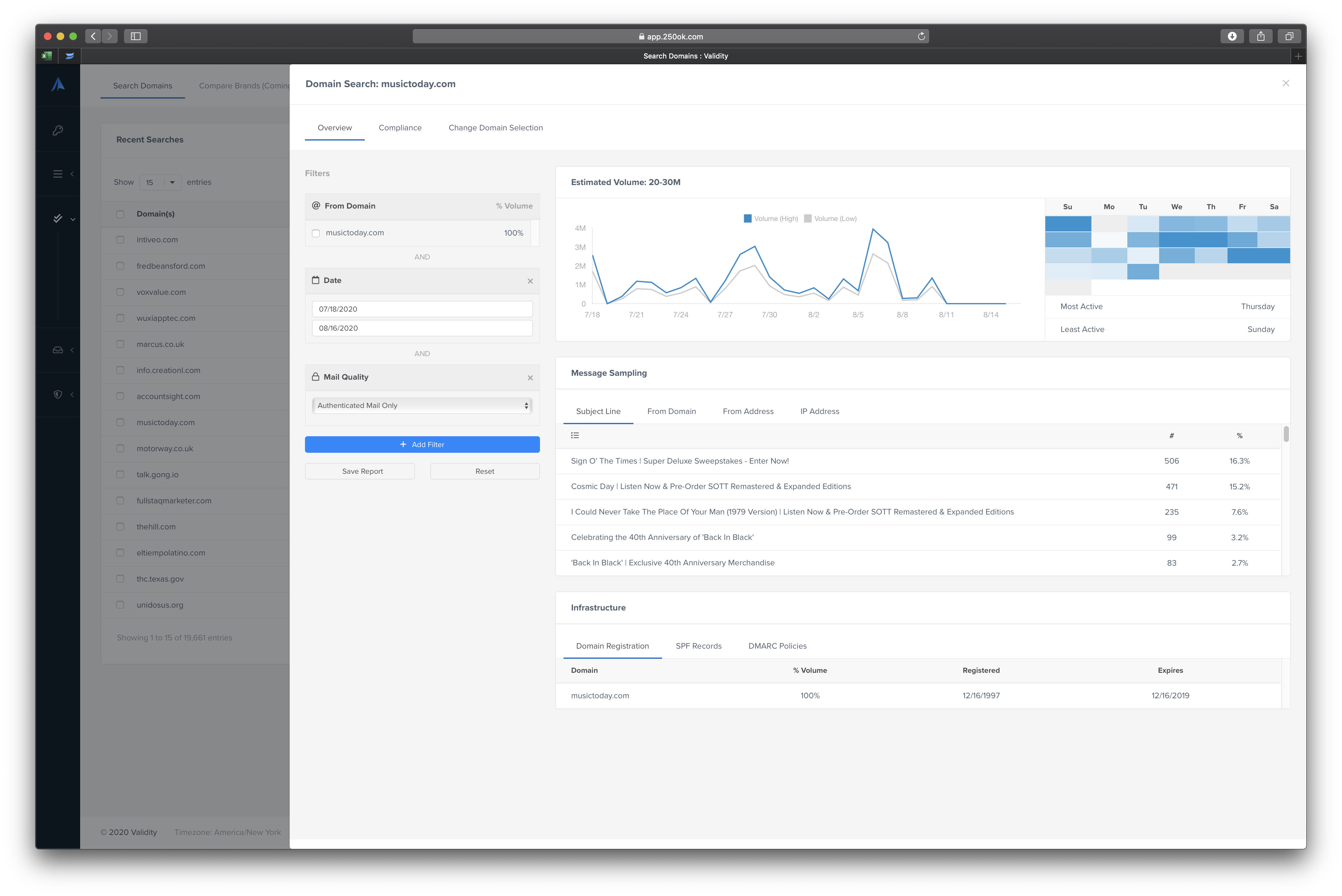 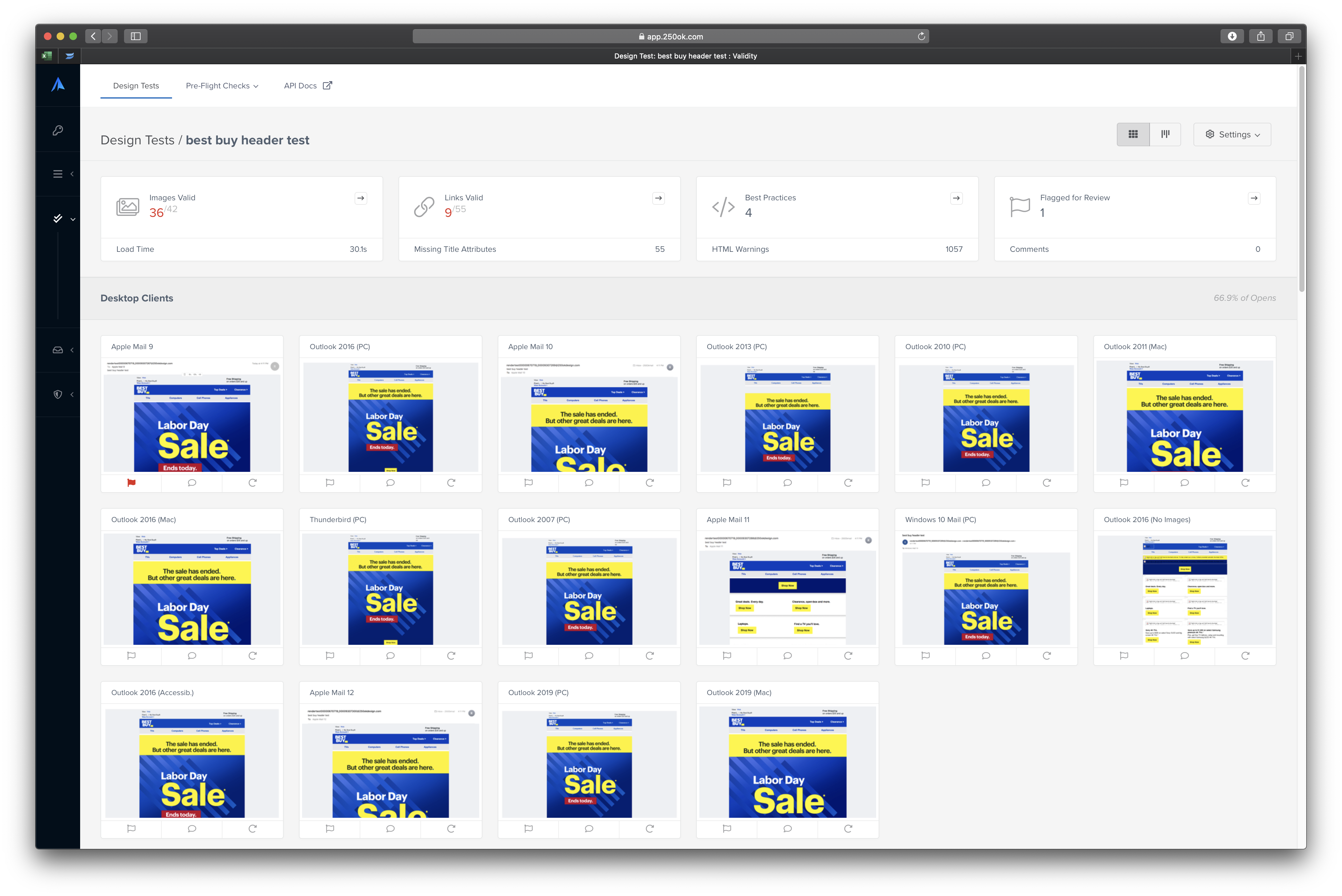    |