Adobe acquired Omniture in 2009 and re-branded the platform as SiteCatalyst. It is now part of Adobe Marketing Cloud along with other products such as social marketing, test and targeting, and tag management.
SiteCatalyst is one of the leading vendors in the web analytics category and is particularly strong in combining web analytics with other digital marketing capabilities like audience management and data management.
Adobe Analytics also includes predictive marketing capabilities that help…
N/A
Mixpanel
Score 8.3 out of 10
N/A
Mixpanel helps companies measure what matters, make decisions fast, and build better products through data. With self-serve product analytics solution, teams can analyze how and why people engage, convert, and retain—in real-time, across devices—to improve their user experience. Mixpanel serves over 26,000 companies from different industries around the world, including Expedia, Uber, Ancestry, DocuSign, and Lemonade. Headquartered in San Francisco, Mixpanel has offices in New York,…
$0
per month
Qlik Cloud Analytics (Qlik Sense)
Score 8.1 out of 10
N/A
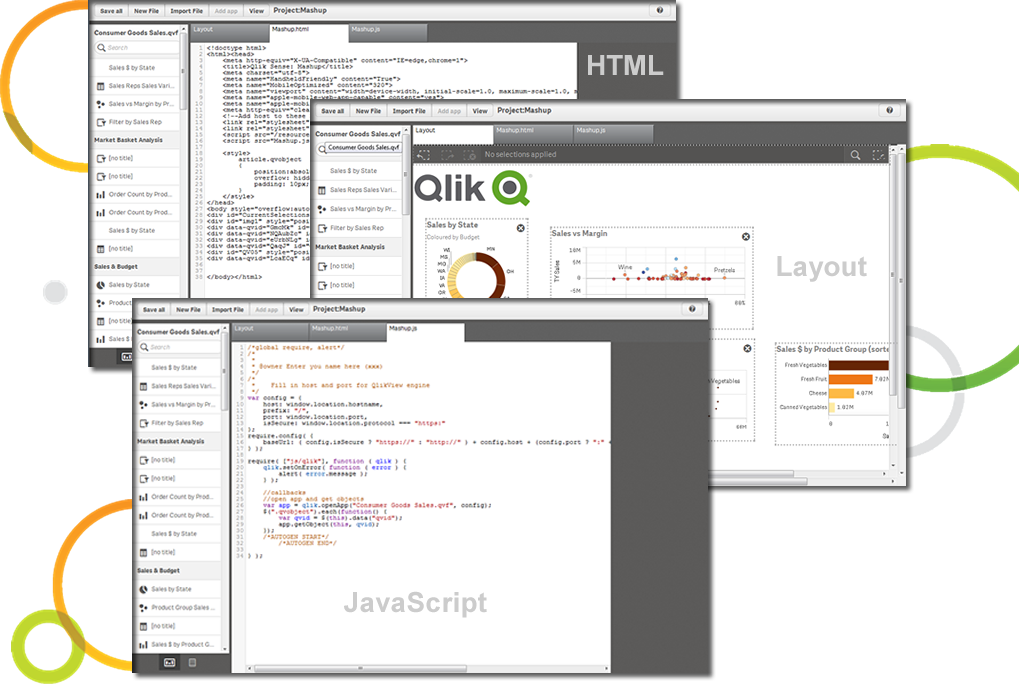
Qlik Sense® is a self-service BI platform for data discovery and visualization. It supports a full range of analytics use cases—data governance, pixel-perfect reporting, and collaboration. Its Associative Engine indexes and connects relationships between data points for creating actionable insights.
$200
per month
Pricing
Adobe Analytics
Mixpanel
Qlik Cloud Analytics (Qlik Sense)
Editions & Modules
No answers on this topic
Free
$0
per month
Growth
$17
per month
Enterprise
Contact sales
Starter
$200
per month
Standard
$825
per month
Premium
$2750
per month
Qlik Sense (On-Premise)
Contact Sales
Offerings
Pricing Offerings
Adobe Analytics
Mixpanel
Qlik Cloud Analytics (Qlik Sense)
Free Trial
No
No
No
Free/Freemium Version
No
Yes
No
Premium Consulting/Integration Services
Yes
No
Yes
Entry-level Setup Fee
Optional
No setup fee
No setup fee
Additional Details
—
Mixpanel uses MTU (Monthly Tracked User) pricing, which is designed to scale with your company. MTUs are roughly equivalent to the number of unique visitors on your product and each user is counted once per month, even if they use multiple devices. If Events based pricing makes more sense for your business, reach out to us and we can work with you!
Google Analytics (inc. 360): Target is less intuitive than Google on a number of fronts: layout, naming conventions, default reporting views, but offers more flexible reporting options without having to swap to tools like BigQuery. In a lot of instances, its faster than Google …
We evaluated and we currently use Mixpanel and we have Google Analytics on a couple of our properties. And honestly, once you get the hang of the Adobe Analytics workspace, the other products really don't stack up against it because the segmentation and the ability to create …
We decided to implement the Adobe Analytics service in our organization because compared to other alternatives, Adobe Analytics is a very reliable and accurate service. The recommendations we were given about this service allowed us to verify its high functionality, and I …
Adobe Analytics has a more modern and friendlier user interface and it's easier to use for me. Google analytics has better compatibility with other Google products
Honestly, because Adobe Analytics is so customizable, I found that it is very well-suited for almost any type of web digital experience tracking of behavioral analytics. It has a very robust mech architecture for any type of e-commerce platform. But it is extensible and is easily adaptable to other circumstances. For example, in our university situation, we've been able to use it for student portal experience tracking, how well they are interacting, interfacing with our internal sites, and how well they are working with our task submission processes. But it does a great job of managing all aspects of the key journeys, especially from a marketing perspective. So while it might not be as out-of-the-box for some of those other alternative use cases outside of marketing, it's extensible and customizable enough that it's worked really well and met our needs.
As a worker in the sales area, I see closely how complex it can be to evaluate the commercial funnel and Mixpanel has been an indispensable guide to prioritize above all what customers expect to receive from our company, and thus be able to determine the main service we offer. Without a doubt, Mixpanel has special functions to be the one that guides the route and marks the objectives much more clearly.
Qlik Sense is a program whose purpose is to greatly improve all your operations and use of all data in an organic way. The mission will always be to increase the economic and commercial processes of the company in a short time. I recommended it for its high technology, which was Created for this area, the results are successful. We have noticed how it has increased relationships with our clients thanks to the credibility and security that we provide.
Within my role of advertising, I can come in, and I can see I'm paying for visitors, paying to drive people to the website. So I can see the differences in my different traffic sources, whether that's a Google search campaign or a Facebook social campaign. I can measure the quality of that traffic and see what they're doing, whether they're bouncing right away and leaving the website, or spending more or less time on the website. And whether they're taking the actions. My ad campaign is focused on filling out forms, and ultimately, that's it. Just measure and see if my campaigns are successful or not.
Mixpanel is a daily use application for everyone in my organization; it helps us have a better flow of information and interaction between work teams.
The user interface of this platform is simple and has a wide variety of functions and resources to help us work in the most organized way, have better team coordination, and keep efficiency high.
I love that it is so easy to program our calendar to our liking, so we can prioritize our activities and know what is pending, and the best thing is that I can update the calendar if necessary.
The chat function is great to improve the interaction between colleagues and share work schedules and any information with third parties.
I think the biggest room for improvement is performance. When I go in certain times of the day or for certain clients, it's slow and it won't load the reports that I need. And as a result, needing to answer a question where you normally have the expectation of it being a near real-time answer that you get when you have to wait for reports to load or you have to wait because the reports can't load at all. It's a really unfortunate thing. It's a big problem actually. So I'd say that's one area of improvement. It's just improving the performance of the reports so that they'll load consistently all the time quickly and effectively.
Mixpanel requires an explicit setting of events from your app. This means you need to be very thoughtful in the design of your events because missing one means you aren't collecting any data from it. Inserting it into the process later on then brings challenges in tracking when certain events came online.
A tool like Mixpanel comes packed with features that sometimes are harder to discover. It's very easy to get sucked into one part of its toolset and not be aware of other tools which may be very useful.
We need it to discover threats long before they become a loophole in the security ecosystem. Also, it is very much compliant with customer standards and expectations. It provides marketing intelligence through in-depth analysis. Overall, a very good product to gain customer attention and thereby improve market
It's not an all encompassing solution like Google Analytics tries to be, but MixPanel offers much easier to use and understandable data insights. That's valuable when juggling many responsibilities as startup life demands, so a renewal would be easily justified.
Qlik Sense is a constantly improving it's software and working with its' users to make it better. They are great at keeping their users informed of progress and care about delivering a quality product
It is necessary to have a minimum knowledge on tracking tools so you can use the tool on full performance. It is not an introduction tool, so please bear that in mind. Once you got the knowledge you just need a small training on how to create your custom reports, where to find the components you need and how to add them to your dashboard. Then you share your report or create a rule for periodic sharing and it's done. Finally, if you have a lot of data stored the tool might be a little slower but that's ok.
Relativity easy to use. Once you get the hang of it, very easy to create dashboards for different use cases. I split my dashboards between customers or use cases
Qlik Sense has a better and easy to learn user interface compared with other analytics tool which always help us to create regular and adhoc reports within the stipulated time frame and can be easily refreshed at a scheduled time and sent to multiple stakeholders for timely update regarding the Key metrics indicator.
I do not ever recall a time when Adobe Analytics was unavailable to me to use in the 8 or so years I have been an end user of the product. My most-used day-to-day analytics tool Parse.ly however, generally has a multiple hours planned offline maintenance every two to four weeks, and sometimes has issues collecting realtime analytics that last anywhere between 15 minutes to an hour, and happen anywhere between 1 to 5 times a month.
Again, no issues here. Performance within the day updates hourly. other reports are updated overnight and available to access by the next morning. Pages load quickly, the site navigates easily and the UX is quite straightforward to get command over. On this front, I give Adobe kudos for building a great experience to work within
Support for Adobe Analytics is ok, it used to be worse years ago. Now, the technology team at Adobe is way more knowledgeable on the product itself as well as the implementation. They also study your custom implementation and have good knowledge of where your company stands. Dedicated support is something worth considering.
We have only ever had to use their support once, when we were setting up the account, but their responses were prompt and the solutions were well documented. The people who solved our issues were helpful, even to non-tech people.
Qlik is great for companies with lots of business domains and departments because it scales well, especially if data that is reported is saved in SQL and similar structures. Its ease of use and good UI enables business units to create and manage their own reports. That removes a great burden of creating and managing/modifying these pages from the IT team. Overall, it's a win-win for both IT and business units.
It was a one-day training several years ago that cost the organization several thousand dollars. There were only about 10 people in the training class. Adobe tried to cram so much information into that one-day class that none of our users felt like they really learned anything helpful from the experience. Follow-up training is too expensive
The online training for Adobe SiteCatalyst consists of short product videos. These are ok, but only go so far. For a while Adobe charged a fee for this, but recently made these available for free. There are many great blog posts that help users learn how to apply the product as well.
Mixpanel has a great resource about their product, with videos on how to use it and real world examples from other companies on how they integrate Mixpanel into their business processes.
One of the benefits and obstacles to successfully using Adobe Analytics is a great / more accurate implementation, make sure your analytics group is intimate with the details of the implementation and that the requirements are driven by the business.
Again, somewhat annoying to be charged based on data points when many other analytics providers have one flat fee. Implementation was good, but I might have tracked a few more detailed points if I had the option.
We evaluated and we currently use Mixpanel and we have Google Analytics on a couple of our properties. And honestly, once you get the hang of the Adobe Analytics workspace, the other products really don't stack up against it because the segmentation and the ability to create reports pretty rapidly are invaluable.
The customization of the platform opens up plenty of other options depending on the use cases. The API layer is incredibly rich and makes integration of Qlik based visualization into web pages a simple and effective pattern. It's been very easy to use with a great community made up of professionals. Qlik Sense has introduces artificial Intelligence into my data visualization and reporting activity.
Adobe Analytics is relatively affordable compared to other tools, given it provides a range of flexible variables to use that I have not found in any other tools so far. It is worth investing in if your company is medium or large-sized and brings a steady flow of revenue. For small companies, it can be overpriced.
My organization uses Adobe Analytics across a multitude of brand portfolios. Each brand has multiple websites, mobile apps and some even have connected TV apps/channels on Roku and similar devices. Adobe can handle the multitude of properties that have simple, small(ish) websites and the larger brand properties that include web, mobile and connected TVs/OTT devices.
Each of those larger brands has multiple categories and channels to keep track of. We can see the data by channel/device or aggregate all the data together. This gives our executive teams the full picture and the departmental teams the view they need to see their own performance.
The professional services team is one of the best teams for complex adobe analytics implementations, especially for clients having multiple website and mobile applications. However, the cost of professional services is a bit high which makes few clients opt out of it, but for large scale implementations they are very helpful
Adobe Analytics impacts nearly every aspect of a billion plus dollar revenue eCommerce business. From measuring the impact of new build features to marketing campaigns.
We are saving substantial money and resource effort by consolidating all of our properties to Adobe Analytics from alternative solutions, at which point we will finally be able to report on Total Digital, rather than disparate reports.
We support experimentation on every platform and the performance is only known through Adobe Analytics tagging.
We've been able to increase the funnel conversions of one of our new product funnels from a 1% conversion rate to a 5% conversion rate.
We've been able to increase the CTR on another of our main product pages from ~3% to ~10% (so far)
We've been able to segment out how users from different traffic sources behave, allowing us to eliminate thousands of dollars of wasteful spending on advertising campaigns that weren't working.