DemandScience is a data-driven marketing platform that offers lead generation and data services that accelerate the technology sales process by identifying intent among technology buyers. Founded in 2009, DemandScience helps marketers meet the ever-changing demands of B2B sales.
N/A
Optimizely Content Marketing Platform
Score 7.0 out of 10
N/A
Optimizely Content Marketing Platform brings teams together in a single, AI-powered workspace to share plans, collaborate on assets and execute campaigns.
N/A
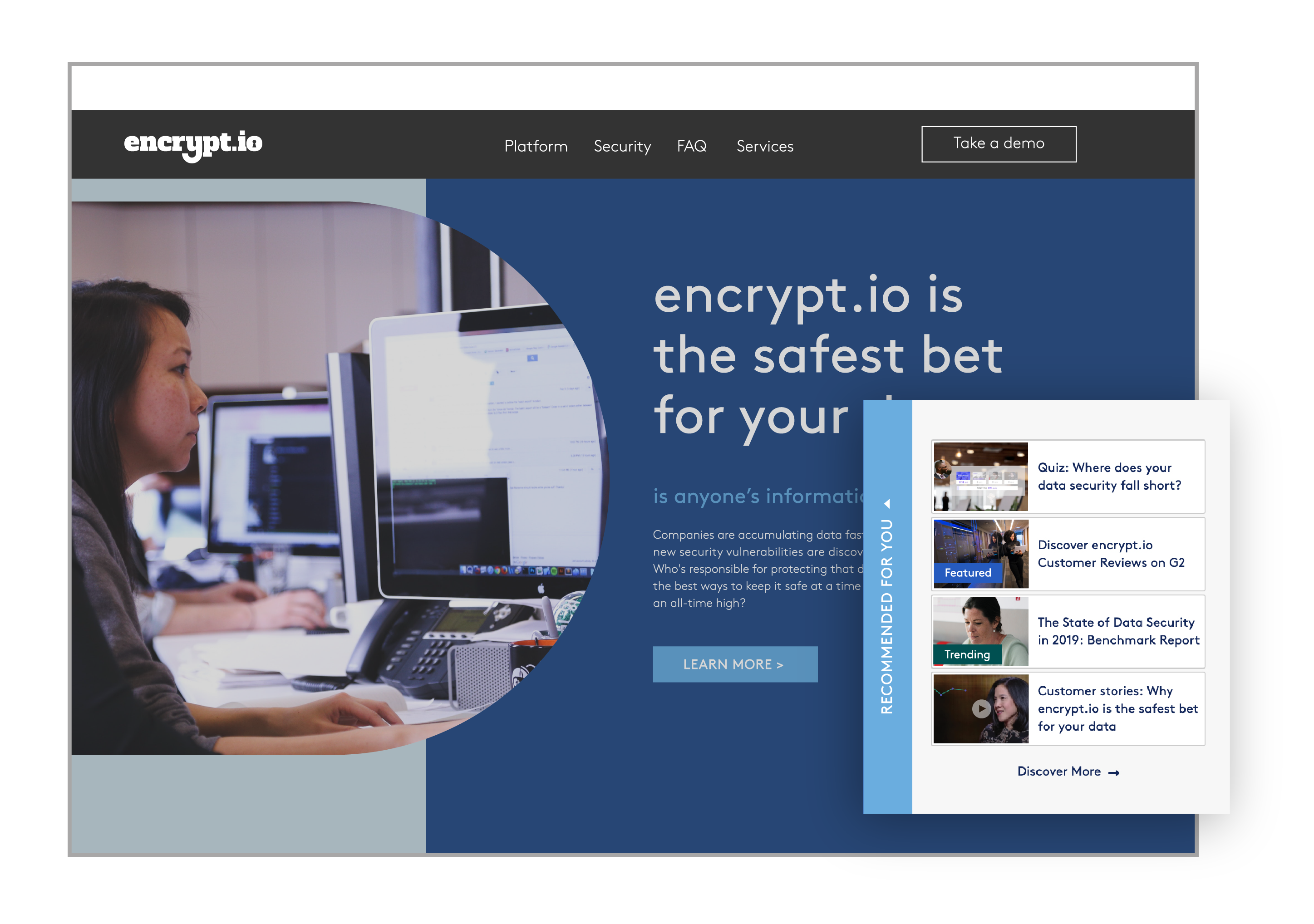
PathFactory
Score 8.4 out of 10
N/A
PathFactory enables you to unlock B2B revenue with AI-powered content intelligence which allows you to generate personalized, engaging, and conversion-focused experiences across the entire B2B buyer journey. Per the vendor, you can accelerate deal velocity and grow your pipeline by recommending the next-best assets for individual buyers and target accounts alike.
Demand Science did deliver the quantity of leads without issue. The data for a few was not accurate (bounced when following up). But they agreed to make good by providing substitute leads to meet the quota. Towards the end of my project, they lost a few folks, and so the end of my campaign got a little rough as they were taking over some assignments midway. But we ultimately completed the SOW. I will say that the leads did not perform well in our email cadence - none converted. However, this was a test of the concept for us. Content syndication had a lower cost per qualified lead than some other tactics, so we tested it. Your results may vary, based on your follow-up and your market.
A 7 only because I think there's question marks around customization. However, I've seen very similar tools in the past where stakeholders have been skeptical, but as you get to know it and use it, you'll find actually you realize those benefits. I just think Optimizely could help its stakeholders and clients see those benefits early on versus later on. However, that's not to say it's not possible, so a 7 at this stage, but I think it's got potential in future. If you are a marketing firm who wants a centralized system for managing workflows and campaigns, it's great. It does that. However, there are better competitors fill in some of the gaps better than optimized leaders does. It could do better. I think for me, visually when I see, when I create a workflow or a campaign, I can see all the tasks associated with it and I've seen the way that our parent company uses it. It's just a list of all the tasks you see in one view. I think visually it needs improving. However, the purpose that it serves fundamentally, it's got potential, if that makes sense. It's going in the right direction, but I think competitors are doing some of it better than Optimizely is. I think they, like I was saying earlier, if they really want to realize the benefits of the product visually there needs to be some improvement. And then the controls element that I mentioned earlier as well, hopefully that answers both of your questions.
It's a great tool if you want to create experiences on web and share content with your audience - especially if you want to create bingeable content. For a microsite, I would like to see more modules that build up a page, and great examples for inspiration
The initial pitch and contact from Mason used "show me you know me" well, which we felt was a good sign of company culture and approach to database marketing.
Delivery of leads was ahead of schedule.
They set expectations, and then delivered what they said they would.
The leads matched our criteria as agreed.
Regular check ins and catch ups, and patience when thing were taking a bit of time to get sorted here.
The CMP really is useful for us not only to manage the processes behind how we create content that we serve in different platforms like websites, landing pages, emails, social media, but it also help us as a team that is scattered around the globe to be able to be connected all the time to be able to see what we're working on, to be able to share assets as well. We are not reinventing the wheel to be able to show to other people within the organization what is happening at any given point. We use it not only for assets now, but we use it also for things like planning our webinars, planning our face-to-face events, so it truly is the heart of our marketing organization within the business.
We would like to see more proactive communication on what's working and what's not without requiring a meeting - regular reporting cadence to assess asset quality
A dashboard view might be nice as well, again, so we can look at an asset and see how it's performing (or if it isn't) without having to wait on a rep to pull a report or schedule a walkthrough
One thing that could be improved is some of the promotions that happen in platform. For example, there's a Opal AI little bubble at the bottom right of the corner, which you can't move across the screen. So if you're trying to change the status of a step or you're trying to update a description within a step, that can be a bit challenging and as it seems to be quite an easy fix.
I would love to see a capability in terms of having visual representation that we can share out with stakeholders that don't necessarily need access to CMP. But for that level of detail, we don't want it to go too granular, but we do want to be able to share in a quick and visual manner some of the activities that are happening so we can keep everybody in the loop without having to create different variations via different tools.
Microsite was very hard to build ourselves. Changing the site can be really confusing and is not always intuitive. We have trouble knowing how to update items to get it to work the way we want it to.
Better instructions on how to customize tracks and use the different tools.
Users that come in without UTM parameters should still be included in all data reporting.
Our executives decided to not renew because we were not seeing the ROI they were looking for. However, our executives did not make the best decisions on the data Demand Science provided.
We have seen a lot of value from our team's use of Path Factory. We also like working with this vendor as they actually take our feedback and implement it on their roadmap. A great vendor with a great product
The leads were pretty straight forward. However, their appointment setting did not integrate well into our system and many of the meetings didn't occur. I had to chase a lot of prospects and many times Demand Science didn't provide direct dials.
The editorial calendar is the one I check multiple times every day. It gives me a clear picture of what's in progress, what's due, and where things can be moving faster. And, there's no need to open a separate doc or ask anyone for a status update. Also, the workflows are another super useful thing. Being able to assign specific reviewers to specific steps and know that nothing moves forward until they've acted has eliminated many repetitive processes.
Overall, I think the tool is fairly easy to use to get a basic content uploaded to create a track and even the more complicated features become easier once you become familiarised with the process
I think there was only one time where we had issues reaching our account manager, otherwise PathFactory was always willing to hop on the phone to talk through strategy, to work through issues, and help build custom solutions to fit our needs. Customer service is a big selling point of PathFactory.
Optimizely Content Marketing Platform's performance is generally good. Nothing that has impacted production. Page load speed doesn't typically lag longer than a few seconds. Reports take some time but not any longer than we're used to with other platforms. We have not experienced lag when integrating with other platforms
The analytics and reports feature is fairly new and have proved very popular with many areas of our business and is growing in popularity. The metrics that are attainable are very insightful and provides a clear picture on the performance of the track.
Our rep is always available and quickly responds to any question we have. I haven't worked with other partners who are as proactive and excited to help us as our DemandScience rep is. He reaches out with new ideas and suggestions frequently. They are happy to make any changes needed to the campaigns and make those changes quickly and efficiently. They work well with our execution agency, but are also happy to meet with us directly to provide insights and support.
We meet weekly with Jennifer and I can't say enough about her. When issues have happened or we need help, she jumps on it quickly. If she doesn't know the answer, she pulls in Reggie or another on her team that can help. She goes above and beyond and has been very supportive, even when we had a lot of hard questions to answer from higher-ups. All this is on top of just being an awesome person.
I was able to browse around the tool quite easily once some basic training was given. I learnt much from using those method and only needed further help when wanting to learn about Reports, External codes and adding forms.
Training was clear and concise. It was intuitive and helped me understand how to navigate the platform. Options to dive in on each action or skip to learn about areas of regular use. Resource links available to when I had additional questions or needed more training in a specific area. Overall, the training allowed me to use the platform without interruption
The customer service, from technical through to customer success, is one of the biggest reasons I'd recommend PathFactory. This is true of their training. It can be as bespoke as you like, at least in my experience, and the team is always willing (where possible) to incorporate your suggestions.
The PathFactory team was very helpful when implementing the product. They gave us a lot of recommendations on best moving forward. As a note to new users, when implementing I would make sure that you create with your team a system to make sure that the platform is scalable. My team was able to do this through creating a foldering structure, naming conventions for tracks and assets, and ensuring tagging is used on all content uploads. I would also make sure when implementing that you have an understanding of how your team will track success and that your brand team is involved to make sure that there is consistency in the look and feel of the tracks
I've not used another content syndication company, and I probably won't after the lack of results we've had. I have used direct email organizations, and they are stronger but also more expensive, so you have to weigh your priorities. I could see if you were selling a specific product or software and how this could be beneficial, but I'd steer away from it for services.
We haven't yet explored the CMS or other products within the suite but we see the potential to move all of our tools to Optimizely One. I see this really helping us gain clarity in the end to end content lifecycle, and help us use our resources and bandwidth more strategically
I used Uberflip in a past company. I think they are pretty comparable. From what I remember, Uberflip was more intuitive to use, but I think PathFactory might have more capabilities. Although this was years ago, I am not aware of Uberflip's functionality now. I have had good experiences with both.
Optimizely is generally a reliable platform for A/B testing and digital experience management. It's helpful for it's stability, flexibility, and comprehensive features, which is helpful when managing an enterprise website
Pathfactory is growing in popularity amongst individuals from different parts of the organisation and it would be difficult to forecast how scalable this can become
The program has allowed us to meet our content goals more easily (e.g.: we publish X articles per month and track where each article is at).
It's helped us improve the accuracy of our information. We have SEO, content strategists, and legal teams involved in the workflow now because it's easy to manage.
We saw ROI within the first 9 months of using PathFactory.
Our onboarding team saw quicker adoption of our product while using PathFactory to engage them during the onboarding process.
We've been able to more accurately understand our content needs and what works best when prospecting for specific segments. (eg. SMB, mid-market, and enterprise)