Chose Gainsight PX
Unfortunately, I haven't used any other product like Gainsight PX so will move to the next question.

| Product | Rating | Most Used By | Product Summary | Starting Price |
|---|---|---|---|---|
 Gainsight PX | N/A | For SaaS products, Gainsight's product experience software enables companies to track every step of their user's journey and fully understand how they're interacting with a product over time. | $0 100 or less MAUs (Monthly Active Users) | |
 Heap | Mid-Size Companies (51-1,000 employees) | Heap is a web analytics platform captures every user interaction on web iOS with no extra code. The tool allows you to track events and set up funnels to understand user flow and dropoff. It also provides visualization tools to track trends over time. | $0 Up to 10k sessions/month | |
 Spekit | N/A | Spekit is a just-in-time enablement engine that embeds answers, coaching, and sales content directly in the tools revenue teams use. From drafting prospect emails to updating deal stages in Salesforce or reviewing Gong calls, Spekit’s AI Sidekick understands what sellers need in the moment and surfaces the precise message, content asset, or process guidance to keep momentum moving. Built for Sales Enablement & Product Marketing Teams Spekit supports various use… | N/A |
| Gainsight PX | Heap | Spekit | ||||||||||||||||||||||
|---|---|---|---|---|---|---|---|---|---|---|---|---|---|---|---|---|---|---|---|---|---|---|---|---|
| Editions & Modules |
|
| No answers on this topic | |||||||||||||||||||||
| Offerings |
| |||||||||||||||||||||||
| Entry-level Setup Fee | No setup fee | Optional | Optional | |||||||||||||||||||||
| Additional Details | — | Heap pricing is based on session volume. A session is a period of activity from a single user on your app or website. It can include many pageviews or events. | — | |||||||||||||||||||||
| More Pricing Information | ||||||||||||||||||||||||
| Gainsight PX | Heap | Spekit | |
|---|---|---|---|
| Considered Multiple Products |  Gainsight PX  Bob Osborn Director of Product Management Chose Gainsight PX We leaned towards Gainsight PX because of the tight integration with Gainsight. Implementations were somewhat similar but the ease of mapping for all features and modules was superior for PX.  David Jensen Operations Manager, Customer Success Chose Gainsight PX Churnzero is similar in its NPS and walk-through abilities as is user IQ but neither fits in the exact same category. Px is unique to anything I've used for the data extraction it offers. It's not a CS tool like those I mentioned but it is easily the best in terms of tracking …  Michael Wohlwend Senior Information Developer, User Assistance Chose Gainsight PX HelpHero is a very flexible and powerful walkthrough tool. We've used it alongside PX. We still use PX for most customer messages, CES surveys, and in-app badges. I also evaluated Pendo, WalkMe, and a few other DAPs.  Justin Miller Director of Customer Success Chose Gainsight PX We chose Gainsight PX over Pendo because of the connector with Gainsight CS for the Customer Success Team.  Helene Tapper Customer Success Manager Chose Gainsight PX I have not used a different product as hands-on as Gainsight PC.  Igor Kranjčec Product Marketing Manager for Growth Chose Gainsight PX The main reason is that Gainsight PX offers a perfect combo - analytics and customer engagement. That allows us to make the engagement contextual, based on real-time analytics results.  Julie Pinto Support Manager Chose Gainsight PX WalkMe: while the in-app engagements were powerful, there was no email capability, and the analytics were an afterthought (rather than a core part of the solution). WhatFix: the concept was great; the in-app engagements could be made into documentation and videos. However, we … |  Heap  rishabh mishra Senior Project Manager Chose Heap Google Analytics stacks up for high level traffic and marketing data but not ideal for enterprises looking user level product interactions in detail. On the other hand Heap stood out for its automatic data capturing, faster onboarding, easy to use dashboards, Highly integrable …  Anmol Dubey Full-stack Developer Chose Heap For me, Heap is much simpler to utilize. I've previously used Google and Adobe Analytics but switched to Heap because it provide better features and is easy to integrate. Without a specialist's assistance, I am able to construct dashboards and am convinced that they are useable …  Zeel Pandya SAP ABAP Consultant Chose Heap all of them may have their own strong suits but Heap is backed by best in class ML and AI algorithms. not only that all this powerful and robust backends are well handles also from the frontend. no matter how good your software is, if it is somewhat hard to navigate or to get …  Sachidananda Choudhury System Architect Chose Heap Other applications help to achive the requirements using the current data, but Heap has two driven model one is dependent on past data which is also known as predictive framework and also one dependent upon fly which is adaptive framework. And integration is other tools is …  Or Tamir Senior Marketing Director Chose Heap Tableau offers more advanced features, but at a much higher cost across all dimensions: price, difficulty of implementation and integration, onboarding effort, prior knowledge required, etc. |  Spekit  Brandon Stokes Customer Operations Enablement Manager Chose Spekit Spekit may not be as robust as Confluence or organized as SharePoint, but its use of embedded tooltips (Speks) and browser extension put it in the S Tier for "just-in-time learning" platforms - particularly for customer-facing teams.  Alex Amerling Strategic Account Executive Chose Spekit Spekit is fine, I just feel like it doesn't have the world's best upfront organizational tool. I like Atlassian Confluence due to the ability to have pages and have an organized thought. That does take significantly more effort to keep it organized and up to date which everyone …  Amanda Mizell General Manager Chose Spekit I have not used anything else like it.  Greg Roland Sales Development Representative Chose Spekit None  Eric Dreshfield (He/Him) Founder & Event Co-Chair Chose Spekit I saw Spekit in action before looking at other products & decided I didn't need to see anything else. |
| Gainsight PX | Heap | Spekit | |
|---|---|---|---|
| Small Businesses |  Fullstory Score 9.1 out of 10 | Fullstory Score 9.1 out of 10 |  Lead411 Score 8.3 out of 10 |
| Medium-sized Companies |  Whatfix Score 9.9 out of 10 | Whatfix Score 9.9 out of 10 |  Paperflite Score 8.0 out of 10 |
| Enterprises | Whatfix Score 9.9 out of 10 | Whatfix Score 9.9 out of 10 | Paperflite Score 8.0 out of 10 |
| All Alternatives | View all alternatives | View all alternatives | View all alternatives |
| Gainsight PX | Heap | Spekit | |
|---|---|---|---|
| Likelihood to Recommend | 8.7 (0 ratings) | 8.5 (0 ratings) | 9.6 (0 ratings) |
| Likelihood to Renew | 8.2 (0 ratings) | 9.3 (0 ratings) | - (0 ratings) |
| Usability | 8.3 (0 ratings) | 9.0 (0 ratings) | 9.7 (0 ratings) |
| Availability | - (0 ratings) | 9.1 (0 ratings) | - (0 ratings) |
| Performance | - (0 ratings) | 8.4 (0 ratings) | - (0 ratings) |
| Support Rating | 7.3 (0 ratings) | 9.0 (0 ratings) | - (0 ratings) |
| Implementation Rating | - (0 ratings) | 9.0 (0 ratings) | - (0 ratings) |
| Configurability | - (0 ratings) | 9.1 (0 ratings) | - (0 ratings) |
| Ease of integration | 7.7 (0 ratings) | 9.1 (0 ratings) | - (0 ratings) |
| Product Scalability | - (0 ratings) | 7.3 (0 ratings) | - (0 ratings) |
| Vendor post-sale | - (0 ratings) | 8.2 (0 ratings) | - (0 ratings) |
| Vendor pre-sale | - (0 ratings) | 8.2 (0 ratings) | - (0 ratings) |
| Gainsight PX | Heap | Spekit | |
|---|---|---|---|
| Likelihood to Recommend |
|
|
Alex Amerling Strategic Account Executive |
| Pros |
Michael Wohlwend Senior Information Developer, User Assistance |
|
|
| Cons |
 Oded Wilder Head of Client Success |
|
Alex Amerling Strategic Account Executive |
| Likelihood to Renew |
Helene Tapper Customer Success Manager |
 Rebecca Lajoie Channel Specialist, SEO & CRO | No answers on this topic |
| Usability |
|
|
|
| Reliability and Availability | No answers on this topic |
Rebecca Lajoie Channel Specialist, SEO & CRO | No answers on this topic |
| Performance | No answers on this topic |
| No answers on this topic |
| Support Rating |
Bob Osborn Director of Product Management |
| No answers on this topic |
| Implementation Rating | No answers on this topic |
| No answers on this topic |
| Alternatives Considered |
|
|
Brandon Stokes Customer Operations Enablement Manager |
| Scalability | No answers on this topic |
Rebecca Lajoie Channel Specialist, SEO & CRO | No answers on this topic |
| Return on Investment |
|
 Alexandria Bruschi Senior Product Designer |
Eric Dreshfield (He/Him) Founder & Event Co-Chair |
| ScreenShots | Gainsight PX Screenshots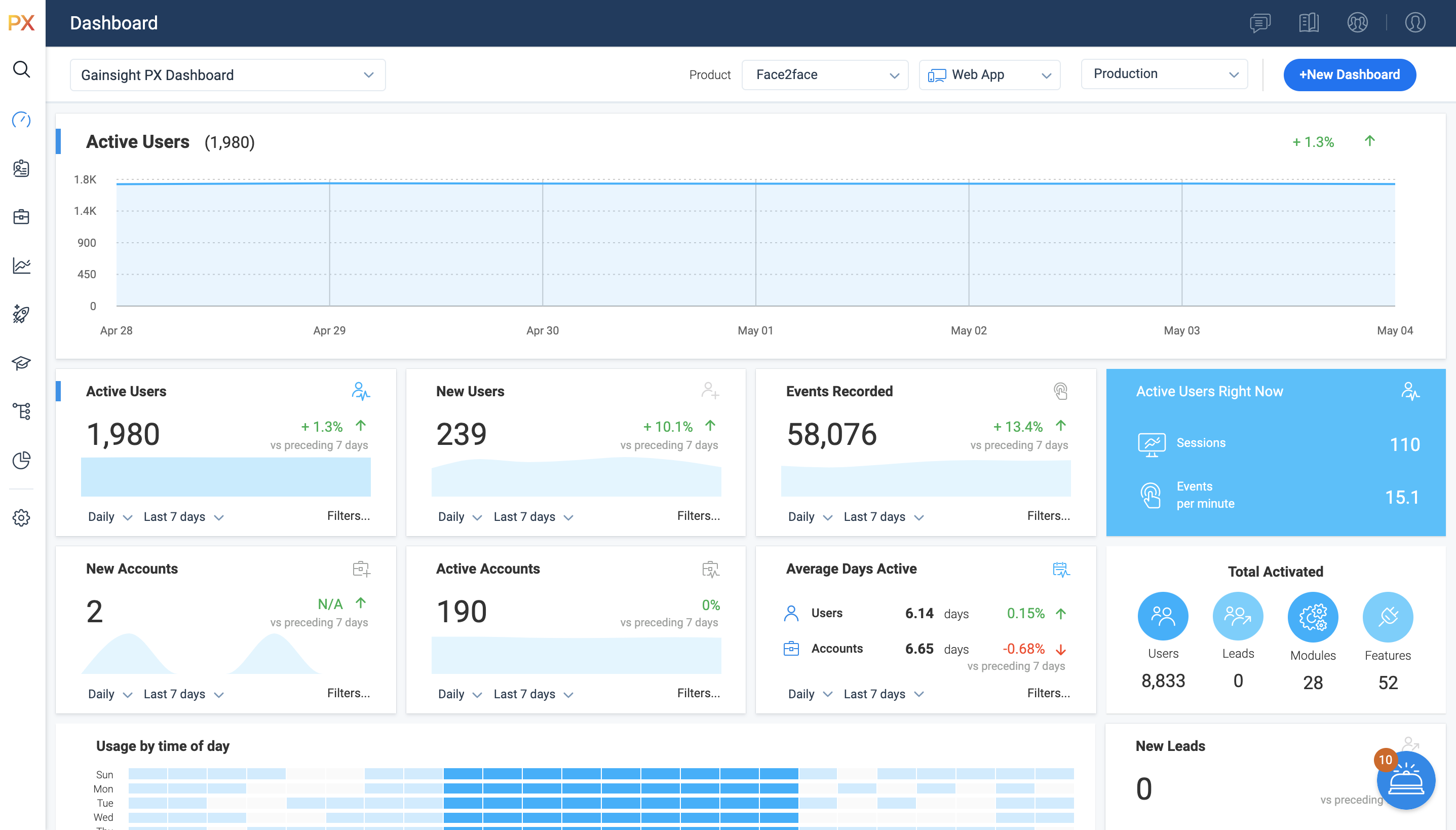      | Heap Screenshots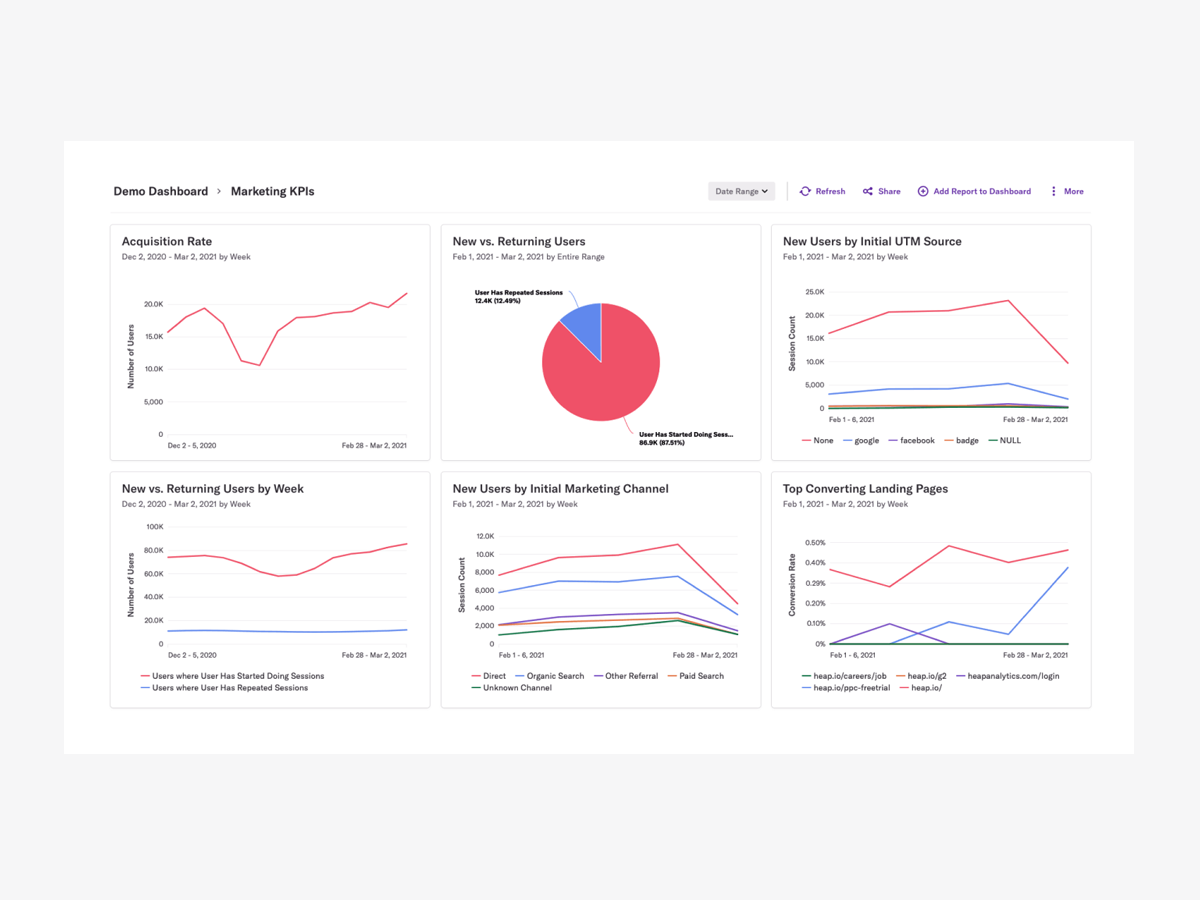   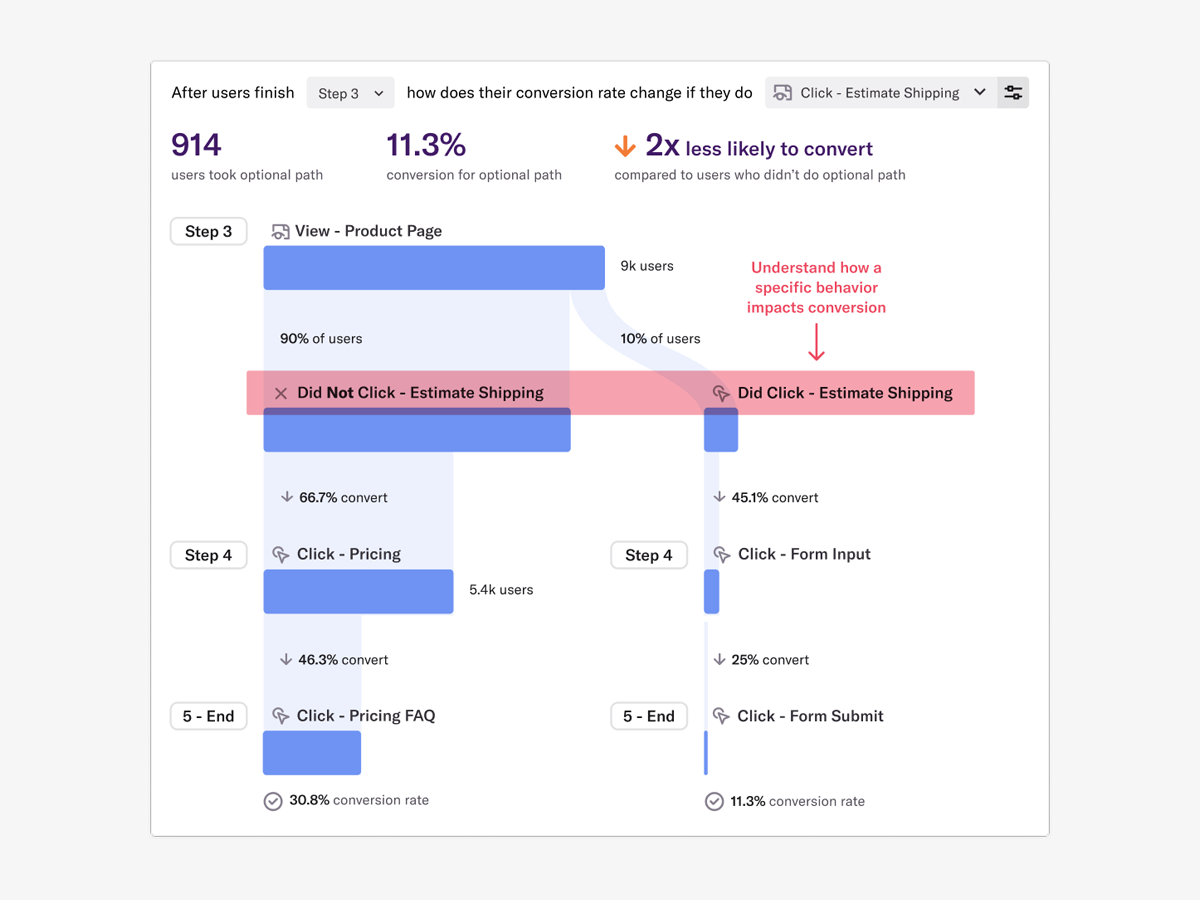 | Spekit Screenshots      |