Laserfiche has two main editions: Rio and Avante: Laserfiche Rio is designed to meet the needs of large organizations that have more than 100 users. It combines content management functionality with business process management (BPM), security and auditing, unlimited servers and a thin-client interface. Add-ons include records management functionality, public Web portals and production-level document capture and processing.
Laserfiche Avante is an ECM suite for small to medium organizations with…
$540
per year per user
Oracle Integration (OIC)
Score 7.9 out of 10
N/A
The Oracle Integration Cloud Service is an iPaaS providing prebuilt integration flows between applications, including other Oracle products. The Integration Cloud Service is scaled for enterprises, with prebuilt codeless adapters for on-premises and SaaS systems and low-code automation capabilities.
N/A
SAP Integration Suite
Score 8.5 out of 10
N/A
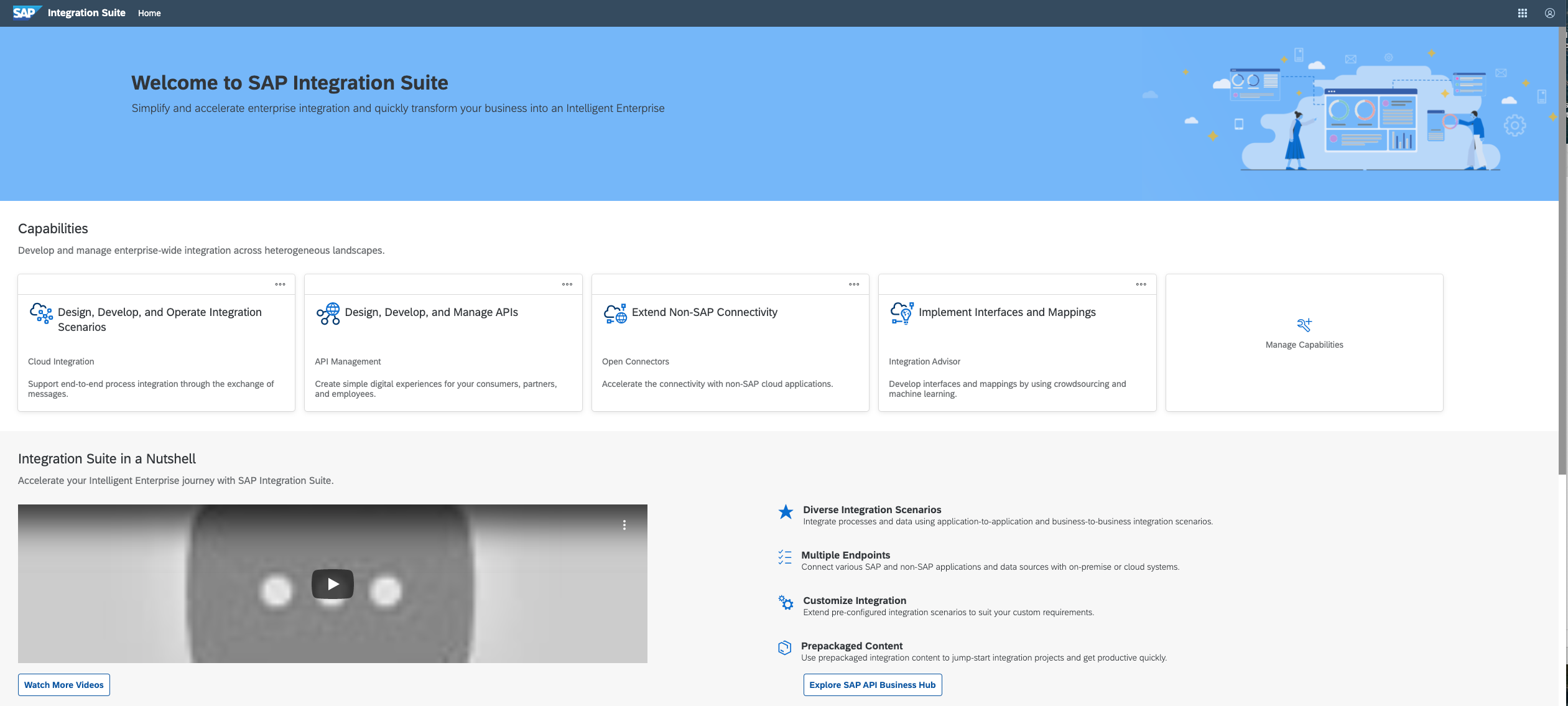
SAP Integration Suite is a modern, secure integration platform as a service (iPaaS) that connects applications, data, processes, and AI agents across SAP and non‑SAP environments.
$11,199
per year
Pricing
Laserfiche
Oracle Integration (OIC)
SAP Integration Suite
Editions & Modules
Starter
$540
per year per user
Starter
$600
per year per user
Professional
$710
per year per user (starts at 10 users)
Professional
$830
per year per user (starting at 5 users)
Business
$830
per year per user (starts at 25 users)
Business
$950
per year per user (starting at 25 users)
Enterprise
Custom
No answers on this topic
No answers on this topic
Offerings
Pricing Offerings
Laserfiche
Oracle Integration (OIC)
SAP Integration Suite
Free Trial
Yes
Yes
Yes
Free/Freemium Version
No
No
No
Premium Consulting/Integration Services
No
Yes
No
Entry-level Setup Fee
No setup fee
Optional
No setup fee
Additional Details
—
—
Access to free tier services does not expire while there is an active Pay-As-You-Go or CPEA account with SAP. Once a free tier service limit has been reached users have the option to update from a free to a paid service plan in the same account.
Laserfiche is well suited to the submission of simple routine reports to create a record repository. We use it for routine transport reports, audit reports, and anonymous citizen complaints. It creates a simple chronological record of routine events that can be reviewed and easily stored and recalled. Because the reports are in PDF format, it is not well suited to anything that needs to be imported into a common database or amended after submission.
Oracle Process Cloud is suited for medium-sized companies and up who want to create applications that can automate tasks without the need of recruiting more software developers. With a couple hours of training, any member of the organization's business team will be well-equipped with all of the knowledge that is needed to use Oracle Process Cloud effectively. If your IT team is large and able to take upon the task of making the given application, then something like Oracle BPM is a better solution.
Good at: 1. Integrations with in SAP applications, especially with event based triggers 2. Can be integrated very well with other BTP services to attain Batch processing and store credentials 3. Supports many authentication models Improvements: 1. No version history available compared to as it is available in S4HANA 2. Need a lot of improvement in git hub connections
New enhanced activities that are targeted to reduce the integration pain. For example, file stage activity reduces the pain of chunking the input file while sending and mapping the data to the target application. Stage activity takes care of it automatically for the customer. Similarly, recommendation on the mapper is a huge plus for people looking for common integration.
There are around 50 adapters available including dedicated out of the box application adapters and generic technologies adapters on OICS. The best part of these application adapters is that they are designed considering LOB users. Most of the time integration implementor does not require, application knowledge to perform the integration. OICS has some of Oracle Cloud applications adapters which make integration much easier may not be available in other integration platforms.
Inbuilt diagnostic dashboard and error hospital makes this product lucrative. OICS also comes with integrated Process Cloud and Visual Builder at the same cost. the customer can have seamless integration with Apiary and SSI on demand.
While Laserfiche has some powerful development tools, it is difficult to manage configurations while promoting code across environments. For example, SQL connections and other environment specific resources have to be manually configured in each environment.
Laserfiche forms are a newer addition to the product family and could use some product maturity. While easy to use for simple forms, once your forms become more complex, you need to accomplish tasks by heavy JavaScript coding.
Currently, it is not retaining the logs for more than 3 days, which it needs to address.
We also need some functionality inside the interface to re-push the same transaction again so that it will be helpful while testing and fixing the issue.
Also, some log errors are not giving the correct details. Oracle needs to rectify those.
Provide more pre-built integrations to use within SuccessFactors or other modules instead of everything having to be custom built
Support is unable to provide advice on custom builds so you often have to engage a 3rd party partner
Works best when you have the functional and technical teams working together. Otherwise, the system is too technical for a functional user to create integration and a technical user not always understand the functional perspective
We plan on renewing Laserfiche for the coming year but also have been considering a scanning and document management solution that can be purchased from our new accounting system company, we are implementing the accounting system this year. It will be a couple years before we make a decision to stay with Laserfiche or change.
It is in place, our system integrators are familiar with it, and it fits into the ecosystem. A better user interface, flow build and debugging experience would see it grow, many technical staff do not enjoy using it for this reason, however it is quite capable and powerful behind this one shortcoming.
It has an intuitive design that feels very natural to any user that has ever used Outlook or Windows Explorer. There are multiple ways to perform every action in order to help users with various software experiences find the shortcuts and actions they seek quickly and effectively.
The user interface is messy and not intuitive. It has a steep learning curve, and flows developed around are easy to make a mess with layout and can be difficult to follow. The debugging is also quite difficult, it takes some time to figure out how to follow the flow and examine data. Error handling is also difficult and not intuitive, it is better to let some errors leak and monitor through ALM.
I am very satisfied with Laserfiche. I have found that certain larger jobs may are slow. This may also be related to our infrastructure environment. We have been able to tune Laserfiche to increase performance on larger jobs.
Performance, of course, is largely dependent on the underlying environment. Laserfiche does its part with multi-threading, taking advantage of multi-core servers on scanning, workflows, and bots. A SQL-Server back-end is suitable for small to medium-sized company, but may not scale to large, where Oracle would be the better choice. Workflows can be poorly written and perform recursive work slowing down the system. It's better to run batch type workflows at night when possible.
I have never had to wait for help from Laserfiche. If I cannot find the answer online, I can easily send an email to a customer support representative. I have always been helped the same day and my questions have always been resolved. The Empower conference is always a great learning opportunity and the online resources and webinars are top-notch.
The support for SAP Integration Suite is satisfactory. We leverage SAP support through our manage services partner. So far, we have not had many major issues. One concern, to make our rating a ten, would be turnaround time on high priority incidents. SAP Integration Suite drives our key business functions forward. Without a reasonable service level agreement on turnaround, we sometimes find us running into issues running pay, etc.
Easily accessible 24/7 so am able to complete courseware whenever time allows: Commute to work; waiting for friends or family; at night while relaxing [with a delicious glass of wine!]; whenever and wherever time and circumstances permit. Courseware is well written and presented in an easy to follow and understand format.
The core infrastructure of Laserfiche, and the end user experience, is vastly superior. OnBase has a TERRIBLE UI and administration console by comparison. The core architecture of OnBase is also more scattered, while all Laserfiche processes go through a single service. Overall, the Laserfiche product is easier and more intuitive to install, maintain, and use.
The nearest thing I have used to OIC is UiPath, as it is often used as a tool to integrate software together. However, it is much more suited to legacy software which have little to no API endpoints. If the infrastructure already exists I understand why people use RPA for integration, however for when API's are easily accessible and you're using Oracle tools, OIC is better.
Before deploying SAP Integration Suite, we assessed Oracle Financial Services Analytics and IBM Risk Analytics. While Oracle had proved its mettle in the exceptional database support and IBM in presenting risk model tools, SAP Integration Suite overwhelmed others by being effortlessly integrated with our existing banking framework.
Laserfiche has increased the efficiency of our sales reps by giving making all of the historical sales deal information very simple and fast to retrieve.
Laserfiche has increased our efficiency with our AP department and gave department heads the ability to approve invoices where ever they are.
I would say the biggest ROI came with the transparency of the order process for new deals. Before there would be numerous phone calls made daily to find out where an order was within the process, and now you can simply look at all deals at any time.
The modern and advanced analytical abilities in Oracle Process Cloud are also a missing element that should be catered to.
This tool is used greatly for IT departments at a lower level with some very basic and limited access for general employees only.
Oracle Process Cloud has many advantages like it offers some very great and scalable solutions.
I find Oracle Process Cloud pretty straightforward and easy as compared to the different options available. Lastly, I think that as it is just one platform, managing the Oracle Process Cloud is pretty easy too.