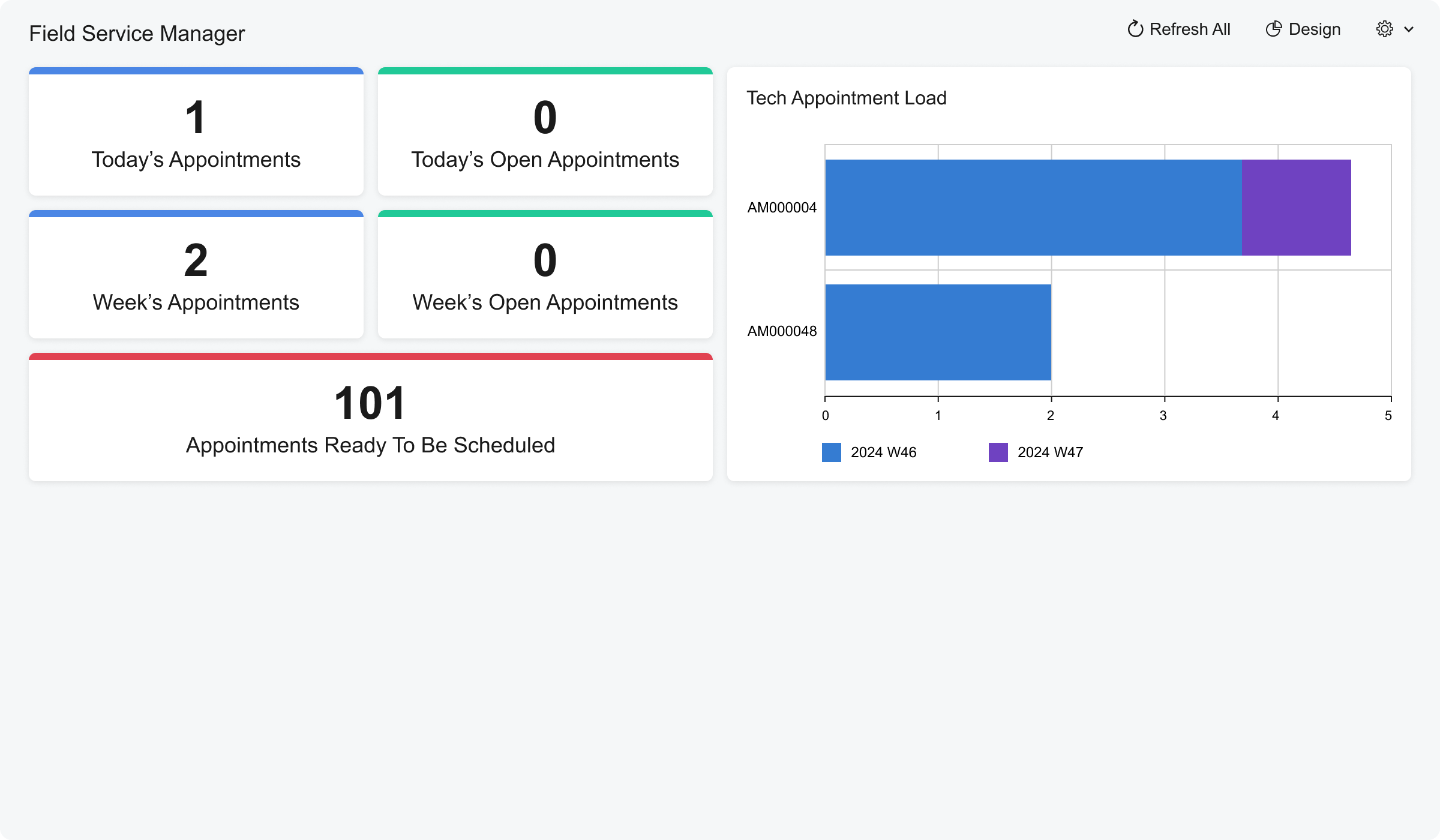
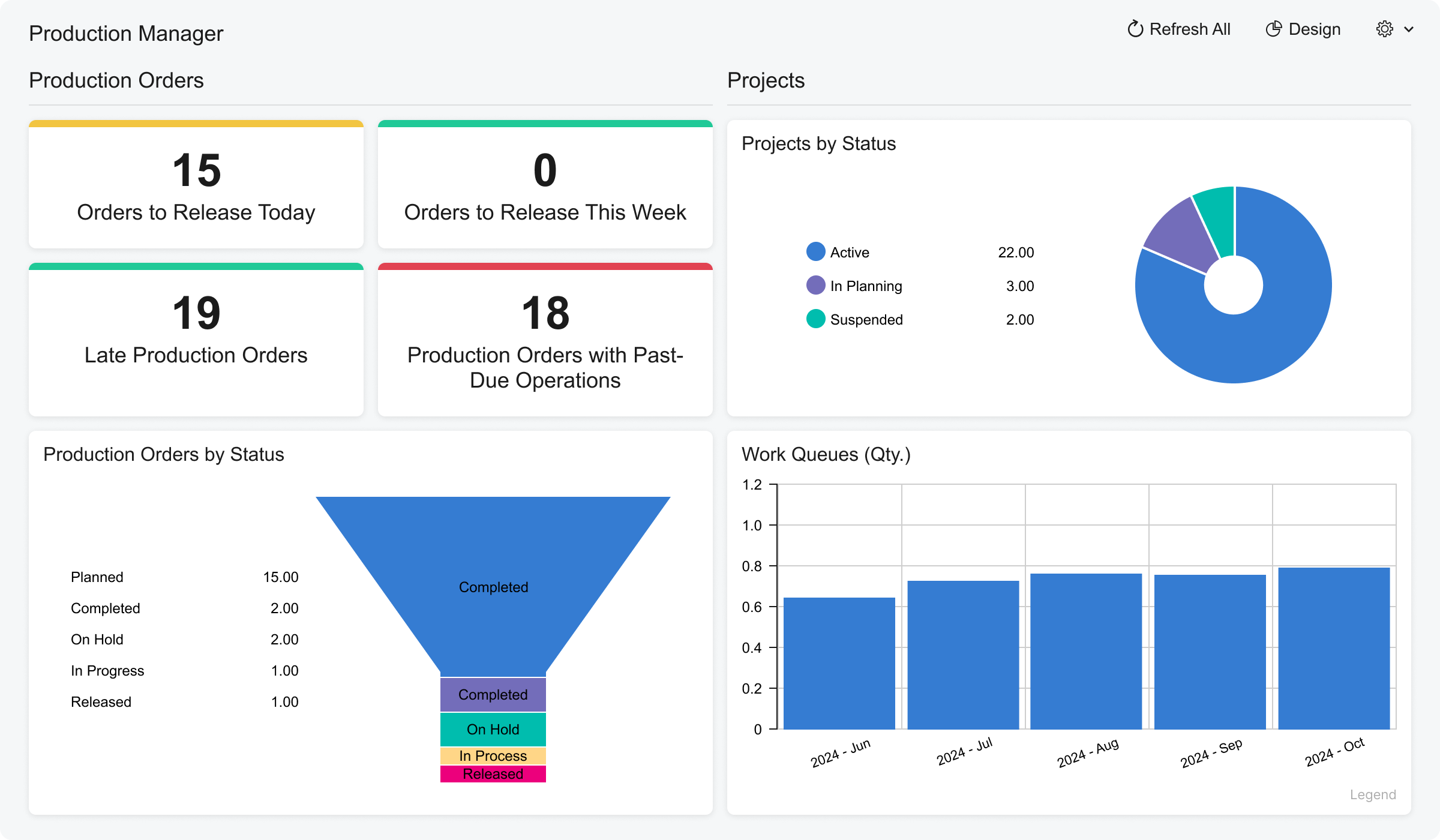
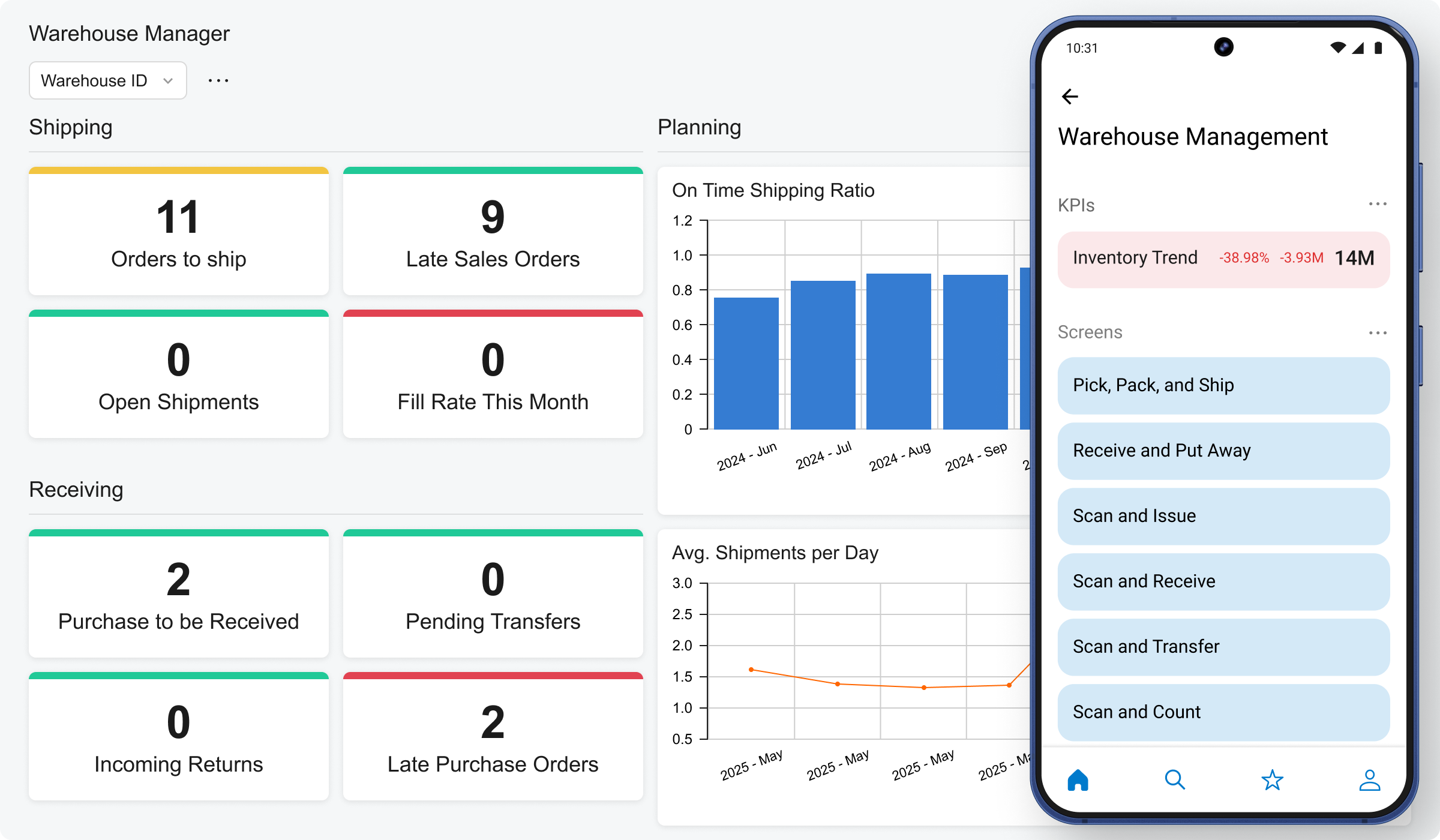
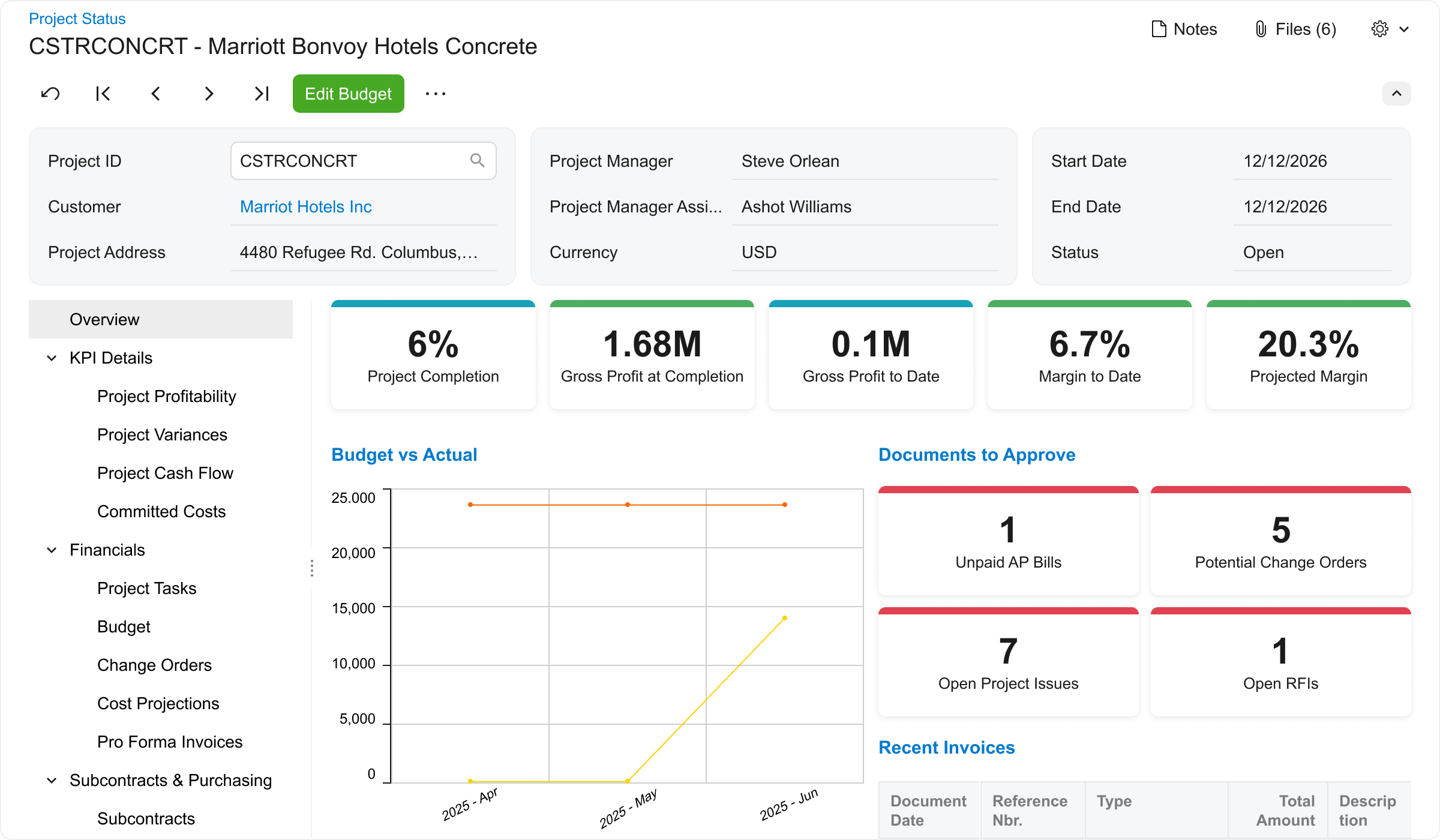
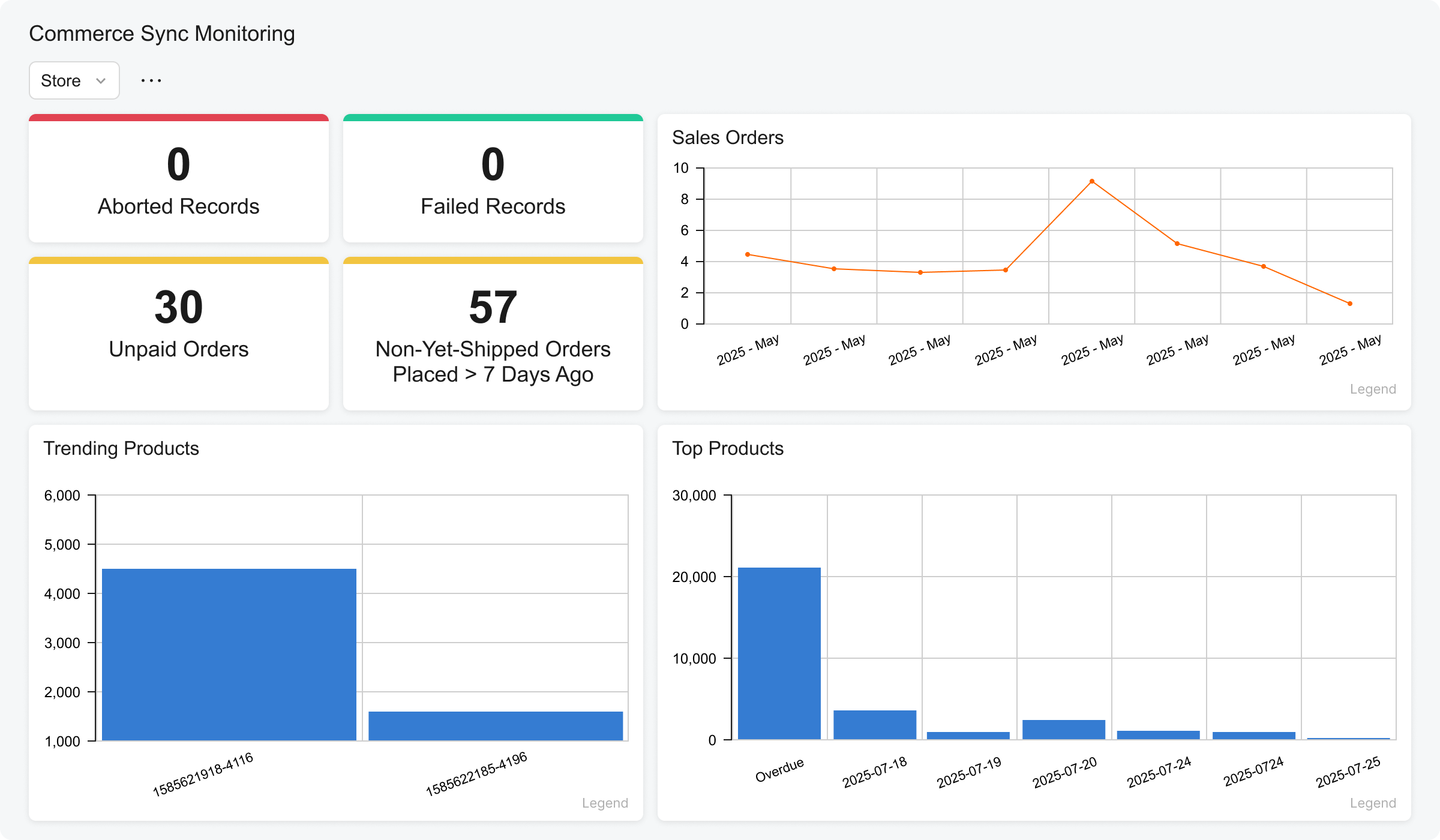
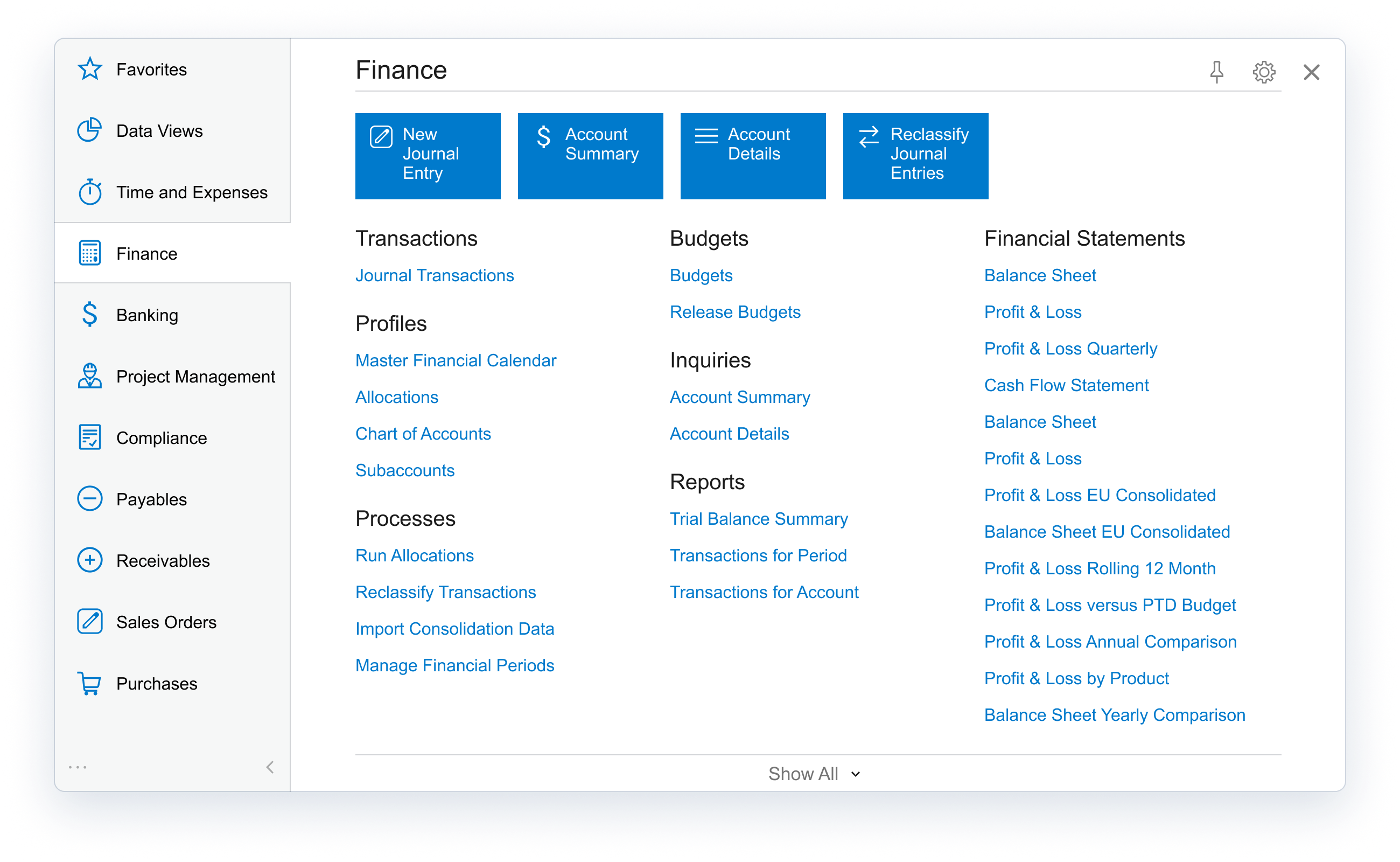
Acumatica delivers a set of cloud-based business software applications with dashboards, reporting tools, integrated document management, centralized security, and customization tools.
$1,000
per year
Microsoft Dynamics AX (discontinued)
Score 4.7 out of 10
N/A
Microsoft Dynamics 365 for Finance and Operations (or Dynamics AX) was an ERP product in the Dynamics family. It has been split into separate Dynamics 365 products and is no longer available.
N/A
SAP Business One
Score 8.3 out of 10
N/A
SAP Business One is an integrated enterprise resource planning (ERP) solution for small and medium-sized businesses, The product encompasses functionality around sales, customer relationships, inventory, operations, financials and human resources.
$99
per month
Pricing
Acumatica
Microsoft Dynamics AX (discontinued)
SAP Business One
Editions & Modules
No answers on this topic
No answers on this topic
Limited
$99.00
per month
Starter
$110.00
per month
Pro
$132.00
per month
Offerings
Pricing Offerings
Acumatica
Microsoft Dynamics AX (discontinued)
SAP Business One
Free Trial
No
No
No
Free/Freemium Version
No
No
No
Premium Consulting/Integration Services
Yes
No
No
Entry-level Setup Fee
No setup fee
No setup fee
No setup fee
Additional Details
Pricing is always consumption-based with no five-year lock-ins or termination penalties.
The Acumatica ERP pricing structure allows adding casual users, suppliers, and customers without paying for additional licenses.
The cost is based on the features and resources utilized, not on the number of users who access the system. An Acumatica partner works with users to understand specific requirements, determine the proper resources and modules for the company, and presents a price for the license.
I worked for a partner that sold SAP Business One and ByDesign. The very best thing I would say about Acumatica compared to those platforms is the support team. I have not seen a level of support that is actually able to resolve very difficult issues. Especially when they are …
Acumatica give us modern cloud ERP capabilities with strong manufacturing fundamentals, the flexibility to fit our workflows, and a roadmap we trust—without the limitations and inflexibility of other products.
Much more easy to use and more cost effective. Seemed to be a better support network through Acumatica University and our VAR. In general, the look and feel was much better also.
The basic difference between Acumatica and similar solutions is their complexity and usability. It is less complex and easier to learn, and it is also based on a low-code platform, which makes it more convenient for the end user.
Verified User
Executive
Chose Acumatica
Cost. Modern code base and technology stack. Features. Customization and data access
Acumatica is more flexible. Acumatica gives more control underneath the hood of the ERP, which enables us to meet our requirements out of the box WITHOUT customizations
Head and shoulders above them. Acumatica is flexible and that is important for our growing business group. The pricing for Acumatica is affordable and reasonable. We love the support from Acumatica as well. The training and community support is overwhelmingly great.
We chose Acumatica. For us it best suited our business and how we do things. When taking in account ease of administration and ease of use for our employees it beat out all. The pricing model is also a great addition for us since we can shrink or grow as much as we need to.
ACU is far and away a better ERP solution. SAP does a great job at saying what they can do and develop but ACU does what they say to help improve the product. The UI is much prettier and configurable and you can see you data how you want to
NetSuite is much more expensive and is difficult to customise or integrate.
SAP is a more complex and powerful system, but several times more expensive to implement and run.
As a consultant, SAP Business One has a strong set of core features that will perform well for a multitude of businesses. It is a mature product with lots of documentation and available training online to answer questions and assist users. It also has multitudes of proven …
Trust in size of SAP and the partner network they've built. It was ultimately Vision33 that made the difference for us. We also liked the feature fit to our manufacturing needs.
Coming from Sage, when you have to post financial data, it locks the system. Acumatica, there is no delay, there is no downtime. Dashboards. My CEO recently asked me, "I really want to see what our top customers are and what markets that they're spending the most money in." Acumatica had that widget already prepared for me.
It integrates fully with the other Microsoft software we use daily, and this coordination speeds up our work and gives us the agility to run easily. For example, in a purchase inquiry, the customer, after submitting a request, identifies the teams that should work on the project, and if they need further review by other people, they are added to the process, and everything is managed seamlessly rather than the sales process. Get the result as fast as possible.
SAP Business One would be more useful if it contained tools to acommodate the growing need of online sales. A more complete shipping module which handles tracking numbers with the common couriers would be great. A built in warehouse management system would be great designed to be used with barcode scanners
Real-time access to financials across firm's locations in India for better in-house sales, cost and financial health analysis
The tool is great with respect to the creation of dashboards and KPI reporting to get visual picture of profitability and cash flow metrics across projects
Microsoft Dynamics AX's scalability to meet our regional office needs provide flexibility to the team's requirements.
Combined with Citrix Xenapp, the application offers seamless access for users on high latency unreliable network connection to the application.
Application maintenance and updates are easy which makes it possible for us to manage remotely considering the servers are located in a remote Asia site.
Mass updating existing BOMs or Production Order Details. For larger orders, especially if many things need to be changed it can take a painstakingly long time to update each production order one-by-one.
The product configurator is too flat, we definitely need nested configurations that can capture variable subassemblies.
Accounting has room for improvement, I don't really like the idea of SO Invoices living in a separate spot until they are Released. I have had complaints from our accounting personnel since they have to leave the "Accounting World".
MRP can be slow to adapt to changes in actual production or supply chain transactions.
Setting up number sequences seems a trivial matter, but these numbers ID transactions once they are in the ledger and are key--easy to miss this point in the implementation process.
Bank rec being easily automated and able to quickly plug into a bank back end to get data is not the best.
Payment processing can be 'clunky' based on checks, ACH, Wires...as some of these items are not triggered out of the box in AX, bur are easily added --talking ACH and Wires specifically.
Following a bench mark process - this seems contradicting to flexibility however we have wished we could follow more of an industry benchmark. Our challenge as a small company has been knowing how to properly use the system. We have discovered that we have set up the system wrong based and are using it improperly which has cause a lot work to correct.
Better live reporting options - current we are on prem SQL. Yes SAP is moving to HANA however smaller companies like ourselves are not ready for that. We need to be able to maintain our existing SQL DB. We also have a demand for live BI Reporting. It has been difficult to do this with our current set up.
Error handling - have found it very difficult to troubleshoot. Errors are not always clear and answers are hard to find.
We are highly likely to renew because Acumatica has become the foundation of our ERP strategy replacing another ERP system with a more flexible, scalable platform while improving governance, planning, and operational visibility. Ongoing stabilization, roadmap investment in IBP and automation, and strong alignment across Finance and Operations give us long‑term confidence in the platform.
Microsoft Dynamics continues to evolve by bringing more functionality to the customer. Also there are several independent software providers that offer a wide range of solutions for vertical markets.
As I said before, it is a first level tool, well developed, and with very strong development support, although the learning curve, its implementation, the cost-benefit ratio, the price and the user experience is not the most suitable for small and medium-sized companies. It is a company with extensive experience, market positioning, technical support and expanded use
The processes are very intuitive and easy to use. Whether you are entering AP bills, timecards for payroll, or AR invoices, the processes are similar and easy to use. The drill-down capability is also a huge plus as you can easily toggle between different modules without having to leave the screen you are in and navigating through a menu to get the information you need. We found that the standard reports out of the box are lacking. Our implementation did not go so well and when we were finally ready to run financial reports, it was both disappointing and frustrating to discover that the P&L was highly summarized and to get a detailed report required having to do a lot of formatting myself. I was able to figure it out on my own, but when our financials were already delayed getting published, I did not really have the time to spend trying to figure out how to build my own P&L.
Overall the product does what we need it to do in order for us to function as a company. While there are some concerns over ongoing costs, the belief is, once we have it fully acclimated to our business the cost should settle into alignment with our original expectations. The new features that are consistently being added do add value to the product as they are usually customer request directed.
I would like to give 8 out of 10 rating for SAP Business One because SAP Business One is a good choice for the mostly used business management solutions for the small and medium-sized companies. SAP Business One can help in optimizing the existing business process and enables streamline business processes for the daily activities for all users across the entire organization. The importance realization of SAP Business One implementation is based on the selection of the good reputation partner and its approach for the entire implementation. SAP Business One is a user-friendly and easy to use Enterprise system that the organization can benefit its features and functionalities by utilizing it.
Some integration and high volume ramping challenges, particularly with BizTalk and SQL Server, but getting sorted out. Outages over time appeared to be more dependent on integration complexity than AX MES.
The SAP Business One software is up and running every time you need it as it was planned. In more than 6 years that we have been using the product, it has never been unavailable and if it ever was, it was because of a planned maintenance window scheduled in the company.
Some integration and high volume ramping challenges, particularly with BizTalk and SQL Server, but getting sorted out. Outages over time appeared to be more dependent on integration complexity than AX MES.
SAP Business One performance depends mostly on the speed of your internal servers, should you have the solution on premise as we do. Sometimes the system tends to be a little slower for some users when others are executing really big reports of performing some batch loads, but generally, the performance is acceptable to all the users.
I would rate the overall support for Acumatica an 8 out of 10. The support team is generally responsive, knowledgeable, and helpful when resolving issues or answering questions. Documentation and community resources are also useful. However, response times can occasionally vary depending on the complexity of the issue or support queue, which slightly affects the overall experience.
We use a 3rd-party Microsoft Partner for the system. They are responsive and very knowledgeable. While costs have been mentioned several times in this review they are very aware of costs and have developers who are more economical they use to help offset the level of work required to meet our changes and fix our issues.
I rate my experience with SAP Business One's support team as excellent (10). They are easy to contact and effortless to work with on any issue or concern. I like the support SAP provides for any of their products. SAP has a great backing and I would recommend them to any of my colleagues.
It took a lot of work, but Microsoft ultimately did a good job with in-person training, including being onsite in multiple global locations for extended periods.
The training I get was a consultant level training, so it's basically a 6 weeks training covering every aspect and every module of the system. It covered most common use cases and exercise training so you can get along with the software, as well as examples so there culd be a better understanding.
Our solution deviated from a number of key out-of-the-box standards that were included in Online training. We just used that for introduction to the general functionality.
Over the past two years SAP has added a great deal of new SAP Business One on-line training for version 9.0 and 9.1. Most of the training is very strong, but some is difficult to understand and follow. Additionally, SAP still has a few holes in their on-line training around Production, Bill-of-Materials, MRP and Service.
I'd say the partner selection is critically important. I think the software is very easy to implement. It's very customizable to your business. Finding a partner that will work with you to understand your business and your needs is the critical piece to make sure that the system goes along with it.
Some rough spots, but ultimately worked out. The contract didn't appear to be structured to support the level of overlapping facility deployments required to meet timeline commitments. Merging cultures on the program was also challenging. Overall, not an easy implementation by any stretch. Everyone did the best they could.
These implementations are not easy. Even a standard implementation can be difficult. With a never-been-done-before implementation, the implementation team and the user team need to be thorough with planning, make a decision on key points, and stick to them before any design happens. Our biggest challenge was not from StellarOne, rather it was from the mid-implementation decisions from our internal team. StellarOne did a great job warning us, implementing our decision, and then helping us adjust our SAP to handle the new direction we took.
Having used Pastel for a long time in the business, it lacked certain features, or the system was not probably setup for our business needs and requirements at the time. It was also not 100% cloud based and needed to be used through remote desktop which had its limitations. Zero just had 10% of what our business needed.
I was not part of the decision making process to select Microsoft Dynamics AX, however, I do know that an exhaustive search was done and many options were considered alongside Microsoft Dynamics AX and I feel that the right decision was made in choosing this solution.
SAP provides the most robust solution, with modules available for all department managers and even options for customization according to the company's special needs. We especially used the Crystal reports options to provide reports for each module. Overall, even if it's not the least expensive option, it has the best value for money.
From my understanding, the P.O. module is not very robust, at least the last time I inquired about it. At the time, it had a one-to-one match, with one invoice for one P.O. and that isn't practical for many businesses. I don't believe it would be an easy system to use for sending out invoices, if we had thousands of retail utility customers. We do a small number of invoices because we sell wholesale power, not retail, so we only Invoice the municipality. Not each utility customer.
For most small businesses, the only way you outgrow SAP Business One is if the nature of your business changes radically. Going from 1 to 50 users is quite easy with SAP B1. Going beyond 50 may require moving to the Hana SAP B1 platform to maintain or improve performance, but the path is there. Add-ons to SAP B1 can also be added as specific needs are encountered that are not closely met by the standard product. These may be required early in the product life because of the nature of your business, or as you expand the use of SAP B1.
They are very responsive and knowledgeable about the product. If the rep doesn't have the ability to solve the issue, they quickly get someone else involved to assist us.
I feel like I am not using it to it's potential and it's frustrating to know that it can do more than I am able to use and more help with that would be great
The implementation was a lot of customize building and I felt like some of it could have been built by my partner rather than having them sit and watch me enter a bunch of stuff, especially when a lot of it was over my head in understanding
Employee efficiency has definitely increased with SAP Business One. This is attributed in a lot of ways to information visibility. Our employees are able to gather the data they need, quickly, and effectively.
Identifying inconsistencies in pricing has also been accomplished through use of reporting off individual tables. Previously, we weren't able to access our data in such a way as to enable us to write custom reports in-house.
We have also benefited greatly from having a single source of all business information. We utilize SAP Business One exclusively in-house. All documentation is attached to specific orders and Business Partners, as well as serialized equipment that has been sold.