Adobe acquired Neolane in July 2013 and later re-named the product Adobe Campaign. Adobe Campaign provides both marketing automation and marketing resource management functionality such as spend & financial management, workflow, and asset management.
N/A
Agentforce Marketing
Score 7.7 out of 10
N/A
Marketing Cloud is a cloud-based digital marketing platform, used by marketers can segment their audience, deliver personalized messages, track campaign performance, engage leads and accounts, and optimize strategies based on real-time insights.
$1,250
per month per installation
Salesforce Experience Cloud
Score 8.2 out of 10
N/A
Salesforce Marketing Cloud Engagement (formerly Salesforce Experience Cloud or Salesforce Community Cloud) is an online forum powered by Salesforce that enables businesses to connect with their employees, customers, partner organizations, and prospects. Designed to help facilitate communication and information sharing, customers can ask questions and request help, administrators can integrate data from third-party apps, and employees can collaborate across projects and…
In the end we didn’t go with Adobe Campaign. Although it offers great a great tool set that is very flexible. You do need someone on staff that know Adobe products to get the full utilisation out of it. Ultimately what it came down to for us was that because we had a small team, …
Adobe Campaign Standard has a lot of segmentation options out of the box and a lot better analytics. Pardot is a lot more listbased, where with Adobe Campaign, you can do complete customized segmentation, such as all permissions in base A who are currently customers of this …
Verified User
Administrative Assistant
Chose Adobe Campaign
Because it's pricey, I've played around with cheaper alternatives when I didn't have access to it through work, such as Infusionsoft, ONTRAPORT & Pardot Marketing Automation. I found that all of them lacked the consistency and tools I needed to create strong results and as …
As we tried to centralise the marketing automation platform within the enterprise, Adobe Campaign can plug into several instances of Salesforce.com for lead management queues. All other marketing automation platforms can only plug into one instance of Salesforce.com.
Adobe Campaign improves your email marketing with personalized and contextually relevant messages. We use the native email capabilities in Adobe Campaign alongside our other marketing channels. With more complete data, it delivers better email personalization and improves our …
Adobe Campaign offers unmatched customization but is definitely the least intuitive and user-friendly marketing automation tool I have ever used. We selected Adobe Campaign because we use other Adobe Marketing Cloud Products (Analytics and Target) but the integration with those …
Salesforce Marketing Cloud is intuitive and does what it needs to do. The functions are easy to find, and the automation options work smoothly. You find an intuitive workspace in both HubSpot and Marketo Engage, and the options in these programs look similar to Salesforce Sales …
Salesforce Marketing Cloud stands out for its comprehensive features, scalability, and seamless integration capabilities. Compared to other platforms, its unified suite of tools for email, social media, mobile, and advertising enables streamlined cross-channel campaign …
My previous organization used Pardot and also Mailchimp. Salesforce Marketing Cloud is more powerful than both of those tools and integrates more deeply with Salesforce CRM.
Overall, 80 percent of the features and boiler plate and standard across all these tools. Salesforce leads in integrations and global scalability. But lacks in User interface and ease of use.
The decision for our organization to switch to Pardot was a global decision and was not very popular. Countries in our company who were using Marketo were very happy and we seem to have limited ourselves by going with Pardot. Overall, Pardot works fine, but Marketo has much …
Pardot is pretty much on the same level. We chose Pardot because it integrates directly with Salesforce. We already use Contentful for landing pages, so we weren't too worried about using Pardot's builder. I really liked the simplicity of the visual email workflows. Coming …
As stated earlier, Pardot is definitely the leader in marketing automation. In comparison to other competitors, it's the most expensive, but it provides the most efficient data for larger organizations. While it can be difficult to onboard, the customer service is excellent and …
Community Cloud is directly connected to the database (Salesforce), so there is no need for a 3rd party or an API to bring systems together. This means that CRM users can see all Intranet items from Salesforce directly. It's also extremely straight forward in use, but can be …
Evaluated custom built website/customer portal. The expense, time, and resources to develop a custom solution was extensive, and continued maintenance was a concern. Salesforce Community Cloud was an easy decision.
Multi-Channel Campaign Management: I have found Adobe Campaign to be excellent for managing campaigns across multiple channels, including email, mobile, social media, and web. Its centralized platform allows me to plan, execute, and track campaigns effectively, making it ideal for organizations with diverse marketing channels. For example, when I was running a campaign to promote a new product launch across email, SMS, and social media channels, Adobe Campaign provided me with the tools to orchestrate and track the campaign seamlessly. I could ensure consistent messaging and a cohesive customer experience across different channels.
I think the product, by definition, is meant for marketing — and we use it exactly for that, for running campaigns. That’s the best-suited use case for the product. I don’t think it’s really meant to be used for anything else — that’s just not how it’s designed.
For well-suited, this product is great for your external clientele groups that you would not necessarily want to have a high user fee rate for. So basically general public or a group that will be authorized to come in and just do a few things here and there, but you don't necessarily want them access to all of your systems and your data points for groups that it would not be a great use for. I'd say probably your high level internal staff, they're going to be using a lot of the backend functionality automations, evaluating data, managing data, and doing custom inputs. That's just not what's intended for.
It allows me to capture leads through various sources, such as website forms or landing pages.
It offers a centralized repository where I can securely store and manage customer data, encompassing contact information, preferences, transaction records, and additional relevant data.
It provides robust analytics and reporting capabilities.
Easy to use, just like Salesforce's other products. Many users can sit down and figure it out in no time, and with a little training become power users.
Fast and secure - Salesforce is a leader in the cloud world so you get consistently fast results and security that is top notch in the industry.
Accessible from anywhere - if you use cloud CMS already this is a no-brainer, but for those that do in-house CMS still, this is a major difference. Mobile access from anywhere on the planet without a VPN is something you just can't do without the cloud.
Adobe Campaign does not have a high enough sales intelligence to let us know which landing page format would be the most optimal for the proper development of our mass marketing operations, which in the long run would also help with customer collection.
Does not directly track the number of people who enter our website, beyond sending them automated messages depending on whether they entered a certain section of the site. This problem is important, because it does not allow us to get complete tracking results in that area.
The platform does not do social media marketing extensively enough to let us create dynamic evaluations on the results of interactions that are obtained within social networks, which creates a huge margin of error in our analytical results messages, and so we have stopped applying social marketing.
Unlike other CMS platforms like Wordpress and Adobe Experience Manager, Salesforce does not provide a fully featured editor with a drag-and-drop design tool.
Our content creators and marketing team often struggle with permissions and how to distribute content across different experience cloud sites.
Also, there is no side-to-side comparison view for content editors to update the content easily.
Once you go for Neolane you are a bit stuck with it, so we will most likely stay with Neolane. Cost of investment and training are the main factors at work here. We havesimply have invested too much in the product to stop using it after 2 years. That said, my score of 8 does not imply that the product is worthy of getting an 8 but reflects our willingness to renew. Given that upgrading to a new version will cost again a substantial sum, we most likely will keep using the current version we are on which is 6X.
As of right now we have not seen any other program that integrates as seamlessly into our Salesforce platform. We have barely scratched the surface of all the features and use cases. It would be irresponsible to make a move to another platform in the near future. We have not come up against any limitations that would prompt a need to switch
Thanks to this tool we are taking more internal control of the creation and deployment of campaigns with less dependency on an ESP. We can pre-program marketing publications, being able to concentrate on the target audience. It helps me manage email campaigns with real-time tracking.
You won't find another solution that has as many features as Salesforce Marketing Cloud Interaction Studio. We all know Salesforce, we all know how big they are and it's not for nothing... Their tools do most of the things you want, need and even imagine. Using it is complicated, but the usability is infinite.
Strengths: - Intuitive for Salesforce Users – If you’re already working within the Salesforce ecosystem, the Salesforce CMS is easy to navigate, with a clean UI, drag-and-drop content management, and reusable assets for quick updates. - Seamless Integration – Since it connects natively with Experience Cloud, Marketing Cloud, and CRM, it allows for efficient multi-channel content distribution without needing extra third-party tools. - AI-Powered Personalization – The ability to deliver dynamic content based on user profiles and engagement data is a huge plus, making content delivery more relevant and impactful. Challenges: - Learning Curve for New Users – If you're not already familiar with Salesforce, the interface can feel overwhelming, requiring training to fully leverage all features. - Limited Customization & Workflow Automation – While it works well for structured content, advanced approval workflows and deep editorial customization are limited compared to enterprise CMS platforms like Adobe Experience Manager. - Media & Design Limitations – Salesforce CMS is not as robust for managing rich media-heavy content, which can be frustrating for teams needing more flexibility in multimedia presentation.
Upgrades and timing of the upgrades were communicated well and planned during off hours for our work. If we did have a campaign scheduled during that time, it would kick-off after the system was back active. There were a few unplanned system down times, but it was a rare occurrence and those times were also short in duration.
Though the make up of MA apps is not built this way today, it would be nice to see them become more real-time. The integration between Salesforce and Pardot is not a true real-time integration. If I modify something in Salesforce, those changes are not automatically reflected in Pardot immediately. There is a delay of about 15 minutes before the systems sync. This delay, although not long, is less than ideal We would love the systems to be integrated real time such that changes are propagated from one system to the other immediately.
Again, since we provide and recommend solutions, I can't speak to every client's individual experience, but can offer general reflections as to keep their collaborations private, that they are satisfied with the experience. We hear a lot about how this system helps to encourage collaborations between their own business partners, customers, and internal members, and enables quality integrations with other products that help drive revenue.
Although there is a lot of material available on the internet to answer questions, I still feel a lack of commitment and delay in the responses of the support, but as a whole, it leaves nothing to be desired. I believe that, in the great majority, companies sin in the desired support, but we cannot generalize. But this one, in particular, has a wide range of specialists and well-qualified management, but I believe that it is not so bad.
They are really responsive and more than not solve the problem or give you insight to how you can manage the solution yourself. I do find however sometimes a long delay on the more complex issues when they need to loop in other departments. but overall a good experience with support
Although support from Salesforce itself can be quite unresponsive sometimes, the community hub is incredibly helpful. The large user base of Salesforce products contribute to troubleshooting and the forums are a powerful tool for finding solutions and possible bugs and response times can be quite fast compared to your regular support channels.
The trainers at the Pardot user conference (Elevate and Connections) were very knowledgeable and presented the material well. Again, the content was targeted to more of a new user audience, and was not really relevant for folks who had been using the product for 2+ years.
Pardot's online training touches on all topics briefly and vaguely without much indepth exploration into how a final outcome could look, such as Nurturing Campaigns, Email templates, landing page templates, etc... The only true way to uncover Pardot's full capabilities is to have Front End design and coding experience. Without this key skill set, I would not recommend Pardot to another business.
From an IT perspective, once you set up the Javascript beacon and start collecting data there is a waiting game. During this time you can start labeling your site actions which can be labor intensive for a single person, but you don't really have the final end-users on the platform yet. We did a lot of training so users were experienced, but it wasn't until they had their first tasks to accomplish that they started using the system and had questions. I'd recommend setting up some immediate goals for an end-user to start segmenting for the purpose of displaying message campaigns so you can jump start end-user action.
As we tried to centralise the marketing automation platform within the enterprise, Adobe Campaign can plug into several instances of Salesforce.com for lead management queues. All other marketing automation platforms can only plug into one instance of Salesforce.com. Adobe Campaign was also able to handle the complexity and challenges of our enterprise data which are a result of years of legacy, mergers and acquisitions and data aggregation.
We use Salesforce Marketing Cloud for lead management, generating reports, tracking customer and dealer information, inputting orders, and more. I prefer HubSpot for email marketing and automation because it is easier to use and the emails are designed much better. We currently use Salesforce and HubSpot, and we are very happy to have both, as they have different pros/cons.
Salesforce Experience Cloud was selected due to its tight integration with our existing Salesforce CRM platform. Customization of the portal was much, much simpler compared to Sharepoint - especially with role-based security parameters that are ultimately inherited based on attributes within the Salesforce CRM platform. Salesforce Experience Cloud was a natural fit for this customer-facing purpose.
Not everything was great at all times. It was handled accordingly, pricing was reasonable for what was purchased. It was the best value on the market at the time of purchase.
Prior to this, we had no solution and literally were doing things on paper in a world where technology is outpacing paper. Having this process optimized has made it easier for the sales and marketing people to change information. From the training perspective, it has allowed us to see holes in where we could create additional support training, so the ROI here has been a lot more than just the optimization of a process.
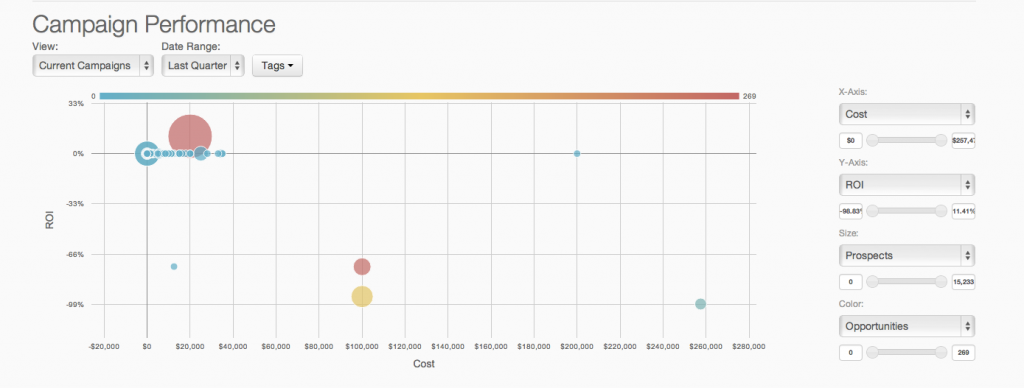
Talking about profits can be subjective if you don't take into account the periodic variations between net and gross profit margins, but fortunately with Adobe Campaign, it is easy to notice these differences quickly.
Results have always seemed relative to us, as they vary greatly depending on how much is invested.
Salesforce Marketing Cloud allows us to more efficiently reach out to a higher number of prospects.
Salesforce Marketing Cloud allows us to nimbly communicate important messages in a timely fashion to facilitate conversion.
Salesforce Marketing Cloud allows us to track who is opening our messages so that we can stop sending to those not interested and focus on the most engaged audiences.