Datadog is a monitoring service for IT, Dev and Ops teams who write and run applications at scale, and want to turn the massive amounts of data produced by their apps, tools and services into actionable insight.
$18
per month per host
OpsGenie
Score 7.8 out of 10
N/A
OpsGenie is an IT monitoring and incident response platform for development and operations teams, providing alerts and schedule management escalations. OpsGenie is now part of Atlassian since the late 2018 acquisition.
$0
up to 5 users
PagerDuty
Score 8.6 out of 10
N/A
PagerDuty, Inc. (NYSE:PD) provides digital operations management. Serving organizations of all sizes, PagerDuty aims to help them deliver a perfect digital experience to their customers, every time.
$25
per month per user
Pricing
Datadog
OpsGenie
PagerDuty
Editions & Modules
Log Management
$1.27
per month (billed annually) per host
Infrastructure
$15.00
per month (billed annually) per host
Standard
$18
per month per host
Enterprise
$27
per month per host
DevSecOps Pro
$27
per month per host
APM
$31.00
per month (billed annually) per host
DevSecOps Enterprise
$41
per month per host
Free
$0.00
up to 5 users
Essentials
$9.00
per user/per month
Standard
$19.00
per user/per month
Enterprise
$29.00
per user/per month
Professional
$25
per month per user
Business
$49
per month per user
Enterprise
Contact Sales
Offerings
Pricing Offerings
Datadog
OpsGenie
PagerDuty
Free Trial
Yes
Yes
Yes
Free/Freemium Version
Yes
Yes
Yes
Premium Consulting/Integration Services
No
No
Yes
Entry-level Setup Fee
Optional
No setup fee
No setup fee
Additional Details
Discount available for annual pricing. Multi-Year/Volume discounts available (500+ hosts/mo).
Datadog is an all in one solution. It has everything in one place so you don't have to go from application to application and try to figure out what exactly happened. No more stitching database errors from one third party to backend errors in another to front end errors in …
Datadog empowers us to create dashboards and visualize the state of our infrastructure in real time. It gives us control over what we want to view and how. The graphs provide deep insight into trends and anamoly detectives. These features are lacking in some of the other …
Much more pricing friendly than PagerDuty but I haven't done the comparison in years so not sure how pricing/features stack up nowadays. Been very happy with OpsGenie.
We also looked at PagerDuty but decided to go with OpsGenie as it had more features on the plan we needed compared to PagerDuty which would have required us to spend a lot more for what we felt were non-premium features. Everything felt like an add-on - automation for an …
I didn't participate in the tool selection, and I don't know other similar tools. Although I think OpsGenie suits well in all the scenarios we have, so I would choose this tools again.
Have done a POC with PagerDuty in the past when evaluating OpsGenie and just liked the clean look and feel of OpsGenie better along with their already extensive list of integrations. The integrations was probably the key deciding factor in us not going with PagerDuty at the time.
When compared to VictorOps and OpsGenie, PagerDuty is clearly the best of the breed. It provides a more polished UI, more integrations, and more features than the others, but it's priced at a premium. Smaller teams will probably get more value out of another alternative that …
PagerDuty has better integrations than OpsGenie. One integration that PagerDuty supports that OpsGenie does not is integration into Microsoft Flow. This allows us further opportunity to automate the routing of certain incidents. Other than that, we did not consider any …
There is too little of a difference between OpsGenie and PagerDuty. Both tools are really great and do the job they promise very well. If I had to choose, I'd go with PagerDuty. This is not because of any features or because it's better. It is because I've been using it for the …
My last experience with OpsGenie was the pre-Atlassian acquisition. At the time there was no SLA, which was an immediate showstopper. We had missed alerts as well with OpsGenie, so we switched to PD. I'd have to think with Atlassian owning OG now, that if we had a bake-off …
After evaluating these two products PagerDuty proved to be the best as PagerDuty met all of our organizations requirements when it came to pricing, functionality, and reliability. We liked that PagerDuty came prebuilt with numerous integrations as that helps us grow out our …
PD is a set-it-and-forget-it solution. The application is reliable, has many features, and will drag a tech out of the deepest sleep so to put out a fire. OpsGenie is clunky at best. It can work, but the paging is unreliable, the schedule is a nightmare, and the integrations …
Pager duty is better than OpsGenie because it offers stronger automation, smarter incident workflows, deeper integrations and better reporting. Teams respond faster, follow consistent processes, and handle complex incidents more efficiently, making it more suitable for growing …
OpsGenie is an amazing application and cheaper than PagerDuty. But PagerDuty is better with alerts and it has no downtime. PagerDuty autoamtes the work better than OpsGenie.
PagerDuty is much reliable and much higher alerting capabilities and higher escalation workflows it automatically assign the error to the respective development team and alert over message and call.
most of the team members were familiar with pagerduty and since its battletested and widely adopted and pricing was also competitive hence we have chosen pagerduty
I have not use the 2 technologies for as long as I have used PagerDuty but in my opinion PagerDuty makes things a lot easier. The other tools got the job done and got alerts out but PagerDuty just seemed to make the setup for on-call alert schedules and integrations easier …
PagerDuty seemed to have a much more flexible setup that allowed the organization to build and manage how we respond to alerts and incidents. The ServiceNow product seemed to be a bit more rigid.
PagerDuty has matched our expectations so far in terms of the quality and quantity of functionalities offered to manage incidents effectively. Other tools being considered during the purchase phase were quite expensive and failed to offer the features we required. They had …
PagerDuty's focus on escalation policies and schedules shows that the responders are most important. Other tools focus more on the data and technical information and therewith do not match our needs as well as PagerDuty does. We still use Icinga and other tools to recognize …
Agile Process Engineer , ScrumMaster, Product Owner
Chose PagerDuty
Very similar in features, but we kept PagerDuty, mostly for the integration capability with almost any system, and the cost of up-fitting didn't make sense. Try googling around and you will quickly find that no one on the market has as many capabilities when it comes to …
While more costly than the competitors, PagerDuty has more functionality and is the better tool. There are more integrations, the UI is cleaner, and there are more features and options.
Both the above products (although they could do more, such as alert filtering), were too bulky and cumbersome. Building simple alerts and integrations were time-consuming and more hassle then they should have been. Escalation policies were also difficult and cumbersome to set …
Datadog may be better suited for teams that have a more out-of-the-box infrastructure, on the primary platforms Datadog supports. You may also have better results if you have a bigger team dedicated to devops and/or a bigger budget. We found that trying to adapt it to our use case (small team, .NET on AWS Fargate) wasn't feasible. We continually ran into roadblocks that required us to dig through documentation (and at times, having to figure out some documentation was wrong), go back and forth with support, and in my opinion, waste money on excessive and unintended usages due to opaque pricing models and inaccurate usage reports, as well as broken/non-functional rate sampling controls.
Incident response is well suited to OpsGenie, and this is where it really shines—whether it's an outage, a security incident, or similar. My experience is mostly with security, and it offers a great audit trail. It minimises the need to cut and paste from different platforms when creating reports and ensures that what was said and what was done (along with any evidence) is persisted and reflected in the incident detail.
From our point of view, PagerDuty is best suited for high priority accounts in collections. For instance, if a priority customer's account fails multiple accounts, notification is already sent by PagerDuty in order to notify us... so we don't have to worry much, as it ensures cases are addressed quickly and prevents any further delays.
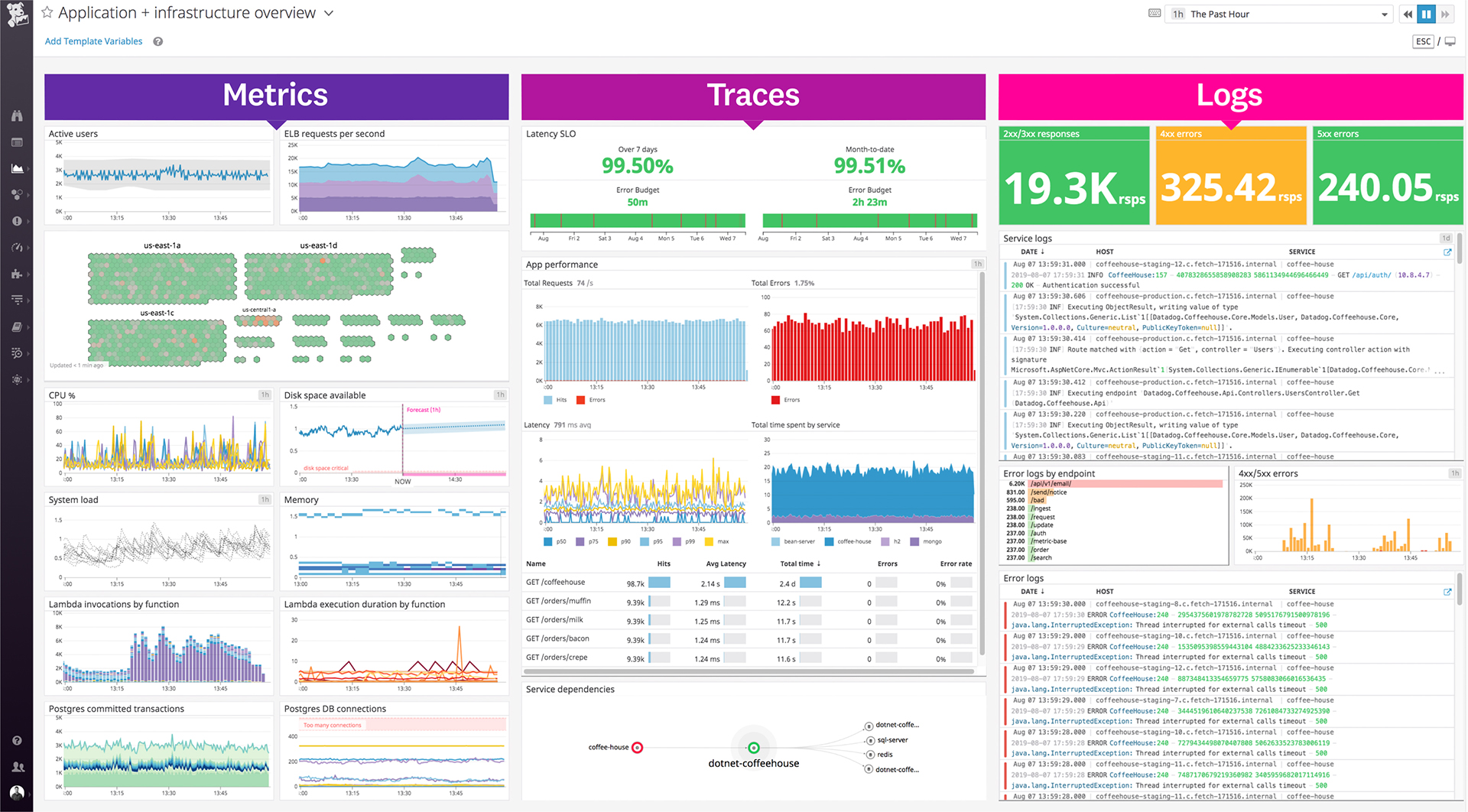
The thing which Datadog does really well, one of them are its broad range of services integrations and features which makes it one step observability solution for all. We can monitor all types of our application, infrastructure, hosts, databases etc with Datadog.
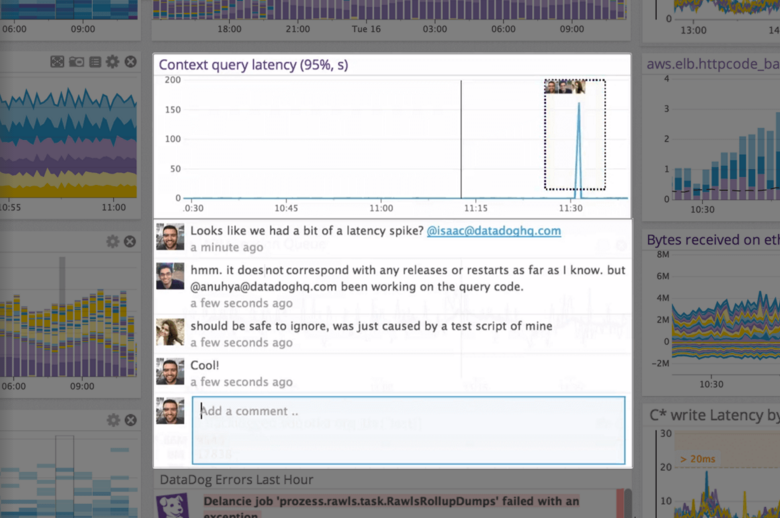
Its custom dashboard feature which helps us to visualize the data in a better way . It supports different types of charts through those charts we can create our dashboard more attractive.
Its AI powered alerting capability though that we can easily identify the root cause and also it has a low noise alerting capability which means it correlated the similar type of issues.
Alert windows cause lag in notifications (e.g. if the alert window is X errors in 1 hour, we won't get alerted until the end of the 1 hour range)
I would appreciate more supportive examples for how to filter and view metrics in the explorer
I would like a more clear interface for metrics that are missing in a time frame, rather than only showing tags/etc. for metrics that were collected within the currently viewed time frame
OpsGenie New Jira design has made it difficult for those not familiar with that style.
OpsGenie could benefit from nested escalation flows for team schedules. Creating a product alert that uses and Tech Schedule as well as an Incident Manager Schedule that already exists would create less overhead and ease management.
There are so many features that it can be hard to figure out where you need to go for your own use case. For example, RUM monitoring us buried in a "Digital Experience" sidebar setting when this is one of our key use cases that I sometimes struggle to find in the application. It appears that ECS + Fargate monitoring was recently released which is great because we had to build a lambda reporting solution for ephemeral task monitoring. But this new feature was never on my radar until I starting clicking around the application.
In general terms OpsGenie is a well done tool for solving the alert incident management, the usability is super ok during the configuration and during the alert. The main opportunity I found is the reporting and analytics section which is a little difficult to understand at a first sight and the refresh is not automatic, some little frictions but frictions at all
The UI is more complex than I would like. Part of the challenge is that most users use PagerDuty infrequently; I don't remember how I changed a policy last time. Another part of the challenge is that some users expect alerting to be a trivial feature, and are reluctant to invest any time in reading the documentation.
The support team usually gets it right. We did have a rather complicate issue setting up monitoring on a domain controller. However, they are usually responsive and helpful over chat. The downside would be I don’t think they have any phone support. If that is important to you this might not be a good fit.
PagerDuty is reliable and easy to set up. It gives an effective way to notify the team about critical incidents which results in a faster turnaround time on issues. users can customize their alerts rules based on their preferences. Overall it's effective and easy to use which adds great business value.
Our logs are very important, and Datadog manages them exceptionally well. We frequently use Datadog services for our investigations. Use case: Monitor your apps, infrastructure, APIs, and user experience.
Key features:
Logs, metrics, and APM (Application Performance Monitoring)
Real-time alerting and dashboards
Supports Kubernetes, AWS, GCP, and other integrations
RUM (Real User Monitoring) and Synthetics
✅ Best for backend, server, and distributed systems monitoring.
We also looked at PagerDuty but decided to go with OpsGenie as it had more features on the plan we needed compared to PagerDuty which would have required us to spend a lot more for what we felt were non-premium features. Everything felt like an add-on - automation for an additional $20 a user per month seemed like a lot on top of the base plan
I have not use the 2 technologies for as long as I have used PagerDuty but in my opinion PagerDuty makes things a lot easier. The other tools got the job done and got alerts out but PagerDuty just seemed to make the setup for on-call alert schedules and integrations easier than the others. This isn't to say the others are difficult, just that PagerDuty was slightly better. I also have noticed that more tools have options to integrate to PagerDuty over the other tools.
Helped us track bugs and issues that came up during product launch periods which reduced overhead that normally came with needing to manually contact the right team members
Prevented last minute breaking issues from falling through the cracks, decreased time to fix by automatically alerting the team members and allowing the product and project teams to easily see what active alerts are in progress




![Screenshot of Similar Incidents [Apple iPad], Open Incidents [iPhone 8], On-Call Schedule Menu [Apple Watch])](https://media.trustradius.com/product-screenshots/kf/M5/L6SIK3HGD31M.png)

