Google Analytics is perhaps the best-known web analytics product and, as a free product, it has massive adoption. Although it lacks some enterprise-level features compared to its competitors in the space, the launch of the paid Google Analytics Premium edition seems likely to close the gap.
$0
per month
Mixpanel
Score 8.3 out of 10
N/A
Mixpanel helps companies measure what matters, make decisions fast, and build better products through data. With self-serve product analytics solution, teams can analyze how and why people engage, convert, and retain—in real-time, across devices—to improve their user experience. Mixpanel serves over 26,000 companies from different industries around the world, including Expedia, Uber, Ancestry, DocuSign, and Lemonade. Headquartered in San Francisco, Mixpanel has offices in New York,…
$0
per month
QlikView
Score 8.2 out of 10
N/A
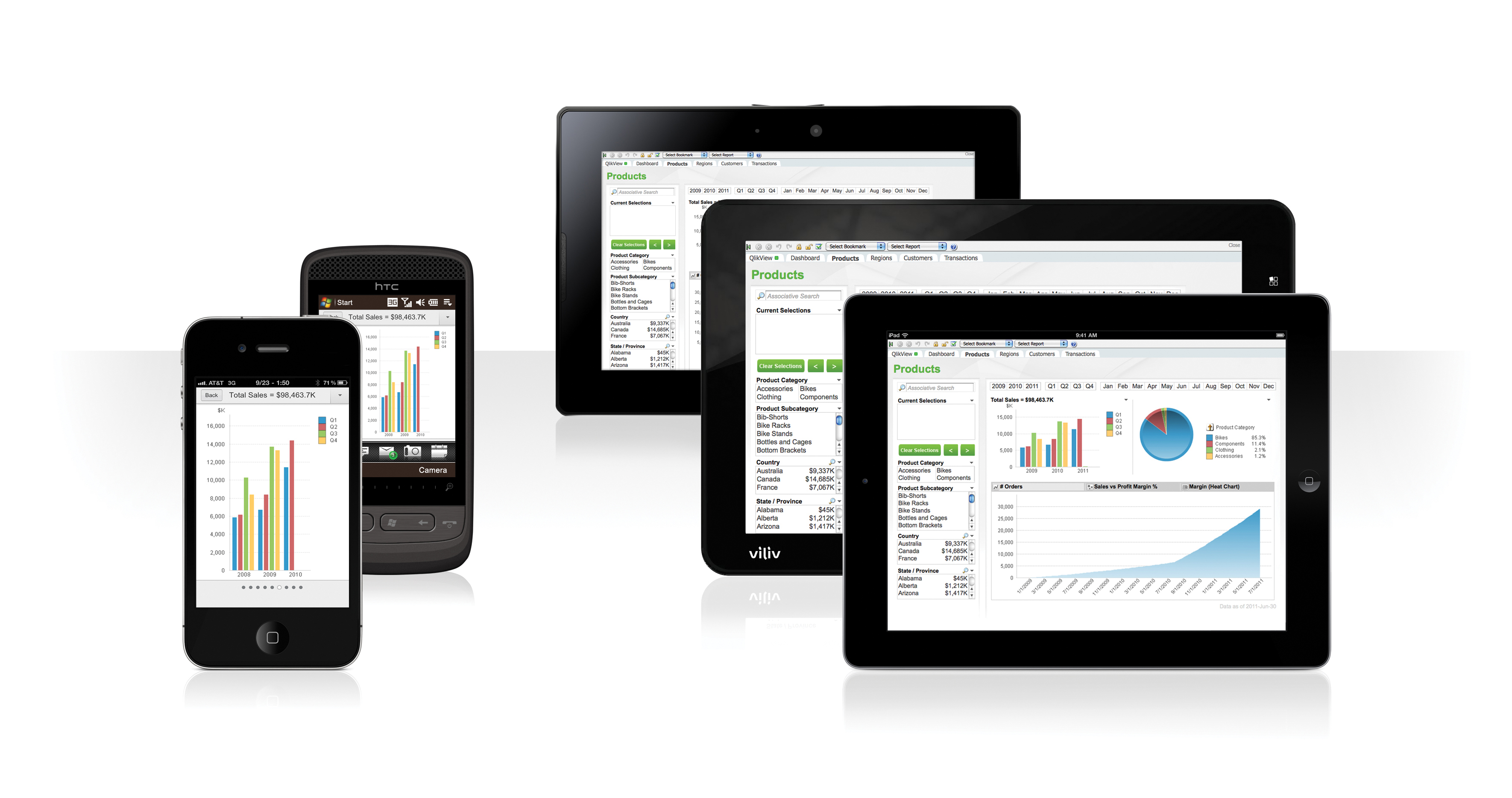
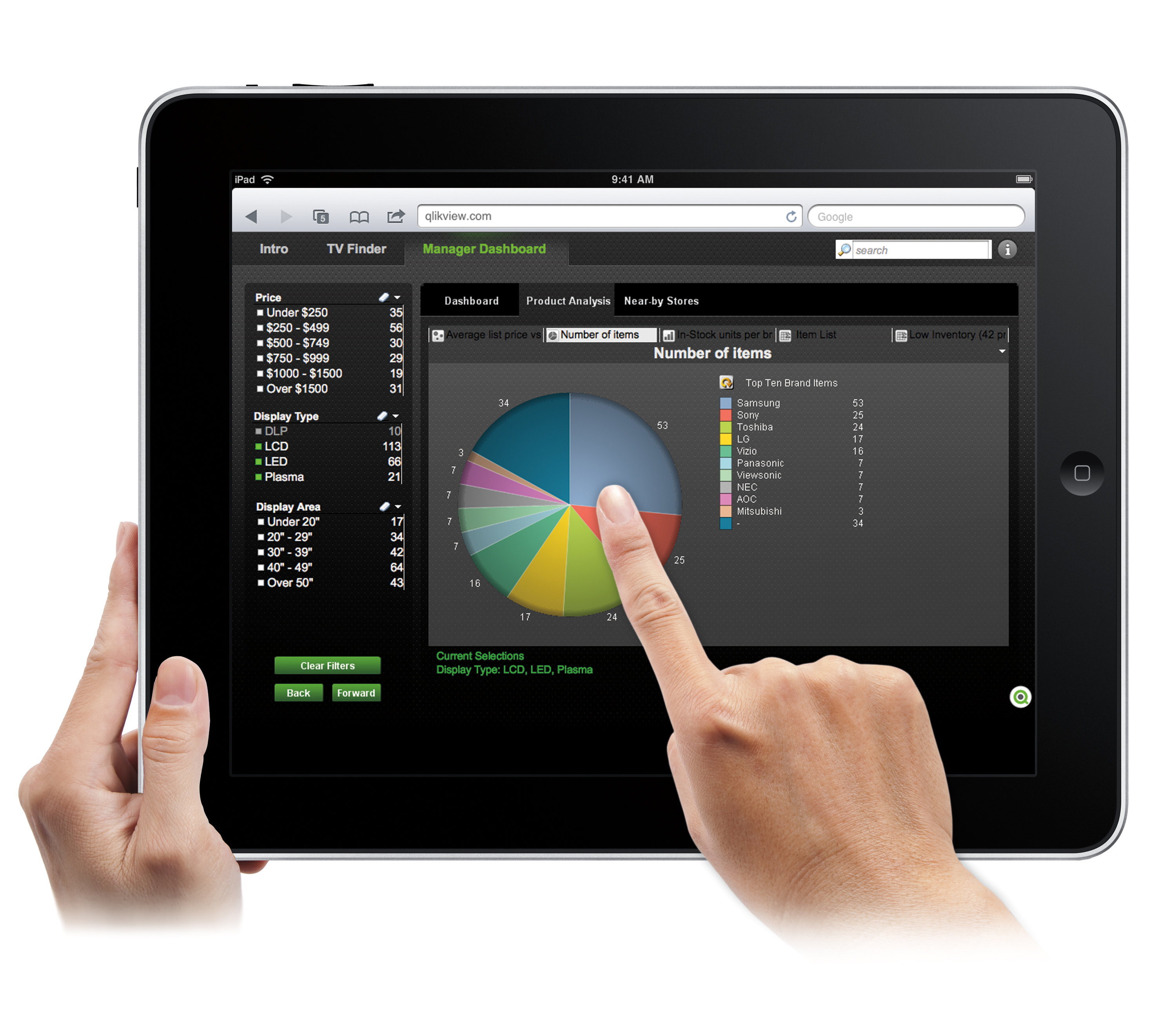
QlikView® is Qlik®’s original BI offering designed primarily for shared business intelligence reports and data visualizations. It offers guided exploration and discovery, collaborative analytics for sharing insight, and agile development and deployment.
N/A
Pricing
Google Analytics
Mixpanel
QlikView
Editions & Modules
Google Analytics 360
150,000
per year
Google Analytics
Free
Free
$0
per month
Growth
$17
per month
Enterprise
Contact sales
QlikView
Custom
per user
Offerings
Pricing Offerings
Google Analytics
Mixpanel
QlikView
Free Trial
No
No
Yes
Free/Freemium Version
Yes
Yes
No
Premium Consulting/Integration Services
No
No
Yes
Entry-level Setup Fee
No setup fee
No setup fee
Optional
Additional Details
—
Mixpanel uses MTU (Monthly Tracked User) pricing, which is designed to scale with your company. MTUs are roughly equivalent to the number of unique visitors on your product and each user is counted once per month, even if they use multiple devices. If Events based pricing makes more sense for your business, reach out to us and we can work with you!
On an perpetual license basis, based on server plus number of users.
Contact vendor for pricing.
Mixpanel and Kissmetrics are good systems, and for the most part they can do the same thing that GA does, but they are more basic. If an average person, if you don't have a desire for deep data, I think these two platforms are better choices.
Google Analytics is for me the default one to implement especially for business starting in analytics. The time (aka cost) of implementation is very low and it provides results in a matter of hours. The integration with the Google ecosystem is also a plus especially when …
Google Analytics is the industry standard, integrates seamlessly with most site setups, and cannot even be compared on cost. While it falls short in some areas like individual user tracking and cross-device reporting, it provides 80-90% of the needed visibility for online …
Some of the other competitors have unique features such as visualization easy to navigate dashboards without having to deal with overwhelming yourself with loads of information. Building customer profiles/personas.
Google Analytics stacks up as some of the best among the competition, assuming you're using it for its intended purpose. It's been the easiest to integrate into our applications, as well as the easiest UI to use. We selected Google Analytics for security and budget reasons, but …
We have been using Google Analytics for over 10 years. Over that time we have periodically reviewed our analytics platforms a number of times. For us, it made more sense to stay with google analytics primarily because if we migrated to another platform we would lose the …
KISSmetrics is best suited for instrumenting specific conversion funnels and looking at individual user behaviors. This type of by-user analysis is impossible with Google Analytics, which is understandable given the amount of data storage that would be required (for a free …
Mixpanel
Verified User
Engineer
Chose Mixpanel
We use both tools in conjunction with each other. Google Analytics is a plug and play widget which gives general information of the applications while mixpanel is better for tracking and looking into specific events. Sure Google Analytics is able to do that but their UX/UI is …
We also use Google Analytics to analyze our web and mobile app data. We noticed that although Google Analytics is a great tool with a lot of useful insights, Mixpanel gives us more data about our mobile users. So, I would say that Mixpanel does a better job on a mobile side.
We use Google Analytics as our primary website analytics platform and Mixpanel as an addition to Google Analytics. We have chosen Mixpanel over Tableau and Moz because Mixpanel offers pretty decent free version that has many features we needed. We are pretty satisfied with …
We use Mixpanel together with Yandex Metrica and Google Analytics, comparing to both YM and GA I'd say Mixpanel has more convenient and featured e-commerce solution. Although, quality of data is better in Google Analytics and Yandez Metrica has plenty of features completely for …
Mixpanel has a free plan and looks more up to date than Kissmetrics. We use Google Analytics and Mixpanel together. We stopped use Kissmetrics simply because there is not enough time to use 3 analytics platform with so many features and capabilities.
We use a few tools at the same time: Moz, Google Analytics and Mixpanel. But mostly we use Mixpanel simply because of the amount of data it provides and also because mobile analysis has more capabilities than Google Analytics' mobile analysis has. Moz and Google Analytics are …
Mixpanel does what it does very well. We sometimes don't see it as the only tool in the arsenal. When combined with other solutions, we get a more complete picture. It also allows us to validate data across different tools.
While Heap isn't as simple as Mixpanel, its major …
Mixpanel is way more granular. We do use Google Analytics for top-level trends, but Mixpanel, when properly integrated, shows you the details. Even our marketing team is able to log events, etc. that they care about.
It’s hard to compare Google Analytics to Mixpanel because Google Analytics doesn’t measure app data, however Google Analytics has a much easier to use platform in my opinion. Google Analytics does not give you as much user data as Mixpanel does though. Mixpanel is definitely …
Mixpanel is a more tailored solution focused on customers and products. Google Analytics behaves more like a generic tool and may require a bit of effort to set up with best practices and actionable data. Mixpanel has a more likable user interface, compared to GA, which can be …
Google Analytics also has a free option and can be utilized in parallel or as a stand-alone system, it will provide most of the features that are required. but lacks live data tracking so Mixpanel is that alternative that anyone can look for. particularly if your project is …
Verified User
Engineer
Chose Mixpanel
Mixpanel is much nicer to use and gives a better UX. However, it doesn't offer historical data that wasn't initially defined as to-be-collected, integration with Salesforce, and requires developers to make changes to the code in order to be able to query for some insights. We …
Mixpanel was fairly simpler to set up and the pricing metrics were easier for us to keep track of. Besides that, Mixpanel integrated with many of the other products we were using which made it simpler for us to keep all our data integrated and easy to keep track of. Mixpanel's …
Mixpanel has been my favorite tool I've used thus far because of how simple it is to use. While Google Analytics is quick to setup also, Mixpanel provides a lot more functionality. The reporting and visualization capabilities that are provided out-of-the-box make it a good tool …
Mixpanel is pretty up to date with many good and useful features. As I mentioned before, the Mixpanel platform provides a pretty good mobile analytics and when our marketing team was looking for the web and mobile analytics tool, detailed and accurate mobile analytics was one …
Mixpanel has pretty powerful mobile users' behavior analytics when comparing to its competitors on a market. Also, Mixpanel offers a lot of capabilities for free, it has an up-to-date, user friendly interface, quick and very professional customer support, reports that you can …
Haven't used any direct competitors at the moment as they didn't exist when we first started using MP. That said, it looks like there are a lot of new up-and-coming tools which will be able to do certain things better than mixpanel - if not all of them. Examples include …
Mixpanel does a great job in tracking user behavior throughout the site from minute details such as link clicks, to event triggers and general page views. Mixpanel also allows you to set up user flows retroactively which GA doesnt.
The first thing we liked about QlikView was the price. For a small amount per user, I can have a very useful software to manage the whole data set our company uses. The Tableau Desktop has very high pricing for the software, and for just one user, not the whole organization. …
Qlikview is great for extracting and cleaning data from ODBC compliant databases and Comma Separated Value (.csv) or excel data files. I think that Qlikview desktop is better than proprietary application's reporting tools since it can gather and compile data from multiple …
Simpler than Tableau and offers some more features for free. While Tableau offers more data connection options, QlikView has satisfied my needs pretty well.
I felt like MicroStrategy was equally comparable to QlikView. I liked the dashboard and the ease of building reports. Our company was testing MicroStrategy as an option so I only got to do a trial for a couple of hours. Both of these platforms are beasts and not for the faint …
TIBCO Spotfire and Tableau were other systems considered. Both of these products are very good and they all have different strengths. QlikView best met our business needs because of its ability to load multiple data sources directly, handle ETL logic on the data load, delivers …
Features
Google Analytics
Mixpanel
QlikView
Web Analytics
Comparison of Web Analytics features of Product A and Product B
Google Analytics
8.4
11 Ratings
4% above category average
Mixpanel
-
Ratings
QlikView
-
Ratings
Lead Conversion Tracking
8.110 Ratings
00 Ratings
00 Ratings
Bounce Rate Measurement
8.410 Ratings
00 Ratings
00 Ratings
Device and Browser Reporting
9.211 Ratings
00 Ratings
00 Ratings
Pageview Tracking
9.011 Ratings
00 Ratings
00 Ratings
Event Tracking
8.311 Ratings
00 Ratings
00 Ratings
Reporting in real-time
7.910 Ratings
00 Ratings
00 Ratings
Referral Source Tracking
8.510 Ratings
00 Ratings
00 Ratings
Customizable Dashboards
7.910 Ratings
00 Ratings
00 Ratings
BI Standard Reporting
Comparison of BI Standard Reporting features of Product A and Product B
Google Analytics
-
Ratings
Mixpanel
-
Ratings
QlikView
8.5
68 Ratings
4% above category average
Pixel Perfect reports
00 Ratings
00 Ratings
8.050 Ratings
Customizable dashboards
00 Ratings
00 Ratings
9.366 Ratings
Report Formatting Templates
00 Ratings
00 Ratings
8.060 Ratings
Ad-hoc Reporting
Comparison of Ad-hoc Reporting features of Product A and Product B
Google Analytics
-
Ratings
Mixpanel
-
Ratings
QlikView
8.1
67 Ratings
1% above category average
Drill-down analysis
00 Ratings
00 Ratings
8.366 Ratings
Formatting capabilities
00 Ratings
00 Ratings
7.767 Ratings
Integration with R or other statistical packages
00 Ratings
00 Ratings
8.336 Ratings
Report sharing and collaboration
00 Ratings
00 Ratings
8.262 Ratings
Report Output and Scheduling
Comparison of Report Output and Scheduling features of Product A and Product B
Google Analytics
-
Ratings
Mixpanel
-
Ratings
QlikView
8.6
62 Ratings
4% above category average
Publish to Web
00 Ratings
00 Ratings
8.049 Ratings
Publish to PDF
00 Ratings
00 Ratings
9.056 Ratings
Report Versioning
00 Ratings
00 Ratings
7.542 Ratings
Report Delivery Scheduling
00 Ratings
00 Ratings
10.048 Ratings
Data Discovery and Visualization
Comparison of Data Discovery and Visualization features of Product A and Product B
Google Analytics is particularly well suited for tracking and analyzing customer behavior on a grocery e-commerce platform. It provides a wealth of information about customer behavior, including what products are most popular, what pages are visited the most, and where customers are coming from. This information can help the platform optimize its website for better customer engagement and conversion rates. However, Google Analytics may not be the best tool for more advanced, granular analysis of customer behavior, such as tracking individual customer journeys or understanding customer motivations. In these cases, it may be more appropriate to use additional tools or solutions that provide deeper insights into customer behavior.
As a worker in the sales area, I see closely how complex it can be to evaluate the commercial funnel and Mixpanel has been an indispensable guide to prioritize above all what customers expect to receive from our company, and thus be able to determine the main service we offer. Without a doubt, Mixpanel has special functions to be the one that guides the route and marks the objectives much more clearly.
Sales data validations have helped manage our justifications in the past, especially with regard to new product development and new business introduction. It has also been helpful in identifying trends with business impact and direction specific to quarter and monthly sales from ERP data as well as decisions to purchase equipment of staffing based on run rates and product demand.
One thing that can get out of hand is data output - if you aren't careful in your query, you may be overloaded with data dumps and drown in the amount of info you have to filter through. This is a user caution, not a comment on the software itself.
Mixpanel is a daily use application for everyone in my organization; it helps us have a better flow of information and interaction between work teams.
The user interface of this platform is simple and has a wide variety of functions and resources to help us work in the most organized way, have better team coordination, and keep efficiency high.
I love that it is so easy to program our calendar to our liking, so we can prioritize our activities and know what is pending, and the best thing is that I can update the calendar if necessary.
The chat function is great to improve the interaction between colleagues and share work schedules and any information with third parties.
Mixpanel requires an explicit setting of events from your app. This means you need to be very thoughtful in the design of your events because missing one means you aren't collecting any data from it. Inserting it into the process later on then brings challenges in tracking when certain events came online.
A tool like Mixpanel comes packed with features that sometimes are harder to discover. It's very easy to get sucked into one part of its toolset and not be aware of other tools which may be very useful.
We found that QlikView can be a bit slow in supporting some forms of encryption. It is web-based and we needed to upgrade all of our server to not support the older SSL and TLS 1 protocols, only support TLS 1.2 and TLS 1.3. However, QlikView could not run with TLS 1.2 and TLS 1.3. We had to wait over six months to get a version that would handle the newer TLS versions.
There are so many options with QlikView that you can get lost when developing a visualization. There are still items I have not yet figured out, such as labeling a graph with the name of a selected detail item.
QlikView works by pulling the data it is going to use for visualization into its database. I am a security reviewer and I need to make certain that PII and PHI is not pulled by QlikView for a visualization, otherwise this could become a reportable indecent.
We will continue to use Google Analytics for several reasons. It is free, which is a huge selling point. It houses all of our ecommerce stores' data, and though it can't account for refunds or fraud orders, gives us and our clients directional, real time information on individual and group store performance.
It's not an all encompassing solution like Google Analytics tries to be, but MixPanel offers much easier to use and understandable data insights. That's valuable when juggling many responsibilities as startup life demands, so a renewal would be easily justified.
Ease of use, ability to load from pretty much any data source. today I created an application that loaded time sheets from excel that are not in a table format. With Qlik's "enable transformation steps" I was able to automate loads of multiple spreadsheets and multiple tabs easily. Could not do that with any other tool.
Google Analytics provides a wealth of data, down to minute levels. That is it's greatest detriment: find the right information when you need it can be a cumbersome task. You are able to create shortcuts, however, so it can mitigate some of this problem. Google is continually refining Analytics, so I do not doubt there will be improvements
Relativity easy to use. Once you get the hang of it, very easy to create dashboards for different use cases. I split my dashboards between customers or use cases
QlikView is very easy to implement. The installation is very straight forward. QlikView has several different data connectors that can connect to different data sources very smoothly. The user interface to build the reports is very easy to understand. This helps to have a smaller learning curve. Something very helpful is that QlikView is a browser application for the end users. So, you don't need to install any applications on the user's computer.
We all know Google is at top when it comes to availability. We have never faced any such instances where I can suggest otherwise. All you need is a Google account, a device and internet connection to use this super powerful tool for reporting and visualising your site data, traffic, events, etc. that too in real time.
This has been a catalyst for improving our site's traffic handling capabilities. We were able to identify exit% from our sites through it and we used recommendations to handle and implement the same in our sites. We have been increasing the usage of Google Analytics in our sites and never had any performance related issues if we used Analytics
The Google reps respond very quickly. However, sometimes they can overly call you to set up an apportionment. I'm very proficient and sometimes when I talk to reps, they give beginner tutorials and insights that are a waste of time. I wish Google would understand my level of expertise and assign me to a rep (long-term) that doesn't have to walk me through the basics.
We have only ever had to use their support once, when we were setting up the account, but their responses were prompt and the solutions were well documented. The people who solved our issues were helpful, even to non-tech people.
My experience with the Qlik support team has been somewhat limited, but every interaction I have had with them has been very professional and I received a response quickly. Typically if there is a technical issue, our IT team will follow up. My inquiries are specific to product functionality, and Qlik has been very helpful in clarifying any questions I might have.
My team attended, but I cannot myself rate, but I think it was good as they've successfully launched a training program at our company themselves for users. It was 3-4 day training.
love the product and training they provide for businesses of all sizes. The following list of links will help you get started with Google Analytics from setup to understanding what data is being presented by Google Analytics.
Mixpanel has a great resource about their product, with videos on how to use it and real world examples from other companies on how they integrate Mixpanel into their business processes.
Training was as expected. The demo environments tend to be more fully featured that our own environment, but the training was clear and well delivered.
I think my biggest take away from the Google Analytics implementation was that there needs to be a clear understanding of what you want to achieve and how you want to achieve it before you start. Originally the analytics were added to track visitors, but as we became more savvy with the product, we began adding more and more functionality, and defining guidelines as we went along. While not detrimental to our success, this lack of an overarching goal resulted in some minor setbacks in implementation and the collection of some messy data that is unusable.
Again, somewhat annoying to be charged based on data points when many other analytics providers have one flat fee. Implementation was good, but I might have tracked a few more detailed points if I had the option.
"Implementation" can mean a few things... so I'm not sure that this is the answer you want.... but here it goes: To me, implementation means: "Is the user interface intuitive and can I produce meaningful reports with ease?" On that score, I'd say YES. The amount of training required was minimal and the results were powerful. The desktop implementation is a simple, "blank" interface just waiting for your creativity. The pre-populated templates give you a reasonable start to any project -- and a good set of objects to "play around with" if you're just getting started. Finally, note that the "implementation" I used was baked into QuickBooks 2016 Enterprise -- called "Advanced Reporting"..... That integration makes it ultra useful and simple.
I have not used Adobe Analytics as much, but I know they offer something called customer journey analytics, which we are evaluating now. I have used Semrush, and I find them much better than Google Analytics. I feel a fairly nontechnical person could learn Semrush in about a month. They also offer features like competitive analysis (on content, keywords, traffic, etc.), which is very useful. If you have to choose one among Semrush and Google Analytics, I would say go for Semrush.
The only other vendor product that I have worked with that provides a similar experience to Qlikview is Tableau. I would recommend Tableau if your use case is to build a fixed dashboard. You can share reports for free without needing to buy additional licenses. I would recommend Qlikview if your users are looking for a more interactive experience. They can create new objects to represent the data which can't be accomplished as easily in Tableau
Google Analytics is currently handling the reporting and tracking of near about 80 sites in our project. And I am not talking about the sites from different projects. They may have way more accounts than that. Never ever felt a performance issue from Google's end while generating or customising reports or tracking custom events or creating custom dimensions
We've been able to increase the funnel conversions of one of our new product funnels from a 1% conversion rate to a 5% conversion rate.
We've been able to increase the CTR on another of our main product pages from ~3% to ~10% (so far)
We've been able to segment out how users from different traffic sources behave, allowing us to eliminate thousands of dollars of wasteful spending on advertising campaigns that weren't working.
You can use the free desktop version to do a lot of reporting and analysis work more quickly so the ROI is huge
QlikView is great at finding outliers such as data entry errors
QlikView is great at helping you quickly discover new insights about your business that can prompt you to take action that can immediately affect your cash flow.