
Tip Iuliucci
Realtor / Team Lead
Chose Apple iCloud
Google Drive is clunky in my opinion. I feel like OneDrive syncs with my PC better.

| Product | Rating | Most Used By | Product Summary | Starting Price |
|---|---|---|---|---|
 Apple iCloud | N/A | Apple iCloud is a document management software offering from Apple. It includes features such as access to music, photos, calendars, contacts, and documents, and it is built into every new iOS device. | $0.99 per month | |
 Google Drive | N/A | Google Drive is a cloud file storage, synchronization, and collaboration platform and service, that features Google Docs, Sheets, and Slides for document editing and presentation. | $6 per month | |
 OneNote | N/A | Microsoft's OneNote is a digital note-taking app, supporting photos, annotating, web page clipping, emailing, and synchronizing notes across devices. | N/A |
| Apple iCloud | Google Drive | OneNote | ||||||||||||||||||||||
|---|---|---|---|---|---|---|---|---|---|---|---|---|---|---|---|---|---|---|---|---|---|---|---|---|
| Editions & Modules |
|
|
| |||||||||||||||||||||
| Offerings |
| |||||||||||||||||||||||
| Entry-level Setup Fee | No setup fee | No setup fee | No setup fee | |||||||||||||||||||||
| Additional Details | — | Discounts are available for students, educators, and non profit organizations. | — | |||||||||||||||||||||
| More Pricing Information | ||||||||||||||||||||||||
| Apple iCloud | Google Drive | OneNote | |
|---|---|---|---|
| Considered Multiple Products | Apple iCloud Tip Iuliucci Realtor / Team Lead Chose Apple iCloud Google Drive is clunky in my opinion. I feel like OneDrive syncs with my PC better.  Scott Strader North America IT Support Manager Chose Apple iCloud Overall they are lightyears above Androids. Most companies are moving to only allow Apple devices because of how simple they are to manage and upgrade  Justin Beckett Creative Design Director Chose Apple iCloud The biggest thing is Apple doesn't lose versions and changes. With Office 365 and various Google corporate programs, they would track versions — but not well. If someone sat with a file open and later closed it after a colleague had made changes, some of those changes would get …  Jeff Terrell Senior Pastor Chose Apple iCloud As I have mentioned, the seamless integration across Apple's ecosystem is what keeps us using this product. However, the robust value of the Microsoft 365 Business Premium suite and functionality of their AI companion - Copilot - makes it superior at an organization level. The …  Shawn Dehner Owner Chose Apple iCloud For me Apple iCloud is the superior choice. Google Drive is acceptable but it feels much less safe (to me). I disliked MS Azure and would never use that system.  Aaron Henderson Marketing Specialist Chose Apple iCloud Egnyte was a good system, but there were two things that I didn't like. One, once your data was in their server, it was in their server. It came across as you did not have control or even ownership of it anymore - plus you had to maintain the payments to them, or it was all …  Doug Fish Finance Director Chose Apple iCloud Google Drive is similar to Apple iCloud, but since I prefer Apple products and have operated within the Apple ecosystem for many years, I use iCloud. Some clients who don't use Apple share documents with me in Google Drive so I have experience with the product, but I prefer …  Justin Moore Assistant Director of Admissions Chose Apple iCloud The basic premise among these is the same. Where Apple iCloud stands apart for our team is that there is not a separate app to be downloaded to access these features on most phones or tablets (most of our staff has iPhones, and we provide iPads). This allows everyone to obtain …  Sandy Hinding Systems Administrator iOS/OSX (Casper Suite) Chose Apple iCloud We have found that Google Backup & Sync and Apple iCloud between them have all the bases covered. While Google is excellent for many things, as an Apple-centric environment, we utilize both systems. Between them, we have been able to reduce our expensive on-prem file storage …  Joshua Melder Customer Account Manager Chose Apple iCloud Overall, iCloud performs quite well against some of its larger competitors. In my opinion, iCloud may be better suited for personal and social sharing compared to business cloud platforms like OneDrive and Google Drive. iCloud is incredibly strong if your organization is fully …  Rene Agredano Advocacy Journalist and Co-Founder Chose Apple iCloud Amazon AWS interface is clunky and too unintuitive for me. It's like going from a Mac to a Windows machine. YUCK. I realize that Apple iCloud is really just relying on Amazon AWS servers for data storage but it's so much nicer to work with the Apple interface for my daily data …  Gavin Scott-Miller IT Consultant Chose Apple iCloud iCloud is probably the best option for someone who uses primarily Apple devices and services. If you are multi-platform in your technology use I would make sure you test out the free version of iCloud before you make the switch, Apple likes to play nice with Apple, which means … |  Google Drive  Maria Sergeeva UX and Content Designer Chose Google Drive Google Drive is more accessible and doesn't require additional implementation, downloading, and synchronization. You need a Google account. It makes it the first-choice instrument when working with non-technically savvy team members or clients. There are no complicated …  rishabh mishra Senior Project Manager Chose Google Drive I had significantly used these drives as well in my professional career as compared to Google Drive: Dropbox offers excellent file synchronization but as compared to Google Drive it seriously lacks dives unmatched ability in document editing. As well as its integration with …  Nic Keating Director Chose Google Drive Compared to Microsoft Sharepoint, the interface and learning curve for Google Drive are better mainly because the solution is much simpler and focuses on doing the basics well.  Yoga Prakasa, CAIA, CDIF Graduate Teaching Assistant Chose Google Drive Feature-wise, Google Drive is at the bottom of its peers. However, due to its Google Mail user base, Google Drive has wide acceptance and penetration. Its ease-of-use feature is probably somewhere in the middle, lower than Dropbox but higher than OneDrive. It is free but so are …  Abhinav Bajpai Graphics Artist Chose Google Drive Apple Drive dosn't offer that much storage and doesn't provide vast features with collaborative tools like docs , spreadsheet and forms etc. Google drive also allows you to search for files and folders that contain certain words in their title or content in any perticular file. …  Jose Ramon Melero Gomar Co Founder Chose Google Drive Dropbox and OneDrive  Gregorio Torres Rancier Q&A Reports Analist & Production Supervisor Chose Google Drive Price, costs/benefits ratio is excellent, comparing with others products. This facilitating access and use by a large number of people, with a fair price and with all the support of google behind. When compared to other products, the price, ease of implementation, and multiple …  Cheryl Shelton CTO (Chief Technical Officer) Chose Google Drive We are also a Microsoft school in addition to GSuite. The Microsoft products don't seem to flow as well in my opinion. I also have had serious synchronization issues with OneDrive. I found OneDrive a little more difficult to navigate when looking for files within folders. … |  OneNote  Christopher Sawyer Web Developer Chose OneNote OneNote is part of the Microsoft stack, so it integrates well if you are already using that. It is quick to use and works on multiple devices like desktop and phone. Confluence may be better for things like wikis and more robust for content it can display. I remember being able …  William (Matt) Wood Sales Engineer Chose OneNote OneNote has its strength rooted in the ability to create and manage notes whereas some of the other players in the market address more niche needs, such as Notion. OneNote absolutely can facilitate note taking, semantic organization, sharing and collaboration, but if you are …  Jill Liegghio Treasury and Shared Services Manager Chose OneNote I’ll be honest, once I met OneNote, I knew my search was over. I found a software package that could do everything I needed and more. Pen and paper are helpful but not searchable, not private, not easily shared. Your notebook can be misplaced or stolen. You cannot use it to …  Jeff Henkel Owner Chose OneNote I tried organizing various online hard drive storage products like Dropbox, iCloud and Google Drive and One Drive. However, I like the visual aspects of OneNote when I save a document or webpage. It's simpler and I am able to know immediately if I have found the item I am …  Lukas Sundahl, MBA Accounting Manager Chose OneNote OneNote is so easy to learn especially for users that have worked in Excel and Word. The ability to quickly hyperlink and post documents into OneNote is why we selected it. OneNote is already part of Office 365 so it made financial sense as well to utilize the product. OneNote …  Kaleb-John Loo Senior Firmware Engineer Chose OneNote OneNote is great if you enjoy the Office suite. It integrated well into the already established workflow of the Office suite. It is a bit lacking in the app side of things, but that might be due to the ingrained idea of having a keyboard while using Office products and making …  Jill Dickert Associate Product Manager Chose OneNote OneNote is best for business needs. Evernote tends to be better for individual needs in my experience. If I am taking notes in a meeting or on a call, Evernote serves the purpose just fine. OneNote is a better platform for "meatier" projects and workbooks which is what our … Gavin Scott-Miller Project Manager Chose OneNote Evernote is also a great product that I had used for years. However Evernote limits you with many various things when you don't have a premium subscription. So this makes one note really great for many use cases, and for many various teams. I think one note is a clear choice …  Chris Hecox Business Owner Chose OneNote As far as I'm concerned, OneNote is the 'go-to' note-taking application. Evernote is not helpful and it's also confusing. OneNote has so much more functionality, putting Evernote to shame. Once I started using OneNote, Evernote became a thing of the past.  Joel Brache Technology Consultant Chose OneNote I tried using Evernote and it is an equally usable tool, however, I prefer the interface and capabilities of OneNote. OneNote seems much easier to use and understand. I think that may primarily be because OneNote is a Microsoft application and I am very used to using Microsoft … |
| Apple iCloud | Google Drive | OneNote | |||||||||||||||||||||||||||||||
|---|---|---|---|---|---|---|---|---|---|---|---|---|---|---|---|---|---|---|---|---|---|---|---|---|---|---|---|---|---|---|---|---|---|
| File Sharing & Management |
| ||||||||||||||||||||||||||||||||
| Cloud Storage Security & Administration |
| ||||||||||||||||||||||||||||||||
| Cloud Storage Platform |
|
| Apple iCloud | Google Drive | OneNote | |
|---|---|---|---|
| Small Businesses |  SugarSync Score 3.8 out of 10 | SugarSync Score 3.8 out of 10 |  Notion Score 8.7 out of 10 |
| Medium-sized Companies |  Druva Security Cloud Score 9.4 out of 10 | Druva Security Cloud Score 9.4 out of 10 | Notion Score 8.7 out of 10 |
| Enterprises | Druva Security Cloud Score 9.4 out of 10 | Druva Security Cloud Score 9.4 out of 10 | Notion Score 8.7 out of 10 |
| All Alternatives | View all alternatives | View all alternatives | View all alternatives |
| Apple iCloud | Google Drive | OneNote | |
|---|---|---|---|
| Likelihood to Recommend | 9.0 (0 ratings) | 8.5 (0 ratings) | 8.3 (0 ratings) |
| Likelihood to Renew | 10.0 (0 ratings) | 10.0 (0 ratings) | 10.0 (0 ratings) |
| Usability | 8.8 (0 ratings) | 8.7 (0 ratings) | 7.7 (0 ratings) |
| Availability | - (0 ratings) | 10.0 (0 ratings) | 10.0 (0 ratings) |
| Performance | 8.2 (0 ratings) | 9.0 (0 ratings) | 8.8 (0 ratings) |
| Support Rating | 7.5 (0 ratings) | 1.1 (0 ratings) | 8.7 (0 ratings) |
| In-Person Training | - (0 ratings) | 9.0 (0 ratings) | - (0 ratings) |
| Implementation Rating | - (0 ratings) | 8.0 (0 ratings) | - (0 ratings) |
| Configurability | - (0 ratings) | 6.0 (0 ratings) | - (0 ratings) |
| Ease of integration | - (0 ratings) | 5.0 (0 ratings) | - (0 ratings) |
| Product Scalability | - (0 ratings) | 10.0 (0 ratings) | - (0 ratings) |
| Apple iCloud | Google Drive | OneNote | |
|---|---|---|---|
| Likelihood to Recommend |
Doug Fish Finance Director |
|
|
| Pros |
 Michelle Braun Learning & Organizational Development Manager |
 Humayun Farooqi Customer Success Manager |
Joel Brache Technology Consultant |
| Cons |
Gavin Scott-Miller IT Consultant |
 Carolina Reyes Ingeniero Soporte NOC1 |
|
| Likelihood to Renew |
|
|
 Ausrine Pasakarnyte Senior Set Up and Data Quality Manager |
| Usability |
 Shelby Bowden Graduate Research Assistant |
 Mandy Cramer Accounting Department |
Christopher Sawyer Web Developer |
| Reliability and Availability | No answers on this topic |
| No answers on this topic |
| Performance |
 Jeff Eaton Senior Digital Strategist |
|
Jill Dickert Associate Product Manager |
| Support Rating |
|
|
|
| In-Person Training | No answers on this topic |
| No answers on this topic |
| Implementation Rating | No answers on this topic |
 Elizabeth Sullivan-Hasson Research Assistant | No answers on this topic |
| Alternatives Considered |
Jeff Terrell Senior Pastor |
Abhinav Bajpai Graphics Artist |
Jill Liegghio Treasury and Shared Services Manager |
| Scalability | No answers on this topic |
| No answers on this topic |
| Return on Investment |
Joshua Melder Customer Account Manager |
 Juan Miguel Rojas Cofundador - CEO |
|
| ScreenShots | Google Drive Screenshots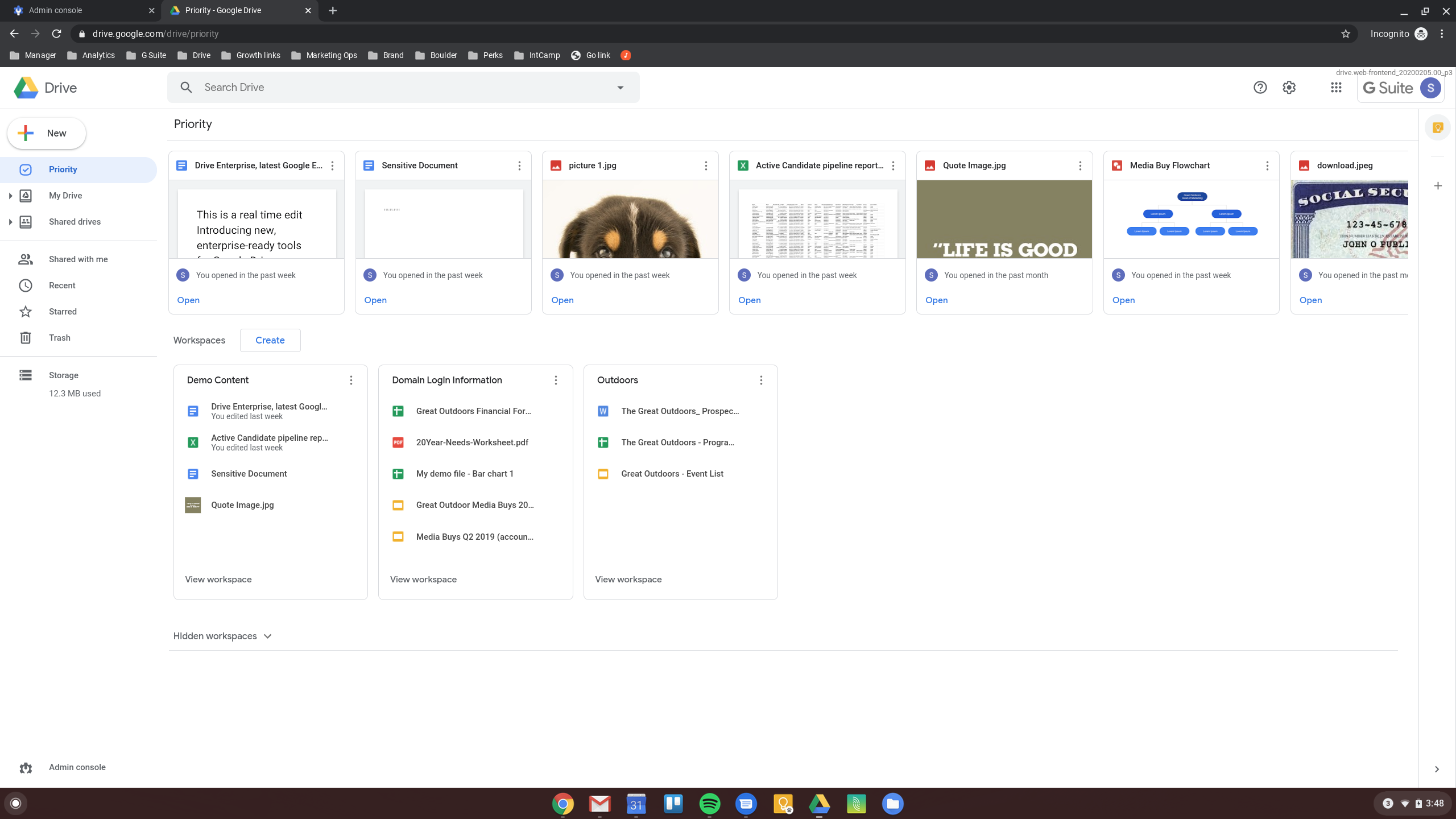   |