
John Crumpton
Technical Director (CTO)
Chose Asana

| Product | Rating | Most Used By | Product Summary | Starting Price |
|---|---|---|---|---|
 Asana | N/A | Asana is a web and mobile project management app. With tasks, projects, conversations, and dashboards, Asana lets an entire team know who's doing what by when, enabling workload balancing. Users can also add integrations for GANTT charts, time tracking and more. | $13.49 per month per user | |
 Google Workspace | N/A | Google Workspace enables teams of all sizes to connect, create and collaborate. It includes productivity and collaboration tools for work: Gmail for custom business email, Drive for cloud storage, Docs for word processing, Meet for video and voice conferencing, Chat for team messaging, Slides for presentation building, and shared Calendars. | $6 per month per user | |
 Notion | N/A | Notion aims to present users with an all-in-one workspace — for notes, tasks, wikis, and databases, from Notion Labs in San Francisco. | $5 per month per user |
| Asana | Google Workspace | Notion | ||||||||||||||||||||||
|---|---|---|---|---|---|---|---|---|---|---|---|---|---|---|---|---|---|---|---|---|---|---|---|---|
| Editions & Modules |
|
|
| |||||||||||||||||||||
| Offerings |
| |||||||||||||||||||||||
| Entry-level Setup Fee | Optional | No setup fee | No setup fee | |||||||||||||||||||||
| Additional Details | A discount is offered for annual billing. | — | A discount is offered for annual billing. | |||||||||||||||||||||
| More Pricing Information | ||||||||||||||||||||||||
| Asana | Google Workspace | Notion | |
|---|---|---|---|
| Considered Multiple Products |  Asana John Crumpton Technical Director (CTO) Chose Asana | Google Workspace  Kristi Porter Chief Do-Gooder Chose Google Workspace There are lots of competitors to various tools in Workspace, like Meet versus Zoom. However, Microsoft is the other big competitor I can think of for Google Workspace as a whole. To me, at least, the strength of Workspace is how easy it is to share and collaborate with others. …  Ed Hart Chief Marketing Officer Chose Google Workspace G-suite has been the preferred solution, particularly compared to Microsoft, particularly because of cost, ease of administration and users general familiarity with Google applications since so many of our folks use the same apps and services personally as well as …  Megan Ronecker Owner and Head Designer Chose Google Workspace I actually never researched anything else - I loved Gmail for business and then started using G Suite when it changed. I love it, so I've never even looked into alternatives. The email is great, the documents you can create are great, and the way you can sync everything …  Mike Madsen Operations Manager Chose Google Workspace G Suite is a much more cost efficient way of managing email and documents for a small organization than any other tools we've worked with. A far more robust and diverse option than most and also one that has been financially feasible for us in our cash starved environment as … |  Notion  Nathan Winkelman Marketing Director Chose Notion Notion was more robust than Asana and allowed for greater flexibility. It feels like Notion also makes up product updates more frequently and adds new features on a consistent basis to help the product continually improve. It Notion works better and allows for more in-depth …  Braxton Bragg VP of Growth Chose Notion I've used Notion only against my will and better judgment, when founders have preferred it. As a startup leader, my recommendation is typically to stick with Google Workspace as you can do everything that you can in Notion, and more, without any additional expense or onboarding …  Divesh Sood Product Marketing Leader Chose Notion  April Jordan CMO Chose Notion Notion is much more robust than Google Tasks, which I find very limited. Notion is far more customizable and affordable than Asana, which is more of a turnkey solution for teams that want to work within a pre-defined structure. Notion and ClickUp are comparable, in my opinion, in …  Juliana Guzzo Bertolini Operations Assistant Chose Notion because Notion is more comprehensive and offers greater possibilities.  José Francisco Laguna Technical Writer Chose Notion It's a combination of the three put together but with the added benefit of web hosting being a part of its core. The other tools are more the same thing, with just a couple of different elements in between. Notion combines them all and consistently adds new functions to its core. |
| Asana | Google Workspace | Notion | |||||||||||||||||||||||||||||||||||||||||||||||||||||||||||||||||||
|---|---|---|---|---|---|---|---|---|---|---|---|---|---|---|---|---|---|---|---|---|---|---|---|---|---|---|---|---|---|---|---|---|---|---|---|---|---|---|---|---|---|---|---|---|---|---|---|---|---|---|---|---|---|---|---|---|---|---|---|---|---|---|---|---|---|---|---|---|---|
| Project Management |
| ||||||||||||||||||||||||||||||||||||||||||||||||||||||||||||||||||||
| Professional Services Automation |
| ||||||||||||||||||||||||||||||||||||||||||||||||||||||||||||||||||||
| Communication |
| ||||||||||||||||||||||||||||||||||||||||||||||||||||||||||||||||||||
| File Sharing & Management |
|
| Asana | Google Workspace | Notion | |
|---|---|---|---|
| Small Businesses |  Stackby Score 9.0 out of 10 |  Microsoft 365 Business Premium Score 8.9 out of 10 | Stackby Score 9.0 out of 10 |
| Medium-sized Companies |  InEight Score 9.5 out of 10 | Microsoft 365 Business Premium Score 8.9 out of 10 |  Troop Messenger Score 9.8 out of 10 |
| Enterprises | InEight Score 9.5 out of 10 | Microsoft 365 Business Premium Score 8.9 out of 10 |  HCL Connections Score 9.0 out of 10 |
| All Alternatives | View all alternatives | View all alternatives | View all alternatives |
| Asana | Google Workspace | Notion | |
|---|---|---|---|
| Likelihood to Recommend | 9.0 (208 ratings) | 8.6 (120 ratings) | 8.6 (85 ratings) |
| Likelihood to Renew | 9.6 (34 ratings) | 10.0 (5 ratings) | 10.0 (1 ratings) |
| Usability | 8.2 (36 ratings) | 8.6 (11 ratings) | 8.4 (55 ratings) |
| Availability | 8.4 (2 ratings) | - (0 ratings) | - (0 ratings) |
| Support Rating | 5.0 (42 ratings) | 2.2 (12 ratings) | - (0 ratings) |
| Implementation Rating | - (0 ratings) | 9.1 (1 ratings) | - (0 ratings) |
| Product Scalability | 8.2 (1 ratings) | - (0 ratings) | - (0 ratings) |
| Asana | Google Workspace | Notion | |
|---|---|---|---|
| Likelihood to Recommend | Asana
 Marina Torttoli Marketing Director | Google
| Notion Labs, Inc
April Jordan CMO |
| Pros | Asana
 Ammar Aboalrub Freelancer | Google
| Notion Labs, Inc
|
| Cons | Asana
| Google
| Notion Labs, Inc
|
| Likelihood to Renew | Asana
 page V CEO (Chief Executive Officer) | Google
| Notion Labs, Inc
 Mantra Manan Saraswat Product Manager |
| Usability | Asana
| Google
| Notion Labs, Inc
 Larissa Bravim Furlan Operations Analist |
| Reliability and Availability | Asana
 Ronen Soreq Project Manager | Google No answers on this topic | Notion Labs, Inc No answers on this topic |
| Support Rating | Asana
 Adam Lumley Director of Marketing & Communications | Google
| Notion Labs, Inc No answers on this topic |
| Implementation Rating | Asana No answers on this topic | Google
 Russ Michaels Jedi Master | Notion Labs, Inc No answers on this topic |
| Alternatives Considered | Asana
 Rafiqul Islam Full-stack Software Engineer | Google
Kristi Porter Chief Do-Gooder | Notion Labs, Inc
|
| Scalability | Asana
Ronen Soreq Project Manager | Google No answers on this topic | Notion Labs, Inc No answers on this topic |
| Return on Investment | Asana
Kristi Porter Chief Do-Gooder | Google
| Notion Labs, Inc
|
| ScreenShots | Asana Screenshots 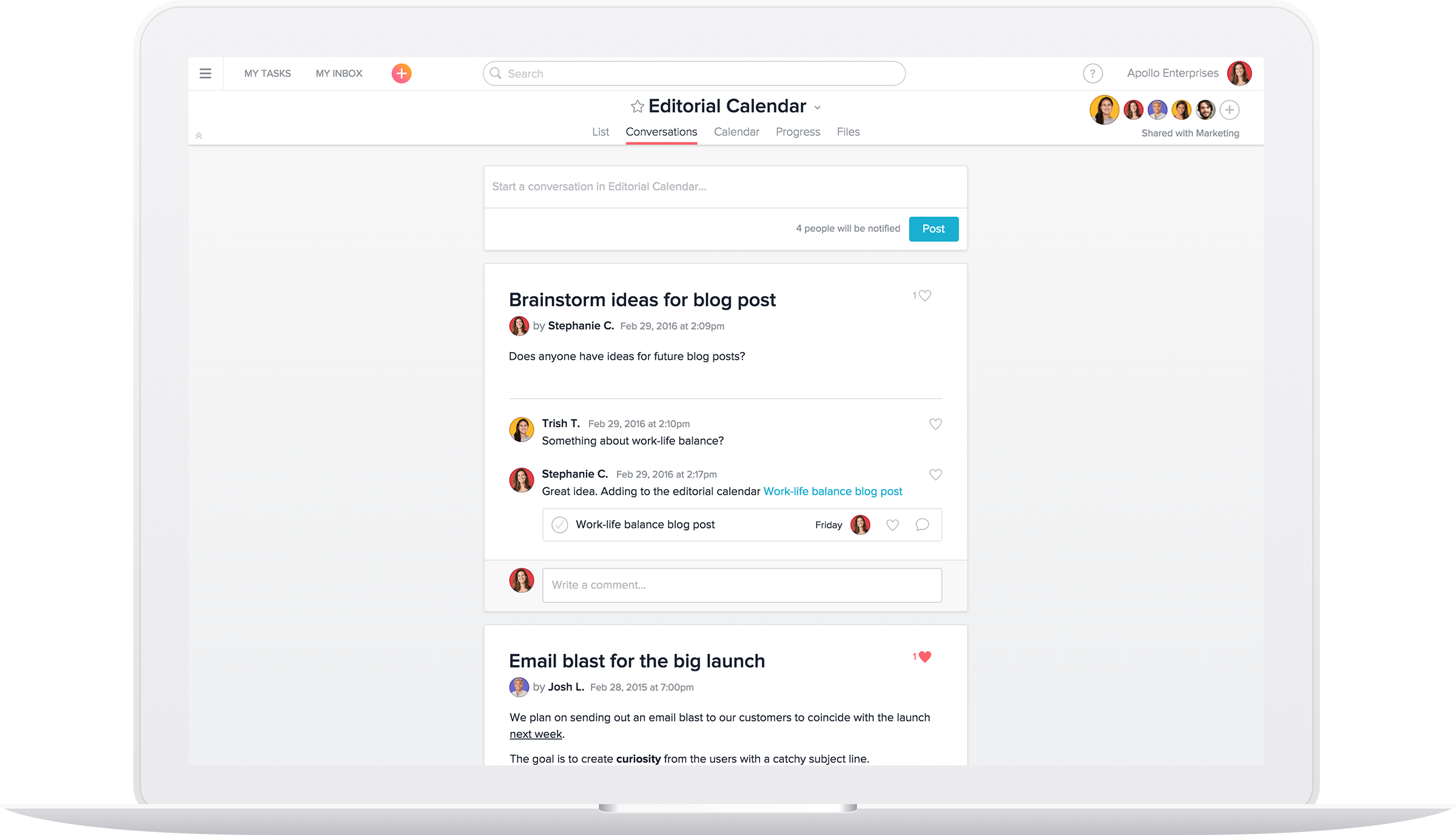     |