
T. Blane McMichen
President
Chose Google Analytics
Campaign tracking requires more set-up in Webtrends, and the additional cost is hard to justify.

| Product | Rating | Most Used By | Product Summary | Starting Price |
|---|---|---|---|---|
 Google Analytics | N/A | Google Analytics is perhaps the best-known web analytics product and, as a free product, it has massive adoption. Although it lacks some enterprise-level features compared to its competitors in the space, the launch of the paid Google Analytics Premium edition seems likely to close the gap. | $0 per month | |
 Twilio SendGrid | N/A | Twilio SendGrid Marketing Campaigns provides users with segmentation, campaign editing, and deliverability. According to the vendor, Twilio SendGrid Marketing Campaigns is trusted by over 80,000 customers globally, including Airbnb, Spotify and Uber. Twilio SendGrid Marketing Campaigns aims to help users by providing: MORE EFFICIENT EMAIL BUILDING The campaign building process is free from frustrating, rigid step-by-step wizards that slow users down. The vendor says… | $15 per month | |
 Webtrends Analytics | N/A | WebTrends provides an enterprise web analytics platform and, according to Forrester, has a strong focus on support for mobile and social channels and a very open platform. Webtrends competes directly with Adobe Site Catalyst, IBM Coremetrics. and comScore DigitalAnalytix. | N/A |
| Google Analytics | Twilio SendGrid | Webtrends Analytics | ||||||||||||||||||||||
|---|---|---|---|---|---|---|---|---|---|---|---|---|---|---|---|---|---|---|---|---|---|---|---|---|
| Editions & Modules |
|
| No answers on this topic | |||||||||||||||||||||
| Offerings |
| |||||||||||||||||||||||
| Entry-level Setup Fee | No setup fee | No setup fee | No setup fee | |||||||||||||||||||||
| Additional Details | — | — | — | |||||||||||||||||||||
| More Pricing Information | ||||||||||||||||||||||||
| Google Analytics | Twilio SendGrid | Webtrends Analytics | |
|---|---|---|---|
| Considered Multiple Products |  Google Analytics T. Blane McMichen President Chose Google Analytics Campaign tracking requires more set-up in Webtrends, and the additional cost is hard to justify.  Alex Nejako Marketing Automation Manager Chose Google Analytics  Adam Hatfield Head of Digital Chose Google Analytics We have been using Google Analytics for over 10 years. Over that time we have periodically reviewed our analytics platforms a number of times. For us, it made more sense to stay with google analytics primarily because if we migrated to another platform we would lose the …  Michael Baker Digital Marketing Manager Chose Google Analytics We tested Webtrends and purchased Omniture (which we used for 2 years). Webtrends wasn't a good fit overall. Omniture was too cumbersome and expensive. The support was HORRIBLE and for a paid product it lacked some basic, no-brainer features.  Jennifer (Utterback) Davis Vice President, Emarketing Chose Google Analytics We have used Omniture and WebTrends. WebTrends is an outdated analytics tool. Omniture, while robust is just not as customizable. Basically, if you have no intention or no need to do customization and you just want out-of-the-box reporting and not willing to spend the time in … | Twilio SendGrid  Brad Emery- CEO The Aimviva Travel Club Founder and CEO Chose Twilio SendGrid We also have Kartra, which is not in your list. Seriously, if I’m running the campaign, it’s SendGrid. I’m not a tech guy, but I can use it and can even design something and get the HTML code out if I need to. My biggest gripe is that it’s so hard to move data across platforms, …  Sam Lepak Head of Digital Marketing Chose Twilio SendGrid Before using SendGrid we used Mailchimp and were very limited with segmenting our users. Then we moved to ActiveCampaign and paid a ton of money for sending a few promotional emails per month. Then we got SendGrid - letting us rid both of ActiveCampaign and Mailgun and having …  Justin McClelland Real Estate Analyst/Software Developer Chose Twilio SendGrid All of the aforementioned competing services don't have a transactional email component along with their email marketing campaign services. Also, SendGrid is the most economical value of the 4, while 2nd place goes to MailChimp with regard to pricing. I liked SendGrid out of … |  Webtrends Analytics  Jaclyn Wallace Campaign Measurement & Reporting Coordinator Chose Webtrends Analytics I find Google Analytics to be very limiting. This may also be the way that the reports have been structured by our organization. It is viewed as an older way to obtain the metrics we are after and no new projects are implemented through Google Analytics.  David Cox Senior Business Intelligence Analyst Chose Webtrends Analytics We currently use WebTrends, Google Analytics, Kissmetrics and ClickTale. I would like us to consolidate our activities to be focused on just Webtrends as it covers all of the requirements we have very well.  Nathan Collins CRM Analyst Chose Webtrends Analytics Using Omniture at my current place of employment and using Google Analytics as a backup at both, Webtrends is the clear superior product. I go back to how easy the UI is to navigate and how simple it is to get user level data that isn't duplicated or doesn't try to pigeon hold …  Mary Kay Scott Web Developer III Chose Webtrends Analytics Compared to WebTrends, Google Analytics has a slicker interface, provides live site usage data, and is easier to jump into with basic usage. These days users expect to be able to create their own reports as needed, rather than have an "expert" do it for them. They are used to …  Matthieu Dejardins Head of Web Analytics & Testing Chose Webtrends Analytics Webtrends was selected because of the price for Google Analytics Premium ($110k per year) and Adobe Omniture Analytics (twice the price). Clearly, it needed the Visitor Data Mart to get additional capability that you would expect as part of a Web Analytics suite. In our case, …  Brian Mackintosh Director of eCommerce Chose Webtrends Analytics I have only had significant experience with Google Analytics (GA) and WebTrends in this space. Overall - it is easier to learn and modify GA reports as a casual user - I always struggled with the fact that GA only offered partial data (sampling based).  Chaim (Daniel) Arnstein Consultant (6+ Years) Sr. Systems Analyst - VP (7 Years) Chose Webtrends Analytics Have not use Webtrends competitors  Kevin Ornduff Marketing Analyst Chose Webtrends Analytics Webtrends is just an option, depending on client budget. It's a simple analytics tool that does the job but we always recommend Omniture whenever possible.  Adam Krause Manager of Web Analytics Chose Webtrends Analytics We evaluated Google Analytics, but we picked Webtrends as it offered better value for the price. |
| Google Analytics | Twilio SendGrid | Webtrends Analytics | |||||||||||||||||||||||||||||||||||||||
|---|---|---|---|---|---|---|---|---|---|---|---|---|---|---|---|---|---|---|---|---|---|---|---|---|---|---|---|---|---|---|---|---|---|---|---|---|---|---|---|---|---|
| Web Analytics |
| ||||||||||||||||||||||||||||||||||||||||
| Email & Online Marketing |
| ||||||||||||||||||||||||||||||||||||||||
| Reporting & Analytics |
| ||||||||||||||||||||||||||||||||||||||||
| Pre-Send Testing |
|
| Google Analytics | Twilio SendGrid | Webtrends Analytics | |
|---|---|---|---|
| Small Businesses |  StatCounter Score 9.0 out of 10 |  Mad Mimi Score 10.0 out of 10 | StatCounter Score 9.0 out of 10 |
| Medium-sized Companies |  Optimal Score 9.1 out of 10 |  VerticalResponse Score 10.0 out of 10 | Optimal Score 9.1 out of 10 |
| Enterprises | Optimal Score 9.1 out of 10 |  Emma by Marigold Score 9.3 out of 10 | Optimal Score 9.1 out of 10 |
| All Alternatives | View all alternatives | View all alternatives | View all alternatives |
| Google Analytics | Twilio SendGrid | Webtrends Analytics | |
|---|---|---|---|
| Likelihood to Recommend | 8.5 (192 ratings) | 5.8 (61 ratings) | 7.1 (30 ratings) |
| Likelihood to Renew | 9.0 (51 ratings) | 7.0 (1 ratings) | 5.4 (25 ratings) |
| Usability | 7.4 (19 ratings) | 5.9 (8 ratings) | 5.4 (7 ratings) |
| Availability | 10.0 (4 ratings) | - (0 ratings) | 9.0 (4 ratings) |
| Performance | 10.0 (2 ratings) | - (0 ratings) | 8.2 (3 ratings) |
| Support Rating | 7.0 (42 ratings) | 3.0 (9 ratings) | 8.8 (8 ratings) |
| In-Person Training | - (0 ratings) | - (0 ratings) | 9.7 (3 ratings) |
| Online Training | 10.0 (2 ratings) | - (0 ratings) | 9.0 (4 ratings) |
| Implementation Rating | 9.0 (7 ratings) | - (0 ratings) | 9.9 (5 ratings) |
| Configurability | 6.0 (2 ratings) | - (0 ratings) | 7.1 (2 ratings) |
| Ease of integration | 10.0 (1 ratings) | - (0 ratings) | - (0 ratings) |
| Product Scalability | 10.0 (2 ratings) | - (0 ratings) | - (0 ratings) |
| Vendor post-sale | 10.0 (1 ratings) | - (0 ratings) | 9.0 (1 ratings) |
| Vendor pre-sale | 9.0 (1 ratings) | - (0 ratings) | 9.0 (1 ratings) |
| Google Analytics | Twilio SendGrid | Webtrends Analytics | |
|---|---|---|---|
| Likelihood to Recommend | Google
 sandro merkvilishvili Head of e-commerce deparment | Twilio
| Webtrends
Chaim (Daniel) Arnstein Consultant (6+ Years) Sr. Systems Analyst - VP (7 Years) |
| Pros | Google
| Twilio
| Webtrends
 Mitchell Teixeira Consultant |
| Cons | Google
| Twilio
 Evan Laird Chief Marketing Officer | Webtrends
 Chris Grant Associate Director of Analytics |
| Likelihood to Renew | Google
| Twilio No answers on this topic | Webtrends
|
| Usability | Google
 Victor Campos Web Developer | Twilio
| Webtrends
|
| Reliability and Availability | Google
| Twilio No answers on this topic | Webtrends
|
| Performance | Google
| Twilio No answers on this topic | Webtrends
Adam Krause Manager of Web Analytics |
| Support Rating | Google
 Sarah Hoffman Media Director | Twilio
 Bryan McAnulty Owner / Founder | Webtrends
 Matthew Koppel Analytics and Insights Supervisor |
| In-Person Training | Google No answers on this topic | Twilio No answers on this topic | Webtrends
Adam Krause Manager of Web Analytics |
| Online Training | Google
 Roy Morejon President | Twilio No answers on this topic | Webtrends
Adam Krause Manager of Web Analytics |
| Implementation Rating | Google
 Joshua Van Horsen Marketing Manager | Twilio No answers on this topic | Webtrends
Mitchell Teixeira Consultant |
| Alternatives Considered | Google
| Twilio
 Alex Richards Chief Information Officer & Co-Founder | Webtrends
|
| Scalability | Google
| Twilio No answers on this topic | Webtrends No answers on this topic |
| Return on Investment | Google
 Heide Rembold Director of Marketing & Analytics | Twilio
| Webtrends
 Lindsay Buescher Senior Manager, Analytics |
| ScreenShots | Webtrends Analytics Screenshots  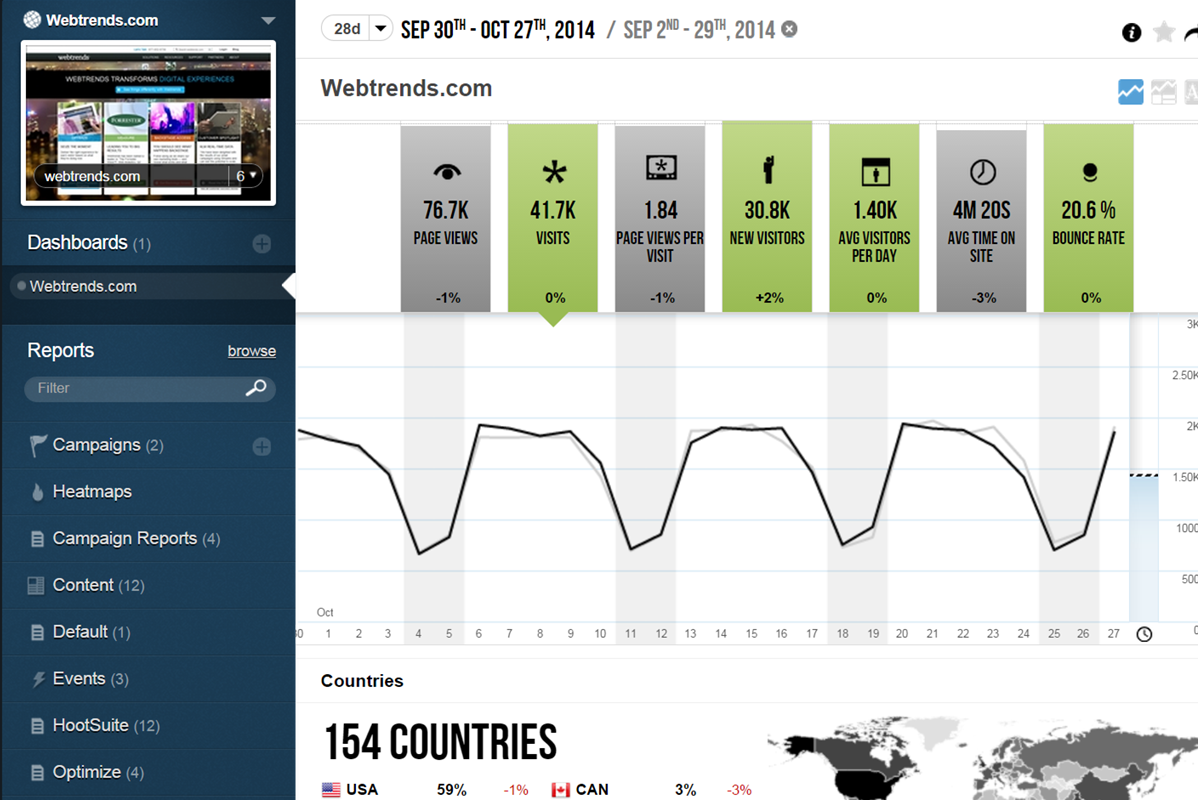 |