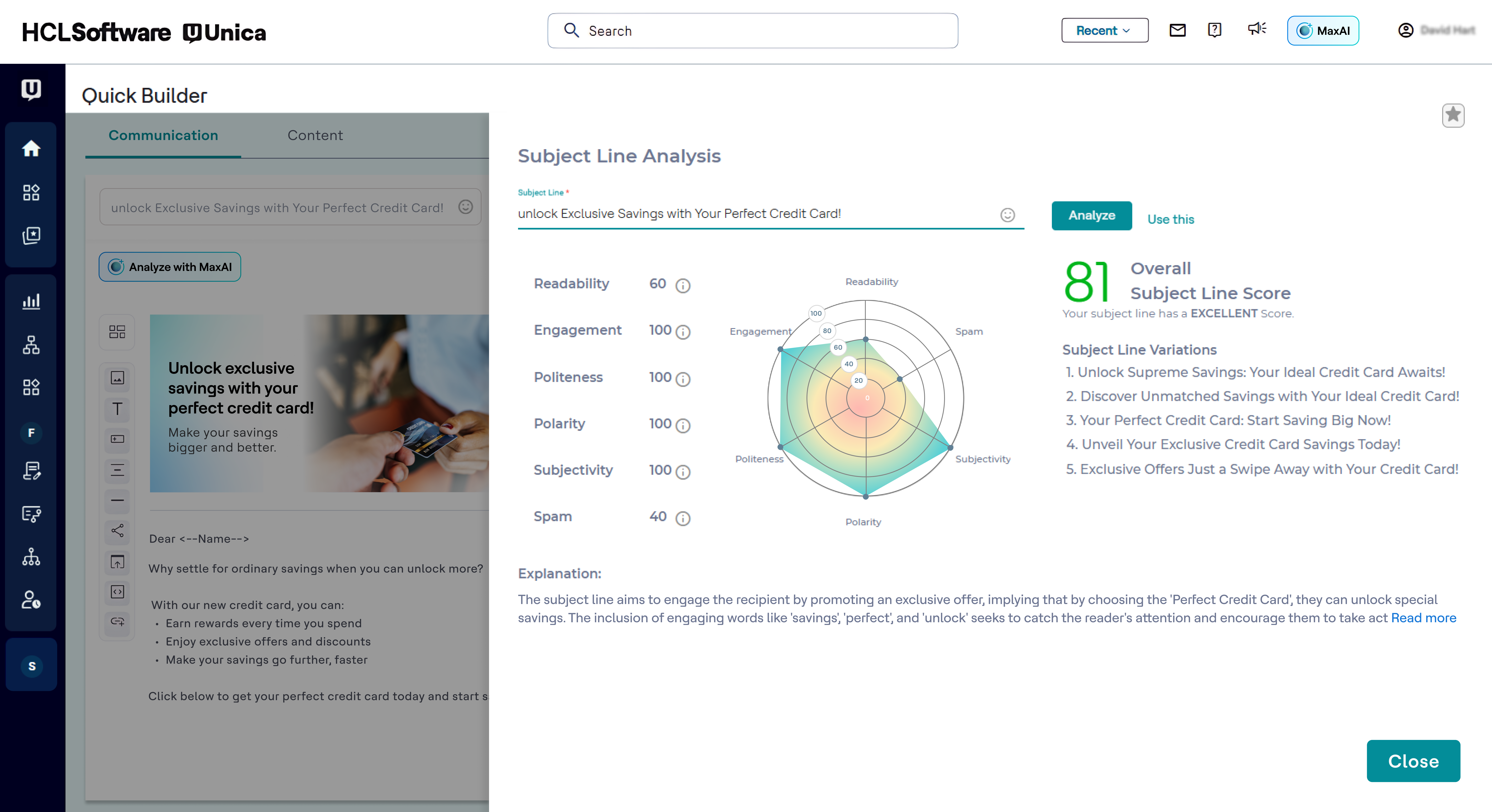
HCL Unica is available as a cloud or on-premise solution that provides fully integrated marketing automation software for enterprise. It includes enterprise marketing automation tools that optimize marketing activities, to ensure excellent customer experiences and data privacy.
N/A
Smartsheet
Score 8.4 out of 10
N/A
Smartsheet is an online project management and collaboration tool. It includes automated alerts, instantaneous updating and sharing across team members, resource management, nested tasks organized in a hierarchy, a Gantt chart view, exportable and automated reports, and integration with email.
$12
per month per user (up to 10 users)
Wrike
Score 8.5 out of 10
Mid-Size Companies (51-1,000 employees)
Wrike is a project management and collaboration software. This solution connects tasks, discussions, and emails to the user’s project plan. Wrike is optimized for agile workflows and aims to help resolve data silos, poor visibility into work status, and missed deadlines and project failures.
$240
per year 2 users (minimum)
Pricing
HCL Unica
Smartsheet
Wrike
Editions & Modules
No answers on this topic
Pro
$12
per month per user (up to 10 users)
Business
$24
per month per user (3 user minimum)
Enterprise
Contact Sales
Advanced Work Management
Contact Sales
Wrike Free
$0
per month per user
Wrike Team
$10
per month (billed annually) per user (2-15 users)
Wrike Business
$25
per month (billed annually) per user (5-200 users)
Apex
Request a quote
per month per user
Pinnacle
Request a quote
per month per user
Offerings
Pricing Offerings
HCL Unica
Smartsheet
Wrike
Free Trial
No
Yes
Yes
Free/Freemium Version
No
No
Yes
Premium Consulting/Integration Services
No
No
Yes
Entry-level Setup Fee
Optional
No setup fee
No setup fee
Additional Details
—
A discount is offered for annual billing.
Every premium plan begins with a 14-day trial period.
Smartsheet is a must to companies that are in need of automating key business processes that will save them time and eliminate productivity killers. This software enables teams identify bottlenecks early on tasks and projects that are due so that they are able plan on a course …
Smartsheet is a unique data and project management collaboration tool that sets itself apart from its competitors. Teams have the ability to create extremely customized dashboards that have data flowing to and from multiple worksheets and workspaces. Smartsheet has the ability …
I was attempting to do all I've described with Google Sheets & SharePoint. Google Sheets didn't have all the functionality we needed. SharePoint was too difficult to set up and doesn't work well with Mac users. None of the solutions I listed could match Smartsheet's versatility …
Well, Wrike is our team standard. However, the only problem are some contributors (guests) cannot collaborate. Smartsheet might be another choice for us, since Wrike is more expensive and requires all collaborators to get accounts.
We continue to use these products throughout our company; however, Smartsheet required a significant amount of time for onboarding and training a champion user, and Basecamp didn't provide the visibility or functionality that Wrike offered. We used Basecamp as a team for a …
Wrike is a unique and wholesome tool that would provide you with all the views like Smartsheet and also all the required features for agile work management like JIRA. However these are tools probably are great at what they do in specific areas and Wrike has not yet just …
We use both Wrike and Smartsheet to satisfy our necessities. Smartsheet gives us a platform to input more information, while in Wrike we stablish contact with our customers for proofing before product development; information that goes directly into our Smartsheet once the …
We used Trello (free version) previously and it worked for us for when we were smaller and not ready to spend on a true PM software. The other options either did not fit from a functionality or price standpoint when we were comparing them. Smartsheet checked the boxes we needed.
I could list a ton more... but in reality, what has been a nice trend in this industry is that the top competing platforms with Wrike, all have adapted and added very similar features, things that didn't exist 5 years ago, are commonplace today among these listed. I would say, …
Verified User
Director
Chose Wrike
Wrike is incredibly robust and customizable in a way that I have not found these other tools to be.
Compared to other project management software we have used, Wrike is easy to implement and garner user acceptance. Other applications we have used and complex to configure and maintain, whereas Wrike is intuitive and simple to understand out of the gate. The communication …
Verified User
Program Manager
Chose Wrike
Wrike has better customization and integrations Flexibility to give different access depending on what it is needed. Spaces provide independence for each Team to set up what they need Open to feedback from users and implementing changes suggested by users Learning material …
Verified User
Project Manager
Chose Wrike
Wrike has more features than most of the competitors we evaluated, and is a much more flexible tool in terms of being able to mold to any use case. The UI of Wrike is clean and easy to look at and navigate, and it allows each team and each user to customize their experience and …
Verified User
Director
Chose Wrike
clean, aesthetic and straightforward. I really love Wrike's flexibility and customization.
My company already had selected Wrike before I joined. From my experience, it's easier on the eyes, better CX, customisation and automatisation.
Verified User
Project Manager
Chose Wrike
What Wrike does better than all of the above is to provide a tool that can handle both Waterfall and Kanban. Usually tools lean one way or the other, or they do one well and the other is terrible. Wrike seems a bit more agnostic and allows you to design how you want to manage …
Verified User
Account Manager
Chose Wrike
Wrike offers way more tools within the platform than Jira
Slack is nice but more for chats and messages I found rather than workflow. Wrike was more well known and my company valued it more based on satisfaction and popularity.
When balancing needs of Roadmap Planning, Program Management, Project Management, Work Management, Queue Management, Ticket Management, I think Wrike hits the perfect balance of usability and configurability with the power to scale effectively while maintaining governance, all …
Verified User
Account Manager
Chose Wrike
Asana is a really good competitor when it comes to project management. We still utilize Netsuite for billing and resource management. Ultimately, we selected Wrike for a multitude of reasons: user friendly interface, highly customizable templates, ability to seamlessly …
I think it is wel suited for a business with a lot of one on one relations in the database. For example a supermarket that sells products to a client and gives a reduction on that product. It is nice if the selection process is not to complex and does not involve to many calculations. It is also nice if it is very clear what you want to follow up. In our environment we have lots of many-to-many relations. for example one product is held by more then one client. And that client might have more of those products with other clients. These kind of situation demands for a lot of calculations with derived fields(*), and there things go far too slow. Unica is probably not such a good solution for us, because our environment is too complex, and so is to process of creating the selection, we often have to change things in the selection flows. Because of the complexity it is difficult to see what the flow is exactly doing afterwoods, it also takes to much time to modify existing campaigns. The interface is not handy to work with, if you have long lists of variables, of tables or derived fields(*) you have to scroll through trough them, you can not really search them or reorder them. You can not drag and drop fields or other objects like derived fields in the flow, what would be easy if you have to make frequent changes to the proces flow. When you copy objects something the content of the object changes because the links with other objects or lost. (*) derived field: field to calculate something
Smartsheet shines for collaboration. When you have multiple people involved with planning events Smartsheet makes it easy to share and collaborate. For instance, multiple people can be in Smartsheet working at the same time. Also setting permissions for exactly those who need to know is quite easy with Smartsheet. For data analytics and general spreadsheet purposes Excel is better but for project management and event planning Smartsheet is superior
I think that Wrike is customizable enough to fit most needs, so I would generally recommend it as a starting point to anyone that is looking for a project management tool. Some people on my team don't like it, but I think that is moreso due to lack of exposure than any flaws in the tool itself. I predominately taught myself many of the features, and I found it to be straightforward. There is lots of great documentation out there, plus the community forums are incredible helpful as well. Wrike might not be THE perfect tool for every single need, but I think that there would be very few situations where it would ultimately be incompatible with a team's workflow needs.
Ability to translate Multiple SQL queries into a very easy to use visual GUI.
Provides the ability to pre-define segments, run them once in off hours, store them in their own system tables for quick youth and a significant reduction in CPU utilization on the database.
It’s use of Reusable objects. Including user variables to pre-define calculations one time, macros that you can create and pass values to parameterize the SQL code And the creation of templates to easily replicate work.
It’s ability to bring in external data on the fly that can very easily be mapped into any flowchart.
It’s flexibility and creating UNIX script via triggers to automate sending of files to multiple vendors with different FTP sites
It’s flexibility in the output layouts that it can create.
Its hard to overstate the value of familiarity. Being able to use a tool that has some familiarity takes away the time needed to train and orient employees on a new tool and allows an organization to hit the ground running.
Smartsheet covers most of the basics of a project management tool, the usual tasks, milestones and project viewing options.
For data viewing, you get multiple data viewing options including a calendar view (good for marketing teams and those who work around scheduling), Kanban, Gaant etc
Greater integration of real time (Interact) capabilities with outbound channels, in particular IBM eMessage Email & SMS delivery.
Additional outbound channels to be integrated into eMessage, including Facebook Fanpage & Twitter DM broadcasts. At the moment these are possible only through custom additional integration.
Support for additional marketing database technology, e.g. MySQL, Exasol, ParAccel, WX2.
Provision of database technology with software purchase, as Web technology (IBM WebSphere Express) is supplied for free, but no database is supplied - since IBM also market DB2, which is a supported technology it seems a shame.
Smartsheet set up is similar to Excel, yet when you upload an Excel file, things like conditional formatting are lost. Smartsheet has its own conditional formatting, and you have to reinstate the rules. It would be great if those would apply automatically once a file is uploaded
Some Smartsheet management and access rules can take some tweaking to work properly. This may be a case of offering more info to admins so they can apply these better and with more efficiency
There are three main factors to renew a licence: 1) Cost to migrate to another platform would be rather expensive and time consuming, plus the requirement of retraining employees to use a new tool 2) It has been proven time and time again that it is a market leader in the space (10 years +) 3) It can be built upon, with the addition of additional IBM EMM modules - despite theories it does have very strong digital capabilities.
It definitely meets our needs as far as organizing and archiving our tasks and files. As we train more staff to view it, I see opportunities for more improvement, which I am sure this program can handle. I look forward to seeing continued improvement from Smartsheet on their capabilities and functionality.
I wish that Wrike had more drag and drop functionality that would be connected to assignee and also I wish that the finish date of a task would update to the date where you checked completed. It does not do that. Also finishing a task doesn't move the start date of the next task it "protects your time in that way", but our management team wants us to quickly see what we have down the pipeline rather than having to scroll down the list of upcoming tasks.
Smartsheet is very easy to learn. However, while I have been able to pick it easily, Microsoft Excel and Project super users that I have trained on Smartsheet get bogged down in the differences and can find it frustrating. Explaining the differences ahead of time and why Smartsheet is being chosen instead of a different software seems to counteract those reactions
It's easy as pie to use. I don't have any issues and only the oldest, most un-tech savvy of coworkers on my team seems to have issues with it. It's quick to pick up, intuitive, and effective. I have no criticism for it.
Over two years of (almost) daily usage without outages. Don't remember any errors. I give it 9 only because some Wrike plugins (for online document edit) are based on NPAPI architecture. These types of plugins are being phased out in new browsers, and NPAPI plugins are disabled by default in recent versions of Chrome so you have to do some browser adjustments when you switch browsers or move to another computer.
Wrike tasks loads fine, but I hate clicking files and wait for a bit of time since it is powerpoint or word, Wrike assumes I want to open those on Wrike. My suggestion is to link it to office 365 so we do not need Wrike based decoder for PPTX and DOCX
I give this rating because it fills a niche in the market. MS Project scares many away from proper task management but there are limited tools our there, especially cloud-based that are mobile-friendly. Smartsheet fills this market gap, especially for small to medium-sized businesses. IT is not fair to compare it to MS Project, but fairer to see what gaps it fills.
During my learning phase with Wrike, I initially struggled with setting up automation rules and request forms. However, Wrike support was always my go-to, resolving issues within seconds or minutes. Their assistance made the learning process much easier. My best experience was receiving step-by-step screenshots to follow, with the support team on standby until I was completely satisfied.
I love the Wrike training options. Wrike Discover has tons of courses, learning plans, certifications, etc. This is an area where Wrike definitely shines! I wish these resources were more in your face for new people, because it seems like a lot of coworkers didn't know all of this training was available to them.
- We had to rebuild a part of the datamart afterwards to tighten up and simplify the selection process. But as it was too time consuming to rebuild all the existing campaigns, we no run campaigns on different versions of the datamart. - The response tracking of the campaigns never worked out well, it was impossible to implement a direct response where there is a link between the lead and the response in our operational process
It's absolutely paramount to take a few minutes to actually play with the software. It's nearly impossible to do anything wrong or make a mistake which cannot be fixed easily. Under the help menu is Live Training option. After you familiarize yourself with the commands, watch the live training for some in depth understanding of how to make the software fit your needs perfectly.
There are a lot of bells and whistles in Wrike, and not all of it is easy or intuitive to understand once it's plopped in your lap. It's easier when there are a few choice people who understand Wrike as a platform and articulate it in such a way where it makes it easy to pass it along to others in the group
The contact history and the response history are so powerful. You can track whatever you want to help the call center to push relevant offers to our customer. In addition, predictive models can be built, with patience, in IBM Campaign. If you have some complaints from the call center about any campaigns, you can easily validate it into the contact or response history.
Jira and Redmine are much more robust and technologically advanced project management solutions. I enjoy using either when managing a very large project. However, I prefer to use Smartsheet for my smaller to medium sized projects. As for Google Drive - I would say that Google sheets and Smartsheet are almost identical in my opinion when it comes to functionality. Personally I prefer to manage smaller projects via Google Drive, but it is a personal preference!
We use both monday.com and Wrike. While Monday does have a better user interface, Wrike allows us to have more visibility into tasks where multiple people are collaborating. And also to receive project brief-ins and requests for new projects. We use both differently and I would say for us Wrike is more the collaboration tool than the day to day individual task management tool - and it works great.
The sky is the limit for what can be done in Wrike. We started with 1 use case and within 5 months we migrated several key business practices over to Wrike because they were easier to manage. Use cases so far: process improvement, management review, corrective actions, maintenance requests, month-end financial closing, and document management. As we grow, it's easy to imagine putting even more into Wrike where it becomes a cornerstone for how we do business
Different teams (e.g., contracting, compliance, provider relations) can view updates in real time, comment directly on tasks, and escalate items when needed.
Wrike allows us to template the contracting process (from intake to signature) to ensure consistency across payers and reduce administrative overhead.
Leadership can see the status of negotiations at a glance, identify bottlenecks, and prioritize resources accordingly.