Mailchimp is an email marketing and marketing automation platform. Beyond just tracking how campaigns perform, Mailchimp takes it a step further by analyzing data from over half a billion emails to show why campaigns perform, driving informed decisions.
$0
per month
Shopify Plus
Score 8.9 out of 10
N/A
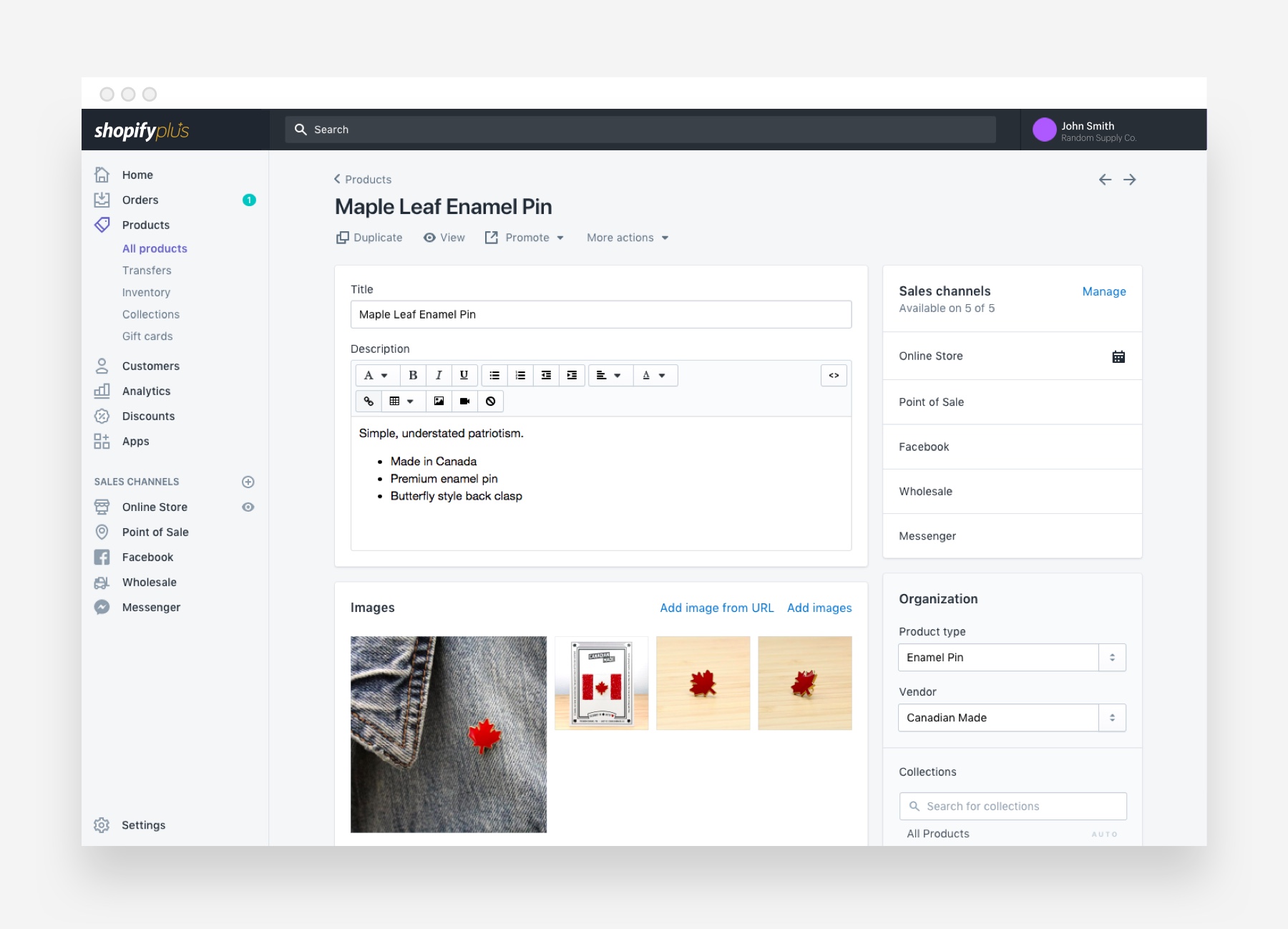
Shopify Plus is an eCommerce solution built for enterprise-level companies that enables them to sell online and offline across social channels like Facebook , Pinterest, and marketplaces like Amazon and eBay.
$2,300
per month with a 3-year commitment
Squarespace
Score 8.4 out of 10
N/A
Squarespace is a CMS platform that allows users to create a DIY blog, eCommerce store, and/or portfolio (visual art or music). Some Squarespace website and shop templates are industry or use case-specific, such as menu builders for restaurant sites.
Mailchimp is a bit more expensive than its competitor, Squarespace, but their analytics capabilities are much better. For simpler projects, you can go with the cheap version but if you want to work on the big leagues and need a state of the art product then Mailchimp is …
I have used a lot of email marketing tools over the years and Intuit Mailchimp is one that I keep going back to, it simple and easy to use, no messing around and it does what it says one tin.
Mailchimp is a little more complex and offers features that these other platforms don't have, which makes it ideal for creating high-quality email content. I also very much appreciate how you're able to track your engagement analytics through the Mailchimp platform, allowing …
Constant Contact is more expensive and hasn't (in the past) really had an A/B testing component. Despite that, it generally had better customer service. We decided to go with Mailchimp because of cost reasons and its more attractive formatting. I also think Mailchimp now …
Mailchimp is a solid platform that you can depend on. Also, it is very affordable, especially when compared to other tools such as HubSpot. Also, I can see that they are continually working to make the platform better and better. Lastly, we are able to do everything in-house …
Squarespace is a platform meant for creating websites/blogs that also has an eCommerce component layered on top. Conversely, Shopify Plus was build from day one with eCommerce in mind. This is evident throughout the experience, especially with regards to order management, and …
Verified User
C-Level Executive
Chose Shopify Plus
While Squarespace has a more sophisticated site theme and template offering, the inventory management, and drop shipping options (while still not perfect, or ideal) makes Shopify Plus the right choice for powering e-commerce businesses.
I selected Shopify Plus because the clients found it easy to use to manage their website, whenever they needed an update of their website. Shopify Plus is great when it comes to e-commerce websites and should only be used for e-commerce.
Squarespace offers better SEO options and ease of use than Wix/Weebly site builders. Squarespace is easy to manage and easy to track inventory and sales. For companies with lower skill sets in-house, it is also very easy to train staff to manage the platform.
It's hard for me to say how Squarespace stacks up against these other options as I've only recently just begun to look into other options. I selected Squarespace initially due to good marketing on their part to get me to look at them first, and also because we initially only …
Squarespace is the top of the pack when it comes to "set it and forget it" website builders. Wordpess is slightly more flexible but still requires a watchful eye from and administrative standpoint. Others, like Drupal, are more extensible but are better for larger websites that …
Wix has a lot more flexibility than Squarespace in designing really original web content, with the same front end, no code style that Squarespace offers. If you want to do something really unique with your site, you can drag and drop something anywhere on the page, similar to a …
Squarespace was much more modern in design and the templates more attractive. The customization options for each template are growing and some sites are almost 100% customizable. Weebly did not have as modern designs or nearly as many customization options.
WordPress.com is the closest competitor to Squarespace that I have used or recommended. WordPress offers significantly more options for templates, plugins, and customizations, but lacks the dead-simple and beautiful approach that Squarespace brings. It is easy to get lost in …
I find Wix to truly be a blank slate. The templates offered can be modified to give you more control over the finished product but the downside to this is the added step of formatting for responsive viewing. It is often overlooked by clients who want to maintain their site once …
For any E-commerce related needs, like you need to see a list of customers who have added products to cart but did not purchase, this can be done really easily, but if your e-commerce provider provides integration, then it is best suited. Most of the systems in the Market provide out-of-the-box integration. Their API is also very easy it can be integrated to any language. You can integrate it into your custom developed system and use the features, like adding customers to specific lists. Also, if your lists become really big, then their system can get a bit slow to respond via API, so you might need a strategy for how you are gonna fetch the data using API.
Shopify Plus makes order management simple and less error prone. Connecting our ERP allows us to seamlessly manage our product listings, fulfill orders, and sync customer data. Limitations to the number of product variants requires attention from our staff to make sure our products sync without issue. Other than being arbitrary, there's really no need to limit the number of product variants.
Squarespace is one of the best solutions out there for building a website or web experience that looks good, has great functionality and is cost-effective, even for smaller businesses. Although most people in marketing will find most of the elements intuitive, if the creator is struggling with any of the functionality, there are many, many support options and other users who can offer assistance.
Mailchimp allows you to manage your mailing list really well. You can subscribe people, unsubscribe people manage the mailing list directly into segments, and what not.
Mailchimp has features where you can create campaigns based on your mailing lists and send out newsletters to your subscribers based on a multitude of parameters that you can setup. Such as send email daily, weekly, monthly and they also have event based mails that you can send out.
Mailchimp also has a feature where you can design your emails. The look and aesthetics are very important when sending emails to your subscribers and all those needs are addressed here.
Stupid simple to use. I know very creative people who cannot code and this is probably the easiest ever platform for them!
Pretty website templates and great functionality with showing off portfolios.
They've already figured out what are the problems that non-coding people have when creating websites and they've figured out a simple solution for all of it.
When linking to our communication service some customers have several emails with orders and only one email generates orders. It would be nice if we could combine all of this information into one account.
If a customer has multiple accounts you are also unable to edit the email address as it is already used, another reason merging accounts would be helpful.
Some of the processes in Shopify are too easy to complete. I’m certain scenarios a peony of “are you sure you would like to complete(this action)” would be extremely helpful and avoid mistakes that are not reversible.
We've had Mailchimp for about ten years, I want to say. I started with the company about four years ago, and I don't see us ever diverting to another source. It's easy for us to use, and we have all our clients already built into the database. I imagine we'll use them for as long as we have the company.
The interface is a bit complicated, and I need to spend some time to learn new functions and understanding how it works. I don't like working with email templates because of the limited customization options. However, functions like AI for generating emails, segmentation, and analytics still work well and are very useful.
It is extremely easy for merchants to get to know how Shopify Plus works. Comparitive to other platforms such as Magento and WooCommerce it is extremely lean and easy to operate, meaning clients who migrate over to it find it very intuitive to use. There is also a lot of guides and up to date information online
It's simple to use for someone who is really good with computers as well as those who are not. I've been using my personal squarespace for years and have also helped clients build a starting page which they are later able to manage theirselves.
I have, in the 4+ years that I've used Mailchimp, never seen an issue that restricted the use of their software/tools. I don't know of a single time when they're system crashed or went down. I could be wrong, but I honestly haven't experienced any issues with outages, errors or unplanned downtime
I haven't noticed any slow speeds from Mailchimp or their tools. I think the landing pages load quickly and look nice. The email reports and editing operates smoothly and doesn't take time to load. Additionally, when I use Mailchimp in conjunction with Zapier + Hubspot I don't notice any drag between any of these tools
Website tools were easy to use and understand so a novice can easily meet or exceed their client's expectations! Loved that we were able to totally customize so that the e-mail we created conveyed our client's overall messaging consistent with their branding! Client love that we can provide turnkey services to support their sales and marketing teams!
Help is available directly from the back end and uses full sentence searching to find answers to questions others may have asked before. With a ton of articles and support questions documents, it is very likely that your question has been answered. If not each page has the ability to open a direct email to support. Each case has a number and can be followed. Responses are often quick and have links and directions clearly stated
It's pretty easy to get up and running! There's a slight learning curve on a few things, but once you find where everything is located, you can import your list and send your first email. It really makes our clients feel great to see how quickly they can get that first email out.
I don't think they are comparable; we use Google Ads to put our website at the top of the list when someone googles certain words. We use meta business to manage our social media. Google aims to gain customers, while Mailchimp is used to interact with both existing and new customers.
Shopify had the quickest go-to-market and most robust API among the products we compared. CommerceCloud required a VERY LONG integration phase that we just didn't have time for. BigCommerce fell short on the number of features and API coverage that we needed. Overall Shopify gave us the most bang for the buck.
Squarespace was quicker to set up and more accessible to manipulate the theme, pictures, and content. The page layouts are more versatile and fluid. With WordPress, more time-consuming efforts go into making a template work the way you want it to (because of the lack of the drag-and-drop grids that Squarespace has).
Mailchimp over the years I've used it has grown in leaps and bounds. They have added so many additional features than were previously available. They are truly an all-in-one marketing platform now. If you're a small operation and just want to add email to your marketing efforts, they're there for you. If you're a larger operation and want to start sending postcard advertisements, they can do that. If you'd good with that and want to kick up your marketing by going social, you can do that on their platform. They are truly able to be as small as you need, but also get quite large in whatever it is you'd like to do through their system.
One of my retail web store clients was sending out email specials and notices about once a month. After clicking the send button, we would watch Google Analytics and the current site users would light up immediately. Often, the current site visitors would pop up to 20, 30 or more after the email was sent. On a normal day, seeing 1 or 2 online users would be OK.
Pretty much in all cases, we could see an uptick in positive activity after sending out a Intuit Mailchimp email to a list.
The pricing of Shopify Plus over the regular Shopify Account solution is about 10x if not 20x the cost. But with this cost comes the increased reliability and trust you have in your eCommerce Software solution/website. We still have a great ROI with the Shopify Plus Pricing.
With Shopify Plus, we have been able to drill deeper into a more robust eCommerce experience for our customers
With Shopify Plus, we have been able to customize our Website further with recommended apps, features, and customizations based on our Dedicated Account Reps expertise.
The cost is reasonably decent. My client says they spent about $20 a month or $240 a year. I asked her if she could add Google AdSense to her blog one day, and they believe they can. They said a custom site would cost them $3000-10,000 depending on who does it. And I agreed, but I found the website they created was on the lower end of that range.