Overview
ProductRatingMost Used ByProduct SummaryStarting Price
SAP Commerce Cloud
Score 8.2 out of 10
N/A
SAP Commerce Cloud (formerly Hybris) is designed to help businesses sell more goods, services, and digital content through every touchpoint, channel, and device through their multichannel ecommerce and order management solution, available as a SaaS or on-premise.N/A
Shopify
Score 8.7 out of 10
N/A
Shopify is a commerce platform designed for both online stores and retail locations. Shopify offers a professional online storefront, a payment solution to accept credit cards, and the Shopify POS application to power retail sales.
$39
per month
WooCommerce
Score 8.4 out of 10
N/A
WooCommerce is an eCommerce plugin for WordPress, developed by WooThemes (recently acquired by Automattic). Like WordPress, it is designed to be an extendable, adaptable, open-sourced platform. WooCommerce allows merchants to sell physical products, downloadables, or services.
$0
Pricing
SAP Commerce CloudShopifyWooCommerce
Editions & Modules
No answers on this topic
Basic Shopify
$39
per month
Grow
$105
per month
Advanced
$399
per month
Shopify Plus
2,000
per month
Shopify Plus
2,300
per month
Woo Enterprise
Contact Sales
Offerings
Pricing Offerings
SAP Commerce CloudShopifyWooCommerce
Free Trial
NoYesYes
Free/Freemium Version
NoNoYes
Premium Consulting/Integration Services
NoNoYes
Entry-level Setup FeeNo setup feeNo setup feeNo setup fee
Additional DetailsA 25% discount is offered for annual billing.WooCommerce is a free and open-source plugin for WordPress. Merchants can host their WooCommerce store on any private hosting service, or with Automattic directly via WordPress.com. Some added features or services from the WooCommerce Official Marketplace may have one time or subscription pricing.
More Pricing Information
Community Pulse
SAP Commerce CloudShopifyWooCommerce
Considered Multiple Products
SAP Commerce Cloud
Chose SAP Commerce Cloud
Shopify is SaaS and has its use cases, we chose Commerce Cloud because we are looking to launch at an enterprise level
Chose SAP Commerce Cloud
Against Odoo: SAP Commerce Cloud is primarily an e-commerce platform as we call it, a vertical solution. Odoo on the other hand is a Monolithic ERP with an E-commerce app not specifically designed for high performance on the web. Against Shopify: Shopify is more of an …
Chose SAP Commerce Cloud
good integration with SAP S/4 HANA and other SAP CX application like CPQ
Chose SAP Commerce Cloud
Better, native integration with other SAP products and almost the same functionalities. Less time spent in integrations means more time available for customization and training.
Chose SAP Commerce Cloud
SAP Commerce Cloud is more powerful tool, provides robust out of box capabilities with great performance.
Chose SAP Commerce Cloud
Having worked with other SAP tools we knew the sales team and how they structure the product offerings. We also felt it was much more robust compared to the other newer or leaner offerings in the space.

We couldn't have a downturn or an outage in the business. That wasn't an …
Chose SAP Commerce Cloud
In terms of price is not comparable with Open Source platforms, but not in capabilities, functionality, security, customization and many other things either. I use this system for different clients, and I can assure you that every project has his right solution. Sometimes SAP …
Chose SAP Commerce Cloud
The SAP Commerce cloud solution is easy to connect with other SAP software that we already use in the organization, and I can state that it assists me in achieving the best implementations produced in various contexts without any trouble or failure, and we can track everything …
Chose SAP Commerce Cloud
SAP Commerce is perceived as old, expensive and not born in the cloud, SAP has a negative touch in general. The monolithic approach is seen negatively, which is a mistake, SAP should sell the current mixed approach better, and focus on a low TCO, which is difficult given the …
Chose SAP Commerce Cloud
SAP Commerce Cloud has tight integration with the backend SAP allowing for our specific business requirements to be tied into the platform. The site user friendliness was intuitive and received nothing but positive feedback from the user community. Data integration and …
Chose SAP Commerce Cloud
It may be customized and is simple to combine with other apps and open-source software.
Chose SAP Commerce Cloud
SAP is a very complex and well-put-together software and there are a plethora of platforms available. SAP Commerce Cloud was chosen as the software for our organization to use because every application can be integrated across all platforms. The training is extensive but there …
Chose SAP Commerce Cloud
Hybris is a massive enterprise-grade system that is built for scale. If your business has <1000 SKUs in the catalog and lacks a large full-stack +java e-commerce dev team, stick to a lighter, more agile solution. Hybris is a nuclear aircraft carrier, and it will take a lot of …
Shopify
Chose Shopify
We used WooCommerce for many years before switching to Shopify. We switched because WooCommerce is not as user friendly on the backend, whereas Shopify is relatively easy to maintain and update. That said, WooCommerce does have additional functionalities that Shopify does not …
Chose Shopify
Shopify eats woocommerces lunch. Shopify is probably the best all around way to get your business selling without doing it all yourself or involving too many moving parts. It’s not perfect but it’s worth what it costs if you are serious about the longevity of your business. …
Chose Shopify
Shopify is much more user-friendly than WooCommerce and has more robust tutorials, especially for beginners. Shopify also includes more integrations and admin tools that provide an additional later of brand safety for our organization and our agency. Shopify also integrates …
Chose Shopify
Magento is more serious; you'll need support from your digital agency and a retainer for promotions and updates.

WooCommerce is good but becomes expensive with all the extras that shopify has out of the box. And this relies on WordPress which you'll need to maintain and keep …
Chose Shopify
Shopify, being wholly self-contained, is a robust solution that doesn't require a developer to get up and running. WooCommerce is a plugin for WordPress that is effective if you already have a robust WordPress site and are tech-savvy. WooCommerce will require a developer's …
Chose Shopify
Shopify vs WooCommerce on WordPress. Shopify was better suited to smaller businesses with fewer design demands, limited budgets, and small product inventories. WooCommerce on the other hand was better suited for larger businesses with more complicated e-commerce needs such as …
Chose Shopify
Shopify is one of the best e-commerce platforms out there. We have tried WooCommerce which is great but it definitely takes a lot more time to integrate and set up.
Chose Shopify
Shopify does not compare to any other platforms out there. It is by far superior,but we have use[d] WooCommerce before.
Chose Shopify
I have used WooCommerce and it definitely works well, but it does not seem to work as smooth as Shopify.
Chose Shopify
Shopify is easy to use. You do not need to install many plugins for it, and if you are using WooCommerce, you will have to install some plugins. With Shopify, you get a high speed hosting and CDN (content delivery network) which will make your website fast. The checkout is also …
Chose Shopify
It’s better than WooCommerce, in my opinion, and the best opinion overall for e-commerce
Chose Shopify
WooCommerce may be a good option for a developer or simple websites for service based businesses (e.g., electrician/cafe/etc). If you are selling a physical or digital product and require the ability to customize your store with any frequency or to track performance etc then I …
Chose Shopify
Shopify allows for companies to quickly and easily get online and selling. However, the more you want to customize the platform, the more you'll realize that other platforms (such as Wordpress + WooCommerce) end up being better because you have access to all of the core code …
Chose Shopify
I havent had a very detailed look at the others. But for us, to migrate the whole infrastructure to something else doesnt make sense. We are happy with Shopify.
Chose Shopify
Shopify is the best tool in the ecosystem because with all the apps in its sphere, you can do almost anything. It also has the best checkout experience one can ask for in the Ecommerce / website space. I think when it comes to shipping inventory and theme management it’s the …
Chose Shopify
Shopify is the number one product if you want to actually have sales. Some other competitors may seem to offer the same suite of functionalities, but Shopify really does stand out a lot by 99.99% availability and the whole shopping experience for your customers.
Chose Shopify
Shopify is easy to navigate and export shipping data to other shipping management tools. We have multiple clients (70+) using Shopify and rarely have issues. With others, we seem to have trouble daily with export to our shipping management tools. In addition to export issues, …
Chose Shopify
Shopify is the best platform where I am handling our different stores. It is a secure and easy-to-use online e-commerce solution. I have been using a lot of software in my organization to gather information about different businesses and sometimes I need to import some data …
Chose Shopify
Shopify has been a great solution! In my opinion it is the perfect balance between ease of use and customizable.
Chose Shopify
The features in Shopify are easy to understand. Different versions for different types of business. Time to market the product is less.
Chose Shopify
Shopify is way easier to set up. No coding needed. All the tools to create your eCommerce are there and are easy to use. You can literally set up a working site in minutes. Most of the initial work is more focused on us making sure we had proper images and product descriptions, …
Chose Shopify
Shopify is really the only contender in the space. They do everything way better than any other platform out there so it is definitely the best option to go with.
Chose Shopify
Shopify is much much simpler than these 2 alternatives. It is aimed at small entrepreneurs or start-ups that cannot afford big costly developments of e-commerce solutions.
Shopify works in a plug-and-play way that allows you to start selling right away and not lose time on the …
Chose Shopify
Wix was vastly more customizable but not built for stores with lots of products. We built a fantastic website on Wix with everything she needed but it had two fatal problems - the first was that it was just too slow to load on the page, and the second was that the products were …
Chose Shopify
We selected Shopify because we did not need a lot of custom functionality but wanted the great UX of Shopify, the integration with our POS, and the out of the box designs that look better in the Shopify marketplace.
WooCommerce
Chose WooCommerce
If someone is tech challenged I would recommend Shopify. If someone is comfortable with WordPress or tinkering with software, I would highly recommend WooCommerce. You can do much more with WooCommerce but you will probably break your website a couple of times in the process. …
Chose WooCommerce
WooCommerce and Shopify both permit essentially limitless customization. However, WooCommerce runs on PHP, a commonly used development language with a thriving community, whereas Shopify uses Liquid, a relatively obscure programming language, in its backend. I'm not I would …
Chose WooCommerce
Shopify while providing a more sophisticated user experience is less easy to integrate with an existing Wordpress website. Hence, WooCommerce is a go-to for those with existing Wordpress websites.
Shopify provides a great store front of its own, and hence may be recommended for …
Chose WooCommerce
Shopify is a premium e commerce platform tailored just for online shops. While WooCommerce is a plugin which has main platform as WordPress. Shopify is costly to have. Most of the basic shop functions that are offered in Shopify can be achieved using WordPress + WooCommerce …
Chose WooCommerce
WooCommerce is a good free version that's very customisable, but is not a smooth or polished platform. If you look at both dashboards between Shopify and WooCommerce you can see the difference is huge.

WooCommerce seems to be built for websites that aren't focused entirely on …
Chose WooCommerce
We were pretty sure we wanted a WordPress site so that we had more control over the site itself, having been burned by third-party vendor sites before. The fact that WooCommerce integrates so well with WordPress was a big selling point for us. Magento would have been too heavy …
Chose WooCommerce
We have used Shopify and definitely prefer it, since Shopify has been around longer and is more tailored to what we are trying to do.
Chose WooCommerce
Since I don't use the e-commerce options constantly for my photography business, I didn't want to pay a monthly subscription and waste that budget during the months when I don't need any online booking options. WooCommerce allows me to install and uninstall plugins as needed to …
Chose WooCommerce
WooCommerce is customizable and can run on any platform. This is a double-edged sword though because you have to be familiar with website hosting. It is also nice that it is free. We compared it to Shopify which is nice because they take care of all of the hosting aspects, but …
Chose WooCommerce
We love the functionality of Wordpress itself, so that's why we ended up using WooCommerce to do checkout instead of going over to the Shopify platform. Wordpress allows us to do so much more with the backend code and customization of our website. We were not impressed with the …
Chose WooCommerce
The level of customization and ease of integration with an existing WordPress website makes it a good choice. Snipcart is better for developers or small sites and Shopify is an amazing e-commerce-optimized platform but if you have an existing website on Wordpress, it is much …
Chose WooCommerce
WooCommerce is great for customization and for customers whose needs grow with their business. With its add-ons, it works for customers of all sizes with a variety of e-commerce needs. It does need more technical development skills to set up compared to Wix or Shopify, which …
Chose WooCommerce
Initially due to budget i have selected the woo commerce but the they dont have customisation as we are need when our customer base is increasing thats why i shifted to big platform like Shopify that give us alot of customisation but it comes with a price...but woo commerce is …
Chose WooCommerce
In my opinion, Shopify is a much better option overall but perhaps more expensive then WooCommerce. I'd recommend Shopify for users with a higher budget as it will deliver a better website in the end
Chose WooCommerce
WooCommerce has been here through many successes and failures for rivals but Shopify has a ton of new features that, in my opinion, the WooCommerce team should take a look at. A modern facelift and a complete review of the systems and I think it'll get to where it needs to be.
Chose WooCommerce
They both are great in terms of usability, Adobe Commerce (Magento) is powerful but provides limited customization than the WooCommerce whereas Shopify is not free and same it doesn't support the customization as much as other platforms do. WooCommerce is free and customizable …
Chose WooCommerce
From a functional perspective this can do everything that the others can do and for many developers it is the preferred platform for online stores that require a high level of customisation. It is an open source platform with a strong community of developers behind it who have …
Chose WooCommerce
They're very similar to be honest, but from our experience and what I've seen online, WooCommerce seems to have better performance and pricing. I think they probably match in quality for most other features
Chose WooCommerce
WooCommerce is cheaper than the other solutions I evaluated. It is a more complicated platform but because of that it is much more flexible. In the end it was an easy choice to go with WooCommerce because we already were using WordPress for our website and it made sense to …
Chose WooCommerce
I have used WooCommerce longer than other products that I have tried. WooCommerce fits my requirements mainly for the value it offers based on the features available for the cost.
Chose WooCommerce
I like WooCommerce because it can be optimized, customized and adapted to every business needs. That's because it's WordPress core, it helps us customize stores in ways we can only imagine and also we can implement Google AMP and PWA easier and faster than with other platforms. …
Chose WooCommerce
One single word: cost!
Most WooCommerce alternatives have very high monthly or annual costs. WooCommerce permits to have an implementation cost (low or high based on customization) and a very low maintenance cost.
Even if some plugins are very expensive, the maintenance cost is a …
Chose WooCommerce
Since WordPress is free, and the core WooCommerce is free, there is zero commitment to the system. Other e-commerce platforms have a monthly fee. Don't get me wrong, if you need the power of something you use the right tool for the job, but if you are okay working the code, …
Features
SAP Commerce CloudShopifyWooCommerce
Online Storefront
Comparison of Online Storefront features of Product A and Product B
SAP Commerce Cloud
8.0
99 Ratings
3% above category average
Shopify
8.4
149 Ratings
8% above category average
WooCommerce
8.0
96 Ratings
3% above category average
Product catalog & listings8.695 Ratings8.8149 Ratings8.095 Ratings
Product management8.495 Ratings8.2147 Ratings8.096 Ratings
Bulk product upload8.191 Ratings8.3125 Ratings7.378 Ratings
Branding8.088 Ratings8.5146 Ratings7.383 Ratings
Mobile storefront7.489 Ratings9.1142 Ratings9.288 Ratings
Product variations8.288 Ratings8.0139 Ratings7.888 Ratings
Website integration8.593 Ratings8.7140 Ratings9.496 Ratings
Visual customization7.990 Ratings8.6146 Ratings7.192 Ratings
CMS7.090 Ratings7.6118 Ratings7.974 Ratings
Online Shopping Cart
Comparison of Online Shopping Cart features of Product A and Product B
SAP Commerce Cloud
8.3
91 Ratings
9% above category average
Shopify
8.5
141 Ratings
11% above category average
WooCommerce
6.3
91 Ratings
19% below category average
Abandoned cart recovery8.014 Ratings8.2131 Ratings5.759 Ratings
Checkout user experience8.590 Ratings8.8139 Ratings6.991 Ratings
Online Payment System
Comparison of Online Payment System features of Product A and Product B
SAP Commerce Cloud
7.8
79 Ratings
7% below category average
Shopify
9.4
143 Ratings
12% above category average
WooCommerce
8.5
85 Ratings
2% above category average
eCommerce security7.879 Ratings9.4143 Ratings8.585 Ratings
eCommerce Marketing
Comparison of eCommerce Marketing features of Product A and Product B
SAP Commerce Cloud
8.1
90 Ratings
5% above category average
Shopify
8.3
146 Ratings
8% above category average
WooCommerce
6.3
94 Ratings
20% below category average
Promotions & discounts8.485 Ratings8.5140 Ratings7.491 Ratings
Personalized recommendations8.182 Ratings8.432 Ratings5.174 Ratings
SEO7.879 Ratings8.0135 Ratings6.483 Ratings
eCommerce Business Management
Comparison of eCommerce Business Management features of Product A and Product B
SAP Commerce Cloud
8.3
90 Ratings
3% above category average
Shopify
8.1
147 Ratings
1% above category average
WooCommerce
7.8
93 Ratings
3% below category average
Multi-site management8.285 Ratings6.719 Ratings6.847 Ratings
Order processing8.587 Ratings9.0144 Ratings8.391 Ratings
Inventory management8.580 Ratings7.6143 Ratings8.290 Ratings
Shipping8.180 Ratings8.4135 Ratings8.484 Ratings
Custom functionality8.085 Ratings8.7136 Ratings7.586 Ratings
Best Alternatives
SAP Commerce CloudShopifyWooCommerce
Small Businesses
Ecwid by Lightspeed
Ecwid by Lightspeed
Score 10.0 out of 10
Ecwid by Lightspeed
Ecwid by Lightspeed
Score 10.0 out of 10
Ecwid by Lightspeed
Ecwid by Lightspeed
Score 10.0 out of 10
Medium-sized Companies
Shopify Plus
Shopify Plus
Score 8.9 out of 10
Shopify Plus
Shopify Plus
Score 8.9 out of 10
Shopify Plus
Shopify Plus
Score 8.9 out of 10
Enterprises
IBM Digital Commerce
Score 9.0 out of 10
IBM Digital Commerce
Score 9.0 out of 10
IBM Digital Commerce
Score 9.0 out of 10
All AlternativesView all alternativesView all alternativesView all alternatives
User Ratings
SAP Commerce CloudShopifyWooCommerce
Likelihood to Recommend
8.1
(91 ratings)
8.5
(161 ratings)
8.5
(93 ratings)
Likelihood to Renew
8.1
(4 ratings)
10.0
(16 ratings)
7.0
(4 ratings)
Usability
7.8
(25 ratings)
8.5
(15 ratings)
8.0
(12 ratings)
Availability
-
(0 ratings)
10.0
(2 ratings)
-
(0 ratings)
Performance
-
(0 ratings)
10.0
(1 ratings)
-
(0 ratings)
Support Rating
7.0
(4 ratings)
10.0
(3 ratings)
5.0
(1 ratings)
Online Training
-
(0 ratings)
10.0
(1 ratings)
-
(0 ratings)
Implementation Rating
9.1
(2 ratings)
10.0
(2 ratings)
-
(0 ratings)
Configurability
-
(0 ratings)
-
(0 ratings)
10.0
(1 ratings)
Contract Terms and Pricing Model
-
(0 ratings)
10.0
(1 ratings)
-
(0 ratings)
Ease of integration
9.6
(48 ratings)
10.0
(1 ratings)
-
(0 ratings)
Product Scalability
9.6
(48 ratings)
10.0
(1 ratings)
-
(0 ratings)
Vendor post-sale
-
(0 ratings)
10.0
(1 ratings)
-
(0 ratings)
Vendor pre-sale
-
(0 ratings)
10.0
(1 ratings)
-
(0 ratings)
User Testimonials
SAP Commerce CloudShopifyWooCommerce
Likelihood to Recommend
SAP
SAP Commerce Cloud is well-suited for large enterprises requiring robust personalization, seamless multi-channel integration, and the ability to handle high-volume transactions, especially during peak periods like Black Friday. Its scalability and advanced features make it ideal for businesses needing to manage complex product catalogs and global operations.Enough development capacities are needed to have a best in class shop
Read full review
Shopify
Shopify allowed us to handle matrix items and combined listings. Both of which we could not do on our previous platform. There was some customization involved but overall, it did what we needed it to. The one downside was that if we want to change anything we would have to reload the entire set of matrix items manually.
Read full review
Automattic
WooCommerce is best suited to customers whose website is built on the WordPress platform, and whose development team has a good understanding of plug-in implementation. If your website is not built on WordPress, but on Laravel or React (or any other non WordPress technology), then WooCommerce is not for you. WooCommerce is also great for customers who just need a simple online shopping experience. If your needs involve more complex or immersive features such as timed discounts, pick up locations, delivery reminders, or post shopping feedback surveys, know that you will need to purchase additional add-ons to make to get these features using WooCommerce set up on WordPress.
Read full review
Pros
SAP
  • Centralized Data Management: SAP Commerce Cloud excels in centralizing data from various operational sectors, which is pivotal in the chemicals industry. This feature allows for better oversight and management of complex supply chains, regulatory compliance, and customer interactions. Having a single source of truth for crucial business data minimizes discrepancies and promotes informed decision-making.
  • Real-Time Data Processing: The real-time data processing capability of SAP Commerce Cloud is invaluable. It aids in timely adherence to regulatory changes and helps in meeting customer demands promptly. In a sector where regulations and market conditions are ever-evolving, real-time data processing is fundamental for maintaining compliance and ensuring customer satisfaction.
Read full review
Shopify
  • It's base security and integration with trusted security partners (such as NoFraud) is a game-changer when it comes to reliability and a "hands off approach" for our IT department. The up-time is also very good.
  • It offers a wide range of verified plugins that are (for the most part) easy to install and use for any specific scenario you're looking for.
  • It's Analytics area in the admin is actually nice and offers a wide variety of reports that you can run.
Read full review
Automattic
  • Free base package means I can use it when I need to and not pay for it when I'm not using it
  • I can customize the e-commerce options and integrate the calendar booking
  • Payment processing is quick and easy and I can choose my provider
Read full review
Cons
SAP
  • It's a little pricey; further cost reductions will expand product selection; also, trained operators are required.
  • HAC occasionally functions extremely slowly and does not provide any problem messages; it simply gets stuck. Logging into the Backoffice for testing purposes causes a lot of trouble; it does not enable us to log in in one attempt, and the page refreshes every time we enter in the credentials.
Read full review
Shopify
  • I would love it if Shopify built an in house app which helped us post UGCs and social proof from platforms such as Instagram, Youtube etc. more seamlessly on our website. Right now, we are able to do it through third party apps but the look and feel is just okay.
Read full review
Automattic
  • Because of how the Wordpress database is structured, WooCommerce isn't great for large or complex e-commerce sites.
  • More out-of-the-box options would be nice within the base software.
  • Because add-on plugins are developed by 3rd parties, sometimes you get conflicts that break things.
Read full review
Likelihood to Renew
SAP
SAP Commerce and Spartacus together becomes one of the omnichannel powerhouse of commerce application. It also comes with edge advantage with out of the box integrations with many SAP applications and also non-SAP applciations which gives it edge advantage over other tools. The main reason being the integration becomes easier as SAP shares the common data schema and model across all its product line and new feature releases are compatible with all the SAP product line.
Read full review
Shopify
Nothing we have used in the past or have seen thus far even comes close to offering what we get with Shopify Plus, especially for the price. You cannot even come close to getting what we are getting at the price we pay. We are beyond thrilled and Shopify Plus meets and exceeds all of our needs and expectations. We love it!
Read full review
Automattic
Despite very rare glitches, more connected to an excessive number of plugins, that affect the speed of the site, we are extremely satisfied with the platform, the ability to import and export products, even though we just export them, as we have our proprietary system for updating inventories. We love the ease of upgrading, enhancing, innovating, and the freedom we have to do whatever we want, which is a plus, when you consider Shopify can take down your whole store as they please, if they think you aren't abiding to their TOS or their ever changing set of rules.
Read full review
Usability
SAP
More true headless and a more rationale pricing. Since moving from the Hzbris Monolyth towards SAP Commerce Cloud a lot of progress has been made, but dissecting the monolyth into composable components where you just pay for what you use is still a longer journey and here pricing should be more realistic. Things become so expensive once they have the SAP stamp on them (example the SAP CIAM)
Read full review
Shopify
It is fairly easy to use Shopify regardless of what task you are attempting to perform. Most things are customizable to a degree without requiring coding ability. I have very limited coding experience and have still been able to navigate my way around changing features of the website that require edits to the code with the use of AI and trial-and-error. This previously wasn't possible with the WooCommerce platform.
Read full review
Automattic
It is built on the Wordpress platform, so there are some quirks compared to a dedicated e-commerce product, but it is very intuitive and easy to use, especially for anyone with Wordpress experience. There are numerous great support articles and learning resources available. Significant customization can be achieved with plugins vs other eCommerce platforms, which may require more custom code and have fewer plugin options.
Read full review
Reliability and Availability
SAP
No answers on this topic
Shopify
Shopify support is always available when you need them.
Read full review
Automattic
No answers on this topic
Performance
SAP
No answers on this topic
Shopify
Shopify website speed is quite impressive. Even if we integrate couple apps, it does not hamper the site speed.
Read full review
Automattic
No answers on this topic
Support Rating
SAP
We have the right to open a ticket or submit request to SAP support teams for all the problems we have experienced. They also provide solutions for critical issues within 48 hours. In addition, the product has support documents such as a user guide and admin guide. In addition, there is a strong community of users. In this way, we can access solution of some specific problems that we have fallen on from there.
Read full review
Shopify
In terms of support I give Shopify a 9 out of 10 because they're always very friendly and thorough, and they personally can't solve my problem for me they always point me in the proper direction with the proper information I need to move forward
Read full review
Automattic
not muh support
Read full review
Online Training
SAP
No answers on this topic
Shopify
Shopify offered us several trainings to setup a Shopify store, how to build a brand, SEO, product photography etc. All this content have been super helpful in our journey.
Read full review
Automattic
No answers on this topic
Implementation Rating
SAP
Scalability of the product was good Seamless integrations were helped in reducing the implementation for the development team to integrate with the SAP ERP Product framework helped customer to customize and adapt the new features which were developed basis business processes and ease of customer experience. Deployment and creation of the build becomes very easy with the CCv2 setup.
Read full review
Shopify
Just start now and make the switch, the sooner the better. You will love it and it is really a simple process
Read full review
Automattic
No answers on this topic
Alternatives Considered
SAP
SAP Cloud is much better than GoDaddy. it was a smooth transition and every aspect of the program is easier. My scalability increased greatly from GoDaddy to SAp Commerce Cloud and sales are now tracked easier and inventory is at the touch of a button, making sales much easier than previous software.
Read full review
Shopify
Big Commerce and SAP Hybris are two other platforms we've investigated and Shopify is by far easiest to use and customize. While it doesn't do everything out of the box, the apps do fill in many gaps. The cost however, is probably the biggest selling point against these other two options.
Read full review
Automattic
We were pretty sure we wanted a WordPress site so that we had more control over the site itself, having been burned by third-party vendor sites before. The fact that WooCommerce integrates so well with WordPress was a big selling point for us. Magento would have been too heavy of a lift for our small dev team and we didn't want to rely on Shopify or BigCommerce (though all of those products could have their merits for other projects or clients).
Read full review
Scalability
SAP
The business users/admins were able to quickly segment products by brand, allowing for unique branding and header-less page design. As new products are added to the SAP backend, all characteristics and pricing automatically migrate to Commerce Cloud. We also segment our user sign-on (domains) by brand and allow targeting displays.
Read full review
Shopify
Shopify has basic to high-end plans. The plans grow with the brand`s growth and I love that about Shopify.
Read full review
Automattic
No answers on this topic
Return on Investment
SAP
  • It has a positive impact on my client's business and ROI is higher than expected. As orders count is increasing due to smooth and better experience.
  • My current client's customers have given very positive experience about new website built on SAP Commerce Cloud.
  • Due to SAP Commerce Cloud website rollout is very easy and due to it, my current client has introduced around 25 websites. As SAP Commerce Cloud logic needs to develop once and can be reused for multiple websites easily with minimal effort.
  • Branding is also very easy as promotions, events can be implemented on the website easily and with minimum time.
  • SAP Commerce has helped our client to integrate the Recommendation tool ISS which is easy to configure after this tool product sale is increased. The best thing was that integration was very easy and quick.
  • One option of Blue/Green deployment helping us to check the production release in advance on production environment. Prev we don't have this option and many times face P1 issue in prod which had ruined client reputation. But now this feature is helping lot
Read full review
Shopify
  • It got the store up quickly so the client could start selling. She was previously selling products on Etsy and Facebook and wanted to consolidate everything onto one website, so the main thing Shopify solved was to reduce the store owner's time in managing all her products on multiple sites. Also, we had previously built a website on Wix with all the custom functionality and branding she needed - a truly great, high-end website - but it performed so slowly that it was unusable. So the speed at which Shopify can be set up and then works on the page is appreciable.
  • The website was manageable by the client - she could figure the system out herself after a while so she saved money on costs for hiring developers. She did have to hire developers to customize some of the plug-ins but costs are all relative; it wasn't a high investment compared to building a full e-commerce website. With the complexity and size of her product base and the functionality and branding she wanted to have in a website, and the potential of her business, she would have needed to invest well over $10,000 to get to where she really needs to be. In the end she kept the budget under $5000.00.
  • Costs kept climbing with plug-ins having to be added with everything. My client became more involved in building the website and began to try multiple plugins, and she did not have the skill base to evaluate the plugins functionalities so she chose plugins that did not do everything she needed, and then ended up paying the plugin developers to customize the plugins. So on one hand, it's pretty amazing to be able to bring up an e-commerce website as quickly as a week or so, but on the other hand if you need anything customized or deeper functionality in regards to product searching and filtering on the web page, and management on the backend, it quickly goes beyond the skills of the average person to manage, and above their expected budget as well. In the end my client really did not get anything close to the functionality for the website we had originally envisioned.
  • Shopify was the easiest way we could find to bring the client's products to a global market. We evaluated several other platforms and the functionality simple did not seem to be adequate, so Shopify seemed like the only solution that could do enough of what we needed and still stay within this client's budget. Really the problem in this project was not platform per se but that the budget wasn't large enough. Shopify managed to provide a solution for an ecommerce store with thousands of products on a tiny budget, so in the sense of pure functionality it provided the best value of all the platforms we evaluated. The solution still isn't big enough for this client's business though so, without having insights into this client's post-build sales results, my guess is that because her new website did not make her products easier to sort through, and she likely didn't have much more budget left to invest in SEO and other marketing of the website, her sales probably didn't increase substantially as a result of having built the website. So I think this project all in all did not likely have a high ROI.
Read full review
Automattic
  • Positive: low cost to start up, and allowed us to start selling right away.
  • Negative: better plug-ins have a high cost of entry. For example if you want to do subscriptions you need a paid plugin for it.
  • Positive: easily integrates with PayPal and Stripe.
Read full review
ScreenShots

SAP Commerce Cloud Screenshots

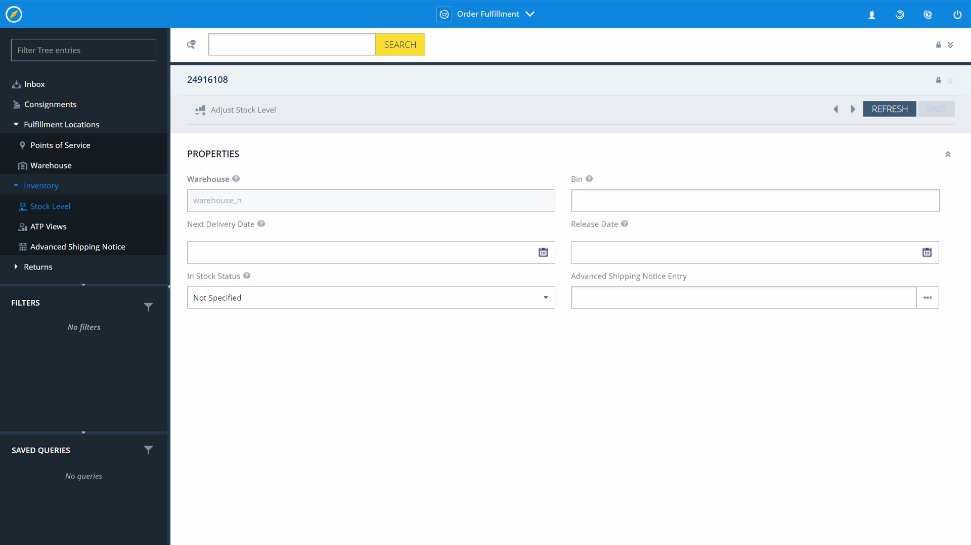
Screenshot of the Product Cockpit for managing catalogs, categories and product contentScreenshot of Order Management Capabilities including sourcing and allocation rulesScreenshot of commerce sites on two different mobile devicesScreenshot of a landing page from an e-commerce siteScreenshot of a web page with product categories and search results from an e-commerce siteScreenshot of headless commerce storefronts

WooCommerce Screenshots

Screenshot of a single product and description.Screenshot of WooCommerce checkout blocks.Screenshot of WooCommerce settings.Screenshot of WooCommerce product editing.Screenshot of WooCommerce products listing.