
TrustRadius: an HG Insights company

Optimizely Web Experimentation

Score8.7 out of 10

599 Reviews and Ratings

What is Optimizely Web Experimentation?

Whether launching a first test or scaling a sophisticated experimentation program, Optimizely Web Experimentation aims to deliver the insights needed to craft high-performing digital experiences that drive engagement, increase conversions, and accelerate growth.

Media

AI-Powered Experimentation with Opal:

- Instant Test Ideas: Generates high-quality A/B test ideas based on any goals and audience insights.
- Smarter Experimentation: The AI can suggest impactful variations, reducing guesswork and increasing test velocity.
- More Than Just Ideas: From hypothesis generation to analyzing results, Opal helps optimize every stage of the experimentation process.
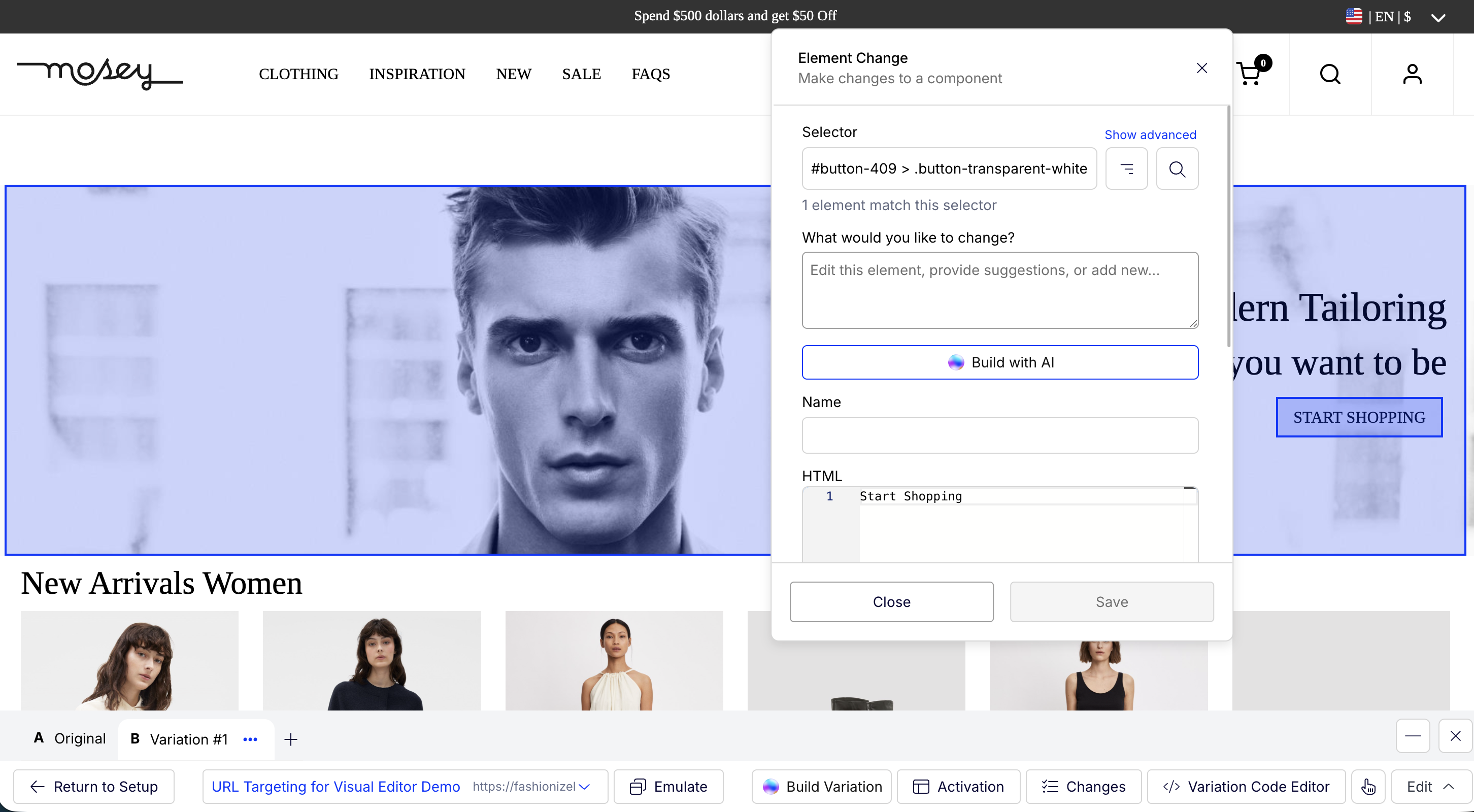
the new Visual Editor with an AI Variation Development Agent

Create simple or advanced website changes fast without writing a line of code with our AI Development Agent.

Use natural language to build out your ideas and apply brand styles to your experiments instantly.
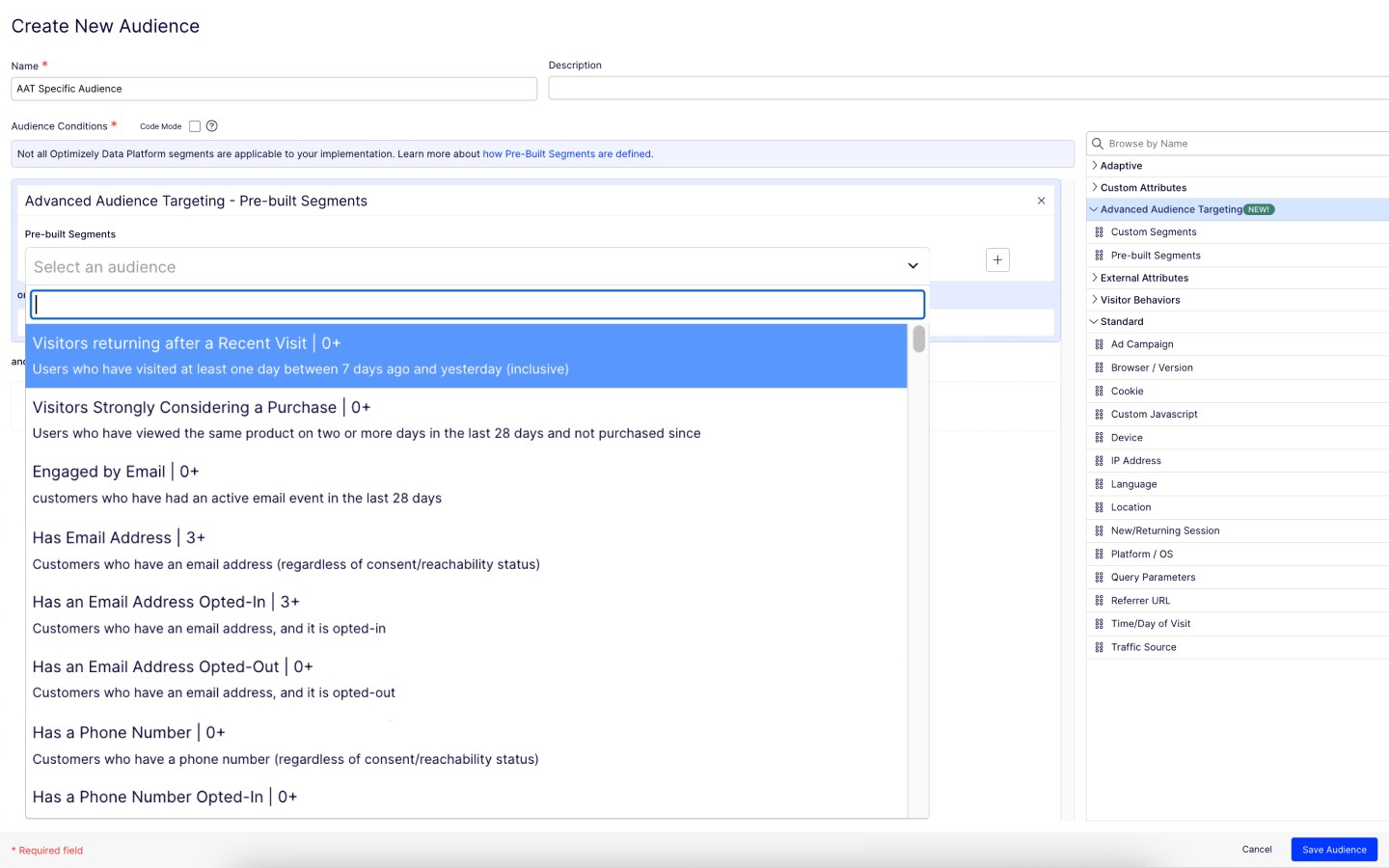
Advanced Audience Targeting:

- Delivers personalized experiences by targeting users based on behaviors, attributes, and real-time conditions.
- Defines precise audience segments using first-party data, geolocation, and device type.
- Can test and optimize for different audience groups to maximize impact and engagement.
Variation Template

Library of experience templates that you can access right within the Visual Editor. Customize these templates or create your own to easily reuse throughout your experimentation program.

- Offers pre-built templates for common test setups.
- Standardized variations and maintains brand integrity with reusable templates.
- Templates can be customized visually or tweak them with code for full flexibility.
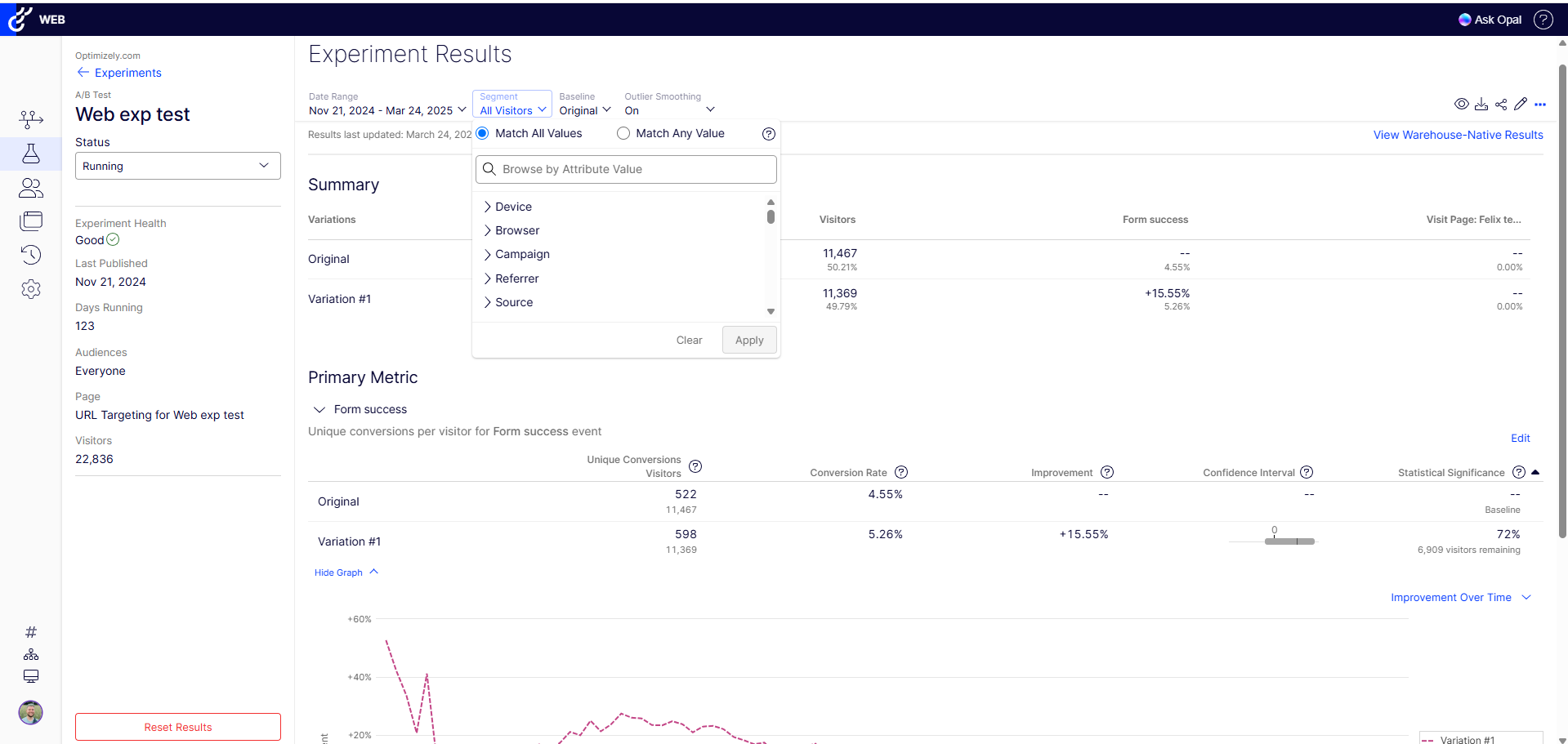
Web Experimentation Results Page:

- Data visualizations help interpret experiment performance.
- Displays which variations are winning with built-in statistical significance calculations.
- Results can be filtered by audience segments, events, and conversions to uncover key trends.
the custom code editor for JavaScript & CSS changes, used to build complex tests.

1 / 6

Top Performing Features

  • Heatmap tool

    A tool that shows which elements of the page generate the most visitor engagement.

    Category average: 8.2

  • Traffic allocation control

    Ability to set what percentage of website traffic receives specific test variants in order to roll out code only to a subset of site visitors.

    Category average: 9

  • a/b experiment testing

    Create and test variations of a website, changing site elements such as headlines, CTAs, images, page design and layout, technical SEO changes, and new feature additions and collect statistical results of each variation’s conversion rates or other metrics.

    Category average: 8.9

Areas for Improvement

  • Dynamic experiment activation

    Ability to activate an experiment after the page’s initial load based on a set of conditions (e.g. if the visitor takes certain actions).

    Category average: 8

  • Server-side tests

    Ability to run server-side tests (e.g. A/B, A/B/n, multivariate, and split URL tests) to test out more complex design changes, roll out features to specific audience segments, or split site traffic between different site versions.

    Category average: 7.5

  • Page surveys

    Create on-page surveys and select which segment of users are asked survey questions using defined audience segments (e.g. new vs. returning users, mobile users, desktop users, etc).

    Category average: 7.2

Robust Web experimentation

Use Cases and Deployment Scope

I'm using Optimizely web experimentation to make our websites perform measurably better rather than relying on guesswork. It helps me to prove value quickly. I often set up custom event tracking, like monitoring engagement with embeded calculators or interactive product filters so we can measure deeper behaviors, not just clicks

Pros

  • Setting up multivariate tests directly in the platform, wiring it up to capture drop off events through the analytics pipeline

Cons

  • I'm currently trying more complex setups like syncing experiment audiences with our data warehouse. It is not always plug and play, sometimes I have to write custom javascripts to track very specific behaviors.

Return on Investment

  • Is shortened our experiment ideation to launch time from 4 weeks to about 8 days, freeing our dev team to take on more billable client projects

Other Software Used

TeamViewer, IBM Maximo Application Suite, Figma Dev Mode

One Platform full experimental cycle - Optimizely Web Experimentation.

Use Cases and Deployment Scope

Optimizely Web experimentation is the primary tool I use to validate front-end and workflow changes. But beyond the day-to-day, I've leaned on it for more ambitious projects like an ongoing experiment with AI-driven diagnostic recommendations. I'm coordinating with our analytics team to pipe experiment data into Power BI. We've also partnered with Kin + Carta to implement a workaround that links Optimizely events with some of our older reporting systems.

Pros

  • Fast iteration on tools with real time reporting.
  • Safe rollouts on high-risk features.

Cons

  • I attempted to test a multi-step referral process across both desktop and mobile, but I couldn't complete it without involving Optimizely experts, as the setup requires a significant amount of custom code.

Return on Investment

  • Experiments that increase completion rates directly reduce support tickets saves us money in the tens of thousands.
  • Biggest ROI comes from avoiding sinking dev resources since we can just test first.

Other Software Used

IBM Cloud Continuous Delivery, Figma Dev Mode

Optimizely Web Experimentation Review

Use Cases and Deployment Scope

We do a lot of data analysis on our e-commerce journeys and one of our biggest, I guess, goals is conversion rate. So we use Optimizely Web to understand the insight that we're getting through either focus groups or other experiments, whether we should roll out a particular change or whether we should add additional information. And whether that basically enhances the journey enough to give us a better conversion uplift.

Pros

  • I think the best aspect of it is because I also manage a team that builds agent experiments, which are a little more complicated. They involve a lot of complex logic and conditions and really focuses in on certain audiences. So when we look at web experiments, the best benefits are getting things off the ground within a matter of minutes. Whereas agent experiments, there's a lot of background build involved with web experiments, we can have an idea, we can build it in web and it can be launched the same day. So it really helps us get to answers faster and make those decisions faster and then lead to other ideas for things we can do on other parts of the website.

Cons

  • I think because I work with both types of experiments, web and agent experiments, the sort of drawbacks come with web that it's the audience logic. Sometimes we have to identify specific customers that we want to target with the change. And a lot of it is probably down to our infrastructure on the site. It's not giving Optimizely the right level of data to target these customers. But I think, yeah, if we had a little bit more understanding of how we could get to that data through optimizing web, that would be useful for us.

Return on Investment

  • I can't probably speak to exact numbers because we're not really allowed to share, but it's in the millions we see conversion rate uplift and obviously that is our main metric. But also in terms of experiments we've done to try to increase our POO, we've seen definite success in being able to use web to validate some of our hypotheses. And like I said, the win rate is so strong that there is no, I guess question on the turn on investment.

Optimizely Web Experimentation is useful

Use Cases and Deployment Scope

In our organization, I use Optimizely Web Experimentation for A/B Testing. Optimizely Web Experimentation helps us test things prior to shipping.

Pros

  • A/B Testing
  • Helps narrow down Variants

Cons

  • I think there is room for improvement in Optimizely Web Experimentation with Better Native OS Apps

Return on Investment

  • The impact Optimizely Web Experimentation has on our organization's overall business objectives is Helping picking variants

Premium experimentation platform

Use Cases and Deployment Scope

We use Optimizely Web Experimentation across our websites to optimise our customer journeys, helping to drive more donors, volunteers, campaigners, service users and more. Experimentation makes it easy to create consistent experiences across multiple pages.

Pros

  • Robust reporting engine
  • Easy to use UI
  • Flexible experiment triggers and audience rules

Cons

  • Using platform can be tricky for non technical users. Particularly with selecting elements.
  • Limited tools for exporting reporting
  • Reports are retired after a certain time making it unreliable as a long-term experimention repository

Return on Investment

  • Our experiments have saved us from rolling out designs that we have loved that would have led to dramatic drops in CTR