Atlassian Jira is a project management tool, featuring an interactive timeline for mapping work items, dependencies, and releases, Scrum boards for agile teams, and out-of-the-box reports and dashboards.
$9
per month per user
monday.com
Score 8.2 out of 10
Mid-Size Companies (51-1,000 employees)
monday.com Work OS is an open platform designed so that anyone can create the tools they need to run all aspects of their work. It includes ready-made templates or the ability to customize any work solution ranging from sales pipelines to marketing campaigns, CRMs, and project tracking.
$36
per month (3 seats)
Pricing
Atlassian Jira
monday.com
Editions & Modules
Standard
$9
per month per user
Premium
$17
per month per user
Enterprise
Contact Sales
per year
Basic
$12
per month per user
Standard
$14
per month per user
Pro
$24
per month per user
Enterprise
Contact Sales
Contact us
Offerings
Pricing Offerings
Atlassian Jira
monday.com
Free Trial
Yes
Yes
Free/Freemium Version
Yes
Yes
Premium Consulting/Integration Services
No
Yes
Entry-level Setup Fee
No setup fee
Optional
Additional Details
Higher volume teams may qualify buyers for a discount.
Jira is the "default" do-everything software project management platform. It literally does everything, but consequently does nothing particularly well. That said, it is robust enough to compete with enterprise heavyweights like Rally, and (usually) easy and light enough to …
monday.com cannot be integrated with CI/CD tools, whereas Atlassian Jira integrates with CI/CD tools seamlessly. Atlassian Jira has strong Agile and Scrum support. Coming to monday.com, it has basic agile functionality. But Atlassian Jira has a complex UI, and monday.com has an …
Jira was selected because it is used by all of our clients and has become the accepted standard in the type of work that we do. The other tools are great in their own right and would better suit a more insular way of working, where a business conducts all work internally, but …
Our groups use JIRA in numerous ways and we've viewed it as capable in practically all cases. I would effectively prescribe JIRA to an organization of the right size and intricacy. It just might be over the top excess for groups that need just light undertaking following and …
Jira Software integrates with other software platforms nearly as well as its competitors, such as Asana or ClickUp. However, it provides more advanced tools than ClickUp and Asana, allowing project managers to see the workload of their team members, manage burndown, and react …
Lead Consultant - Solutions Architect - Software Engineer
Chose Atlassian Jira
Jira Software works for many development environments, has custom workflows, is friendly, stable, robust, and can be integrated with the most recognized DevOps tools on the market.
For Agile software development (roadmaps, epics, stories, etc), I'd stick to a purpose-built tool like Atlassian Jira. But when it comes to project and status tracking outside of software development, then Monday is likely to be my go-to tool due to its flexibility. This tool …
I've used Slack and Jira in the past and find that monday.com is much more intuitive than Jira, and it's much easier to find and track tasks than in Slack.
Verified User
Manager
Chose monday.com
monday.com is much more user-friendly and makes it easier to visualize the overall project versus the other solutions we switched over from.
monday.com feels like it offers a lower barrier to entry as well as more versatility, extensibility without becoming too complex. Atlassian is geared more for larger companies requiring a greater degree of granular controls.
Both platforms have a number of integrations (though, …
Workfront offered a more intuitive user interface, which made team adoption easier. It also included additional products that aligned well with the needs of our Dev, Work Management, and Service teams.
Cost is a big factor as the alternatives stacked up poorly in user costs and built in features. Also, the business was already using a different facet of monday.com so it was a quick setup and we already had experience and people were Jo knew the platform. Less complex and also …
When I arrived at my org, I was initially disappointed to hear that we used something other than Asana for project management. Fast forward just a few months, and I became a complete monday.com convert. While its organization is similar to Asana's, it's user interface, …
monday.com has the only interface that is 100% customizable, can use public and private boards, can be shared with customers, produce Gantt charts, and has THE MOST integrations "in house". The professional relationships that monday.com has established to be "on board" with …
Jira can be complicated to setup, but offers the most versatility. Basecamp is simple to use; however, doesn't provide everything a team or many teams may need. Monday fits in the middle and is easy to use and versatile.
I'd put monday.com and Asana on par, then ClickUp and lastly Jira. Jira would be more appropriate for exclusively technology engineering teams. Jotform offers better choices for forms use cases especially ones with complexity. Zoho makes more sense when you have the full suite, …
I briefly used Jira in a previous company and I can say that I like Mmonday.com better. The functionalities are very vast and you can personalize it easily and assign tasks to whomever you want. I think monday.com is definitely harder to master but once you get there, it is a …
Smartsheet does more than we needed it to do for our simple project management. JIRA is the same way. Asana and Trello are probably the closest comparisons for our needs. Both of these others are great, and I don't have any real complaints to compare on any of these. Monday.com …
Easier to use than JIRA. Assigning tasks and creating stories are easier. easier to view in Kanban compared to JIRA. Asana comparison is about the same. But more visibility with status of tasks than Asana. Interface is easier to use compared to Trello
monday.com includes the basic features from most project management apps: task management, collaboration, boards, messaging and so on. Also, the app excels in making multiple technical tools available in a single app, like Gantt, Kanban, and task management. Where you cannot …
ClickUp is a competitor but Monday's design is much better and user experience is superior. Also, export functions are a class above those of ClickUp. Asana is trying to compete with a lot more project management apps by picking the best features and making them available to …
Selecting dapulse was a mistake. It was simply due to its simplicity and self-explanatory processes but ended up not providing the complexity we needed and had bugs and bad support who wouldn't respond to concerns and would spend time fixing other things that aren't necessary …
With both Asana and Basecamp, unless you are the organizer, it is very hard to control how much information you are receiving. That is one reason we chose dapulse because each specific user has more control over how involved they want to be. Asana and Basecamp are also both set …
Jira facilitates software development, bug tracking, and sprints. It's ideal for structured workflows, issue management, and customer communication. However, more straightforward tools might be more efficient for highly creative, unstructured tasks or tiny, agile teams with quick visual overviews. Jira's complexity can be overkill for basic task lists.
monday.com can handle a lot of complex needs for an organization while keeping permissions, usage, and workflows separated by who needs what. It's a great software that multiple people can work out of without needing to buy separate software to keep track of some super different tasks. We love being able to upload files and use it as an archive for various things, too, so the important things don't get lost in a company folder, never to be seen again!
Integration of tools like Bitbucket, Github, etc., has made it easier to track the code changes, pull requests, and branches linked to the respective ticket.
The detailed tracking system in JIRA has helped the teams prioritize and understand the project tasks and issues.
JIRA's project tracking board helps you keep track of the project, its flow, and expectations in a structured format.
Intuitive board functionality with a variety of column types and customizations to address different use-cases, such as templates for user lifecycle management, checklists for onboarding.
Extensive automation capabilities to reduce tedium in more complex boards, such as our company's computer asset inventory board, to ensure devices are kept organized within the board for quicker reference.
The ability to connect boards and mirror info across them allowed us to build out a cross-functional, quasi-ticketing system enabling more efficient processing of requests that involved action items from different departments and/or teams.
We could use both the many board functions in tandem with the WorkForm feature to create an IT ticketing system that could be replicated and tailored for other teams needs.
Monday AI needs integration with Excel, Outlook and Microsoft 365. If I could share my staff availability for a given week, monday.com could learn what tasks I regularly assign to team members and build out future schedules for me based on availability and weekly needs.
Make it easier to add outside team members. Right now we have to give an account to each person who needs to view something -- and this is labor and cost intensive.
Maybe a drag and drop feature? If I create a series of tasks, could I just drag it to an individual user and let it assign them to that person?
An easier-to-print filtered calendar. Once I filter to certain tasks or staff members, I need to be able to create a legible, useful PDF that I can share out.
This is because Jira Software generates a huge profit for an affordable price. Having a tool that makes team management transparent and effective is very valuable.
In addition, the renewal of Jira Software and all Atlassian tools is predictable and clear, as the prices are published on the Atlassian website and there is no pyramid of intermediaries.
Teams involved in content creation, such as marketing or editorial teams, could use monday.com to manage the entire content lifecycle. Boards might track content ideas, assignments, drafts, reviews, approvals, and publication schedules, helping teams collaborate and keep content production on track.
The interface is simple and easy to use if you have some experience with it. Configuration is also logical most of the time. However, less experienced users tend to find themselves lost in some tasks - usually complex project configuration- but sometimes simple things, such as seeing why a user can't move issues in a workflow. Jira configuration requires a good amount of experience - and even experienced users often resort to documentation. It's a tool that's easy to use if you know what you're doing and where to find the proper documentation, but novice users tend to find it challenging.
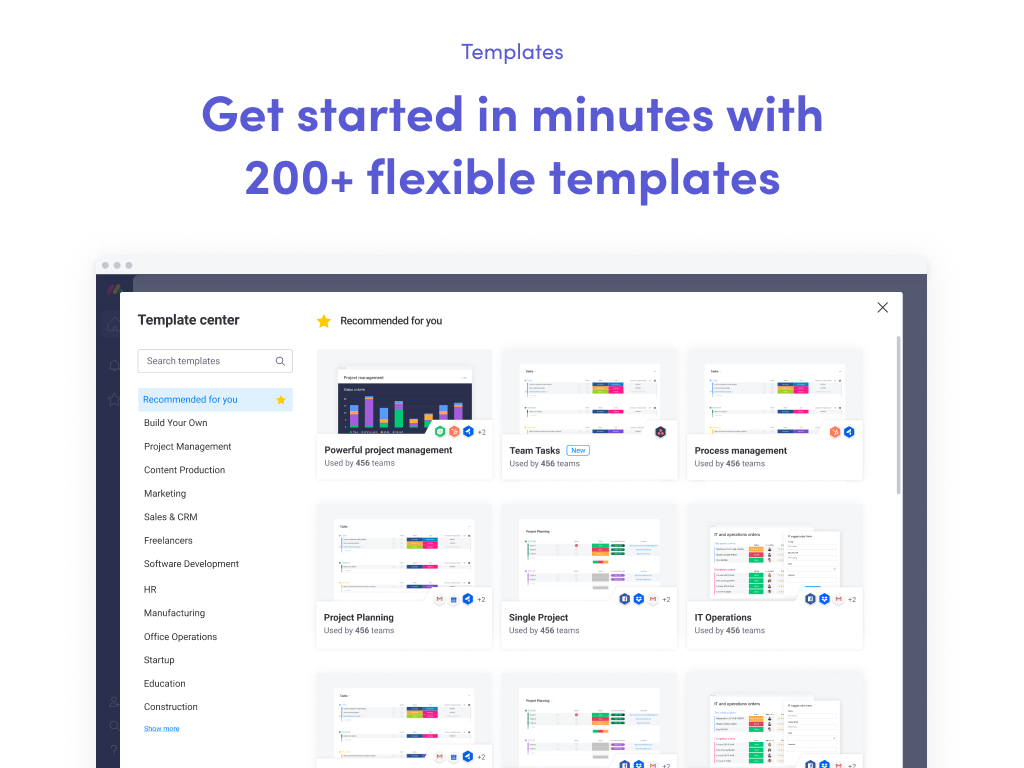
We love the library of templates offered on monday.com. We also love the fact that we can modify any template to fit our needs. And if we can't find what we need, all we have to do is reach out to support for help with creating what we need
Did not face any issues and whenever they plan maintanance they update all of us very well in advance also so in that view we are good with the product stability.
Performance is really good though it holds lot of data it loads quickly especially search operation also get the results very quickly as needed hence its good
Everything performs fairly well. Every now and then there are user errors where an employee will not click "ok" on a note they've created and simply exit out (I do wish that something was in place to prevent this, such as a pop "are you finished?")
I have not had a chance to contact JIRA's customer support. It does offer extensive documentation, although it often feels too technical for me. There is also a JIRA training app that lets you take little lessons and quizzes on different areas (e.g., JIRA basics, agile). I did find it a helpful way to teach myself.
Regarding customer support, I have had a good experience. With many tools, you often need to wait at least 24 to 48 hours. However, with monday.com support, I always receive an instant reply on chat with a live agent. The last time I used their support, I initiated the chat with an AI and was connected with a live agent within 5 minutes. This level of convenience is unmatched elsewhere.
Had received training from our own internal user so it was good and also very easy to understand topics and many tasks in the UI are self explanatory and we can do by our own
One of their strong points i stheir documentation. Almost all of the basic set up needed within JIRA is available online through atlassian and its easy to find and very precise. The more critical issues need to be addressed as well and hence the rating of 8 instead of a 9.
To have someone walk you thru the features and capabilities of Monday.com is priceless. Someone also coming along later in the contract to see if you are maximizing the program to suit your company needs is beyond helpful. The staff that have provided this training are fun, creative and very patient.
Take your time implementing Jira. Make sure you understand how you want to handle your projects and workflows. Investing more time in the implementation can pay off in a long run. It basically took us 5 days to define and implement correctly, but that meant smooth sailing later on.
We signed up for the accounts. Created the accounts. Ran the trial version and tested it live while we were running multiple projects and found that it was fitting our needs perfectly. When the trial ended and we were asked to purchase the full version, we did. We have found other ways to use it and it's a breeze.
monday.com cannot be integrated with CI/CD tools, whereas Atlassian Jira integrates with CI/CD tools seamlessly. Atlassian Jira has strong Agile and Scrum support. Coming to monday.com, it has basic agile functionality. But Atlassian Jira has a complex UI, and monday.com has an intuitive, drag-and-drop interface. Overall, Atlassian Jira provides features like Agile project management, DevOps integration, and customizable workflows.
When I arrived at my org, I was initially disappointed to hear that we used something other than Asana for project management. Fast forward just a few months, and I became a complete monday.com convert. While its organization is similar to Asana's, it's user interface, automation, and support blow Asana out of the water. I have received so many compliments from new hires about the onboarding experience, and I believe that's a testament both to the decision to use monday.com and the way we've built the program within.
For it to work across multiple departments and sites, I would like to see improvements made with integrations and automation. For this question, I am acknowledging not only the addition of internal triggers/automation, but also an expansion on external ones.
For our marketing team, Jira Work Management caused us to lose valuable work time due to manual updates that could have been automated.
Due to lack of creative review tools within Jira Work Management, our team had to pursue other tools that do not integrate with Jira Work Management, thus creating additional OpEx.
Much easier to review my prior month and report to clients on work completed; easy to extract the information and work done to Excel to add budget tracking etc - I see this is possible in monday.com and I will investigate how/if this is possible on our current plan.
Very fast and easy set-up of Boards.
Still lots to learn and grasp - many more opportunities to become more efficient using monday.com. I'm only just getting started.
The initial automations are quick and easy to set up, and if set up correctly.
My month-end client status and progress reports are now more accurate, and I can keep track of all the information in one place (inside monday.com).