Chose Airtable
We use Basecamp as more of the "where our work gets done" space, while Airtable is planning the work.

| Product | Rating | Most Used By | Product Summary | Starting Price |
|---|---|---|---|---|
 Airtable | N/A | Airtable is a project management and collaboration platform designed to enable content pipelines, product management, events planning, user research, and more. It combines spreadsheet,database, calendar, and kanban functionality within one platform. | $24 per month per seat | |
 Basecamp | N/A | Basecamp is a web-based project-management tool. Basecamp offers features standard to project management platforms, as well as mobile accessibility, unlimited users, and 3rd party integrations. Basecamp is priced by space requirements and concurrent projects. | $15 per month per user | |
 Microsoft Teams | N/A | Microsoft Teams combines video conferencing software with team collaboration tools. The communications platform allows MS Office users to conduct conference calls and share files via SharePoint, and join or initiate a group chat. | $4.80 per month per user |
| Airtable | Basecamp | Microsoft Teams | ||||||||||||||||||||||
|---|---|---|---|---|---|---|---|---|---|---|---|---|---|---|---|---|---|---|---|---|---|---|---|---|
| Editions & Modules |
|
|
| |||||||||||||||||||||
| Offerings |
| |||||||||||||||||||||||
| Entry-level Setup Fee | No setup fee | No setup fee | No setup fee | |||||||||||||||||||||
| Additional Details | — | — | Discounts are available for non profit organizations. | |||||||||||||||||||||
| More Pricing Information | ||||||||||||||||||||||||
| Airtable | Basecamp | Microsoft Teams | |
|---|---|---|---|
| Considered Multiple Products | Airtable  Peg Ivanyo Director Chose Airtable I don't intend to replace Basecamp with Airtable, rather enhance my use of it, limit it to what it does best, which isn't ongoing tracking of data. Not wanting to build this in something like Access, which I've used previously, I did a search for services like Airtable that …  James Shafstall Marketing Director Chose Airtable I have mostly set up and helped architect custom database solutions in a proprietary software, as compares directly to Airtable. I have set up and used JIRA Software extensively, and several Marketing Automation systems, and set up Oncontact CRM, and used DAM systems, and Baseca…  Justin Raney Program Director and Co-owner Chose Airtable Airtable exceeds in the organization aspect. The one thing I think Airtable lacks is the general communication aspect like in Basecamp.  Chloe Sayers Billing Specialist Chose Airtable Airtable is way more powerful than Trello, while still incorporating the Kanban boards. However, in Airtable, you can customize the Kanban boards since they are actually database records, allowing for a lot more functionality. With the tagging feature in Airtable, it is also a …  Brian Chung Co-Founder, Business Director Chose Airtable Airtable is better because it has a free version. Free is always good for me. The others require payment. I don't like monday at all. Basecamp and Teamwork have been fair comparisons, but there isn't a free version that we can use. Overall, Airtable is still pretty good for the …  Ricardo Jose Correia D'lucas Comerciante Mayorista Chose Airtable Wrike is a very good platform for project management, however, it focuses more on marketing work which is not negligible, but for us it has worked better to manage with Airtable because it is made to manage projects using the primary information of the company that is none …  Alison Gross Director, Strategic Communication and External Affairs Chose Airtable Asana did not have the templates that we needed and Microsoft Project is not cloud-based, which limited its usability. Airtable met our needs in both those categories. Additionally, we love Airtable's visual approach.  Harper Brokaw-Falbo Administrative Coordinator Chose Airtable So much better! It's not even a competition. That being said, it would be great to have more developed user profiles within Airtable like Facebook Workplace.  Amber Delamater Digital Media Buyer Chose Airtable
 Susie Kaup Manager Online Engagement Chose Airtable Have used Basecamp in the past and this tool is much better suited for visual personalities and creative teams.  Rhys Harper Director of Marketing and Communications Chose Airtable Airtable is infinitely more customizable and robust. And it is much more affordable, too! |  Basecamp  Nicholas Kouvatsos Marketing Director Chose Basecamp I thought Microsoft Teams may be a good alternative to Basecamp, and it was already included in our suite of Microsoft products we subscribe to, but it seems to be more of a collaboration tool than a project management tool. After review, Microsoft Teams is not suited to manage … | Microsoft Teams  Chris Carpenter Staff Project Manager, Awesomizer, Fixer, Maker, Collaboration Enabler Chose Microsoft Teams Microsoft Teams is a clear winner for robustness and for integration. It has the entire Office 365 toolkit in its corner and for an enterprise level solution, it doesn't have many peers, at least at that level of comprehensiveness. There are some peers that might compete well …  Karen Zelzer Environmental Specialist II Chose Microsoft Teams Haven't really looked into any other options since Microsoft Teams was already installed with the Office 360 package. This made it convenient to integrate into our office and work space. It provides a good place to communicate without interrupting fellow employees and our …  Stephen Wittmaak Media Associate Chose Microsoft Teams For an app that is integrated with the Microsoft Office 365 suite, it's nice to have. That said, there are many alternatives out there with the same or more robust options if you aren't tied to packaging everything together. |
| Airtable | Basecamp | Microsoft Teams | |||||||||||||||||||||||||||||||||||||||||||||||||||||||||||||||||||
|---|---|---|---|---|---|---|---|---|---|---|---|---|---|---|---|---|---|---|---|---|---|---|---|---|---|---|---|---|---|---|---|---|---|---|---|---|---|---|---|---|---|---|---|---|---|---|---|---|---|---|---|---|---|---|---|---|---|---|---|---|---|---|---|---|---|---|---|---|---|
| Project Management |
| ||||||||||||||||||||||||||||||||||||||||||||||||||||||||||||||||||||
| Professional Services Automation |
| ||||||||||||||||||||||||||||||||||||||||||||||||||||||||||||||||||||
| Communication |
| ||||||||||||||||||||||||||||||||||||||||||||||||||||||||||||||||||||
| File Sharing & Management |
|
| Airtable | Basecamp | Microsoft Teams | |
|---|---|---|---|
| Small Businesses |  Stackby Score 8.9 out of 10 | Stackby Score 8.9 out of 10 | Stackby Score 8.9 out of 10 |
| Medium-sized Companies |  InEight Score 8.4 out of 10 | InEight Score 8.4 out of 10 |  Troop Messenger Score 9.8 out of 10 |
| Enterprises | InEight Score 8.4 out of 10 | InEight Score 8.4 out of 10 |  HCL Connections Score 9.0 out of 10 |
| All Alternatives | View all alternatives | View all alternatives | View all alternatives |
| Airtable | Basecamp | Microsoft Teams | |
|---|---|---|---|
| Likelihood to Recommend | 8.7 (237 ratings) | 9.8 (150 ratings) | 8.4 (281 ratings) |
| Likelihood to Renew | 9.5 (5 ratings) | 10.0 (26 ratings) | 3.7 (9 ratings) |
| Usability | 8.0 (36 ratings) | 9.3 (20 ratings) | 8.7 (67 ratings) |
| Availability | 10.0 (2 ratings) | 10.0 (5 ratings) | 9.0 (1 ratings) |
| Performance | 9.0 (1 ratings) | 7.3 (4 ratings) | 8.0 (1 ratings) |
| Support Rating | 9.0 (30 ratings) | 8.8 (28 ratings) | 8.3 (113 ratings) |
| In-Person Training | 8.0 (1 ratings) | - (0 ratings) | - (0 ratings) |
| Online Training | 9.0 (1 ratings) | 5.0 (1 ratings) | - (0 ratings) |
| Implementation Rating | 9.0 (2 ratings) | 7.7 (4 ratings) | 10.0 (1 ratings) |
| Configurability | 10.0 (2 ratings) | 8.0 (1 ratings) | - (0 ratings) |
| Contract Terms and Pricing Model | 5.0 (1 ratings) | - (0 ratings) | 6.3 (7 ratings) |
| Ease of integration | 8.0 (2 ratings) | - (0 ratings) | - (0 ratings) |
| Product Scalability | 9.0 (2 ratings) | - (0 ratings) | 10.0 (1 ratings) |
| Professional Services | - (0 ratings) | - (0 ratings) | 7.0 (7 ratings) |
| Vendor post-sale | 8.0 (1 ratings) | - (0 ratings) | - (0 ratings) |
| Vendor pre-sale | 8.0 (1 ratings) | - (0 ratings) | - (0 ratings) |
| Airtable | Basecamp | Microsoft Teams | |
|---|---|---|---|
| Likelihood to Recommend | Airtable
| 37 Signals
 Andrea Hester Director Of Operations | Microsoft
|
| Pros | Airtable
| 37 Signals
| Microsoft
|
| Cons | Airtable
 Kaley White Data and Systems Analyst | 37 Signals
 Heather Miller Senior Graphic Designer | Microsoft
|
| Likelihood to Renew | Airtable
| 37 Signals
| Microsoft
 Phil Parrish Co-founder, Managing Director |
| Usability | Airtable
| 37 Signals
 James Roy Office Manager | Microsoft
 Jayson Cadano In-Country Manager |
| Reliability and Availability | Airtable
| 37 Signals
 Lisa Keyser Developer & Designer | Microsoft
|
| Performance | Airtable
| 37 Signals No answers on this topic | Microsoft
|
| Support Rating | Airtable
| 37 Signals
| Microsoft
 RAJESH VENGILOT Lead (Unified Communications) |
| In-Person Training | Airtable
| 37 Signals No answers on this topic | Microsoft No answers on this topic |
| Online Training | Airtable
| 37 Signals No answers on this topic | Microsoft No answers on this topic |
| Implementation Rating | Airtable
| 37 Signals
 Jenni Waggoner Marketing Content Manager | Social Media | Newsletter | Blog | White Papers | Microsoft
 Sarath Kumar Pujari Staff Engineer |
| Alternatives Considered | Airtable
 Matt Aldridge Knowledge Lead | 37 Signals
 Blake Baron Senior Financial Analyst - Cost Analytics | Microsoft
|
| Contract Terms and Pricing Model | Airtable
Kaley White Data and Systems Analyst | 37 Signals No answers on this topic | Microsoft
|
| Scalability | Airtable
| 37 Signals No answers on this topic | Microsoft
|
| Professional Services | Airtable No answers on this topic | 37 Signals No answers on this topic | Microsoft
 Asik Jaman Business Development Specialist |
| Return on Investment | Airtable
 Ryan Dury Senior Manager Strategic Accounts & Sales Support | 37 Signals
| Microsoft
 Keith James Veloso Virtual Assistant |
| ScreenShots | Airtable Screenshots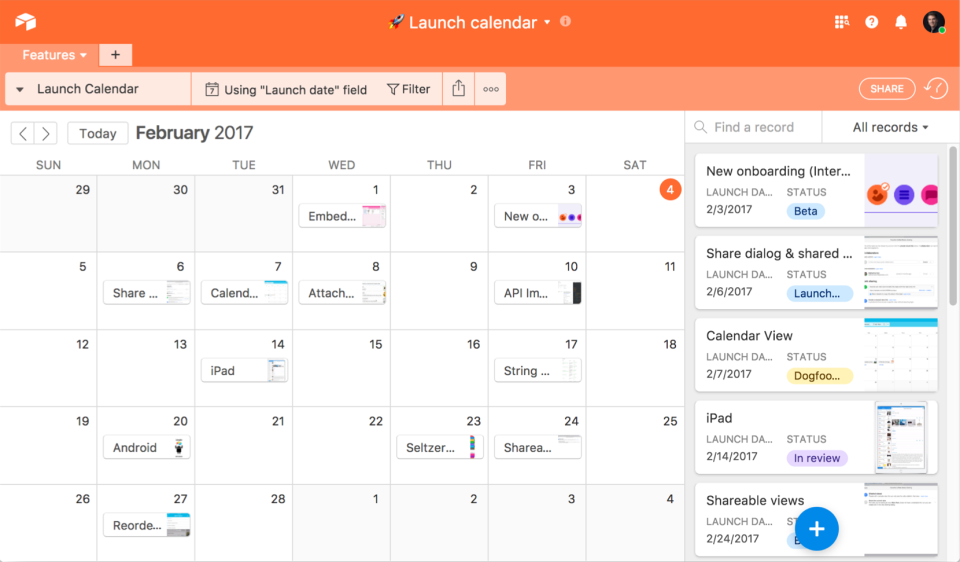   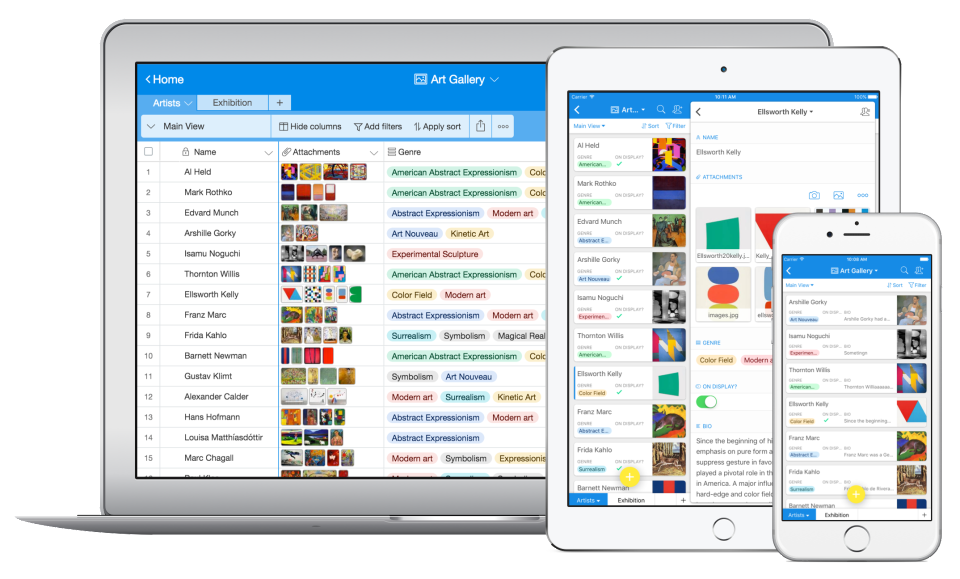  |
