

Chose Airtable
Airtable vs. Box vs. Slack
Airtable vs. Box vs. Slack
| Product | Rating | Most Used By | Product Summary | Starting Price |
|---|---|---|---|---|
 Airtable | N/A | Airtable is a project management and collaboration platform designed to enable content pipelines, product management, events planning, user research, and more. It combines spreadsheet,database, calendar, and kanban functionality within one platform. | $24 per month per seat | |
 Box | N/A | Box is an online Intelligent Content Management solution that caters to individual users as well as businesses. | $21 per month 3 users (minimum) | |
 Slack | N/A | Slack is a group messaging or team collaboration app that aims to simplify communication for businesses. Features include open discussions, private groups, and direct messaging, as well as deep contextual search and message archiving, and file sharing. Slack integrates with a number of other tools, such as MailChimp, Dropbox, and Google Drive. Slack was acquired by Salesforce in December 2020. The product is free to use, and also has paid plans with more features and greater controls. The… | $8.75 per month per user |
| Airtable | Box | Slack | ||||||||||||||||||||||
|---|---|---|---|---|---|---|---|---|---|---|---|---|---|---|---|---|---|---|---|---|---|---|---|---|
| Editions & Modules |
|
|
| |||||||||||||||||||||
| Offerings |
| |||||||||||||||||||||||
| Entry-level Setup Fee | No setup fee | Optional | No setup fee | |||||||||||||||||||||
| Additional Details | — | A discount is available for annual pricing. | *Per active user, per month, when paying once a year. Pro is $8.75 USD per active user when paying month to month. Business+ is $15.00 USD per active user when paying month to month. | |||||||||||||||||||||
| More Pricing Information | ||||||||||||||||||||||||
| Airtable | Box | Slack | |
|---|---|---|---|
| Considered Multiple Products | Airtable  Elaine Truesdale Founder Chose Airtable Airtable better organizes communication with clients than Slack. Communications with Airtable are task-specific and fall into the overall process.  Kaley White Data and Systems Analyst Chose Airtable There's a saying that spreadsheets were never meant to be databases, and Airtable provides the missing piece for nontechnical users who need to hear that saying. It's more performant and provides more custom view options, for example, than Excel or Google Sheets. Retool …  Lorrie Fisher SAP Basis Manager Chose Airtable N/A  Sander Kallshian Owner Chose Airtable Airtable is much more affordable than Smartsheet, and more capable than Google Sheets as far as related tables, integrations, data views, and team collaboration.  Sean Gilligan Senior Digital Marketing Coordinator Chose Airtable Airtable is more robust than Trello yet equally intuitive  Maria Zuniga Product Manager Chose Airtable I think Airtable could be used for even more collaborative projects.  Sarah Jones Project Manager, Telepresence Robot Pilot Chose Airtable Airtable is much more user-friendly and easy to navigate and update than Confluence. We still use Confluence as a wiki, but Airtable is used for all our day to day management.  Keegan Ead Digital Multimedia Editor Chose Airtable While traditional spreadsheets provide a space to input information, Airtable actually makes it useful and easy to look at it, showing you only what you need or want to see at that moment.  Jayme Kreitinger Executive Director Chose Airtable Excel is only good for numbers, not words or relational database. Access is too complicated for a total novice to build databases from scratch. Task trackers and project planners like Asana have limited functionality.  Brad Johns Executive Director: Fabrication + Instructional Resources Chose Airtable SAIC is a gSuite campus and Airtable is a very good companion to the gSuite. The Airtable gDrive integration is quite good and Airtable solves problems that gSuite simply does not solve.
Though it does not replace them, Airtable also plays well with our Project Management …  Kartik A. Dhar Head, Special Initiatives Chose Airtable There are 2 main competitors I feel, Google Sheets and MS Excel. Both are great for creating complex spreadsheets with complex logic and interlinking in between them, however, the speed of quickly creating process flows, data management systems and more in Airtable is way …  Jane Leuchter Content Librarian Chose Airtable For us, the most important things to consider were the relational aspect (linking one record to another record) and the ease of use. We found Smartsheets clunky and unable to add relationships, and introducing relationships in Google Sheets or Excel was just too difficult to …  Anthony J. Acocella Project Lead, Gilbert Kaplan Digital Mahler Archives Chose Airtable Airtable was a more affordable, more mobile, and more versatile platform. The options for future integration were greater for us with Airtable; the mobile opportunities give our Foundation flexibility; and since our team is based in several locations, the sharing and cloud …  Stephanie Etchie Administrative Assistant Chose Airtable We selected Airtable for the Calendar view and the grid view features. We like being able to link tables to one another, and we appreciate how collaborative the platform is. Airtable is able to display our data in a visually appealing and user-friendly way. We wanted to be able …  Jay DeDapper Co-Founder Chose Airtable |  Box  Ragul Kumar Research Executive II Chose Box Box is more professional when comparing other alternatives  Leon Prather II, CTS Manager of Digital Services Chose Box Box is nowhere as deep as Google Drive due to the breadth of Google's ecosystem, but it is a self-contained mini-DAM that most will find works really well. The added bonus of built in Gmail sharing is a nice addition.  Heather Miller Senior Graphic Designer Chose Box The unlimited storage with Box beats all the other options, along with the ease of sharing. With the other products, we found that we had the issue of having to clean up folders to make sure we had enough space to work with, and the ability to share links and files wasn't …  Dave Becker Content Manager Chose Box Box was superior to all of the cloud file storage systems I've used. It is easier to use, has more space available, and we rarely had any problems. Unfortunately, budget was the deciding factor that pushed us to a different product, but I have found myself wishing that weren't … | Slack  Jason Smith, DPA Instructional Technologist Chose Slack Well we get Yammer with the Office 365 pack. So, Yammer is paid for and integrates well with Office. MS Office 365 does not have the type of ridiculous service interruptions that Slack seems to experience. Yammer does all the same stuff but without the bad user interface. I did …  Lucas Riggi GNC - Mission Design Lead Engineer Chose Slack It is much easier to use slack for internal communication than it is to use any other emailing platform (gmail or outlook). You get direct notification and the interface is made for intuitive fast communication, it is really a chat service with easy access to group chats, …  Dominick Cabal Client Services Manager Chose Slack Skype - clunky and ugly Google Chat - functionally great but uninspiring |
| Airtable | Box | Slack | |||||||||||||||||||||||||||||||||||||||||||||||||||||||||||||||||||
|---|---|---|---|---|---|---|---|---|---|---|---|---|---|---|---|---|---|---|---|---|---|---|---|---|---|---|---|---|---|---|---|---|---|---|---|---|---|---|---|---|---|---|---|---|---|---|---|---|---|---|---|---|---|---|---|---|---|---|---|---|---|---|---|---|---|---|---|---|---|
| Project Management |
| ||||||||||||||||||||||||||||||||||||||||||||||||||||||||||||||||||||
| Enterprise Content Management |
| ||||||||||||||||||||||||||||||||||||||||||||||||||||||||||||||||||||
| Communication |
| ||||||||||||||||||||||||||||||||||||||||||||||||||||||||||||||||||||
| File Sharing & Management |
|
| Airtable | Box | Slack | |
|---|---|---|---|
| Small Businesses |  Stackby Score 8.9 out of 10 |  Square 9 Softworks Score 9.7 out of 10 | Stackby Score 8.9 out of 10 |
| Medium-sized Companies |  InEight Score 8.4 out of 10 |  MediaValet Score 9.0 out of 10 |  Troop Messenger Score 9.8 out of 10 |
| Enterprises | InEight Score 8.4 out of 10 | MediaValet Score 9.0 out of 10 |  HCL Connections Score 9.0 out of 10 |
| All Alternatives | View all alternatives | View all alternatives | View all alternatives |
| Airtable | Box | Slack | |
|---|---|---|---|
| Likelihood to Recommend | 8.8 (238 ratings) | 8.0 (154 ratings) | 9.2 (626 ratings) |
| Likelihood to Renew | 9.5 (5 ratings) | 8.0 (12 ratings) | 10.0 (25 ratings) |
| Usability | 8.0 (36 ratings) | 8.0 (21 ratings) | 9.0 (248 ratings) |
| Availability | 10.0 (2 ratings) | 10.0 (5 ratings) | 10.0 (2 ratings) |
| Performance | 9.0 (1 ratings) | 9.1 (12 ratings) | 10.0 (2 ratings) |
| Support Rating | 9.0 (30 ratings) | 8.5 (29 ratings) | 9.9 (68 ratings) |
| In-Person Training | 8.0 (1 ratings) | 10.0 (1 ratings) | - (0 ratings) |
| Online Training | 9.0 (1 ratings) | 10.0 (3 ratings) | - (0 ratings) |
| Implementation Rating | 9.0 (2 ratings) | 10.0 (6 ratings) | 8.7 (5 ratings) |
| Configurability | 10.0 (2 ratings) | 10.0 (1 ratings) | 10.0 (2 ratings) |
| Contract Terms and Pricing Model | 5.0 (1 ratings) | - (0 ratings) | 10.0 (1 ratings) |
| Ease of integration | 8.0 (2 ratings) | 10.0 (1 ratings) | 9.2 (2 ratings) |
| Product Scalability | 9.0 (2 ratings) | 10.0 (1 ratings) | 10.0 (1 ratings) |
| Professional Services | - (0 ratings) | - (0 ratings) | 10.0 (1 ratings) |
| Vendor post-sale | 8.0 (1 ratings) | 10.0 (1 ratings) | 10.0 (1 ratings) |
| Vendor pre-sale | 8.0 (1 ratings) | 10.0 (1 ratings) | 10.0 (1 ratings) |
| Airtable | Box | Slack | |
|---|---|---|---|
| Likelihood to Recommend | Airtable
| Box
| Salesforce
 Jeremy Herman Security Engineer |
| Pros | Airtable
| Box
 james dean Senior Software Engineer | Salesforce
 Donavan Dunga Training Manager |
| Cons | Airtable
Kaley White Data and Systems Analyst | Box
| Salesforce
|
| Likelihood to Renew | Airtable
| Box
 Sam Montoya, CSM Project Manager | Salesforce
|
| Usability | Airtable
| Box
 Tyler Grudowski Product Development Engineer | Salesforce
|
| Reliability and Availability | Airtable
| Box
| Salesforce
 Leonardo Oliveira Quality Analyst |
| Performance | Airtable
| Box
 burt smith Graphic Design Specialist | Salesforce
Leonardo Oliveira Quality Analyst |
| Support Rating | Airtable
| Box
| Salesforce
|
| In-Person Training | Airtable
| Box
| Salesforce No answers on this topic |
| Online Training | Airtable
| Box
| Salesforce No answers on this topic |
| Implementation Rating | Airtable
| Box
| Salesforce
Leonardo Oliveira Quality Analyst |
| Alternatives Considered | Airtable
 Matt Aldridge Knowledge Lead | Box
 Pjeter Gjergjaj Senior Network Engineer | Salesforce
|
| Contract Terms and Pricing Model | Airtable
Kaley White Data and Systems Analyst | Box No answers on this topic | Salesforce No answers on this topic |
| Scalability | Airtable
| Box
| Salesforce No answers on this topic |
| Return on Investment | Airtable
 Ryan Dury Senior Manager Strategic Accounts & Sales Support | Box
| Salesforce
 Michael Grey Director of Operations |
| ScreenShots | Airtable Screenshots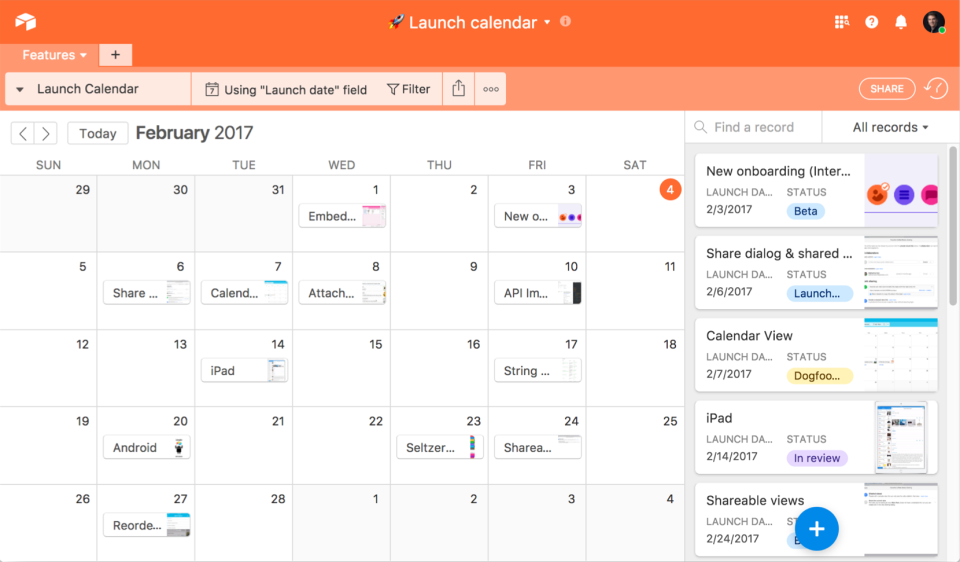   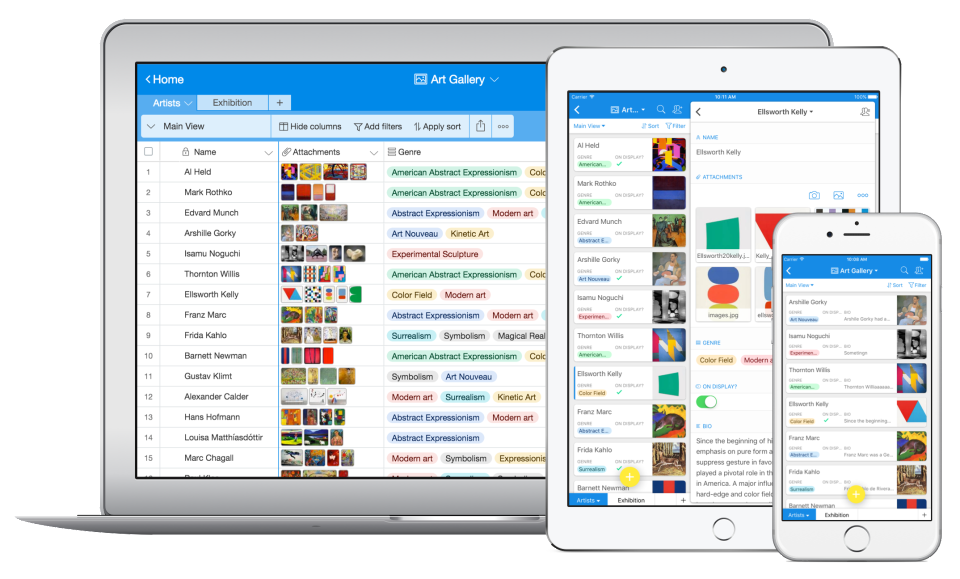  | Box Screenshots      |
