
Daniel Blazquez
Corporate Development and Strategic Product Management
Chose Glip (discontinued)

| Product | Rating | Most Used By | Product Summary | Starting Price |
|---|---|---|---|---|
 Asana | N/A | Asana is a web and mobile project management app. With tasks, projects, conversations, and dashboards, Asana lets an entire team know who's doing what by when, enabling workload balancing. Users can also add integrations for GANTT charts, time tracking and more. | $13.49 per month per user | |
 Glip (discontinued) | N/A | Glip was a conversation platform to plan, share and organize work. Glip featured text and video chat at its core, with file sharing, collaborative task management, shared calendars, and automatic version control. Glip was acquired by RingCentral in 2015 and is no longer available standalone, though its features are included in RingCentral MVP. | $11.99 Per User Per Month | |
 Notion | N/A | Notion aims to present users with an all-in-one workspace — for notes, tasks, wikis, and databases, from Notion Labs in San Francisco. | $5 per month per user |
| Asana | Glip (discontinued) | Notion | ||||||||||||||||||||||
|---|---|---|---|---|---|---|---|---|---|---|---|---|---|---|---|---|---|---|---|---|---|---|---|---|
| Editions & Modules |
|
|
| |||||||||||||||||||||
| Offerings |
| |||||||||||||||||||||||
| Entry-level Setup Fee | Optional | No setup fee | No setup fee | |||||||||||||||||||||
| Additional Details | A discount is offered for annual billing. | — | A discount is offered for annual billing. | |||||||||||||||||||||
| More Pricing Information | ||||||||||||||||||||||||
| Asana | Glip (discontinued) | Notion | |
|---|---|---|---|
| Considered Multiple Products |  Asana No answer on this topic |  Glip (discontinued) Daniel Blazquez Corporate Development and Strategic Product Management Chose Glip (discontinued) |  Notion  Nathan Winkelman Marketing Director Chose Notion Notion was more robust than Asana and allowed for greater flexibility. It feels like Notion also makes up product updates more frequently and adds new features on a consistent basis to help the product continually improve. It Notion works better and allows for more in-depth …  Divesh Sood Product Marketing Leader Chose Notion  April Jordan CMO Chose Notion Notion is much more robust than Google Tasks, which I find very limited. Notion is far more customizable and affordable than Asana, which is more of a turnkey solution for teams that want to work within a pre-defined structure. Notion and ClickUp are comparable, in my opinion, in …  Juliana Guzzo Bertolini Operations Assistant Chose Notion because Notion is more comprehensive and offers greater possibilities.  José Francisco Laguna Technical Writer Chose Notion It's a combination of the three put together but with the added benefit of web hosting being a part of its core. The other tools are more the same thing, with just a couple of different elements in between. Notion combines them all and consistently adds new functions to its core. |
| Asana | Glip (discontinued) | Notion | |||||||||||||||||||||||||||||||||||||||||||||||||||||||||||||||||||
|---|---|---|---|---|---|---|---|---|---|---|---|---|---|---|---|---|---|---|---|---|---|---|---|---|---|---|---|---|---|---|---|---|---|---|---|---|---|---|---|---|---|---|---|---|---|---|---|---|---|---|---|---|---|---|---|---|---|---|---|---|---|---|---|---|---|---|---|---|---|
| Project Management |
| ||||||||||||||||||||||||||||||||||||||||||||||||||||||||||||||||||||
| Professional Services Automation |
| ||||||||||||||||||||||||||||||||||||||||||||||||||||||||||||||||||||
| Communication |
| ||||||||||||||||||||||||||||||||||||||||||||||||||||||||||||||||||||
| File Sharing & Management |
|
| Asana | Glip (discontinued) | Notion | |
|---|---|---|---|
| Small Businesses |  Stackby Score 9.0 out of 10 | Stackby Score 9.0 out of 10 | Stackby Score 9.0 out of 10 |
| Medium-sized Companies |  InEight Score 8.5 out of 10 |  Troop Messenger Score 9.8 out of 10 | Troop Messenger Score 9.8 out of 10 |
| Enterprises | InEight Score 8.5 out of 10 |  HCL Connections Score 9.0 out of 10 | HCL Connections Score 9.0 out of 10 |
| All Alternatives | View all alternatives | View all alternatives | View all alternatives |
| Asana | Glip (discontinued) | Notion | |
|---|---|---|---|
| Likelihood to Recommend | 9.0 (208 ratings) | 10.0 (14 ratings) | 8.6 (85 ratings) |
| Likelihood to Renew | 9.6 (34 ratings) | 9.0 (2 ratings) | 10.0 (1 ratings) |
| Usability | 8.3 (36 ratings) | 8.0 (2 ratings) | 8.4 (55 ratings) |
| Availability | 8.4 (2 ratings) | - (0 ratings) | - (0 ratings) |
| Support Rating | 5.0 (42 ratings) | 6.1 (4 ratings) | - (0 ratings) |
| Ease of integration | - (0 ratings) | 10.0 (1 ratings) | - (0 ratings) |
| Product Scalability | 8.2 (1 ratings) | - (0 ratings) | - (0 ratings) |
| Asana | Glip (discontinued) | Notion | |
|---|---|---|---|
| Likelihood to Recommend | Asana
 Marina Torttoli Marketing Director | Discontinued Products
 Shahab Razak Senior Network Architect | Notion Labs, Inc
April Jordan CMO |
| Pros | Asana
 Ammar Aboalrub Freelancer | Discontinued Products
 Hernán Silva Senior Front-end developer | Notion Labs, Inc
|
| Cons | Asana
| Discontinued Products
 Paul Ellul Vice President | Notion Labs, Inc
|
| Likelihood to Renew | Asana
 page V CEO (Chief Executive Officer) | Discontinued Products
 Brian Jackson Owner/Director of Optimization | Notion Labs, Inc
 Mantra Manan Saraswat Product Manager |
| Usability | Asana
| Discontinued Products
Hernán Silva Senior Front-end developer | Notion Labs, Inc
 Larissa Bravim Furlan Operations Analist |
| Reliability and Availability | Asana
 Ronen Soreq Project Manager | Discontinued Products No answers on this topic | Notion Labs, Inc No answers on this topic |
| Support Rating | Asana
 Adam Lumley Director of Marketing & Communications | Discontinued Products
 Logan Wiser IT Director | Notion Labs, Inc No answers on this topic |
| Alternatives Considered | Asana
 Rafiqul Islam Full-stack Software Engineer | Discontinued Products
 Joe "JC" Cross Co-Founder | Notion Labs, Inc
|
| Scalability | Asana
Ronen Soreq Project Manager | Discontinued Products No answers on this topic | Notion Labs, Inc No answers on this topic |
| Return on Investment | Asana
 Kristi Porter Chief Do-Gooder | Discontinued Products
 Lee L Kennedy Analytics Director | Notion Labs, Inc
|
| ScreenShots | Asana Screenshots 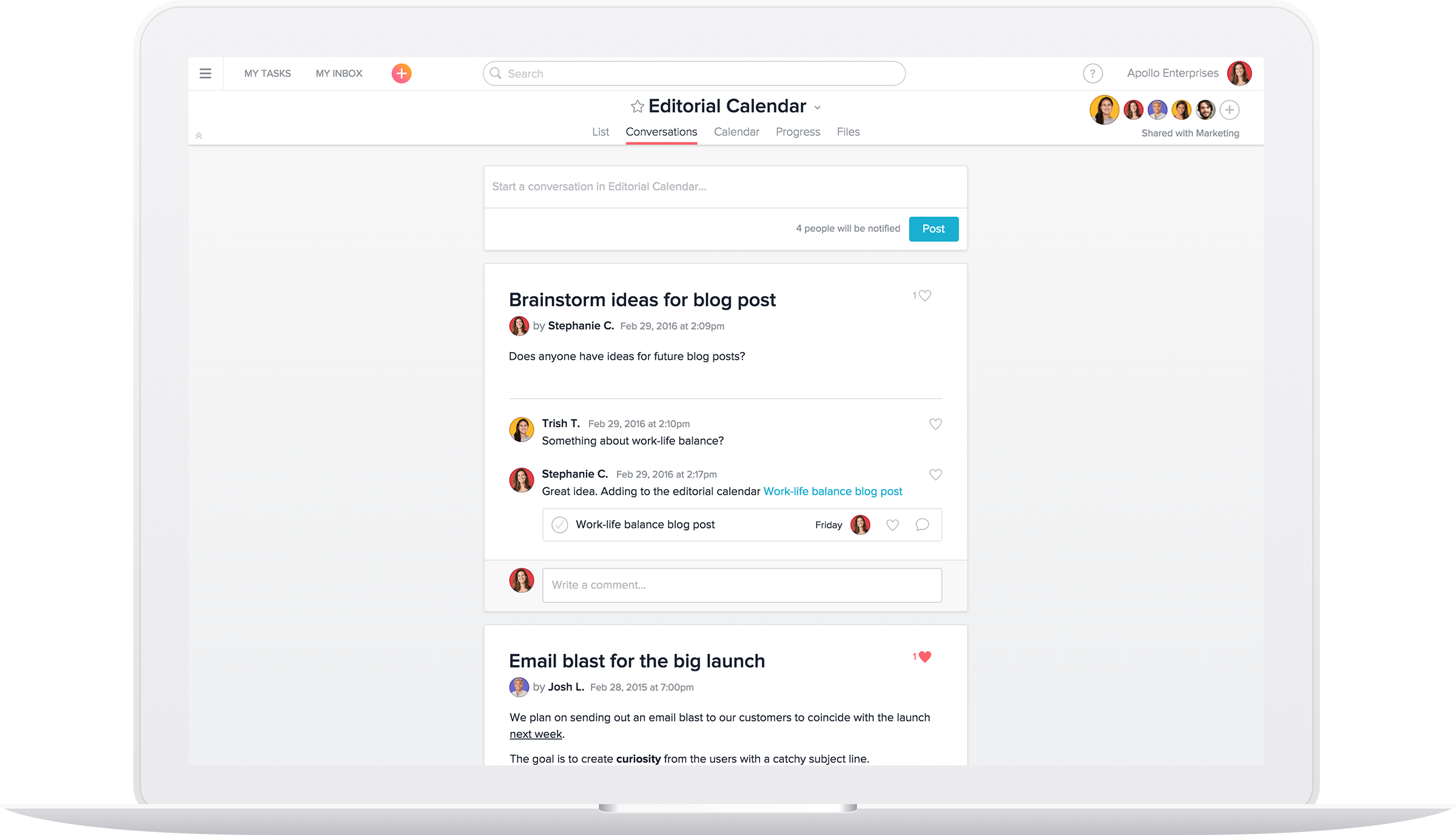     |